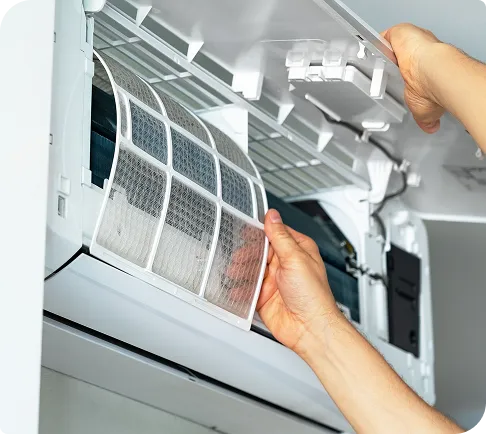
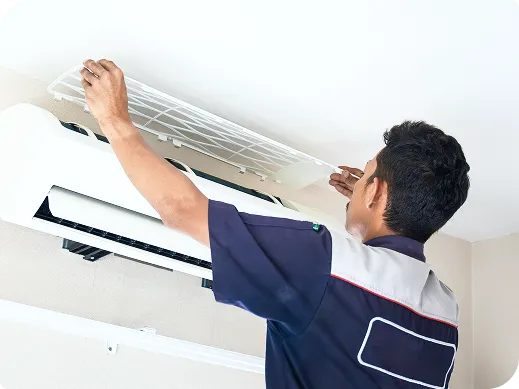
Heat pumps are among the systems W.F. Smith designs and fits across Bensalem Township, ducted and ductless. The survey costs nothing and the load calculation comes with it. A repair diagnostic is separate — our office confirms the fee before a visit.
A heat pump moves a larger volume of air, at a lower supply temperature, than the gas furnace it replaces. In a township whose duct was laid out for heating alone, that changes the order of work. We measure duct first and pick equipment last.
Lennox is what we fit most on the ducted side, Mitsubishi Electric on the ductless side.
Some Bensalem houses take a heat pump easily and some fight it. These conditions make it straightforward.
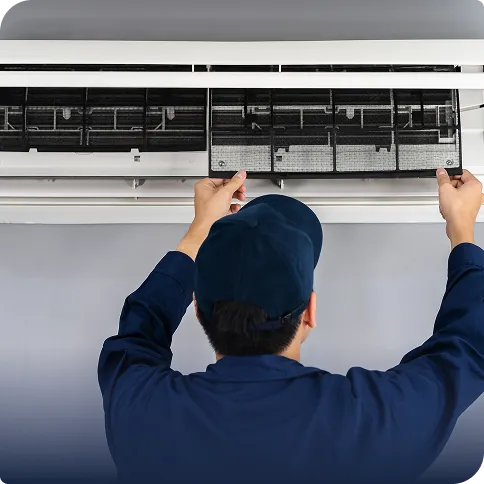
A gas furnace delivers hot air in a modest volume. A heat pump delivers cooler air in a much larger one. Duct that satisfied a 1960s furnace can therefore strangle the system replacing it. The limit is almost always return area rather than supply trunk.
That’s fixable, and it’s rarely a rebuild. Enlarging a grille, adding a second return, or straightening a crushed run usually brings static pressure back into range. We price that into the estimate rather than finding it on installation day. A heat pump on strangled duct underperforms from its first week.
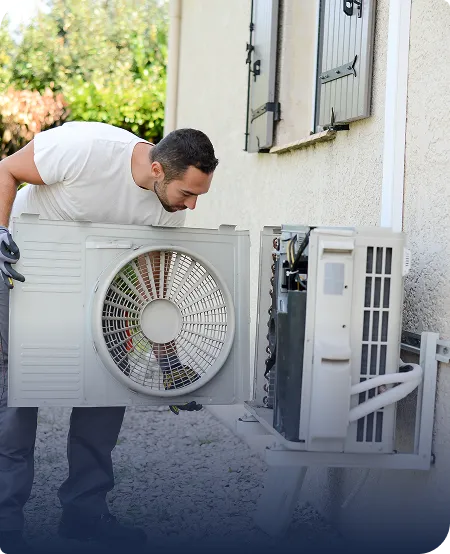
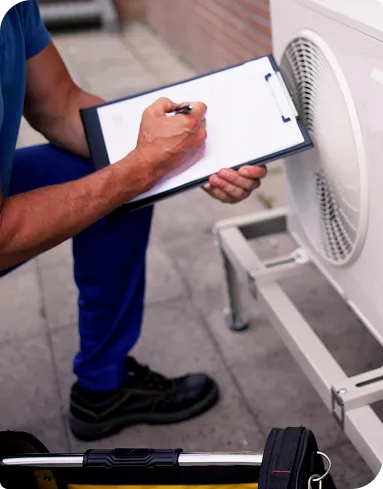
Ducted equipment answers for a ranch, or for newer construction toward Middletown where trunk and returns are already adequate. The coil sits on the air handler. Duct gets corrected where the readings call for it.
Ductless fits the slab houses, the additions, and the converted spaces no trunk reached. The link back to the outdoor unit passes through a wall rather than a ceiling. Nothing gets torn open and no closet is lost to a chase.
Dual-fuel is for the house whose gas furnace still has years left in it. Cooling and the bulk of the winter fall to the heat pump. The furnace takes the coldest stretch.
No figure goes out before the survey is done, which is why we won’t price a heat pump by phone. Three things move it more than the badge on the box.