
Philadelphia Commercial AC Repair and Replacement

Cooling Philadelphia commercial buildings since 1946. W.F. Smith, family-owned.
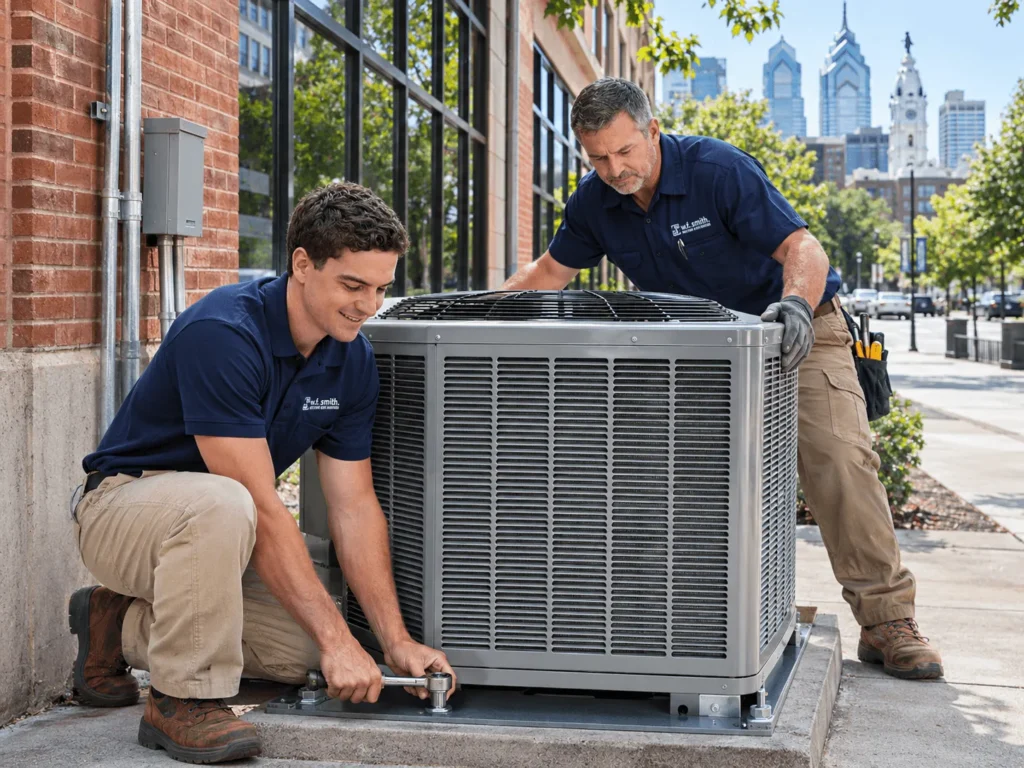
Two W.F. Smith HVAC technicians installing a new commercial air conditioning unit outside a commercial building in Philadelphia.

Commercial AC Repair, Replacement, and Installation

W.F. Smith repairs, replaces, and installs commercial air conditioning across Philadelphia and the nearby Bucks and Montgomery County suburbs. That covers rooftop and packaged units, commercial split systems, air handlers, and ductless cassettes.

The commercial diagnostic visit is quoted per site, and replacement estimates are free. Nothing gets replaced before you approve the price.

We install Lennox equipment most often and Mitsubishi Electric for ductless work. We do not service chillers, boilers, water heaters, oil systems, or steam systems.

Signs Your Commercial AC Needs a Technician

Rooftop equipment rarely fails without warning, and tenant complaints are often the earliest data.
  • Supply air is warm or barely cool while the unit runs. Refrigerant may have leaked below charge, a compressor may be failing, or the condenser may not be shedding heat.
  • One stage works and the other does not. Multi-stage units can limp along on half capacity, with the space never fully recovering after lunch.
  • Ice on the suction line or coil. Can mean restricted airflow or low charge.
  • Short cycling through the afternoon. Often an oversized unit, a fouled coil, or a control fault, and it can wear a compressor fast.
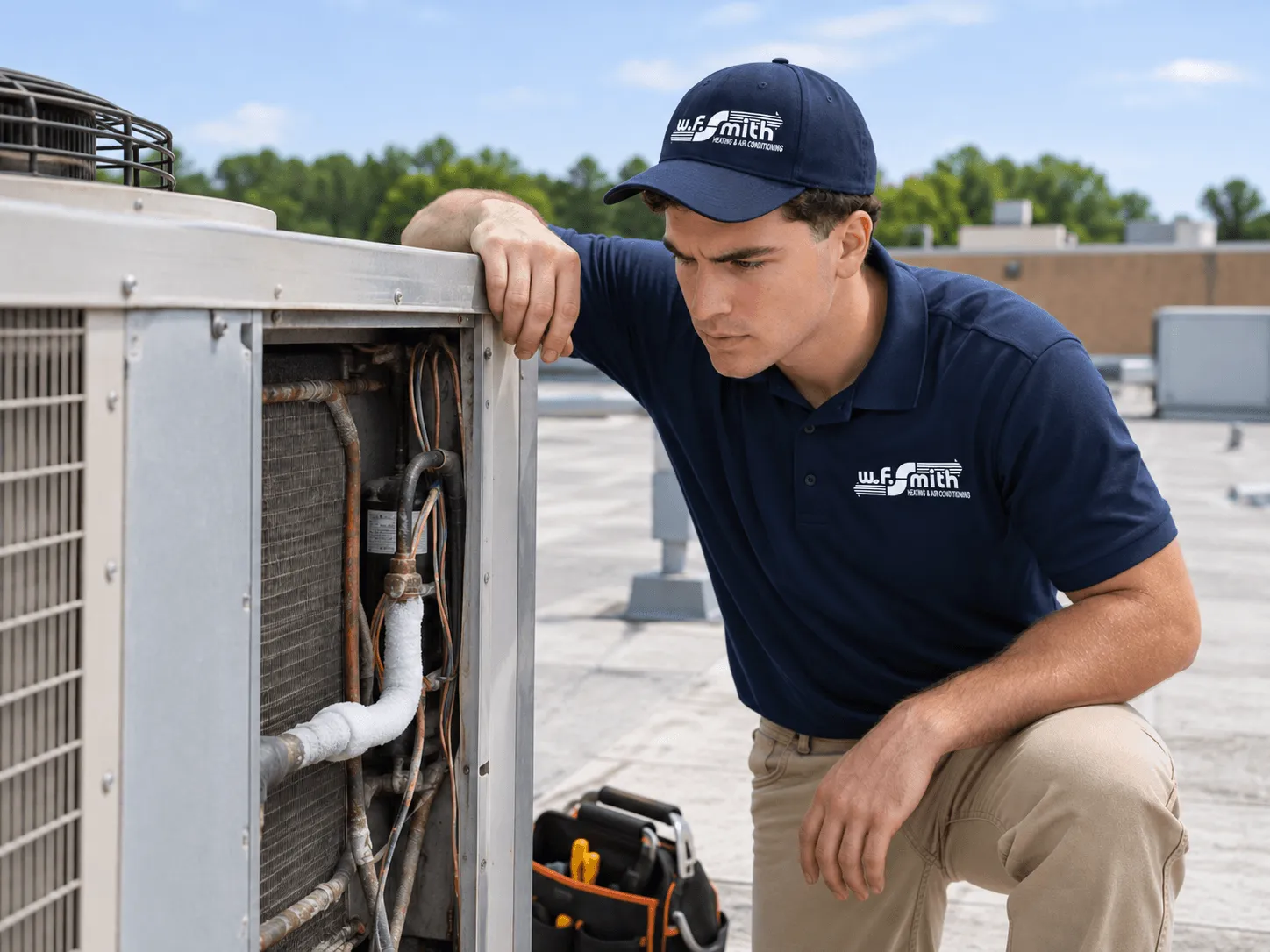
W.F. Smith HVAC technician inspecting a frozen refrigerant line inside a commercial rooftop air conditioning unit.

How Commercial Cooling Differs From Residential Equipment

Commercial cooling is not just a larger version of a house system. A few differences change how it fails.

  • Packaged cabinets on a roof. Cooling, heating, and the blower sit in one cabinet on a curb, exposed all year.
  • Three-phase power and staging. Staged compressors, larger contactors, and higher amp draws change diagnosis and parts.
  • Economizers and building controls. Outside air dampers and control wiring add failure points a house doesn’t have.

Commercial AC Repair

A technician diagnoses the fault, quotes it, and waits for your approval. The diagnostic visit buys a finding, not a guess.
  • Compressor failures. The repair cost gets set against the replacement cost first.
  • Refrigerant leaks. We look to find and seal the leak rather than simply topping off the charge.
  • Electrical faults. Capacitors, contactors, and fan motors are behind most sudden no-cool calls.
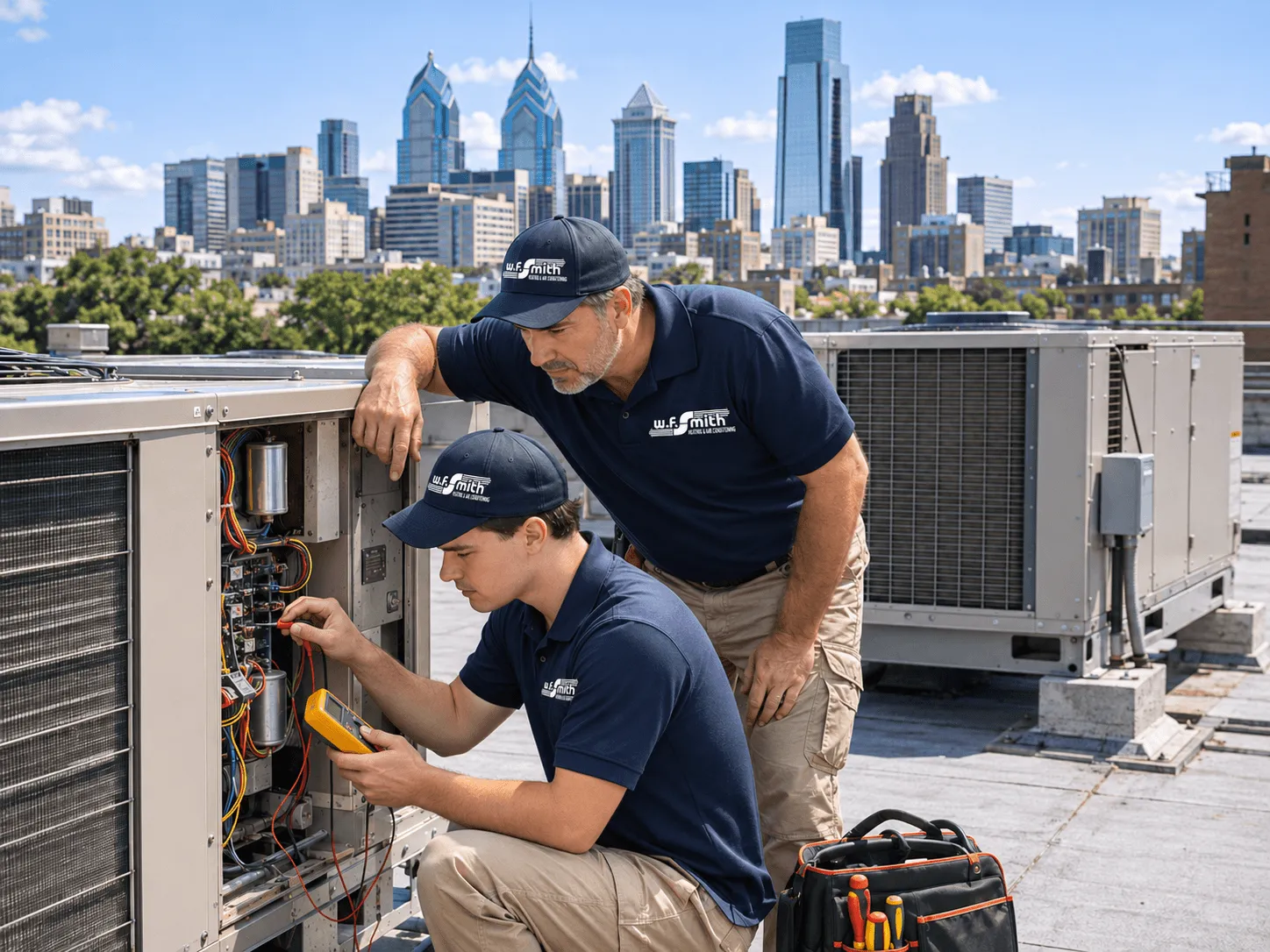
Two W.F. Smith HVAC technicians diagnosing electrical components in a commercial rooftop air conditioning unit with the Philadelphia skyline in the background.
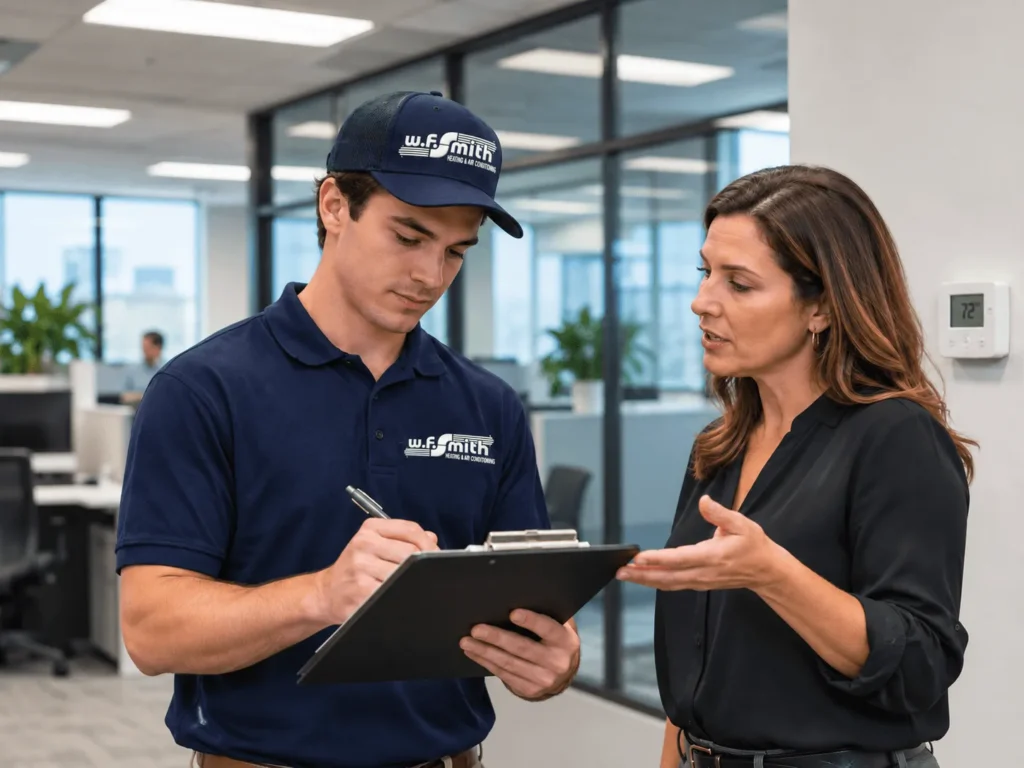
W.F. Smith HVAC technician documenting cooling concerns discussed with a commercial property manager inside an office building.

What Tenant Comfort Complaints Usually Mean

A complaint log is often the cheapest diagnostic tool a building has. The pattern usually points toward the fault.

  • Same space, every season. Often balance, damper position, or duct sizing rather than capacity.
  • Whole floor, afternoons only. Often lost capacity, a fouled condenser, or one stage out.

Commercial AC Replacement

A replacement starts with a free estimate and a load calculation, not the nameplate on the old unit. A fit-out can shift the real load.

Written options come at more than one efficiency level, so ownership can see running cost alongside price.
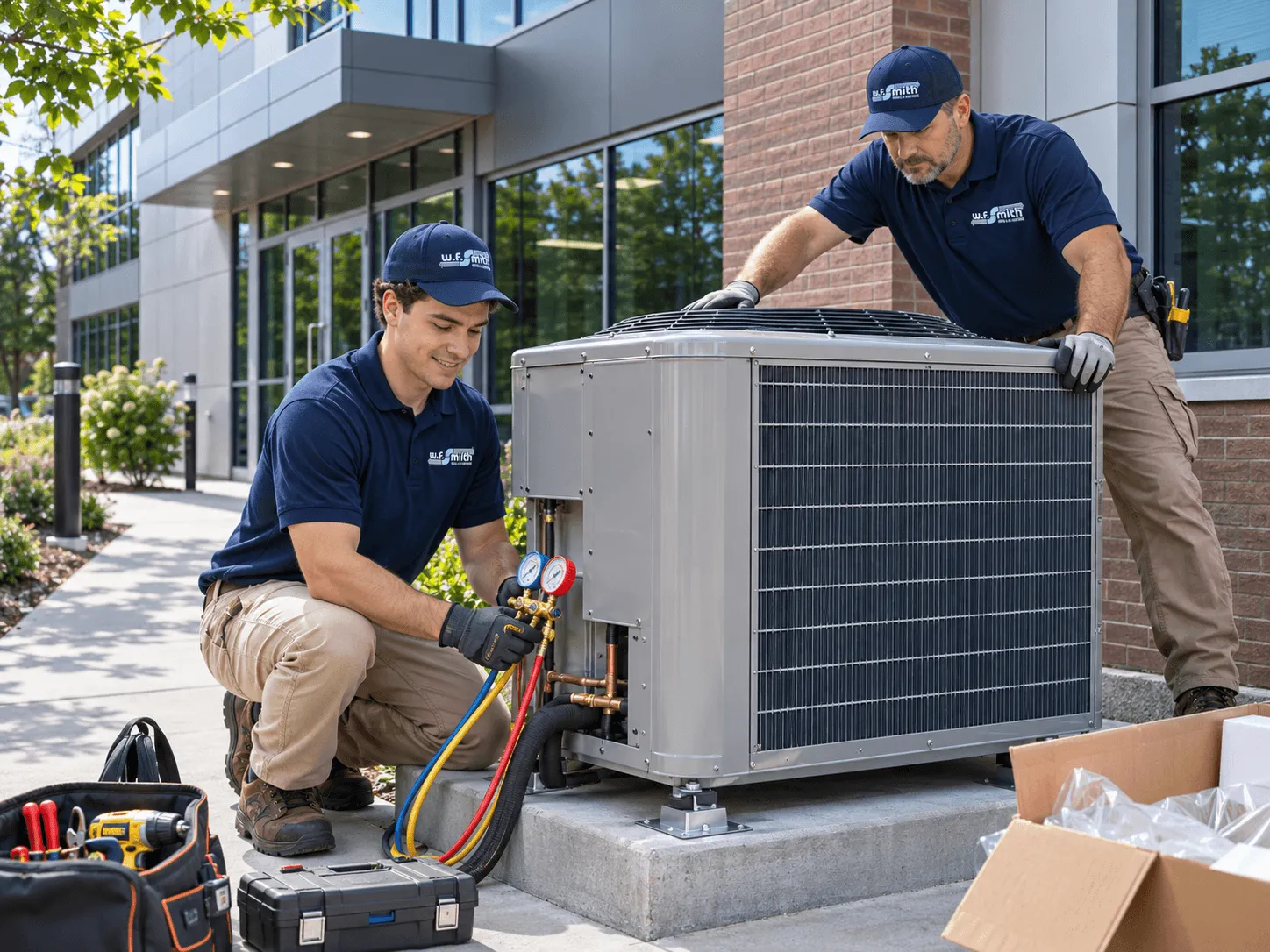
Two W.F. Smith HVAC technicians installing a new commercial air conditioning unit outside a modern office building.
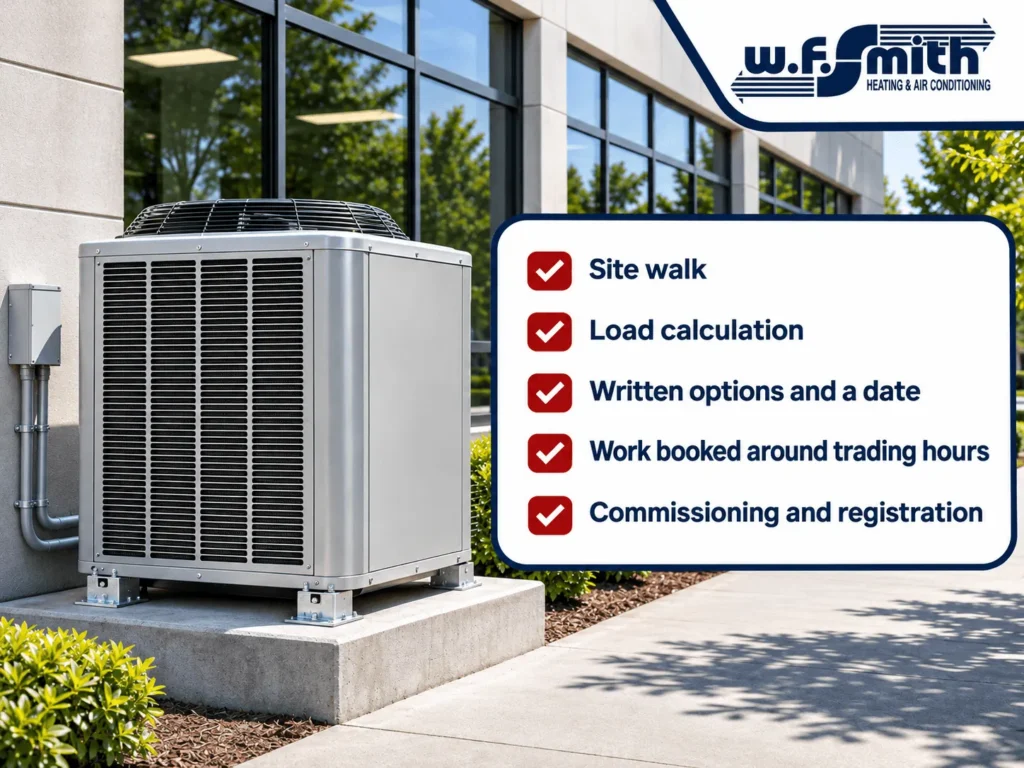
New commercial air conditioning unit outside a modern office building with a five-step installation checklist featuring red checkmarks.

How We Schedule Work Around Your Business Hours

  • Site walk. We read nameplates, check curb condition, and confirm roof access.
  • Load calculation. Measured heat gain sets the size, not the old tonnage.
  • Written options and a date. The estimate carries the equipment, the price, and the working window.
  • Work booked around trading hours. Evenings, early mornings, and weekends are available at overtime rates.
  • Commissioning and registration. We verify charge and airflow, then register the equipment for full manufacturer warranty.

What Commercial AC Work Costs

Commercial diagnostic visits are quoted per site. The fee runs higher than our residential visit, since roof access takes longer.

Replacement estimates are free. We quote after seeing the unit, not over the phone.
  • The part. A capacitor or contactor sits at the lower end of cost, a compressor or coil at the higher end.
  • Refrigerant type. Older refrigerants have grown more expensive as supply has wound down, which affects the cost of a recharge.
  • Roof access. Crane time, hatch size, and loading limits can add labor to the same job.
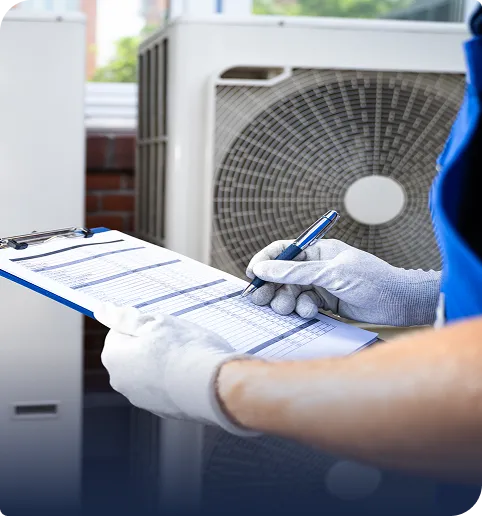
HVAC technician completing an air conditioning inspection checklist beside an outdoor AC unit to assess commercial cooling service needs.

Why Businesses Choose W.F. Smith for Commercial AC

Load calculations on every install.

Not a rule of thumb, not the old nameplate tonnage.

Diagnosis before quoting.

The fault gets named and priced in writing before anything is opened.

Work booked around trading hours.

Changeouts are scheduled so the space keeps operating.

A family business since 1946.

Our five owners share more than 140 years in the trade.

Commercial AC Questions From Philadelphia Property Managers

Why is my rooftop unit running but not cooling the space?

A few faults cause most of these calls: low refrigerant, a fouled condenser coil, a failing compressor, or blocked airflow from a loaded filter bank. Multi-stage units add another possibility, where one stage quits and the space never fully recovers after lunch. A technician separates these with pressure, temperature, and amp readings, often within the first hour on the roof.
Ice usually means the evaporator coil has dropped below freezing, which happens when airflow is restricted or the refrigerant charge is low. Shut the unit down and leave the fan running, which lets the ice melt without the compressor running. Call once it thaws, since running a frozen unit can push liquid refrigerant back to the compressor and damage it.
A space that cools early and loses ground by noon has often lost capacity rather than airflow. Solar gain on a Philadelphia flat roof peaks through the afternoon, and a unit down one stage or short on charge can struggle to keep pace. A technician checks staging, charge, and condenser condition before quoting, since adding tonnage rarely fixes it.
Commercial equipment is built for longer run hours, higher static pressure, and roof exposure residential units never see. Most of it is three-phase and staged, with heating packaged in the same cabinet on a curb. It also carries economizers, outside air dampers, and building controls that add failure points a house doesn’t have.
A technician diagnoses the fault, quotes the repair in writing, and waits for your approval before opening anything up. The visit itself is quoted per site before dispatch, since unit counts, roof access, and parking affect the time involved. Declining stays a genuine option, and parts we supply on service work carry a one-year warranty.
Often, yes. Most changeouts can be scheduled around your hours rather than through them. A straight rooftop changeout on an existing curb commonly takes about a day, and crane work can often be booked outside trading hours at overtime rates. That working window goes into your written estimate before the work is booked.
It depends on the failed part and the condition of the rest of the unit. A capacitor, contactor, or fan motor is often worth replacing at almost any age, since the cabinet is untouched. A compressor or coil failure on older equipment is a different conversation, since rooftop units commonly run 15 to 20 years and the next failure can follow close behind.
Booking cooling service in spring, before the first stretch of hot weather, helps catch issues early. A technician cleans the condenser coil, checks charge and airflow, tests capacitors and contactors, and clears the condensate drain. Filter changes matter on rooftop equipment since a starved blower can freeze a coil.

Commercial Cooling Problems We See Most

Get the Building Cooling Again