
Geothermal Heat Pumps for Philadelphia Homes

Heating and cooling that trades heat with the ground. W.F. Smith, family-owned since 1946.
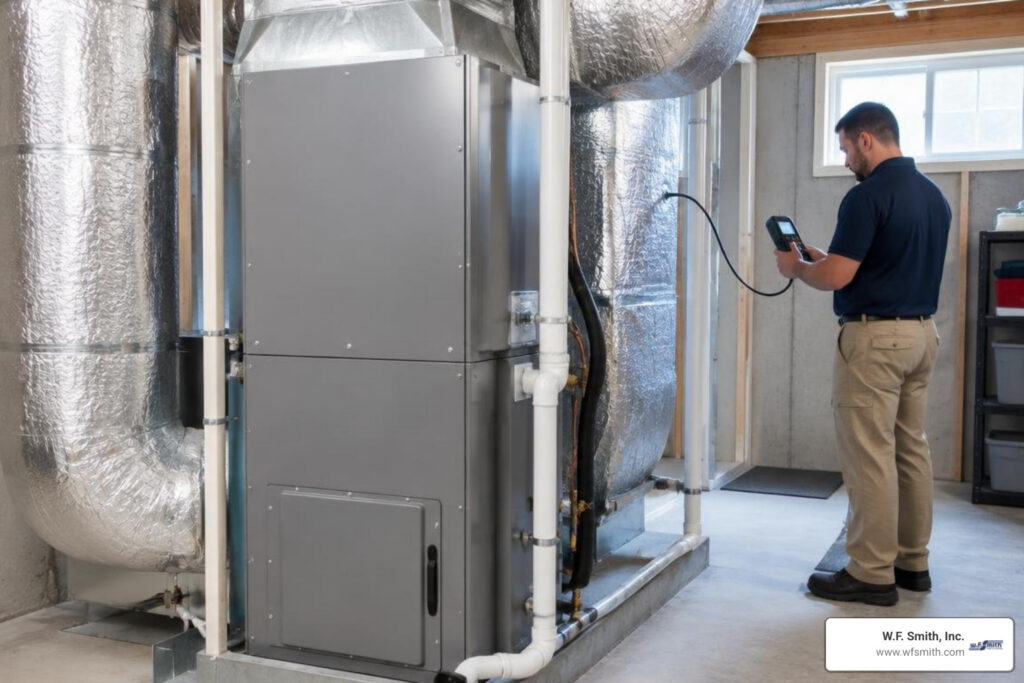
Geothermal heat pump air handler with insulated supply and return ductwork during an airflow assessment

Heating and Cooling From the Ground

W.F. Smith installs and services geothermal heat pump systems for homes across Philadelphia, Bucks County, and Montgomery County. A geothermal system trades heat with the ground instead of the outdoor air, which is why its output stays steady between a mild fall day and a cold winter one.

We install ClimateMaster geothermal and water source equipment. Whether a property is a good fit is a site question, and we answer it honestly before quoting anything.

Is Geothermal Worth Considering for Your Property?

  • Open land around your home. A loop field needs yard space, a driveway area, or acreage.
  • Long-term ownership plans. Geothermal equipment costs more upfront, with lower running costs over time.
  • Higher-cost heating fuel today. If you currently use electric resistance, propane, or oil, geothermal can offer meaningful savings.
  • Ductwork already in good condition. Geothermal uses conventional ductwork, so sound existing ducts reduce the project scope.
  • Interest in low-emission heating. A geothermal system burns no fuel on site.
Homeowner reviewing and signing HVAC project paperwork with a W.F. Smith technician during an in-home consultation.
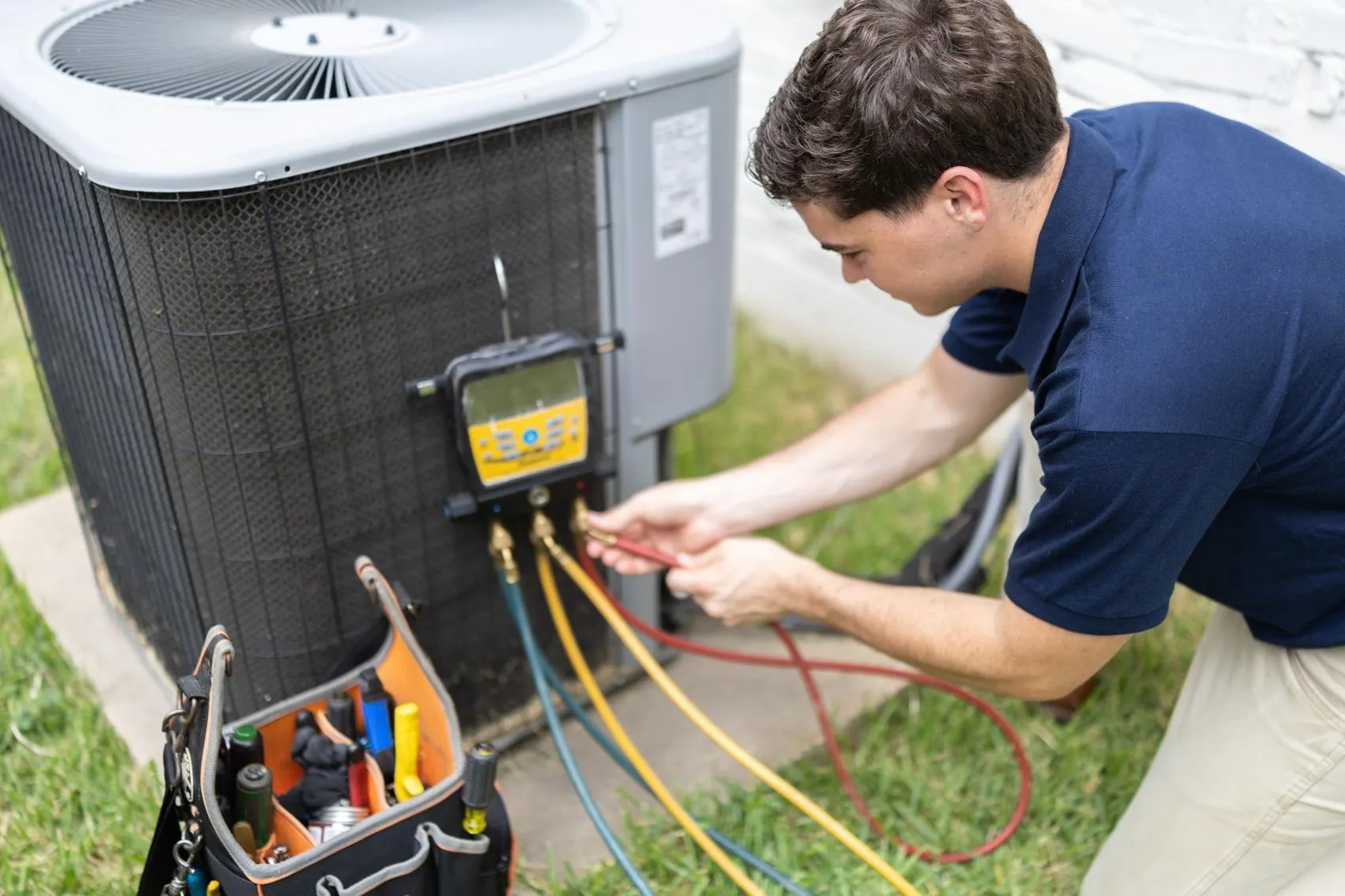
A technician wearing white shirt is repairing a white heat pump system with various tools next to a beige wall.

How a Geothermal Heat Pump Works

A few feet below the surface, ground temperature stays fairly steady all year. It is warmer than winter air and cooler than summer air. Buried pipe, called a loop field, circulates fluid through the ground. In winter, the system pulls heat from the earth. In summer, it moves house heat back into the ground.

The indoor unit is a heat pump connected to conventional ductwork, with no outdoor condenser unit like a traditional air conditioner.

Loop Field Options

The loop field design depends on your property. Three arrangements cover most homes.

  • Horizontal loops. Pipe laid in trenches across open ground, suited to yards with room to spare.
  • Vertical loops. Pipe set into bores, trading width for depth, suited to smaller lots.
  • Water source options. A property with a suitable well or pond may be able to use an open loop system instead.

Soil type, rock, water table, and equipment access all factor into which arrangement works for your property, and we confirm this during a site visit.

What a Geothermal Site Assessment Covers

  • Available ground. We measure usable yard space, setbacks, and equipment access.
  • Utilities and obstructions. Buried lines, septic systems, wells, and old fuel tanks can limit where a loop can go.
  • The load. A room-by-room load calculation sizes the equipment, which in turn sizes the loop.
  • Ductwork condition. Undersized or leaking ductwork limits what any system can deliver.

How a Geothermal Project Works

Free in-home visit

We assess the property and ductwork, and tell you plainly if the site is not a good fit.

Load calculation

Heat loss and heat gain calculations set the required capacity.

Loop design

The loop type, length, and layout are planned around your load and ground conditions.

Written proposal

You see the equipment, loop design, and project schedule in writing.

Installation and commissioning

The indoor unit connects to the completed loop, and we verify flow before registering the equipment.

Geothermal Questions From Philadelphia-Area Homeowners

How does a geothermal heat pump heat a house?

It moves heat from the ground into your home instead of burning fuel to create heat. Fluid circulating through buried pipe picks up warmth from the earth and carries it to an indoor heat pump. In summer, the system reverses to move house heat back into the ground.
It depends on your lot, and this is the first thing we check during a site visit. Horizontal loops need open yard space for trenching, while vertical loops trade width for depth. Many suburban properties in Bucks and Montgomery Counties can accommodate one arrangement or the other.
Neither is better in every situation. Geothermal trades heat with ground that stays relatively steady in temperature, so its output changes less between seasons. An air-source heat pump typically costs less to install and needs no loop field.
Often, yes. Geothermal uses conventional supply and return ductwork, similar to a furnace or central air system. We check your existing ductwork’s condition and airflow capacity during the site assessment.
Geothermal equipment needs less maintenance than systems exposed to outdoor weather, but still benefits from annual service. A technician checks loop pressure and flow, circulating pumps, refrigerant charge, and electrical connections.
Longer than a typical furnace or air conditioner changeout, since the loop field goes in before the indoor equipment. Timing depends on the loop layout, soil conditions, and weather. We provide a full schedule in your written proposal.
We service ClimateMaster equipment, which is what we install most often. Ask our office about your specific system when you call, and we can confirm whether we are a good fit to service it.

Is Your Property a Good Fit for Geothermal?

Find Out If Geothermal Suits Your Property