


Paying for a New Heating or Cooling System

W.F. Smith, family-owned since 1946, registered PA003700.

Financing and Rebates on a New System

W.F. Smith installs heating and cooling systems across Philadelphia and out into Bucks and Montgomery Counties. Financing is available for qualifying work, and an estimate on a replacement system costs nothing, so the figure you’re deciding on is a measured one rather than a guess off a website.

Rebates can apply to a replacement too, through manufacturer programs and through the Electrical Association of Philadelphia’s spring and fall program. We check what’s currently live when we quote your project.

What Financing Is Usually For

Financing generally applies to a replacement rather than to a repair. A repair is quoted after diagnosis and is usually the smaller number, and most homeowners settle it directly. A whole system is a planned project with a real price attached, and that’s where spreading the cost becomes the question.

The order matters. Get the estimate first, then work out how to pay for it. Deciding on a monthly figure before anyone has measured the house is how people end up with equipment that doesn’t fit the building.

Start With the Free Estimate

What Moves the Price of a Replacement

Three things account for most of the spread between one quote and another. None is visible from the street.

  • The equipment and its efficiency level. Higher efficiency costs more up front and less to run, and the gap between the options is usually the largest single variable.
  • The condition of the ductwork. Leaking or undersized duct undermines new equipment, so putting it right is part of the job rather than an upsell.
  • Access and electrical. Roof placement, tight alleys, third-floor air handlers, and a panel that needs attention all add labor.

How This Crew Runs a Job

The same steps apply whether the call is a repair, a seasonal tune-up, or a full system replacement. You approve the price before any work starts.
  • Book the visit. Our office tells you the visit fee before anyone is sent out, so the first number you hear is one you agreed to.
  • Find the fault. A technician checks pressure, temperature, electrical readings, and airflow on the running system, rather than swapping parts until the problem happens to stop.
  • Price it in writing. On a replacement, that means measuring the home and giving you two or three written options at different costs and efficiency levels.
  • Decide. You approve or you decline, and the written quote is yours to keep either way.
  • Finish and register. We check the charge and airflow, then register the equipment so the manufacturer warranty starts from day one.
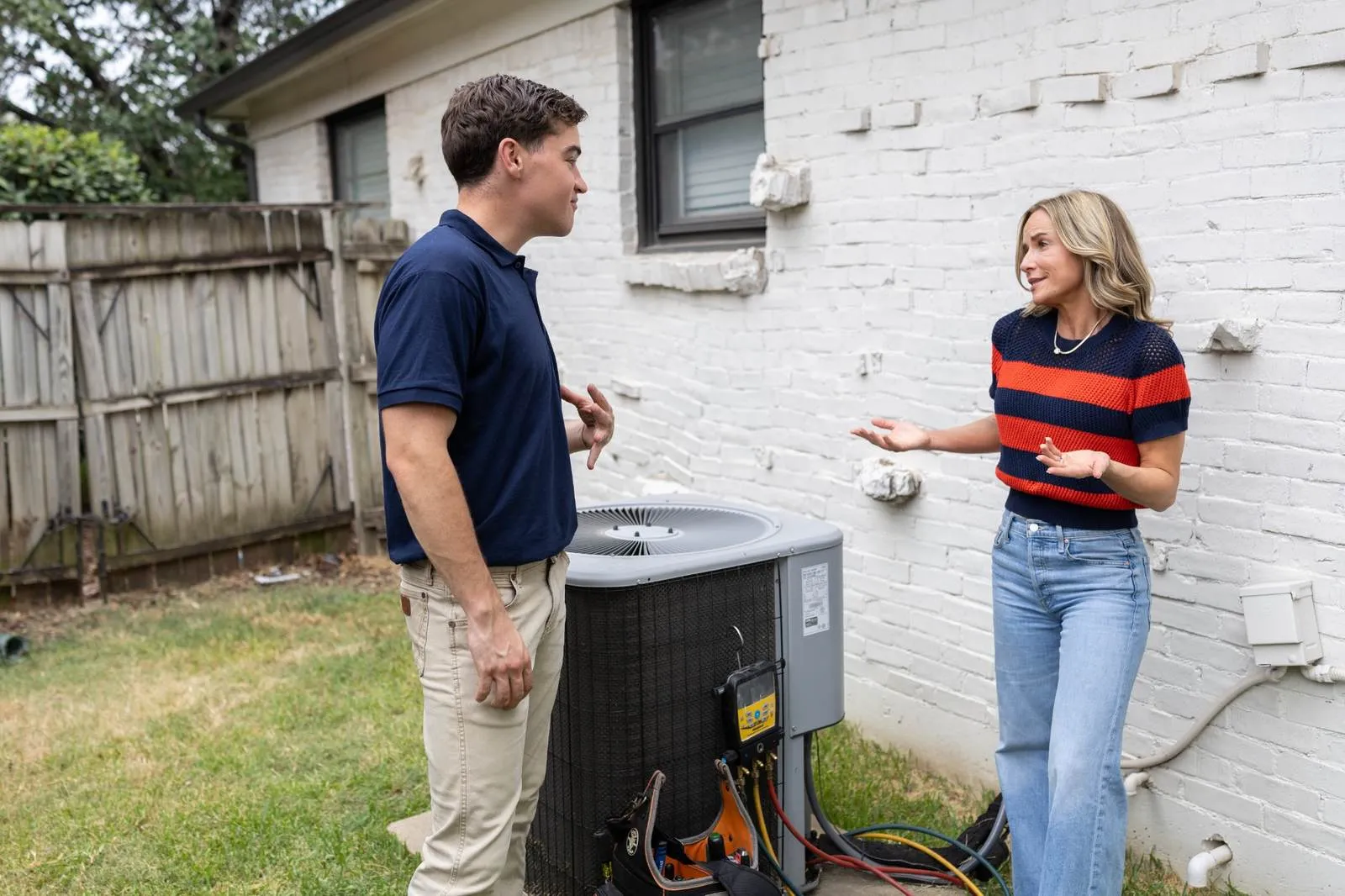
HVAC technician completing an air conditioning maintenance checklist beside an outdoor residential AC unit.

Rebates That Can Apply

Two rebate routes matter most on a replacement here. Manufacturers run their own programs on qualifying equipment, and the Electrical Association of Philadelphia runs a spring and fall rebate program. Both change often, so we confirm what’s genuinely live while the estimate is being put together, then tell you which of it your chosen equipment qualifies for.

Pricing That Holds Steady

Rates hold steady through the year. They don’t climb during a heat wave, and they aren’t cut in October to fill a schedule, so there’s no advantage in gambling on the calendar.

What Comes With the System

Warranty coverage is part of what the money buys. Parts on service work carry a one-year warranty. Every system we install is registered so the manufacturer coverage runs from the first day. Most Lennox systems are auto-registered for a three-year labor warranty, and Mitsubishi Electric equipment typically carries a one-year labor extension. Labor terms vary by manufacturer and by program, so we go through exactly what your system carries before anything is signed.

Financing Questions We Get Asked

Do you offer financing on a new system?

Financing is available for qualifying work, generally a replacement project rather than a single repair. The terms and what a given household is approved for depend on an application, so call the office during business hours and ask what’s currently available.
Offers change, and a payment figure that doesn’t apply to you is worse than no figure at all. The office will tell you what’s live today.
Financing is generally used for replacement projects rather than repairs. A repair is diagnosed first and quoted in writing, and it’s usually the smaller of the two numbers. If a repair is large enough that settling it in one go is difficult, raise it with the office when the quote lands.
Nothing. Estimates on replacement systems are free, and that includes a real measurement of the house and two or three written options at different cost and efficiency levels. A separate diagnostic visit applies only when a technician is called out to find a fault on a system you want repaired, and our office tells you that fee before coming out.
Two routes apply most often. Manufacturers run rebate programs on qualifying equipment, and the Electrical Association of Philadelphia runs a spring and fall rebate program. Amounts and deadlines change from one season to the next, so we confirm what’s actually live while the estimate is being prepared, then tell you what your chosen equipment qualifies for.
Not on price. Rates hold steady here through the year. What does change is availability and rebate timing. Booking outside the first hot week of summer or the first cold week of winter usually means a shorter wait and a wider choice of installation dates.
Parts on service work carry a one-year warranty. Installed equipment is registered so the manufacturer coverage runs from the start, and most Lennox systems are auto-registered for a three-year labor warranty. Mitsubishi Electric equipment typically carries a one-year labor extension. Labor terms vary by manufacturer and by program, so we go through exactly what your system carries before anything is signed.
Call and book a free estimate on a replacement system. A technician measures the house and puts written options in front of you. Once a real price is on paper, ask the office about financing and about which rebates the equipment qualifies for. Working in that order keeps the payment question attached to an actual number.

Start With the Real Project Price

Talk About the Numbers Before You Commit