
Heating Repair in Philadelphia and Nearby Suburbs

When the house is cold and the cause is not obvious, W.F. Smith starts with the system, the symptom, and the heating cycle itself.
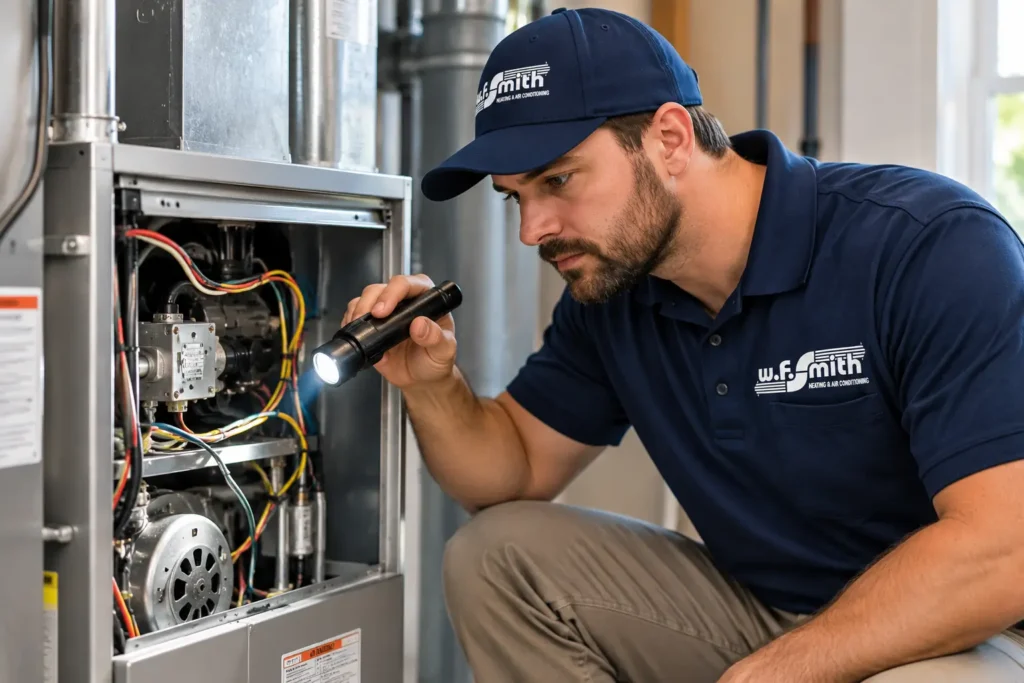
HVAC technician inspecting the internal components of a residential gas furnace with a flashlight while diagnosing a heating problem.

A No-Heat Problem Can Start in More Than One Place

A thermostat can be calling for heat while the furnace never ignites. A heat pump can be running while the air from the vents feels cooler than expected. A ductless unit can power on and still leave one room uncomfortable. Those situations feel similar from inside the house, but the equipment and the diagnosis are different.

W.F. Smith repairs gas furnaces, heat pumps, dual-fuel systems, and ductless heating across Philadelphia and nearby Bucks and Montgomery County communities. The repair visit is meant to find where the heating process stops working correctly, explain what that means, and provide the repair price before work begins.

W.F. Smith does not service boilers, radiators, oil systems, steam heat, or water heaters.

Heating Problems Homeowners Notice First

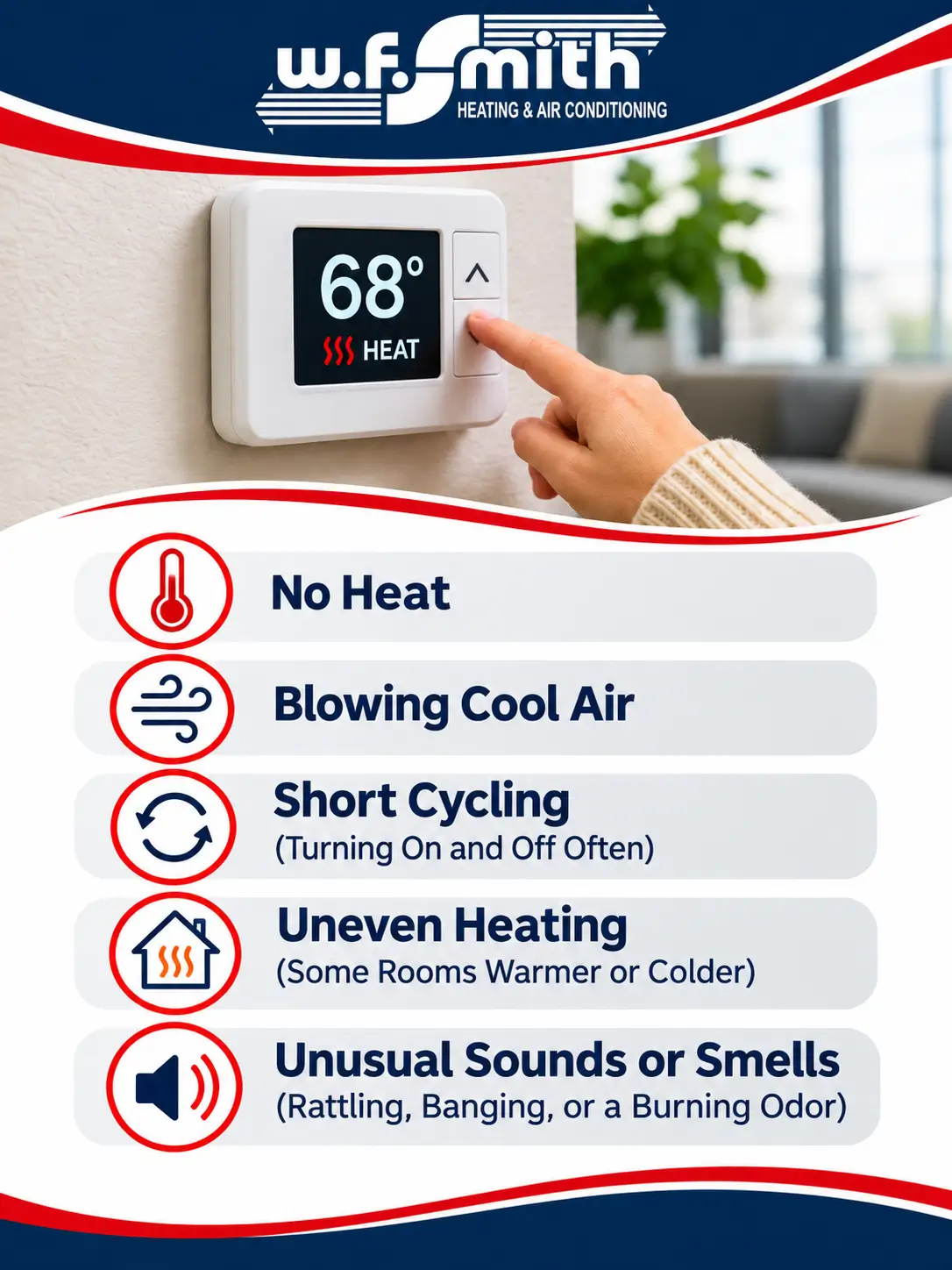
  • The heat never starts. The thermostat may be calling, but power, controls, ignition, a safety switch, or another part of the startup sequence may be stopping the system.
  • Air is moving, but the house stays cold. The system may not be producing enough heat, airflow may be restricted, or the heat may be getting lost through ductwork.
  • The system starts and stops repeatedly. Short cycling can come from controls, airflow, ignition, refrigerant, sizing, or a safety limit.
  • One floor is comfortable and another is not. Distribution problems can matter as much as the heating equipment itself, especially in rowhomes and multi-story houses.
  • New sounds, smells, or breaker trips appear. A change in how the equipment starts or runs can point to an electrical, mechanical, airflow, or combustion-related problem.
W.F. Smith heating repair infographic showing a home thermostat and five common heating problems: no heat, cool air, short cycling, uneven heating, and unusual sounds or smells.

The Type of Heating System Changes the Diagnosis

Knowing your system helps us send the right technician. If you are not sure, call and describe the equipment.

Gas Furnace Problems

A gas furnace has to move through ignition, flame proving, heat transfer, and blower operation before warm air reaches the rooms. A failure anywhere in that sequence can produce the same complaint – no heat. Furnace-specific problems are covered in more depth on the Furnace Repair page.

Heat Pump Problems

A heat pump behaves differently because it moves heat rather than creating it through combustion. Defrost operation, refrigerant conditions, the outdoor unit, controls, airflow, and supplemental heat can all change what the homeowner feels at the vents. A system that seems to be blowing cool air is not automatically failing, but persistent comfort problems deserve diagnosis.

Ductless Heating Problems

Ductless systems make it possible for one room or zone to have a problem while the rest of the home remains comfortable. Error lights, drainage, filters, indoor-unit airflow, controls, or the outdoor system can all affect a single zone. The error pattern and the way the unit behaves give the technician useful clues before testing begins.

Dual-Fuel Problems

A dual-fuel system depends on two pieces of heating equipment and the controls that decide when each one should operate. A comfort problem may come from the heat pump, the furnace, or the changeover between them. Looking at the system as one connected setup matters more than testing either piece in isolation.
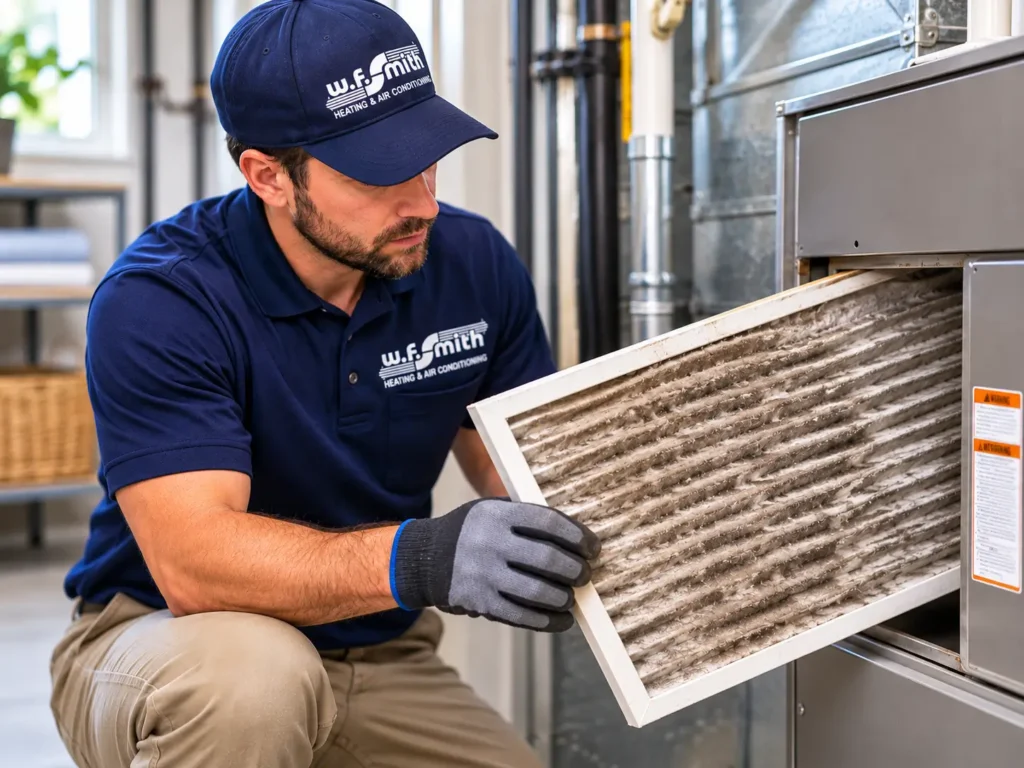
W.F. Smith HVAC technician removing a heavily clogged air filter from a residential heating system while inspecting a potential cause of poor airflow.

Small Checks Can Rule Out Simple Causes

Before a technician arrives, the most useful information is often simple: whether the thermostat is set to Heat, whether the display is working, whether the filter is heavily clogged, and whether a breaker or nearby furnace switch has been turned off. Those details can explain a surprising number of no-heat calls without asking the homeowner to open equipment or work around gas or live electrical components.

If a breaker trips again after one reset, if you smell gas, or if a carbon monoxide alarm sounds, stop using the equipment. Gas or carbon-monoxide concerns should be handled from outside the home through the utility or emergency services before HVAC work is arranged.

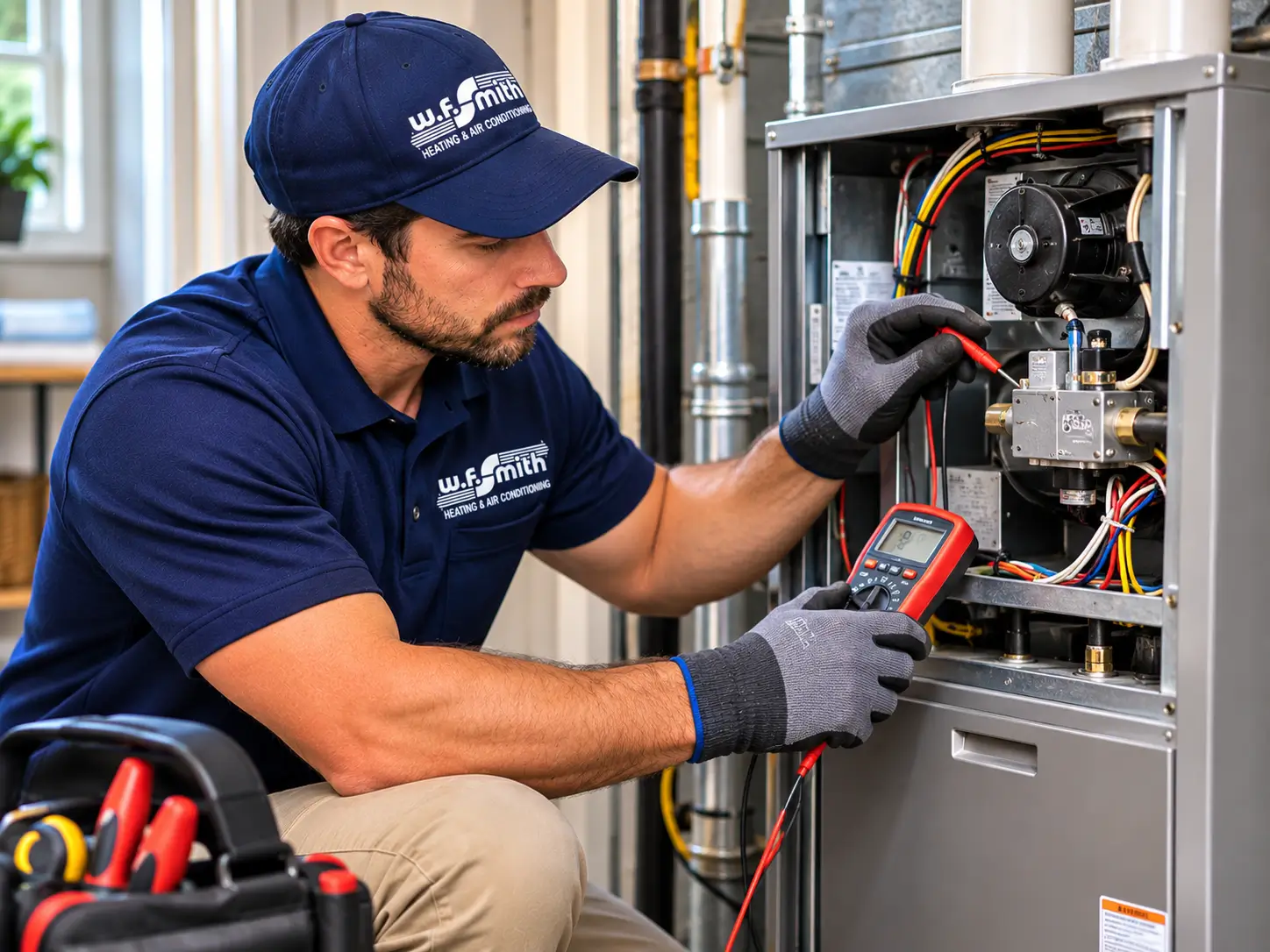
HVAC technician using a digital multimeter to test electrical components inside a residential gas furnace during a heating repair visit.

What the Repair Visit Is Trying to Answer

A good repair visit narrows the problem to a specific part of the heating cycle. The technician may need access to the thermostat, indoor equipment, outdoor equipment for a heat pump, electrical panel, and ductwork around the system. The point is not to replace parts until the system works; it is to identify the failure, explain why it produced the symptom, and price the repair before work begins.

If the repair is substantial, a replacement estimate can be useful because it puts the repair in context. That does not mean an older system automatically needs to be replaced. It means the homeowner can compare the condition of the equipment, the cost of the repair, and what a new system would change before deciding.

When the Heat Goes Out After Hours

W.F. Smith’s office answers Monday through Friday from 8:00 a.m. to 4:00 p.m. Outside those hours, an answering service reaches the technician on call. The technician talks through the situation and the applicable after-hours rate before a visit is dispatched.

A gas smell, a carbon monoxide alarm, repeated breaker trips, electrical burning odors, or a home losing heat during dangerous cold with a vulnerable person inside are more urgent than a minor comfort issue. The Emergency HVAC page explains the after-hours process in more detail.

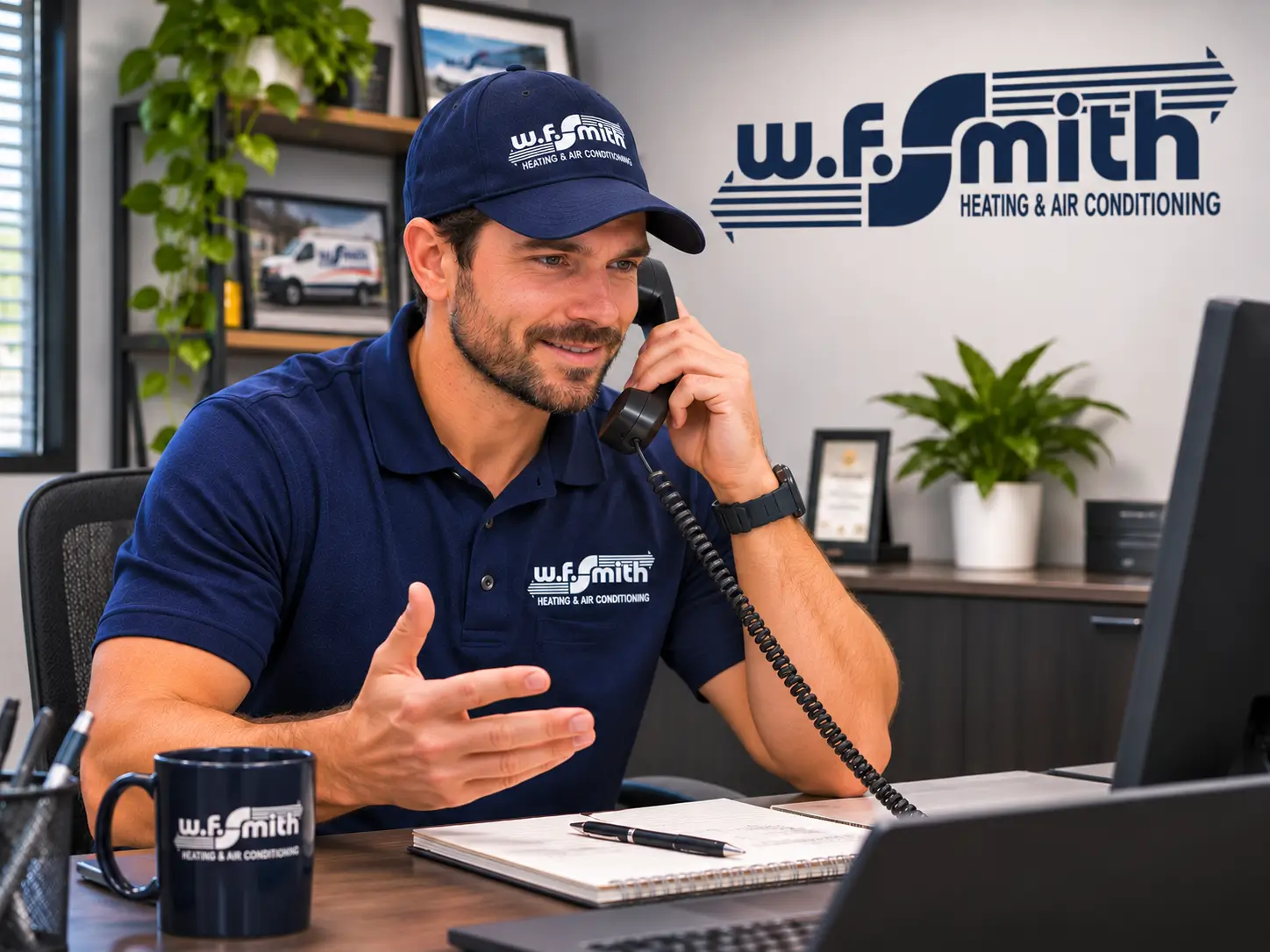
HVAC technician speaking with a homeowner by phone about an after-hours heating problem while seated at a desk in a W.F. Smith-branded office.
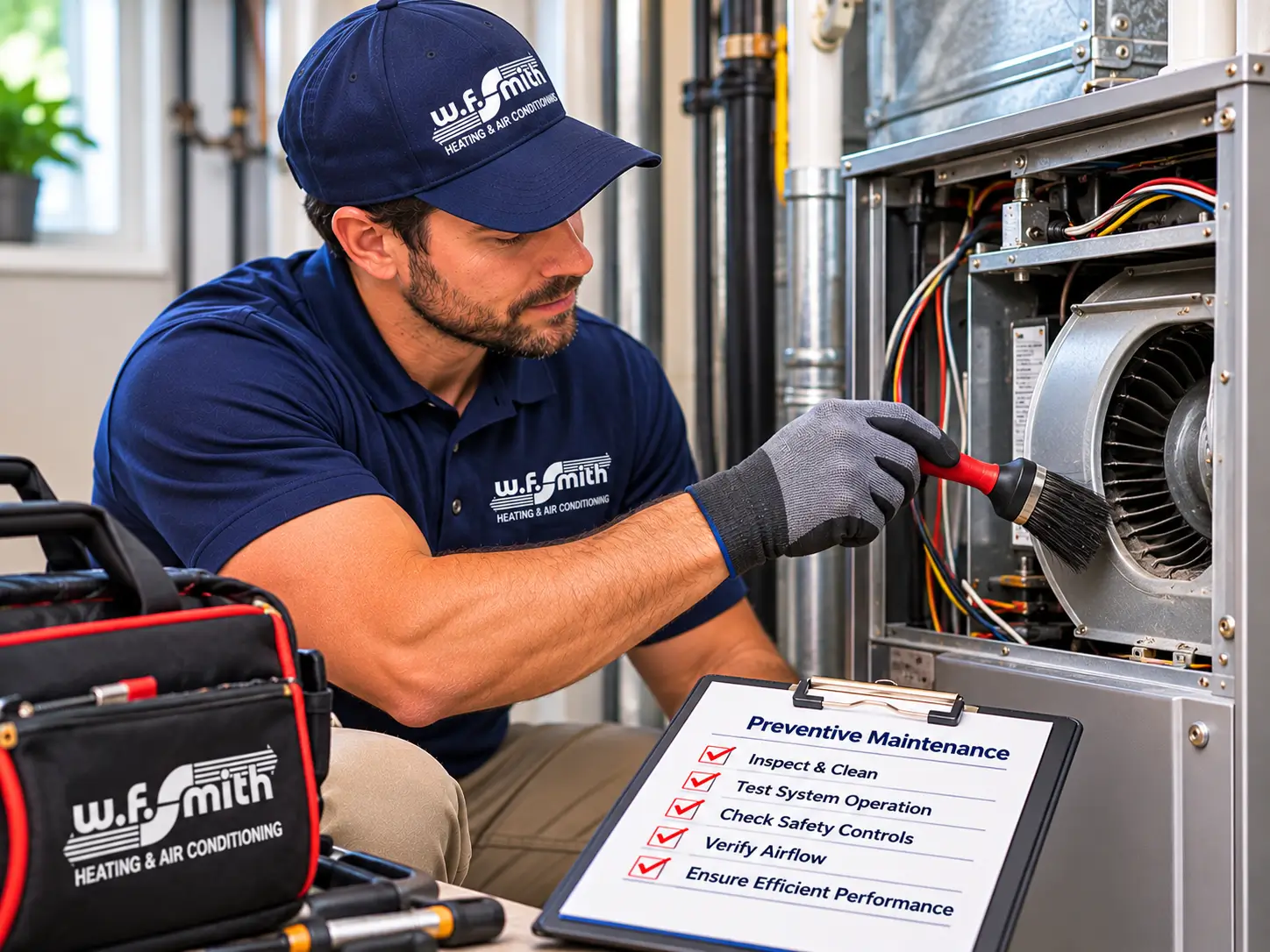
HVAC technician performing preventive maintenance on a residential gas furnace, cleaning the blower assembly and inspecting heating system components.

After the Repair, Preventive Service Has a Different Job

Repair restores a system that has a specific fault. Maintenance is meant for equipment that is operating and gives a technician a chance to look for developing wear before the next long run of cold weather. Furnace owners can use the dedicated Furnace Maintenance page; heat-pump owners have a separate maintenance page for equipment that runs through both heating and cooling seasons.

Heating Repair Questions From Philadelphia Homeowners

Why is my heating system running but the house is still cold?

The equipment may be producing some heat without delivering enough of it to the rooms. Restricted airflow, duct losses, thermostat controls, a weakening furnace, heat-pump performance, or poor distribution can all create that symptom. Diagnosis matters because the same complaint can come from very different causes.
Frequent cycling can come from airflow restrictions, thermostat or control problems, a furnace safety limit, ignition trouble, heat-pump controls, or equipment that is poorly matched to the home. The cycling pattern tells the technician where to start, but it does not identify the failed part by itself.
Heat pumps normally deliver air that can feel cooler than furnace air, and they may briefly change operation during a defrost cycle. If the home stays cold, the outdoor unit remains heavily iced, or the system never recovers, the heat pump needs testing rather than assumptions based on vent temperature alone.
Yes. The thermostat starts the call for heat and can affect timing, temperature, and system communication. But a heater that ignores the thermostat can also have wiring, control-board, power, or equipment problems, so the thermostat should be tested as part of the system rather than replaced on guesswork.
Use Furnace Repair when you know the home has a gas furnace and the problem is furnace-specific, such as ignition failure, a pilot or flame-sensing issue, blower trouble, repeated shutdowns, or combustion-related concerns. Heating Repair remains the broader starting point when the system type or cause is not clear.
Yes. W.F. Smith uses an answering service outside regular office hours to reach the technician on call. The technician discusses the situation and the after-hours rate before a visit is dispatched. This is after-hours emergency service rather than an unrestricted around-the-clock service promise.

Get the Heating Problem Diagnosed