


Central Air Installation in Philadelphia

Custom-designed cooling from W.F. Smith, family-owned since 1946.
W.F. Smith HVAC technician wearing a navy uniform with the company logo explains a new outdoor air conditioning unit to homeowners.

New Air Conditioning, Designed for Your Home

W.F. Smith installs central air conditioning and ductless cooling in homes across Philadelphia and nearby Bucks and Montgomery County communities. Every system starts with a custom design and load calculation so the equipment fits the actual home rather than a rule of thumb.

Installation estimates are free. You receive written options and can compare the cooling approach, equipment, project scope, and any related work before deciding.

New Installation or Replacement?

This page covers adding cooling where the right system does not exist yet. That includes a home with no central air, an addition, a finished third floor, or a renovation that changed how the house heats up. If you already have central air and it is wearing out, start with AC Replacement instead.

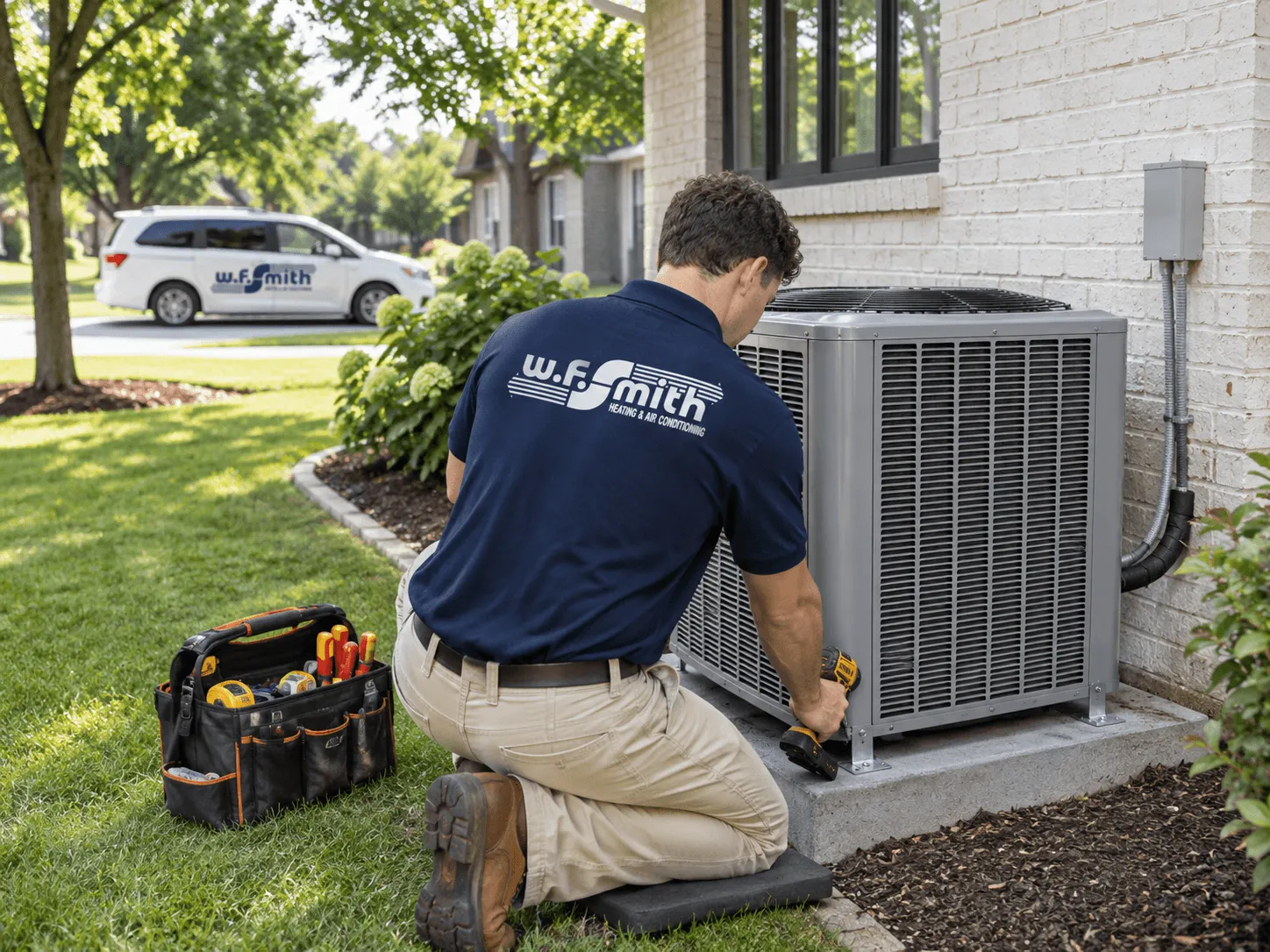
W.F. Smith technician installing a new outdoor air conditioning unit beside a modern home with a branded service van parked on the street.

When AC Installation Makes Sense

  • Your home has no central air and you want whole-house cooling.
  • An addition, finished attic, or converted space was not included in the original cooling design.
  • A renovation, new windows, insulation, or layout changes altered the home’s cooling needs.
  • One area remains uncomfortable and may need a dedicated or zoned solution.

Adding Central Air to a Home Heated by Radiators

Many Philadelphia-area homes were built for radiator heat and have no ductwork at all. You can still add air conditioning. The cooling system runs separately from the boiler, so the way your home is heated does not change.

There are two main routes. Ducted central air uses an indoor air handler, often in the attic or a closet, with ducts run through closets, chases, or the attic to each room. Ductless mini-splits mount an indoor unit in each room or zone and connect to an outdoor unit through a small opening in the wall, with no duct runs at all.

The free estimate compares what is practical in your house, including how much finished space ducts would take and where the outdoor unit can sit. W.F. Smith installs and services the cooling side only. We do not work on boilers, steam, or oil heat.

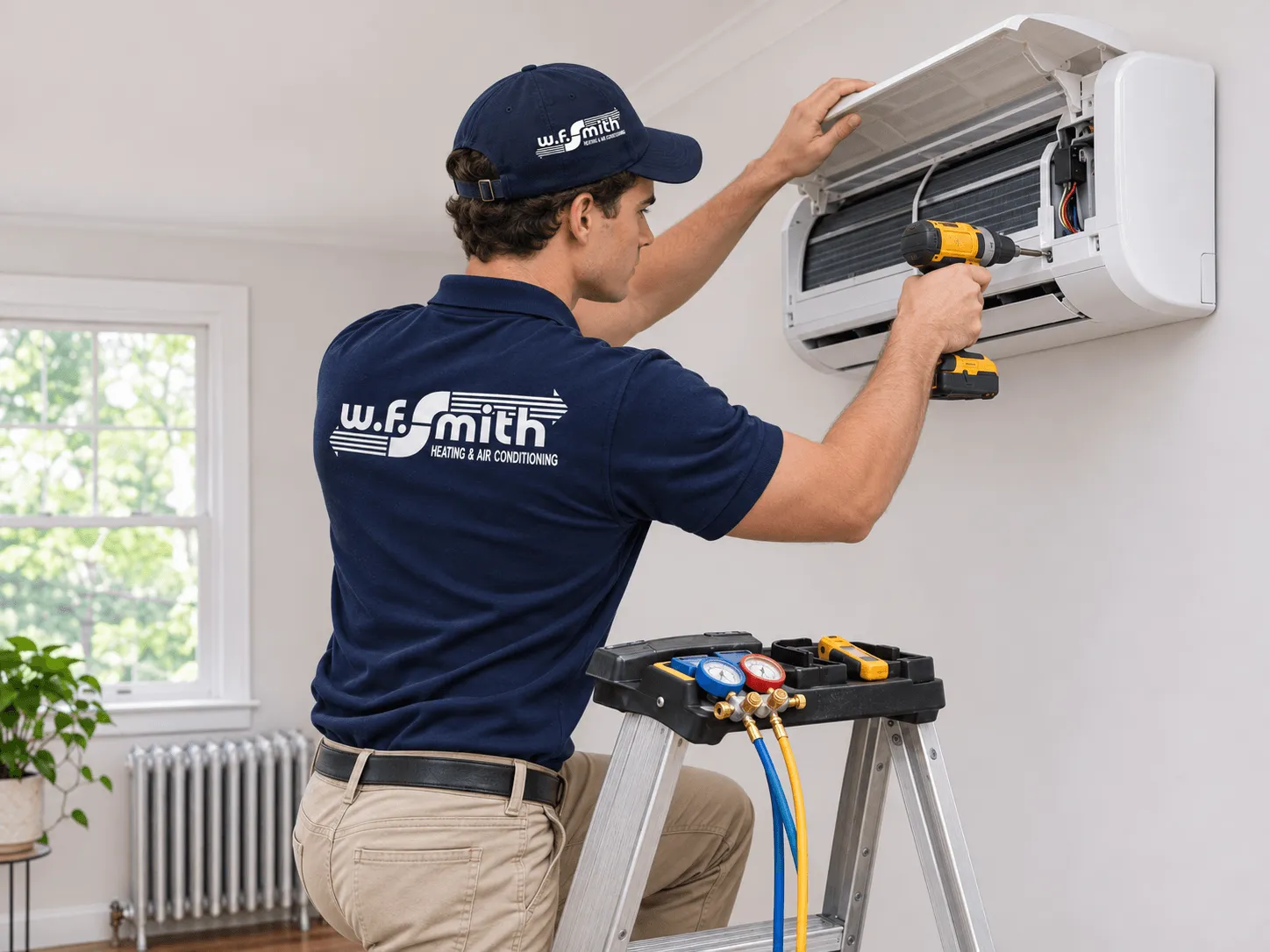
W.F. Smith HVAC technician installing a wall-mounted ductless mini-split air conditioner in a home with existing radiator heating.

“My wife and I live in an old house and were uncertain if we could even get a central air system installed. Dave at WF Smith was fantastic to work with, very responsive, very proactive, and honest. The installation looks great, and it works flawlessly.” – Philadelphia homeowner 

What We Check During Your Free Estimate

Five stages cover it:
  • The load calculation. Room-by-room heat gain from insulation, windows, sun exposure, and ceiling height sets the system size.
  • Ductwork or a path for it. We check existing ducts for leaks and size, or plan where new ducts or ductless lines can run.
  • Electrical supply. The outdoor unit needs its own circuit, so we check the panel for capacity.
  • Drainage. Indoor equipment in an attic or closet needs a safe condensate drain and backup protection.
  • Outdoor placement. We look for a level spot with clearance, away from bedroom windows where possible. Rooftop and tight rear-yard placements are common in Philadelphia.
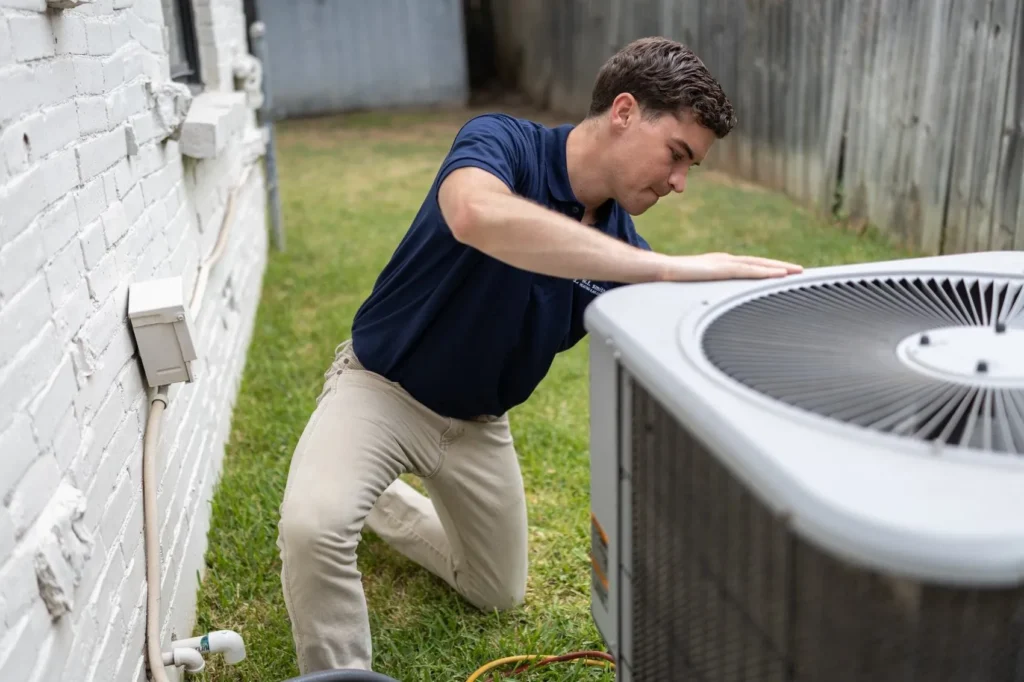
W.F. Smith HVAC technician inspecting an outdoor residential air conditioning unit to assess cooling performance and airflow.

Planning for Comfort, Humidity, and Airflow

Equipment size is only one part of the design. Return-air paths, duct sizes, thermostat location, and how long the system runs each cycle all decide whether every room cools evenly and the air feels dry.

Top floors need extra attention. In a three-story rowhome or a house with a finished attic, heat collects upstairs, so the design may add a second zone or a ductless unit for that level.

What Your Written Proposal Includes

Your written proposal names the recommended equipment, the installation scope, and everything needed to make the system work. Ductwork, electrical upgrades, permits, access work, and any other items outside the base equipment are listed before the project is scheduled. The price you approve covers the full job you were shown. 

W.F. Smith HVAC technician reviewing an air conditioning installation proposal with a homeowner at her kitchen table.

How an AC Installation Project Works

  • Free in-home estimate, including a room-by-room load calculation and a look at duct routes, electrical capacity, and outdoor placement.
  • Written proposal with the recommended system, the design, and the full scope of work.
  • Scheduling once you approve the proposal.
  • Installation of the outdoor unit, the air handler or indoor units, refrigerant lines, a condensate drain, the electrical circuit, and any new ductwork in the scope.
  • Startup and airflow checks, a thermostat walk-through, and registration of the equipment warranty.
Homeowner reviewing and signing HVAC project paperwork with a W.F. Smith technician during an in-home consultation.

What Affects the Cost of Central Air Installation?

  • System type, capacity, efficiency, and single-stage, two-stage, or variable-speed operation.
  • Whether new ductwork is needed, and how hard it is to route through a finished home.
  • Electrical work, including a new circuit or more panel capacity.
  • Access, such as a rooftop condenser, an attic air handler, or a tight crawlspace.
  • The number of zones or indoor units in a ductless design.
Online price ranges rarely fit a real house, because duct routes, roof access, and electrical service vary so much from home to home. The free in-home estimate gives you a written price for yours. Financing is available for new systems.

Why Homeowners Choose W.F. Smith for New Cooling

Designed for your house.

Every system starts with measurements of your home, not a standard size.

Proven equipment.

Most new systems we install are Lennox or Mitsubishi Electric, including ductless systems for homes with no ducts.

A written scope before scheduling.

You see every part of the job and its price before work is booked.

Family-owned since 1946.

Five owners with more than 140 years of combined industry experience.

AC Installation Questions From Philadelphia Homeowners

Can you add air conditioning to a home heated by a boiler?

Yes. Central air and ductless systems run separately from a boiler, so you can add cooling without changing how the house is heated. Ducted central air needs a route for ducts through closets, an attic, or chases. Ductless mini-splits need only a small wall opening for each indoor unit. W.F. Smith installs the cooling side only and does not service boilers, steam, or oil systems.
Yes. A single-zone ductless mini-split cools one space, such as a converted attic, a sunroom, or a top-floor bedroom. It has its own controls, so you cool that room without running a whole-house system. When several rooms need help, a multi-zone system connects more than one indoor unit to a single outdoor unit.
Not always. A new air conditioner needs its own circuit and enough spare capacity in the panel. Many homes already have room. Older homes with smaller electrical service sometimes need an upgrade first. We check the panel during the free estimate, so any electrical work appears in the proposal before you approve the project.
Ductwork decides most of the schedule. A ductless system, or central air connected to ducts that already exist, takes far less time than a system that needs new duct runs through finished rooms. Your proposal includes the expected schedule for your project, so you can plan around it before work begins.
Coverage depends on the brand, the model, and whether the equipment is registered after installation. Some manufacturers offer longer parts coverage only on registered equipment. Your final proposal states the coverage for the system you choose, and we complete the registration steps at startup so that coverage is in place.
Start with our AC Replacement page. A replacement project looks at whether the current system is still worth repairing, removes the old equipment, recovers its refrigerant, and matches the new outdoor unit to a compatible indoor coil. The estimate is free in either case, and it shows you the full scope before you decide.

Plan Your New Air Conditioning