

Planned Commercial HVAC Service in Philadelphia

Maintaining Philadelphia rooftops since 1946. W.F. Smith, family-owned.

Scheduled Commercial HVAC Service

W.F. Smith provides scheduled commercial HVAC maintenance across Philadelphia and the nearby Bucks and Montgomery County suburbs. We maintain rooftop and packaged units, commercial split systems, air handlers, make-up air units, and VRV and VRF systems.

Planned service is about the record as much as the tune-up. The history can tell a building owner which units are struggling, which are due, and what to budget.

Scheduling and agreement terms are set per building. We do not service boilers, water heaters, oil systems, steam systems, or chillers.

Signs Your Building Is Overdue for Service

Deferred maintenance tends to announce itself before it turns into an outage. These patterns often mean a roof hasn’t been touched in a while.

  • Tenant complaints cluster in the same spaces every season. Can point to balance, damper, or control drift rather than capacity.
  • Energy use creeps up with no change in occupancy. Fouled coils, slipping belts, and loaded filters can cost money long before they fail.
  • Nobody can say when filters were last changed. A sign maintenance has lapsed.
  • Belt dust on the curb or a new vibration at startup. Blower assemblies carry more running hours than most other roof equipment.
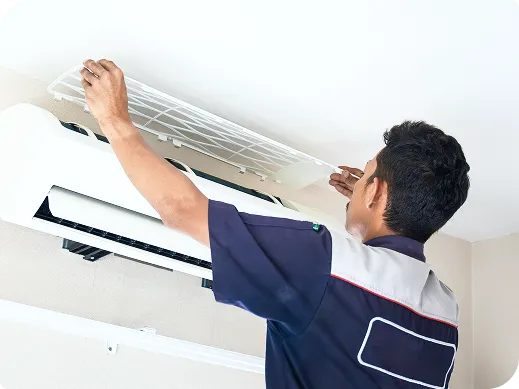
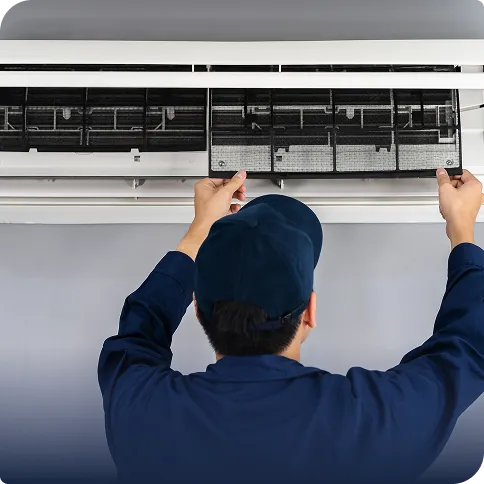
W.F. Smith HVAC technician inspecting the air filters inside a wall-mounted air conditioning unit during routine maintenance.

What a Commercial Maintenance Visit Covers

Every reading gets recorded, and anything found gets written up.

  • Cooling side. Coil cleaning, refrigerant charge, amp draws, capacitors, contactors, and the condensate drain.
  • Heating side. Burner and ignition, gas pressure, temperature rise, heat exchanger condition, and the safeties.
  • Air side. Filter bank service, belt and bearing checks, and economizer and damper operation.
  • Cabinet and curb. Panel seals, curb condition, drain pans, and float switches.

Why Deferred Maintenance Costs More in a Commercial Building

A skipped visit costs a house a repair. It can cost a commercial building the repair, the trading hours around it, and a complaint to ownership.

  • Failures arrive at the worst time. Equipment often quits under load, on a hot afternoon rather than a quiet Tuesday.
  • After-hours rates can apply. An outage that cannot wait for a weekday bills at overtime, and Sundays and holidays bill higher again.
  • Small faults become big ones. A slipping belt can take a bearing; a fouled coil can take a compressor.

Seasonal Scheduling Through the Year

Both sides of a rooftop cabinet need a season of their own, and scheduling often works backward from the weather.

  • Spring. Cooling service before the first hot stretch.
  • Summer. Filter changes and condensate checks, since drains tend to block fastest in humid weather.
  • Fall. Heating service before the first cold week, including combustion and safeties.
  • Winter. Filter changes and a look at economizer operation, which can drift in the cold.

How a Scheduled Visit Runs

  • Access and check-in. We confirm roof access, tenant notice, and which units are listed.
  • Inspection and readings. Each unit is measured rather than glanced at, and recorded.
  • Cleaning and adjustment. Coils, filters, drains, belts, and dampers get serviced the same visit.
  • Findings and quotes. Anything needing repair is written up, with a photograph where it helps.
  • Written report. The record covers every unit, whether or not anything needed doing.

What Commercial Maintenance Costs

Maintenance is quoted per site rather than as a flat rate. A storefront unit and a nine-unit roof are not the same visit.

  • Unit count and type. A roof with several units takes longer than one, and VRF can take longer than packaged equipment.
  • Access. Hatch access, crane needs, and loading limits can add time before work starts.
  • Filter specification. Bank size, filter grade, and how fast the space loads them affect material cost.

Rates hold steady through the season.

Why Building Owners Choose W.F. Smith for Maintenance

Readings, not glances.

Every unit gets measured, and the numbers go into the report.

A written record per unit.

You get it whether or not anything needed doing.

Findings quoted before work.

Nothing gets repaired on a maintenance visit without your approval.

A family business since 1946.

Our five owners share more than 140 years in the trade.

Commercial Maintenance Questions From Philadelphia Property Managers

What does a commercial HVAC maintenance visit include?

A scheduled visit is a working inspection rather than a wipe-down. On the cooling side that means coil cleaning, refrigerant charge, amp draws, capacitors and contactors, the condensate drain, and staging. On the heating side it means burner and ignition operation, gas pressure, temperature rise, heat exchanger condition, and the safeties. Filters, belts, bearings, and dampers get serviced on the same visit.
Look for repeat complaints in the same spaces, rising energy use with no change in occupancy, and nobody able to say when filters were last changed. Belt dust on the curb and rust streaks around a condensate pan are other common signs. Philadelphia rooftops sit exposed all year, so equipment up there can drift faster than equipment in a basement.
The effect can show up on the energy bill before it shows up as a breakdown. A fouled condenser coil, a slipping belt, or a loaded filter bank can all force equipment to run longer for the same result. Cleaning and adjusting those is most of what a visit does, and catching a small fault early can stop it from taking a bearing or a compressor.
Deferred maintenance can turn a part into an outage, and an outage often costs more than the repair behind it. Tenants stop trading, complaints escalate to ownership, and after-hours rates can apply because a failure rarely waits for a weekday. Sundays and holidays bill higher again.
A common guideline is service before cooling season and again before heating season, which in Philadelphia often means spring and early fall. Rooftop equipment carries heating and cooling in one cabinet, so both sides benefit from checking while the roof is still workable. The right interval for a given building depends on run hours, filter loading, and what the space produces.
You get a written report on every unit, whether or not anything needed doing. It records what was measured, what was cleaned or adjusted, what was found, and what is likely to need attention next. Anything needing repair is written up and quoted before work starts.
Documented maintenance is commonly a condition of manufacturer warranty coverage, so a service record can help protect the equipment warranty. Skipping it can give a manufacturer grounds to decline a claim on a compressor or a coil. We register equipment at install, and parts we supply on service work carry a one-year warranty.
Often more than residential filters, since rooftop units move more air and draw more of it from outside. A quarterly change suits many offices, while kitchens, gyms, and workshops can load filters much faster than that. Loaded filters can trip high limits in winter and freeze coils in summer.

A Practical Commercial Maintenance Schedule

Put Your Equipment on a Schedule