
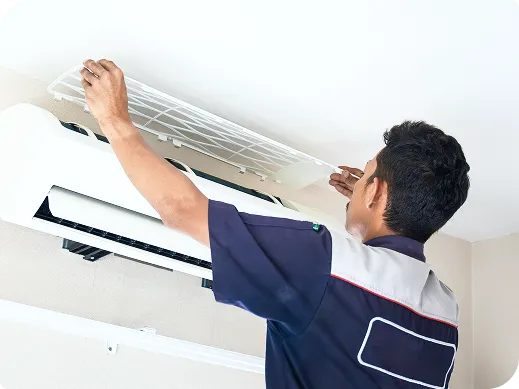
Heat Pump Maintenance in Philadelphia

A heat pump works in both heating and cooling seasons, so maintenance needs to account for both modes. W.F. Smith provides heat pump maintenance for homes across Philadelphia and nearby Bucks and Montgomery County communities.

Why Heat Pumps Need Regular Maintenance

A heat pump uses the same major system to cool the home in summer and heat it in winter. That means airflow, coils, drainage, electrical components, controls, the outdoor unit, and the refrigeration circuit all affect performance across more than one season.

Routine maintenance can help keep normal service items addressed and can reveal changes such as dirty coils, drainage trouble, electrical wear, weak airflow, abnormal icing, or control problems before they become larger comfort issues. Maintenance is preventive service; it does not guarantee that mechanical or electrical components will never fail. 

What a Heat Pump Maintenance Visit Can Include

  • Thermostat and control operation.
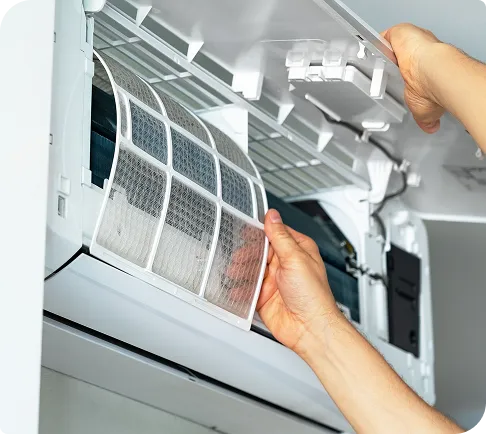
  • Filter condition and airflow through the indoor equipment.
  • Indoor and outdoor coil condition.
  • Condensate drainage and signs of water where it should not be.
  • Electrical connections and accessible electrical components.
  • Blower and indoor equipment operation.
  • Outdoor-unit condition, clearances, and obvious debris restrictions.
  • Defrost operation or defrost-related components as appropriate to the season and test conditions.
  • Backup heat, auxiliary heat, or dual-fuel controls when applicable.
  • Refrigerant-system performance checks appropriate to the equipment, service conditions, and technician findings.

Maintenance for Heating Mode

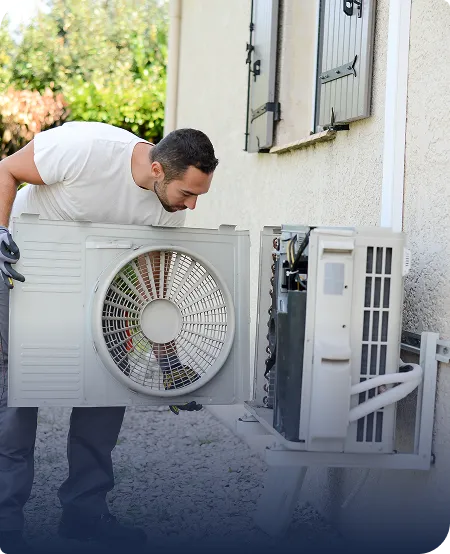
Before or during the heating season, the technician should pay attention to how the heat pump changes into heating operation, how the outdoor unit behaves in colder conditions, how defrost and backup heat are intended to work, and whether airflow and controls support the selected heating strategy.
  • Heating-mode startup and thermostat response.
  • Defrost-related operation and signs of abnormal icing.
  • Backup or auxiliary heat operation when the system design uses it.
  • Dual-fuel controls when the heat pump is paired with a gas furnace.
  • Airflow and temperature response that may reveal a developing comfort problem.

Maintenance for Cooling Mode

Cooling-season maintenance focuses on the same system from a different operating direction. Airflow, coil condition, condensate drainage, electrical components, and refrigeration-system performance all matter when the equipment is removing heat and humidity from the home.

  • Cooling-mode startup and thermostat response.
  • Indoor coil, outdoor coil, and airflow condition.
  • Condensate drainage and signs of water backup or leakage.
  • Electrical components and outdoor-unit operation.
  • Comfort or humidity complaints that should be separated from routine maintenance and diagnosed as a repair issue.

How Often Should a Heat Pump Be Maintained?

Because a heat pump serves both heating and cooling seasons, both operating modes should be considered in the maintenance schedule. The exact interval should follow the equipment, how heavily it is used, the home environment, any W.F. Smith maintenance-plan terms, and the manufacturer’s written requirements for that specific system.

For homeowners who want the system checked before periods of heavy use, seasonal service can be planned around the heating and cooling seasons. The page should not state that every manufacturer requires the same annual or twice-yearly schedule.
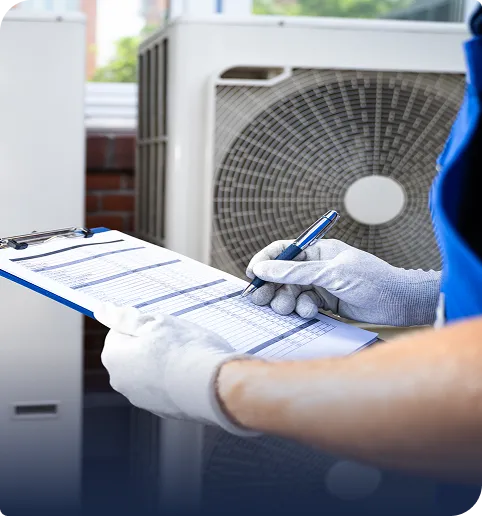
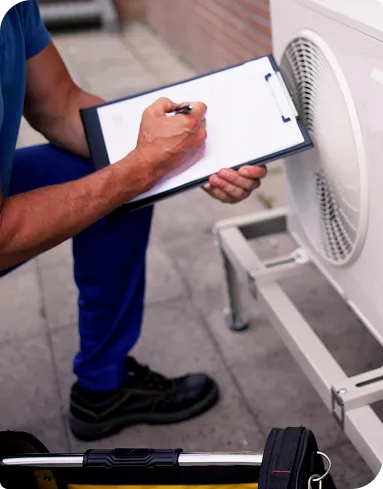
HVAC technician completing an air conditioning inspection checklist beside an outdoor AC unit to assess commercial cooling service needs.
HVAC technician completing an air conditioning maintenance checklist beside an outdoor residential AC unit.

What Homeowners Can Do Between Visits

  • Check and replace or clean the filter according to the equipment and filter instructions.
  • Keep leaves, debris, stored items, and overgrown vegetation away from the outdoor unit.
  • Keep supply and return openings clear so the system can move air through the home.
  • Watch for water where it should not be, repeated icing, new noises, unusual odors, or changing comfort.
  • Do not repeatedly reset a tripping breaker or open sealed refrigerant or electrical components.
  • If the system is already not heating or cooling correctly, schedule repair rather than waiting for the next routine maintenance visit.

When Maintenance Turns Into Repair

A maintenance visit can uncover a failed or weakening component, abnormal icing, drainage trouble, electrical problems, control issues, or another condition that requires diagnosis and repair rather than routine service. If that happens, the repair recommendation should be explained separately so you understand what is maintenance and what is corrective work.

A maintenance appointment should also not be used to hide a clear malfunction. If the heat pump is already failing to heat, cool, defrost, or run safely, the visit should be scheduled and handled as a repair problem.

HVAC technician completing an air conditioning inspection checklist beside an outdoor AC unit to assess commercial cooling service needs.

Heat Pump Maintenance and the W.F. Smith Maintenance Plan

This page explains the heat-pump maintenance service itself. Homeowners who want recurring HVAC service can separately review W.F. Smith’s maintenance-plan options for current membership benefits, scheduling, and program details.

Keeping those two pages separate avoids mixing a specific heat-pump tune-up with the broader maintenance-plan program.

HVAC technician completing an air conditioning inspection checklist beside an outdoor AC unit to assess commercial cooling service needs.

Planning for an Aging Heat Pump

Maintenance can help you understand how an older system is operating, but it cannot prevent every component failure or correct a system that no longer fits the home. If inspections are repeatedly uncovering repairs, comfort is declining, or the equipment is approaching a major decision point, compare the repair path with a properly designed replacement before an emergency forces the choice.

Heat Pump Maintenance Questions

How often should a heat pump be maintained?

The appropriate schedule depends on the equipment, usage, home conditions, maintenance-plan terms, and manufacturer requirements. Because a heat pump operates in both heating and cooling modes, both should be considered.

No. Maintenance can keep routine service items addressed and may identify developing problems, but mechanical and electrical components can still fail.
Requirements vary by manufacturer, model, registration, and warranty terms. Follow the written requirements for the specific equipment rather than relying on a general rule.
If the system already has a clear malfunction, schedule repair. Routine maintenance and diagnostic repair are different services even though some inspection steps may overlap.
The problem should be explained separately so you can approve corrective work before it proceeds.
There is overlap in items such as airflow, electrical checks, and controls, but a heat pump also changes between heating and cooling modes and may use defrost, backup heat, or dual-fuel controls that need to be considered.

Keep Your Heat Pump Ready for Both Seasons