
Restaurant Heating and Cooling in Philadelphia

W.F. Smith has installed zoned comfort systems since 1946. PA003700.

Restaurant Comfort Systems We Service

W.F. Smith services the heating and cooling side of restaurants across Philadelphia and the nearby Bucks and Montgomery County suburbs. That covers rooftop and packaged units, commercial split systems, and ductless or zoned equipment for dining rooms, bars, and back of house.

This page covers comfort heating and cooling only: the equipment that keeps the dining room, bar, and back of house at a comfortable temperature. Kitchen exhaust hoods, makeup air units, grease duct, and walk-in or reach-in refrigeration are a different trade and are not part of what we service.

We also do not service boilers, steam systems, oil systems, water heaters, or chillers. Tell us what’s on the roof and in the mechanical room when you call, and we’ll say plainly which of it is ours.

Our office quotes the commercial diagnostic visit per site before a technician is dispatched. Replacement estimates are free, and nothing gets replaced before you approve the price. We install Lennox most often and Mitsubishi Electric on the ductless and zoned side.

Signs a Restaurant Needs an HVAC Technician

A restaurant reports an HVAC fault through the room rather than the equipment. Staff and guests notice it before anyone opens a panel. The pattern of when it happens usually names the fault.

  • Warm by the second seating, fine at open. Capacity has dropped, or a stage is out and the room never recovers.
  • Front of house cold while the back stays hot. Distribution and zoning, not capacity.
  • It runs all service and never satisfies. A fouled coil, low charge, or equipment sized for an older floor plan.
  • Ceiling tile staining under a rooftop unit. A blocked condensate drain, a rusted pan, or a coil leak.
  • Filters loading far faster than expected. A back of house return loads faster than an office one, and a starved blower freezes a coil.
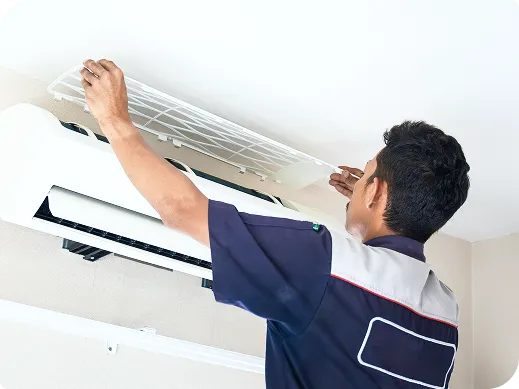
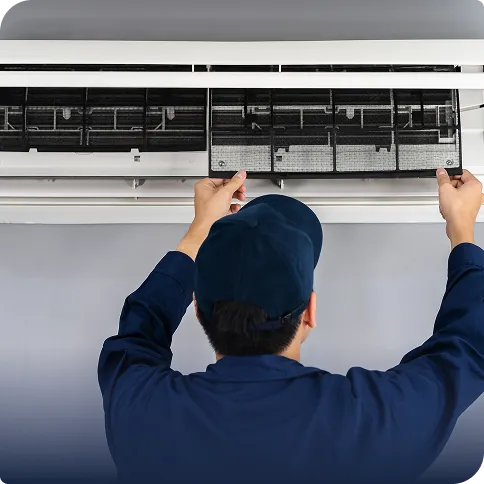
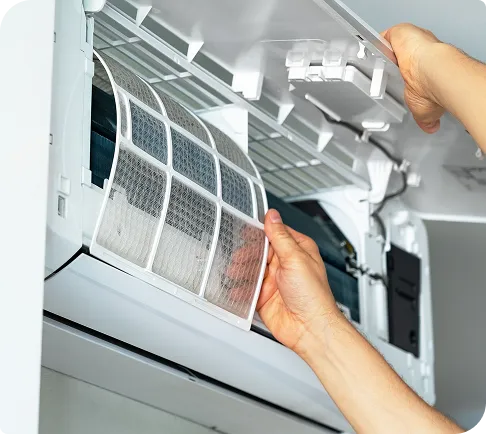
W.F. Smith HVAC technician inspecting the air filters inside a wall-mounted air conditioning unit during routine maintenance.

What We Cover in a Restaurant, and What We Don't

Our work is the comfort system and the controls attached to it. Knowing where that boundary sits saves a wasted visit. Describe the equipment on the phone and we’ll tell you before anyone is dispatched.
  • Rooftop and packaged units. The most common equipment over a restaurant in this area.
  • Commercial split systems and air handlers. Condenser outside, air handler serving the space from inside.
  • Ductless and zoned equipment. For a bar, private room, or back of house the main system loses.
  • Gas heating sections. Rooftop heat and duct furnaces serving dining space.
Plenty of restaurants here sit in buildings heated from a central plant. A second contractor covers that side. We say so on the phone rather than billing a visit and walking away. The cooling equipment in the same building is usually still ours.

Why a Restaurant Load Swings by Service

A restaurant is not a building with a steady load. An empty dining room at three in the afternoon and the same room at eight on a Saturday are different problems. The equipment has to answer both.

Three things move it. A full room adds heat and moisture from the people in it. Cooking equipment runs hard through service and pushes heat toward the front. A street door opens all evening and brings outside air with it.

Equipment sized on floor area alone misses all three. A real measurement of occupancy, equipment, and outside air is why two restaurants on the same block with the same square footage can need different systems.

Heat behaves the same way in reverse. A room that fills on a January evening needs less heat than the empty room did at four in the afternoon. A single stage overshoots and then coasts, which is why zoning matters on the heating side too.

The Hot Line and the Cold Dining Room

This is the complaint we hear most from operators, and it’s a zoning problem rather than a capacity one. Back of house makes heat all service. Front of house does not.

One thermostat holds whichever end it sits in and loses the other. Turning the setpoint down cools the dining room past comfortable. The line stays hot anyway. Guests put coats on while the compressor runs hours it doesn’t need.

Splitting the space so front and back answer to different thermostats is the fix. Zone dampers do it where the duct allows. Where duct won’t reach, ductless equipment covers a bar, a private room, or back of house on its own thermostat.

A technician reads supply air temperature, damper position, and the balance between the two ends before quoting anything. Added tonnage rarely fixes a split like this. It usually makes the cold end colder and leaves the line where it was.

How We Schedule Work Around Service

The same five steps on every job, with the working window agreed before anything starts.

  • Site walk. We read nameplates, check roof access, and watch how the space works.
  • Load calculation. Occupancy, equipment, and outside air set the size, not the old nameplate.
  • Written options. Two or three systems, priced, with the working window included.
  • Work booked around trading hours. Mornings before prep, closing nights, and quiet days.
  • Commissioning. Charge and airflow verified, then the warranty registered.
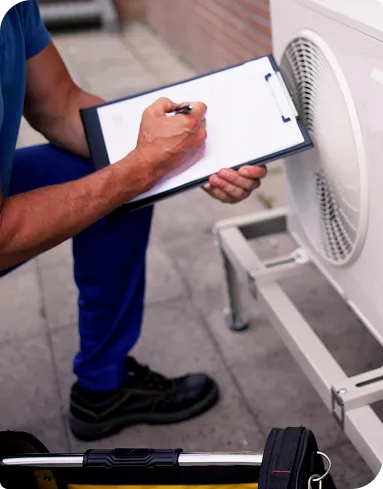
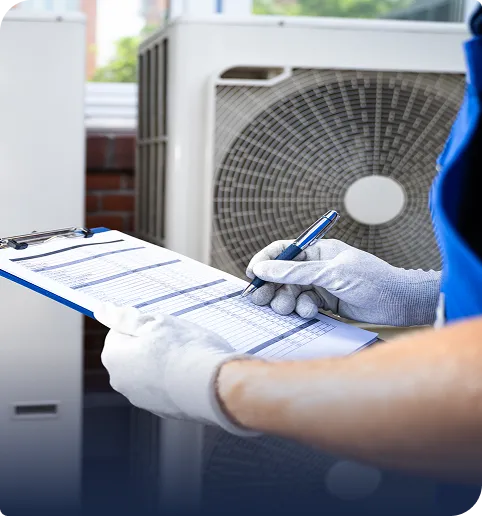
HVAC technician completing an air conditioning inspection checklist beside an outdoor AC unit to assess commercial cooling service needs.
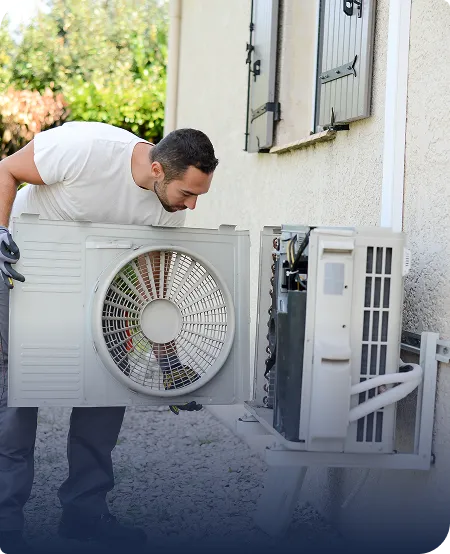
HVAC technician completing an air conditioning maintenance checklist beside an outdoor residential AC unit.

Replacing in the Off Season

The time to replace a restaurant’s cooling is before you need it, which means late winter into spring rather than June. Planning ahead gets you the same load calculation and the same written options as always, plus more room to schedule: crane time, equipment lead time, and a working window between services.

A unit that fails without warning in July still gets measured and quoted the same way. What changes is the scheduling room: equipment comes from whatever’s available that week, and the work runs at overtime rates since it falls outside a planned window.

Three signs a unit belongs on a schedule. It is past the service life of its type. It has needed refrigerant twice in two seasons. Or it has lost a stage and the room now leans on the other one.

What Affects the Cost of Restaurant HVAC Work

Our office quotes the commercial diagnostic visit per site, since roof access, unit counts, and parking change the time on site. Replacement estimates are free. We quote after seeing the roof rather than over the phone.

  • Access. Crane time, alley width, and hatch size add real labor to the same job.
  • Refrigerant. Older refrigerants have grown expensive as supply winds down.
  • Curb and duct condition. New equipment on a failing curb or leaking duct never performs.
HVAC technician completing an air conditioning inspection checklist beside an outdoor AC unit to assess commercial cooling service needs.
Rates hold steady through the season. Prices do not climb during a heat wave and they do not get cut in the fall. Manufacturer and Electrical Association of Philadelphia rebates can apply, and financing is available for qualifying work.

Why Restaurant Operators Choose W.F. Smith

Load calculations on every install.

Occupancy and equipment, not the old nameplate.

Work booked around service.

Mornings, closing nights, and quiet days.

Diagnosis before quoting.

The fault gets named and priced before anything opens up.

A family business since 1946.

Five owners share more than 140 years in the trade.

Restaurant HVAC Questions We Get Asked

Do you handle kitchen exhaust, hoods, or makeup air?

No. Kitchen exhaust hoods, grease duct, makeup air units, and fire suppression are a different trade from comfort heating and cooling, and we don’t service them. We cover the dining room, bar, and back of house comfort system — call a kitchen ventilation specialist for the exhaust side.
Because one system reading one thermostat can only hold one end of the space. Back of house produces heat through every service and front of house does not, so thermostat location decides who is comfortable. Turning the setpoint down chills the dining room and still leaves the line warm. Splitting front and back onto separate thermostats is the fix. Added tonnage is not.
People are a load. A full dining room adds heat and moisture that an empty one doesn’t, and a system sized for the quiet hours can’t hold the busy ones. A street door opening all evening adds outside air on top. If the room only fails when full, the equipment is undersized for the real load rather than broken.
Only a real measurement of the space answers that properly. Occupancy, cooking equipment, outside air at the door, glazing, and the hours you trade all move the number. Two restaurants on the same block with the same square footage can need different systems. We run that measurement as part of the free estimate.
Most of it, yes. Service calls and repairs get booked before prep or after close, and larger work goes into quiet days rather than through a seating. A straight rooftop changeout on an existing curb is usually quick, and crane time can be scheduled outside trading hours at overtime rates. The working window goes into the written estimate before anything is booked.
Twice a year, before cooling season and again before heating season, since rooftop equipment over a restaurant carries long running hours. A technician cleans the condenser coil, checks charge and airflow, tests the electrical parts, and clears the condensate drain. Filters need changing far more often than in an office, since a back of house return loads fast.
Boilers, steam systems, oil systems, water heaters, and chillers all sit outside what we do, along with kitchen exhaust and refrigeration equipment. Older buildings in this market often heat from exactly that kind of central plant, so a second contractor covers it. Describe what’s on the roof and in the mechanical room when you call and we’ll tell you plainly which parts are ours.
That’s a common job. A back room, a bar, or an upstairs private room usually sits at the end of the longest duct run and loses every time the main floor fills. Ductless or zoned equipment serves that space on its own thermostat without adding duct. It also lets you shut the space down when it’s not in use, which takes load off the main system.

Why Restaurant HVAC Has to Follow the Schedule

Get the Room Comfortable Again