
The People Who Do the Work at W.F. Smith

Family-owned since 1946. W.F. Smith, registered PA003700, based at 7310 State Road.

A Family-Owned Crew Since 1946

W.F. Smith is a family-owned heating and air conditioning company working out of State Road in Northeast Philadelphia. The same family has owned it since 1946. Our office tells you the visit fee before we come out, and estimates on replacement systems are free.

This page is about the crew, not the equipment. Five owners run the company, and between them they carry more than 140 years of industry experience. Our core technicians and installers average over 20 years each.

Our technicians fit Lennox central systems and Mitsubishi Electric ductless equipment most weeks, and they service other major brands too. ClimateMaster covers the geothermal side. Boilers, water heaters, oil systems, and steam systems are outside what this crew works on.

The Owners and the Office

Five owners run W.F. Smith, and the Smith family still works in the office. That matters on the day a job goes sideways, because the person who can approve a fix is right there on State Road, not at a regional office somewhere else. The company holds Pennsylvania Home Improvement Contractor registration PA003700 and has been accredited by the Better Business Bureau since 1991.

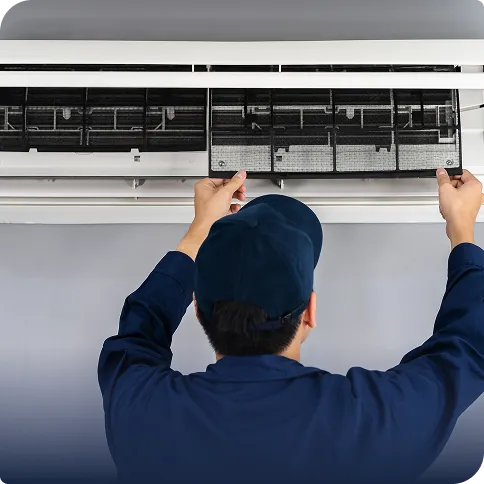
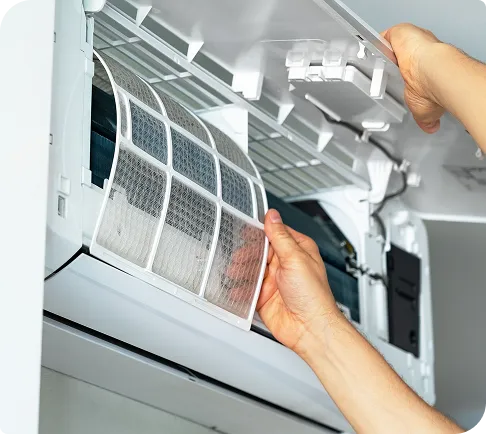
W.F. Smith HVAC technician inspecting the air filters inside a wall-mounted air conditioning unit during routine maintenance.

The Technicians Who Come to the House

The Credentials We Hold, and the Ones We Do Not Claim

Two credentials belong on this page, and only two. W.F. Smith is registered in Pennsylvania as a Home Improvement Contractor under PA003700, and it has been BBB accredited since 1991. We do not add manufacturer badges here, since those are marketing programs rather than something a state or licensing board issues. Ask any contractor for their registration number and proof of insurance, then look both up yourself before anyone opens a panel in your home.

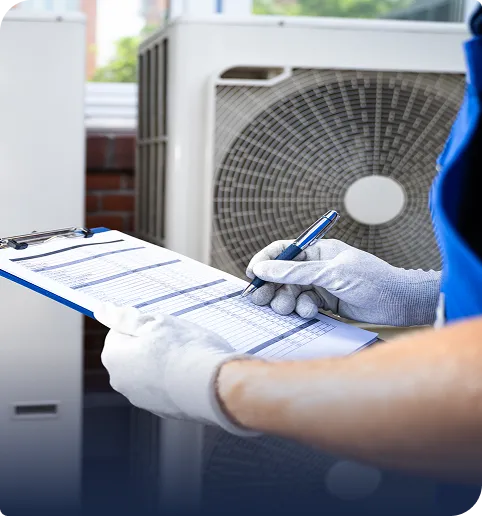
HVAC technician completing an air conditioning inspection checklist beside an outdoor AC unit to assess commercial cooling service needs.

How This Crew Runs a Job

The same steps apply whether the call is a repair, a seasonal tune-up, or a full system replacement. You approve the price before any work starts.
  • Book the visit. Our office tells you the visit fee before anyone is sent out, so the first number you hear is one you agreed to.
  • Find the fault. A technician checks pressure, temperature, electrical readings, and airflow on the running system, rather than swapping parts until the problem happens to stop.
  • Price it in writing. On a replacement, that means measuring the home and giving you two or three written options at different costs and efficiency levels.
  • Decide. You approve or you decline, and the written quote is yours to keep either way.
  • Finish and register. We check the charge and airflow, then register the equipment so the manufacturer warranty starts from day one.
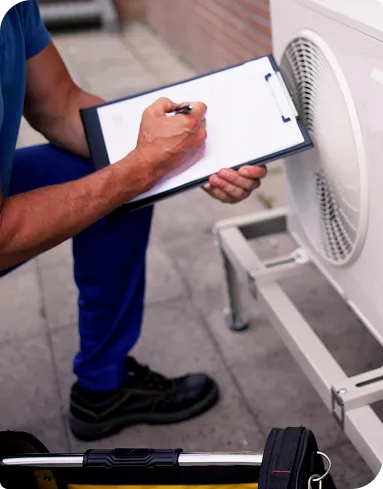
HVAC technician completing an air conditioning maintenance checklist beside an outdoor residential AC unit.

The Work This Crew Turns Down

Boilers, water heaters, oil systems, and steam systems are not what we service. Our office tells you that on the phone, before anyone is sent out and before any fee is charged. Staying in one lane is exactly how a technician builds twenty years of depth on the equipment they do see.

Switching away from one of those systems is a different conversation, since the replacement side is our work. A home on oil or steam can move to forced air or to a heat pump, and that project starts with a free estimate and a real measurement of the home instead of a sales visit.

What to Expect From Any Technician We Send

Four things hold on every visit, no matter which technician the office sends out. These are standards the owners set, not something that depends on who happens to show up.

A diagnosis before a quote.

You learn what failed and what it costs before agreeing to anything.

A real measurement on every install.

Not the size of the old unit, and not a number picked to hit a price.

Steady pricing.

Rates do not climb during a heat wave, and they are not cut in October just to fill the schedule.

A stated limit.

We say plainly what we will not service, instead of you finding out once we are in the basement.

Team Questions Homeowners Ask Us

Who owns and runs W.F. Smith?

Five owners run the company, and between them they bring more than 140 years of industry experience. The Smith family owns W.F. Smith and works in the office at 7310 State Road, which is where scheduling, quoting, and the calls on a tricky job actually get made. The business opened in 1946 and has stayed with the same family since.
Our core technicians and installers average over 20 years each in the trade. That shows up most on a diagnosis, where telling a worn part from a failing one comes down to real readings instead of a guess. It shows up again on awkward installs, where ductwork has to fit a tight space or an outdoor unit has to land somewhere unusual.
The company holds Pennsylvania Home Improvement Contractor registration PA003700 and has been accredited by the Better Business Bureau since 1991. Both are public records, so you can look them up yourself instead of taking a website at its word. Ask for proof of insurance too, and ask for the estimate in writing. A contractor who will not put a price on paper has told you something useful.
Start with the state registration number and proof of insurance, then ask how the company sizes equipment. If the answer is just the size of the old unit, or a rule based only on square footage, keep looking. Ask whether you get the diagnosis and the price in writing before any work begins.
The technician finds the fault before quoting anything. That means checking pressure, temperature, electrical readings, and airflow on the system itself, not just a quick look at the outdoor unit. You then get the finding and the repair price, and nothing is touched until you approve it.
An accurate diagnosis is cheaper than a slow one. Someone who recognizes a failure pattern replaces the one part that failed. Someone who does not tends to replace one part, then another, then another, charging for each try. Experience also catches the second problem hiding behind the first, which is often the one that decides whether the repair actually holds.
Boilers, water heaters, oil systems, and steam systems are a separate trade, with their own parts and their own common failures. Doing them properly takes technicians who see them every week, and ours do not. Turning that work away is part of how the crew keeps its depth on forced air, heat pumps, and ductless equipment.
Our office answers calls Monday through Friday, 8:00 a.m. to 4:00 p.m. Outside those hours, an answering service takes the call and reaches the technician on call. That is real after-hours coverage for emergencies, not a promise of round-the-clock staffing. Customers on a maintenance plan get priority on after-hours calls.

Experience You Can Put a Name To

Talk to the People Who Will Do the Work