A thermostat can be calling for heat while the furnace never ignites. A heat pump can be running while the air from the vents feels cooler than expected. A ductless unit can power on and still leave one room uncomfortable. Those situations feel similar from inside the house, but the equipment and the diagnosis are different.
W.F. Smith repairs gas furnaces, heat pumps, dual-fuel systems, and ductless heating across Philadelphia and nearby Bucks and Montgomery County communities. The repair visit is meant to find where the heating process stops working correctly, explain what that means, and provide the repair price before work begins.
W.F. Smith does not service boilers, radiators, oil systems, steam heat, or water heaters.
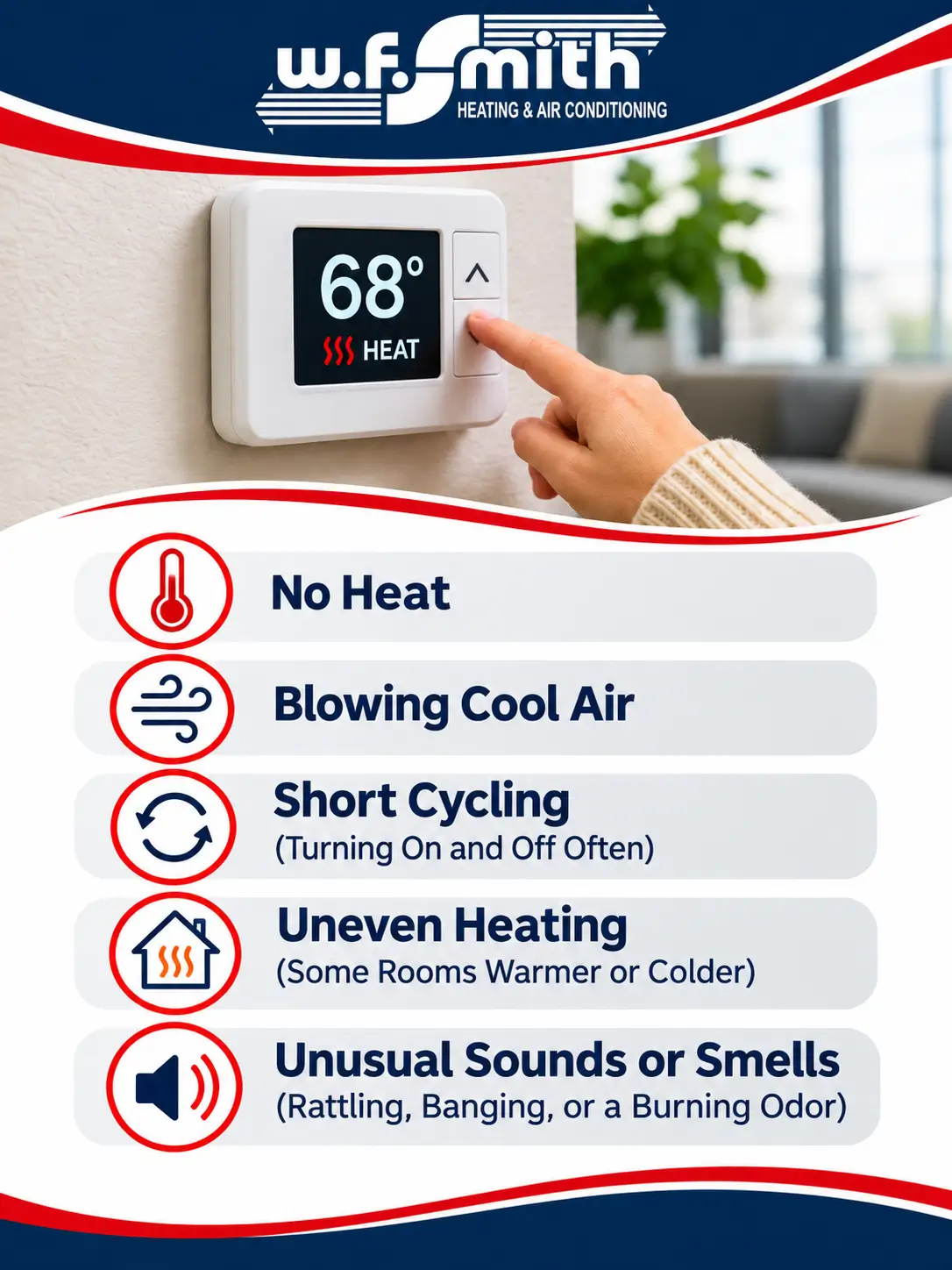
Knowing your system helps us send the right technician. If you are not sure, call and describe the equipment.
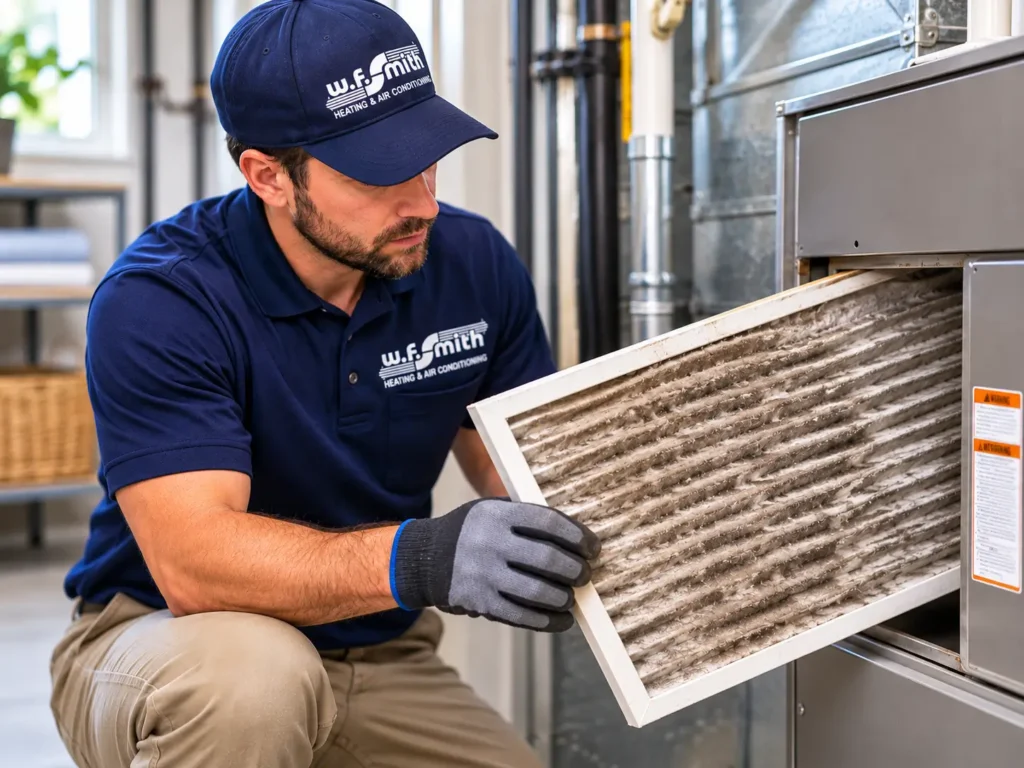
Before a technician arrives, the most useful information is often simple: whether the thermostat is set to Heat, whether the display is working, whether the filter is heavily clogged, and whether a breaker or nearby furnace switch has been turned off. Those details can explain a surprising number of no-heat calls without asking the homeowner to open equipment or work around gas or live electrical components.
If a breaker trips again after one reset, if you smell gas, or if a carbon monoxide alarm sounds, stop using the equipment. Gas or carbon-monoxide concerns should be handled from outside the home through the utility or emergency services before HVAC work is arranged.
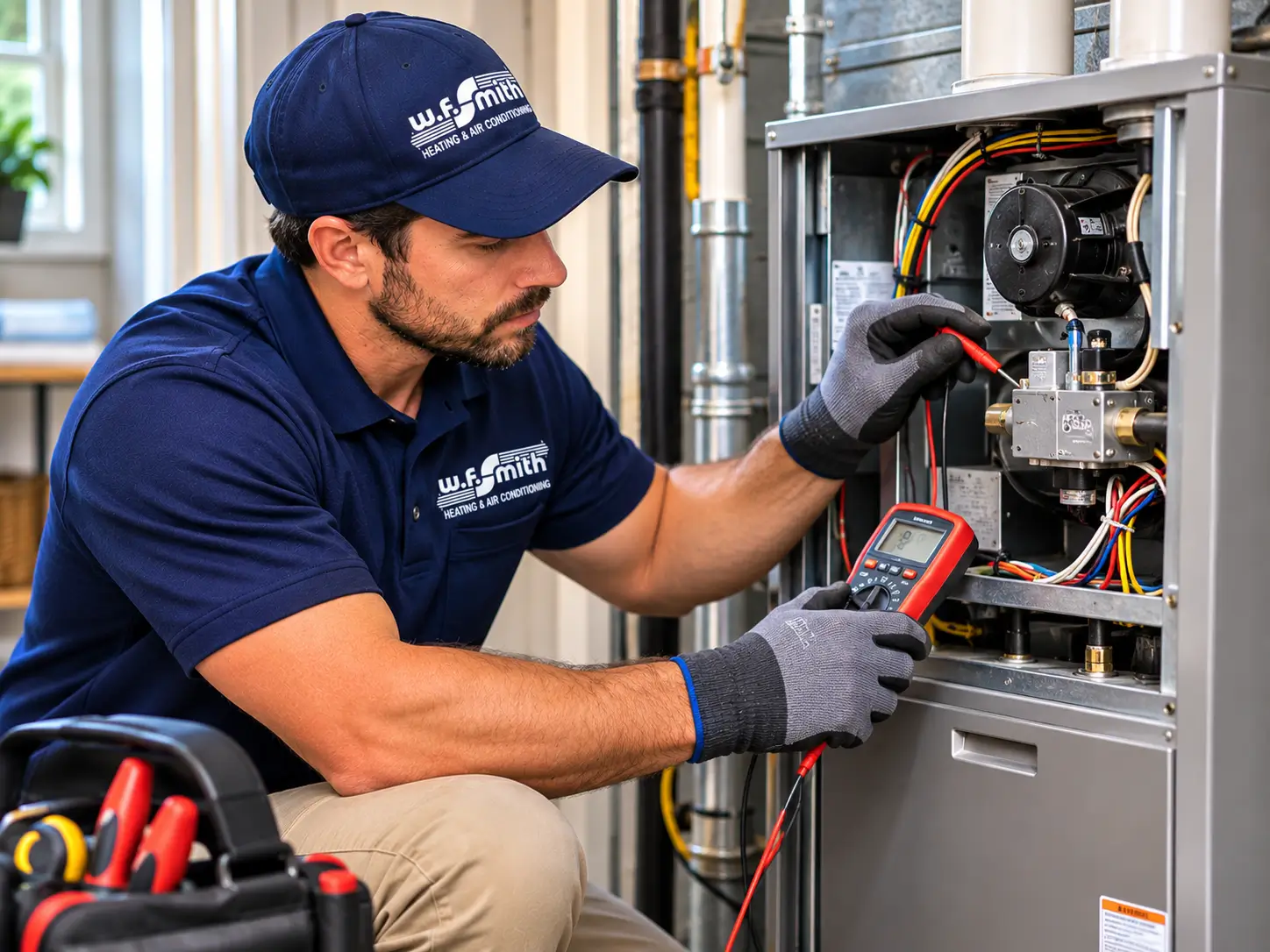
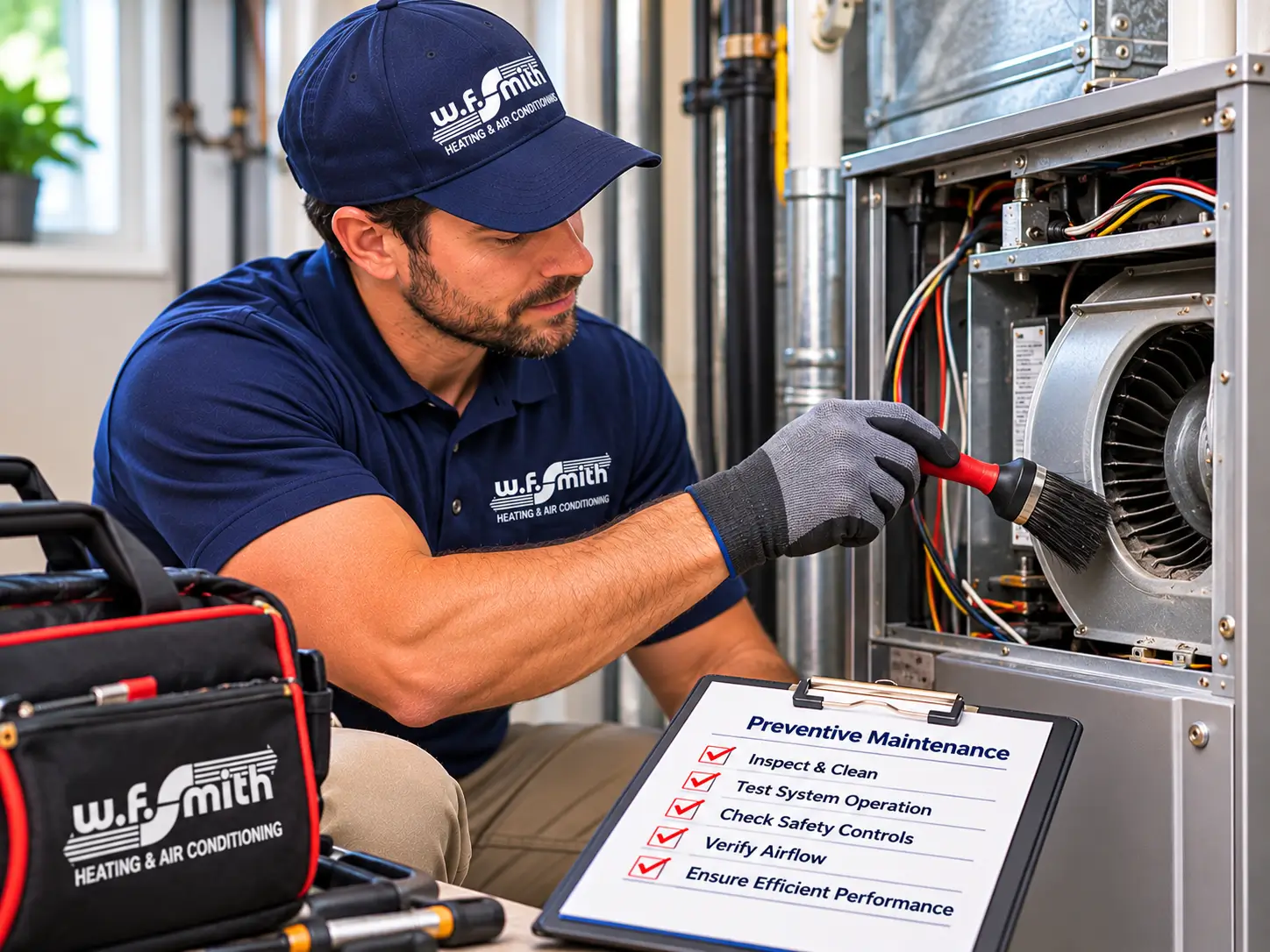
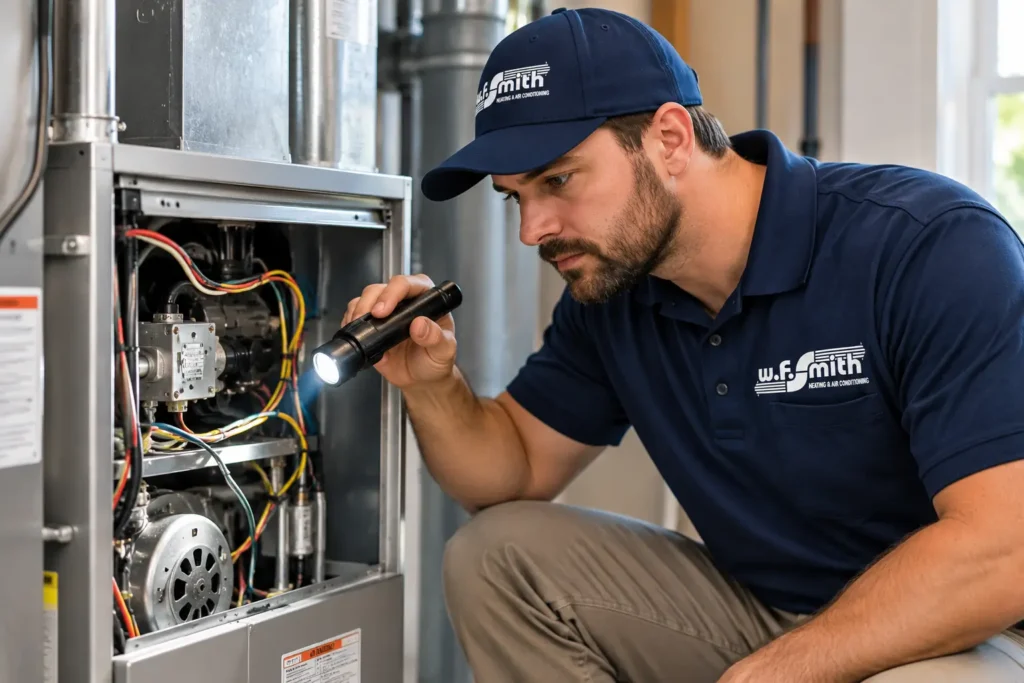
A good repair visit narrows the problem to a specific part of the heating cycle. The technician may need access to the thermostat, indoor equipment, outdoor equipment for a heat pump, electrical panel, and ductwork around the system. The point is not to replace parts until the system works; it is to identify the failure, explain why it produced the symptom, and price the repair before work begins.
If the repair is substantial, a replacement estimate can be useful because it puts the repair in context. That does not mean an older system automatically needs to be replaced. It means the homeowner can compare the condition of the equipment, the cost of the repair, and what a new system would change before deciding.
W.F. Smith’s office answers Monday through Friday from 8:00 a.m. to 4:00 p.m. Outside those hours, an answering service reaches the technician on call. The technician talks through the situation and the applicable after-hours rate before a visit is dispatched.
A gas smell, a carbon monoxide alarm, repeated breaker trips, electrical burning odors, or a home losing heat during dangerous cold with a vulnerable person inside are more urgent than a minor comfort issue. The Emergency HVAC page explains the after-hours process in more detail.