
Heat Pumps for Philadelphia Homes

One system for heating and cooling, from W.F. Smith, family-owned since 1946.
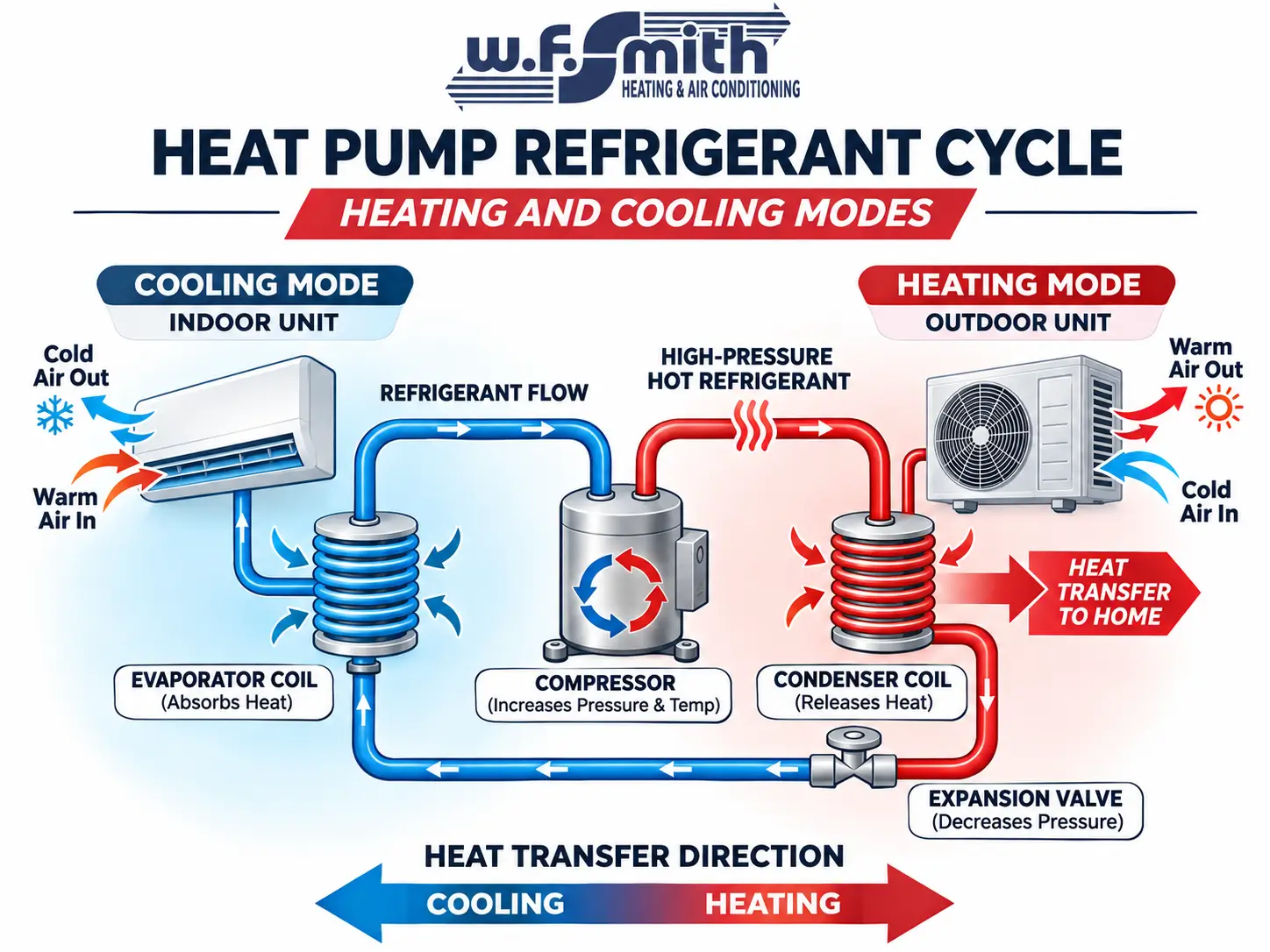
Illustration of a residential heat pump transferring heat outdoors during summer cooling and moving heat indoors during winter heating, using the same ductless HVAC system.

One System, Heating and Cooling

A heat pump moves heat rather than burning fuel to create it. In summer it moves heat out of your home, and in winter it runs in reverse to bring heat in. W.F. Smith repairs, installs, replaces, and maintains heat pumps for homes across Philadelphia and nearby Bucks and Montgomery County communities.

We install Mitsubishi Electric ductless heat pumps most often, and also install ducted systems.

Heat Pump Services for Your Home

Choose the service that matches what your system needs now.

Heat Pump Repair

Your heat pump is not heating, not cooling, icing over, making new noises, or running constantly. Start with diagnosis before deciding whether a repair or replacement makes sense.

Heat Pump Installation & Replacement

You need a new heat pump, whether you are installing one for the first time, replacing an aging system, or changing how the home is heated and cooled.

Heat Pump Maintenance

Your heat pump is working and you want to keep both heating and cooling modes ready for the seasons ahead.

Dual Fuel Systems

Pair a heat pump with a gas furnace so the system can shift between heat sources based on the home, equipment, and outdoor conditions.

Dual Fuel Systems

Pair a heat pump with a gas furnace so the system can shift between heat sources based on the home, equipment, and outdoor conditions.

Ductless Heat Pumps

No ductwork? A ductless heat pump can heat and cool individual rooms or multiple zones without extending a traditional duct system.

When a Heat Pump May Be a Good Fit for Your Home

Heat pumps can solve different comfort problems, so the starting point matters. A homeowner replacing an aging AC and furnace has a different project from someone adding comfort to a finished attic or converting from electric resistance heat. W.F. Smith looks at the home, existing equipment, electrical capacity, ductwork, and winter-heating strategy before recommending a system type.
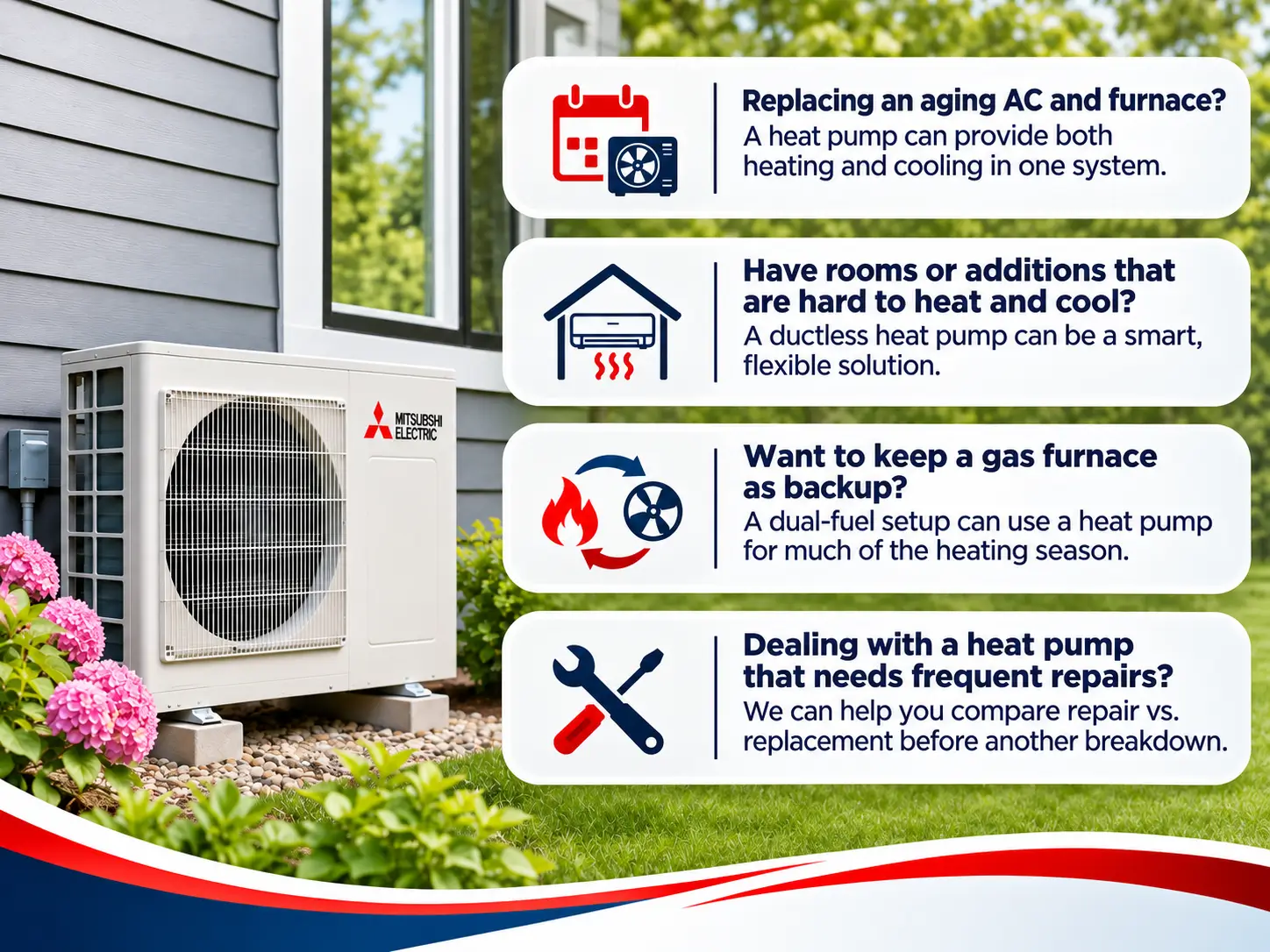
  • Your air conditioner and heating equipment are both approaching replacement, and you want to evaluate one system that can provide heating and cooling.
  • Your home has rooms or additions that are difficult to serve with existing ductwork, making a ductless heat-pump design worth considering.
  • You want to keep a gas furnace as backup and use a heat pump for much of the heating season through a dual-fuel setup.
  • Your current heat pump needs repeated repairs or no longer keeps the home comfortable, and you want to compare repair with replacement before another breakdown.
W.F. Smith infographic featuring a residential heat pump and four situations where a heat pump may be beneficial, including replacing aging HVAC equipment, heating and cooling additions, dual-fuel systems, and comparing repair with replacement.

When a Heat Pump May Be a Good Fit for Your Home

Heat pumps can solve different comfort problems, so the starting point matters. A homeowner replacing an aging AC and furnace has a different project from someone adding comfort to a finished attic or converting from electric resistance heat. W.F. Smith looks at the home, existing equipment, electrical capacity, ductwork, and winter-heating strategy before recommending a system type.
  • Your air conditioner and heating equipment are both approaching replacement, and you want to evaluate one system that can provide heating and cooling.
  • Your home has rooms or additions that are difficult to serve with existing ductwork, making a ductless heat-pump design worth considering.
  • You want to keep a gas furnace as backup and use a heat pump for much of the heating season through a dual-fuel setup.
  • Your current heat pump needs repeated repairs or no longer keeps the home comfortable, and you want to compare repair with replacement before another breakdown.

Signs Your Heat Pump Needs a Technician

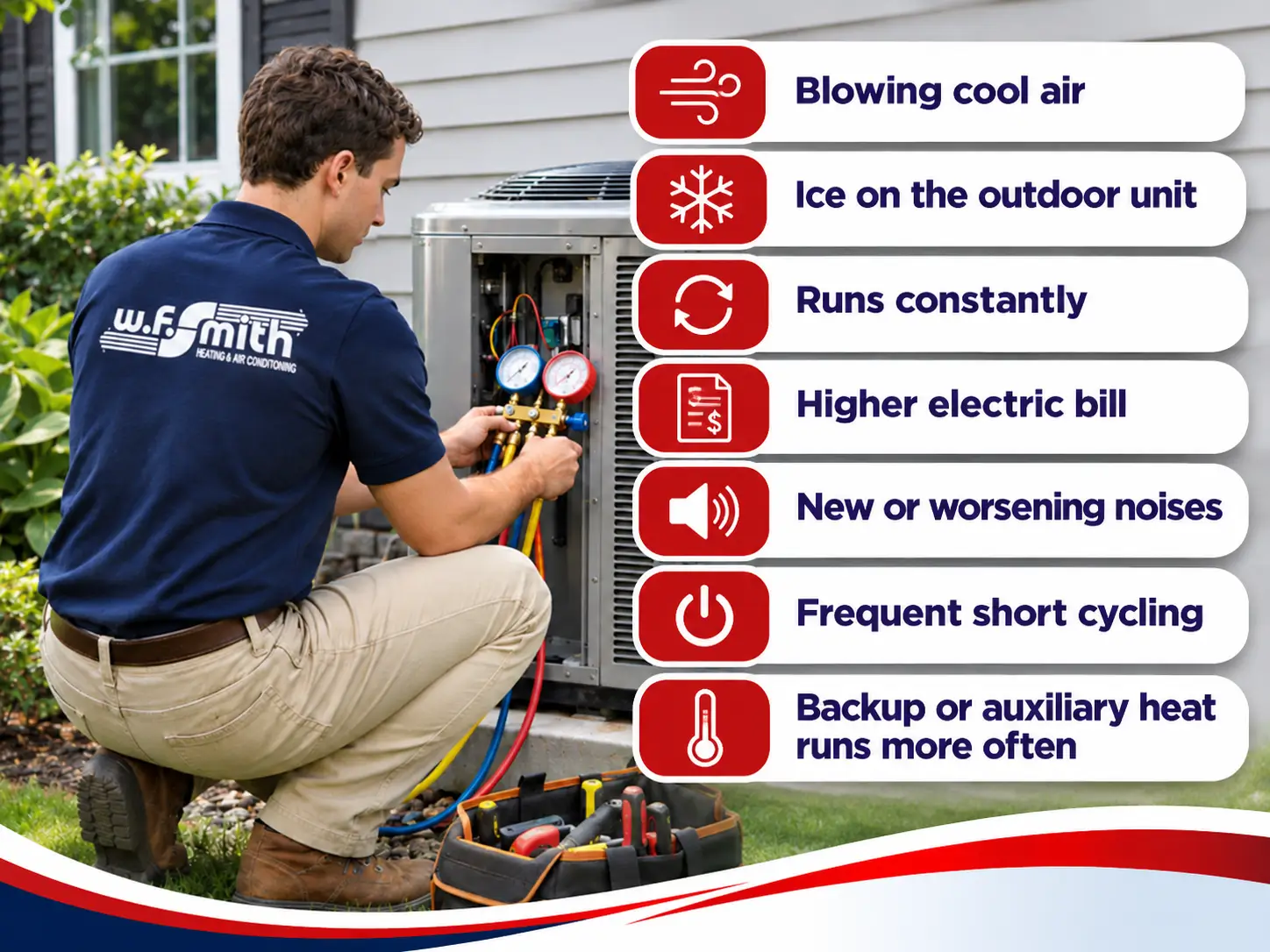
  • Blowing cool air during a full heating cycle, not just the first few minutes.
  • Ice on the outdoor unit that does not clear during normal defrost operation.
  • The system runs constantly without reaching the set temperature.
  • A noticeably higher electric bill with no clear change in use.
  • New or worsening noises from the outdoor unit or indoor equipment.
  • Frequent short cycling, where the system starts and stops before completing a normal heating or cooling cycle.
  • Backup or auxiliary heat appears to run far more often than usual, or the system struggles whenever outdoor temperatures drop.
W.F. Smith HVAC technician inspecting an outdoor residential heat pump beside an infographic highlighting seven warning signs, including poor heating, persistent ice, continuous operation, higher energy bills, unusual noises, short cycling, and excessive auxiliary heat use.
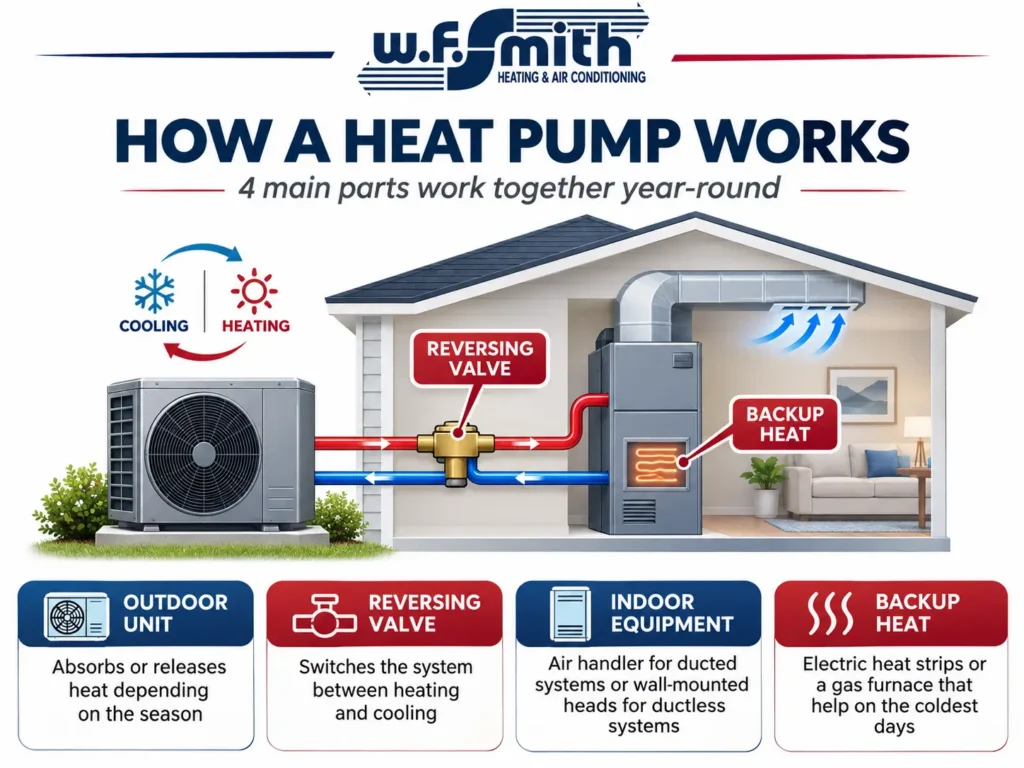
Infographic showing how a residential heat pump works, including the outdoor unit, reversing valve, indoor equipment, and backup heat in heating and cooling modes.

How a Heat Pump Works

A heat pump has four main parts that work together year-round.

  • The outdoor unit. Absorbs or releases heat depending on the season.
  • The reversing valve. Switches the system between heating and cooling.
  • Indoor equipment. An air handler for ducted systems, or wall-mounted heads for ductless systems.
  • Backup heat. Electric heat strips or a gas furnace that help on the coldest days.

How Heat Pumps Perform in Cold Weather

As outdoor temperatures fall, the amount of heat available in the air changes and the system has to work under different conditions. Cold-weather performance depends on the exact equipment, the home’s heating load, correct sizing, and the backup-heat strategy. Those details should be decided during system design rather than assumed from the words “heat pump” alone.

If an existing heat pump is running but cannot keep up, the first question is whether the problem is a repair issue, a control or backup-heat issue, or a system-design limitation. Diagnosis should come before a replacement recommendation.
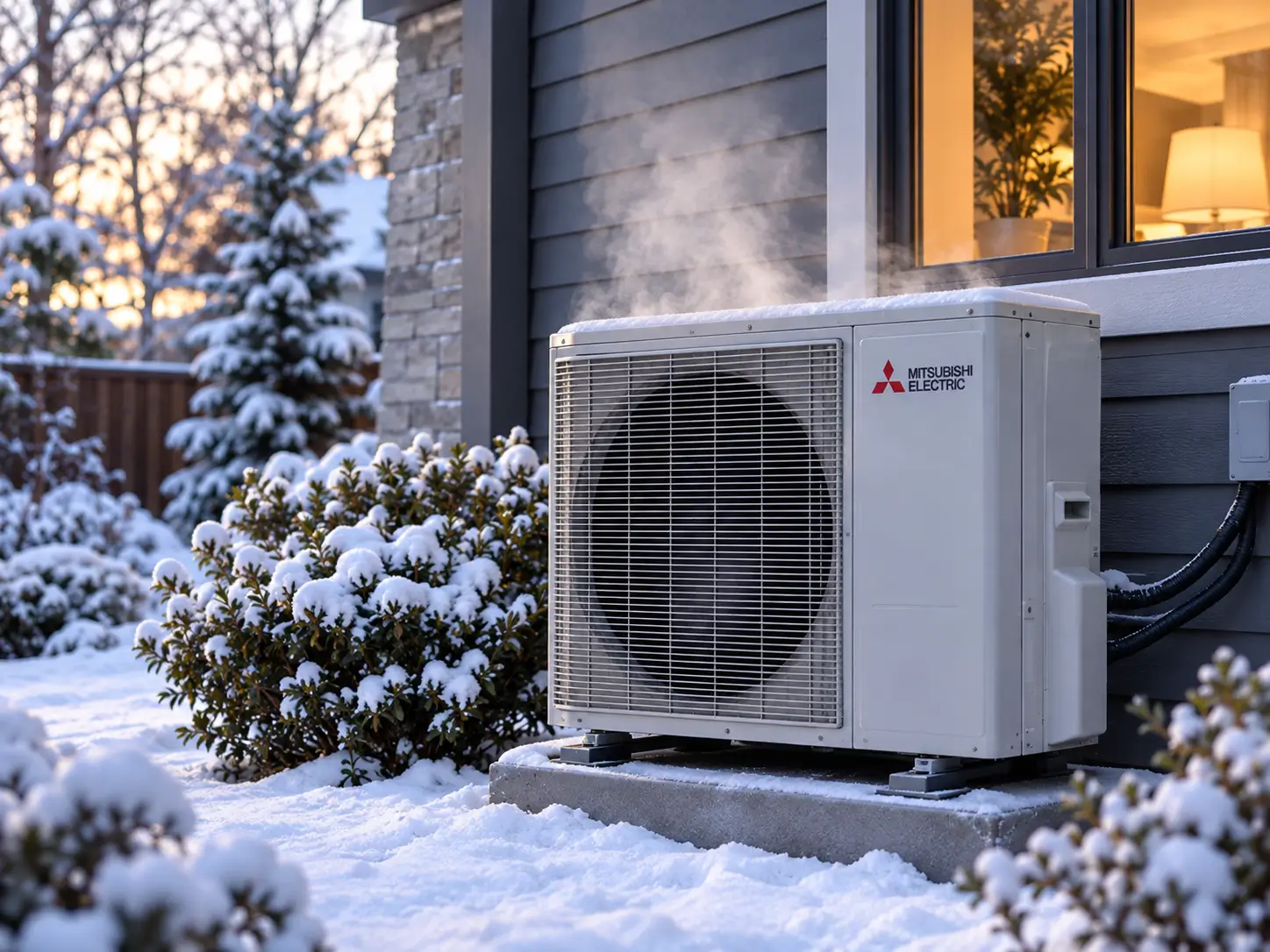
Residential outdoor heat pump operating beside a home in snowy winter conditions, with light water vapor visible during a defrost cycle.
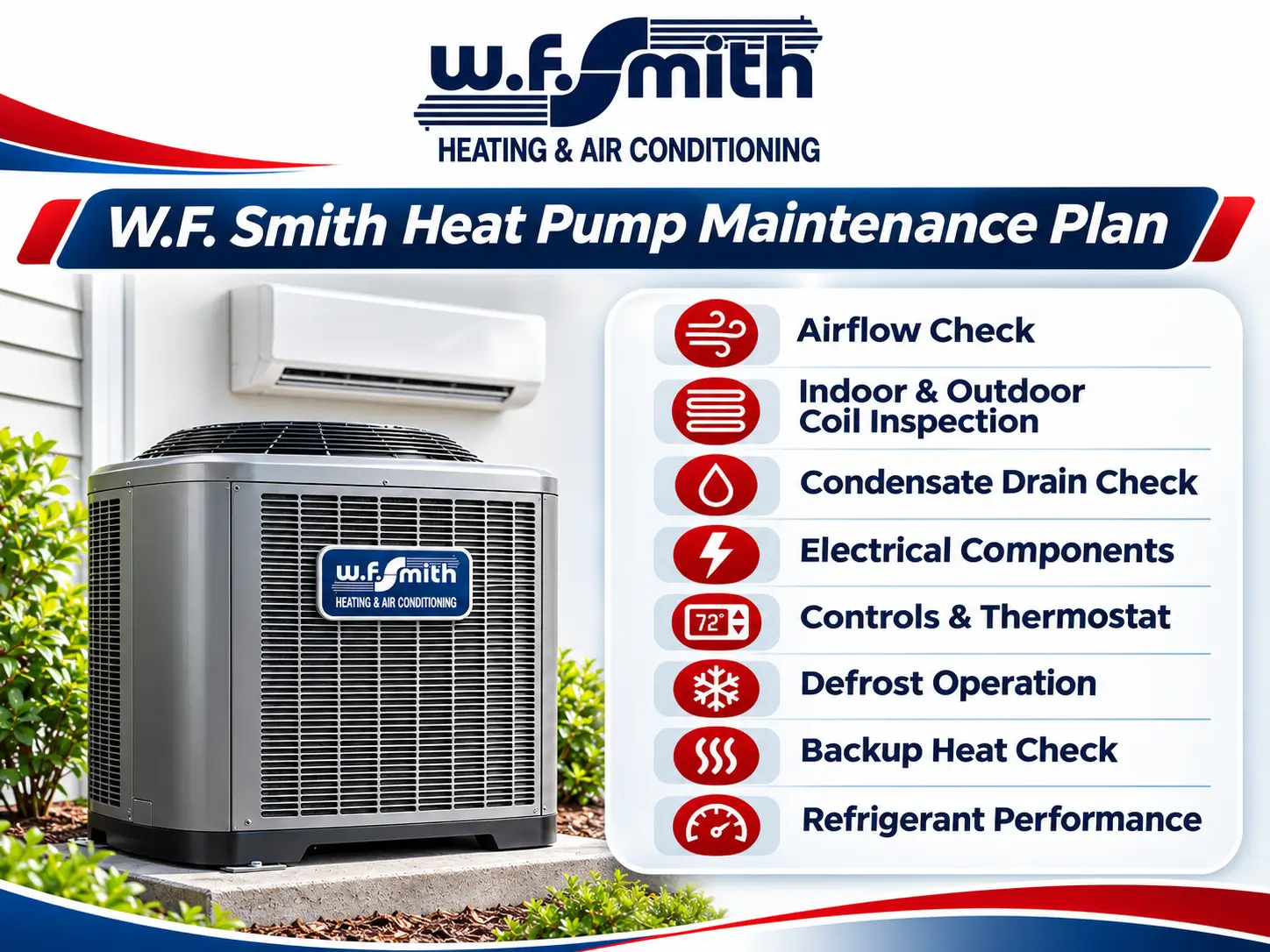
W.F. Smith heat pump maintenance infographic featuring indoor and outdoor HVAC units with a checklist of airflow, coil, condensate drainage, electrical, thermostat, defrost, backup heat, and refrigerant performance checks.

Heat Pump Maintenance

Because a heat pump handles both heating and cooling, maintenance needs to account for both operating modes. A visit can include airflow, coil condition, condensate drainage, electrical components, controls, defrost operation, backup heat when applicable, and refrigerant-system performance checks appropriate to the equipment and conditions.

The right maintenance schedule and any warranty-related requirements depend on the specific equipment and written manufacturer terms. Homeowners should follow the documented requirements for their system rather than relying on a blanket rule.

Why Homeowners Choose W.F. Smith for Heat Pumps

Both loads calculated

We size for heating and cooling separately, not just one.

Tested in both modes

We verify performance in heating and cooling before we leave.

Recommendations Based on the Home

Repair, replacement, maintenance, ductless, and dual-fuel options are discussed around the home and the equipment rather than forcing every project into the same solution.

A family business since 1946

The Smith family runs the company from 7310 State Road.

Heat Pump Questions From Philadelphia Homeowners

Why is my heat pump blowing cool air when heat is on?

A brief period of cool air during a defrost cycle is normal, since the system melts frost off the outdoor coil. Cool air for a full heating cycle is not normal, and usually means low refrigerant, a stuck reversing valve, or a defrost problem.

Yes. Modern heat pumps handle most of a Philadelphia winter on their own, with backup heat covering the coldest stretches. How well a system performs depends on correct sizing and the backup heat setup, both of which we confirm during installation.
A dual fuel system pairs a heat pump with a gas furnace. The system automatically switches to whichever is more efficient at the current outdoor temperature, giving you efficient heat pump operation most of the year and furnace backup on the coldest days.
Yes. Ductless heat pumps connect an outdoor unit to one or more indoor units without a traditional duct system.
Because the equipment operates in both heating and cooling seasons, both modes should be considered in the maintenance schedule. The exact interval should follow the equipment, usage, maintenance-plan terms, and manufacturer requirements.
Start with diagnosis. A repair may make sense when the problem is isolated and the system otherwise meets the home’s needs. Replacement becomes a stronger conversation when major failures, repeated repairs, comfort problems, or system-design limitations are adding up. W.F. Smith can explain both paths before you decide.
Sometimes. A heat pump can provide both heating and cooling, but the right design depends on the home’s load, electrical capacity, ductwork, selected equipment, and whether supplemental or dual-fuel heat will be part of the system.

Heat Pump, Furnace, or Dual-Fuel?

Compare Your Options Before You Decide