
Air Conditioner Maintenance in Philadelphia

Spring AC tune-ups by technicians who average more than 20 years with W.F. Smith.
W.F. Smith HVAC technician arriving at a residential property with a tool bag for annual air conditioning maintenance.

Annual AC Maintenance Before the Heat Arrives

An air conditioner can run fine in May and still have a weak capacitor, a slow drain, or a dirty coil waiting to fail in July. A yearly tune-up gives a technician the chance to find those problems while they are still small repairs.

Book AC maintenance once a year, ideally in spring before the first long stretch of heat. If the system is already blowing warm air, leaking, tripping a breaker, or freezing up, schedule a repair instead of waiting for a tune-up. 
What We Check During an AC Tune-Up

  • Thermostat: settings, wiring, and how the system responds to a call for cooling.
  • Filter and airflow: filter condition and the airflow moving across the indoor coil.
  • Coils: the indoor and outdoor coils for dirt, buildup, and damage.
  • Condensate drain: the drain line, pan, pump, and float switch.
  • Electrical parts: capacitors, the contactor, and wiring connections.
  • Fans: the indoor blower and the outdoor fan motor.
  • Cooling performance: air temperatures at the supply and return and overall cooling output.
  • Refrigerant: signs of a low charge or a leak that need further testing.
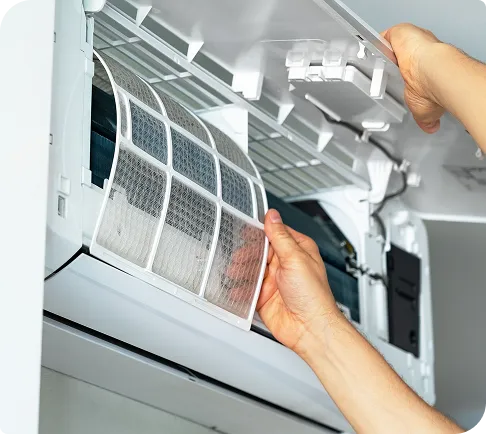
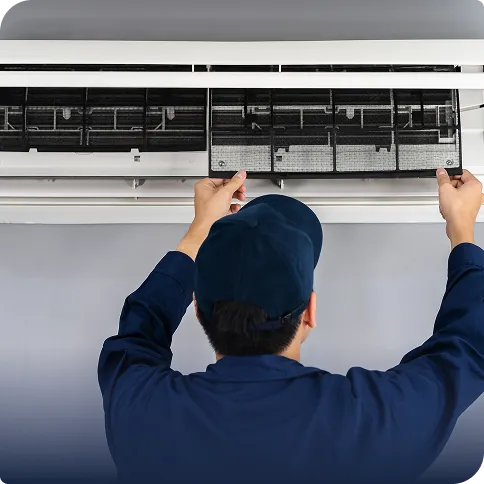
W.F. Smith HVAC technician inspecting the air filters inside a wall-mounted air conditioning unit during routine maintenance.

Why a Yearly Tune-Up Pays Off

Dirt is the slow enemy of an air conditioner. According to the U.S. Department of Energy, swapping a dirty, clogged filter for a clean one can cut an air conditioner’s energy use by 5% to 15%. Dirty coils and partly clogged drains cause the same kind of gradual decline, and most people do not notice it until the system struggles on a 95-degree day.

A yearly visit also builds a service history for your equipment. When the system gets older, that record makes repair-or-replace decisions much easier.

When a Tune-Up Finds a Problem

Maintenance is for a system that is working. Repair is for one that is not cooling right or has a specific fault. If a tune-up turns up a failing capacitor, a clogged drain, a refrigerant leak, or a worn motor, the technician shows you what was found and explains which repairs are needed now and which can wait. You get the price before any repair work starts.
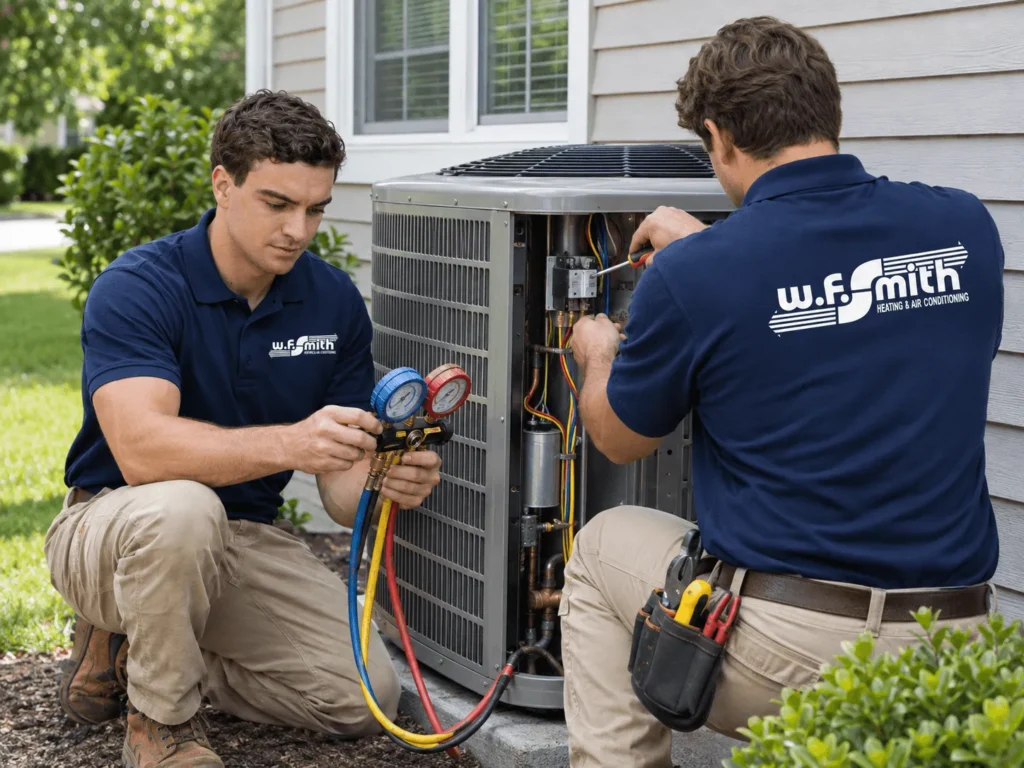
Two W.F. Smith HVAC technicians performing maintenance on an outdoor residential air conditioning unit, checking refrigerant pressure and inspecting electrical components.
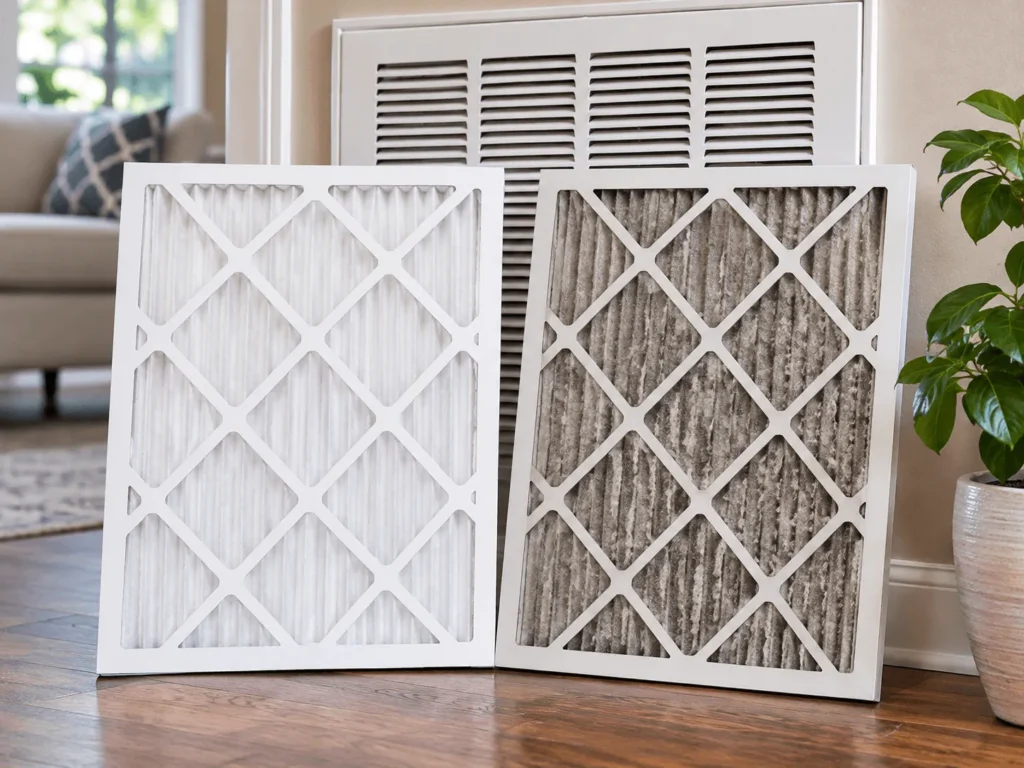
Clean white HVAC air filter next to a dirty, dust-covered filter beside an open return-air vent in a home.

What You Can Do Between Visits

  • Check the filter every month or two during summer, and replace it when it looks gray or dusty.
  • Keep about two feet of open space around the outdoor unit, and clear away leaves, grass clippings, and plants.
  • Keep supply vents and return grilles open and unblocked by furniture or rugs.
  • Watch for water, ice, new noises, odors, or rooms that stop cooling.
  • If a breaker trips twice, leave it off and call instead of resetting it again.

Maintenance for Ductless and Heat Pump Systems

Ductless mini-splits need the same yearly visit plus some homeowner care. Clean the indoor unit’s washable filters as often as the owner’s manual directs, more often during heavy summer use. Mitsubishi Electric is the ductless brand we install most, and our technicians also maintain other ductless brands.

Heat pumps run all year, so they wear faster than an air conditioner that rests all winter. Most heat pump owners book two visits a year, one in spring for cooling and one in fall for heating. 
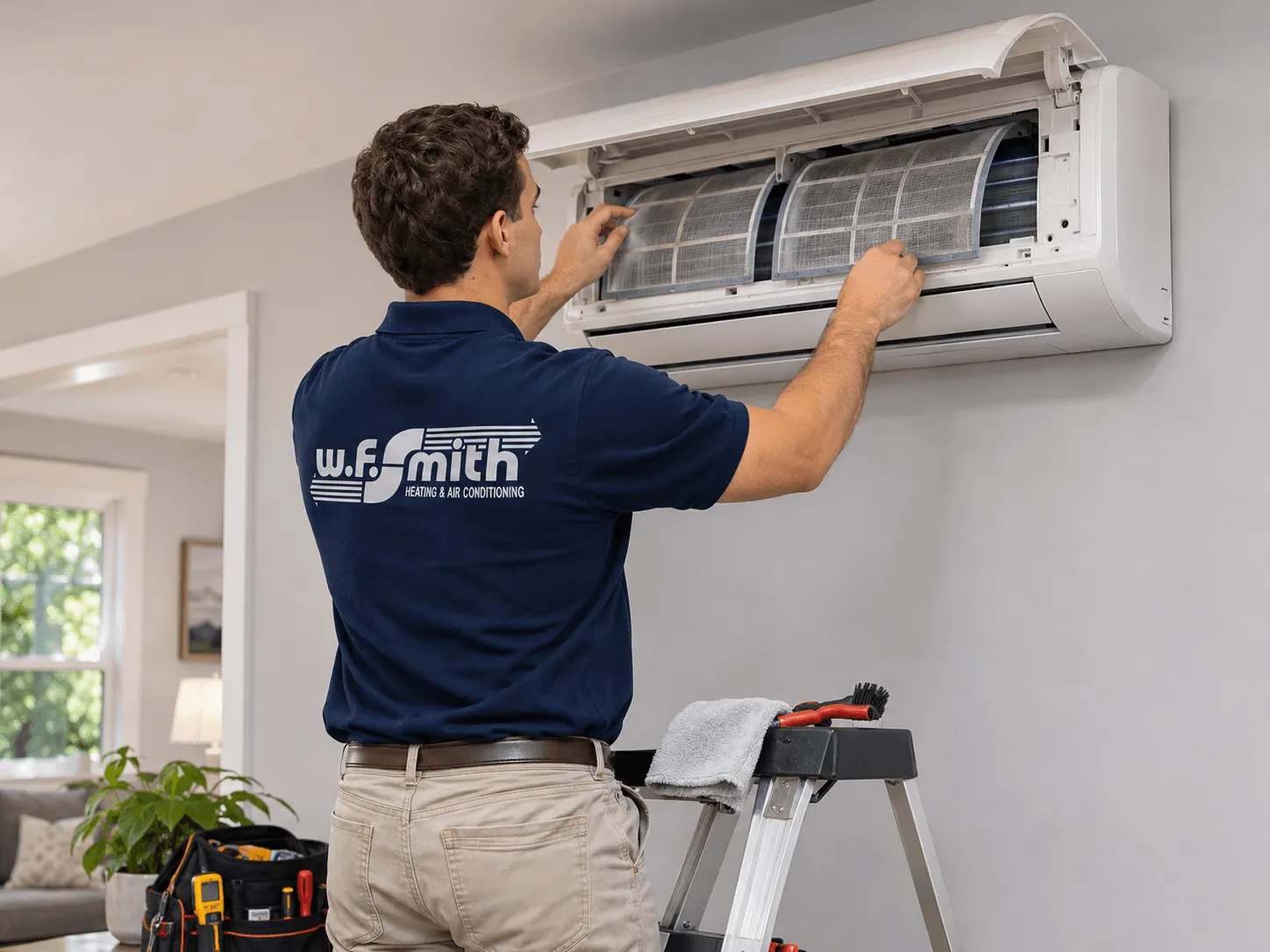
W.F. Smith HVAC technician performing preventive maintenance on a wall-mounted ductless mini-split air conditioner, inspecting and cleaning the indoor unit's air filters.
HVAC technician completing an air conditioning maintenance checklist beside an outdoor residential AC unit.

One-Time AC Maintenance or the W.F. Smith Maintenance Plan?

You can book a single AC tune-up whenever you need one. Homeowners who want regular heating and cooling service through one ongoing program can join the W.F. Smith Maintenance Plan instead, and plan members get priority when they need emergency service. The plan page lists current pricing, included visits, and terms.

AC Maintenance Questions From Philadelphia Homeowners

How often should I schedule AC maintenance?

Once a year for a central air conditioner, ideally in March, April, or May before Philadelphia’s first long stretch of heat. A spring visit also fits in before summer repair calls fill the schedule. Heat pumps, which run all year, usually need a second visit in the fall. Follow your equipment manufacturer’s schedule if it calls for more frequent service.
No. Refrigerant circulates in a sealed loop, so a healthy system never needs more added. If the technician sees signs of a low charge during a tune-up, that points to a leak somewhere in the system. Finding and repairing the leak is separate repair work, and you get the price before any refrigerant work begins.
A tune-up lowers the chance of a breakdown, but it cannot rule one out. It catches parts that are already wearing, such as a capacitor that tests weak or a drain that is starting to clog. Parts can still fail without warning, especially in an older system. Yearly visits mean more of those problems get caught before the hottest weeks of summer.
It depends on the manufacturer. Some equipment warranties require proof of regular professional maintenance, and others do not. The terms depend on the brand, the model, and whether the equipment was registered. Check your written warranty, and keep the service record from each tune-up in case you ever need to file a claim.
Yes, starting with its first full cooling season. A new system can still collect dirt on its coil, clog its drain line, or develop loose electrical connections. Yearly visits also start a service record from day one, which helps with warranty questions and future repair decisions.
A full cover is usually not needed. Outdoor units are built to sit outside year-round, and a tight cover can trap moisture and invite rodents. If falling ice or branches are a concern, a cover over the top only is enough. Never cover a heat pump in winter, because it runs all season to heat your home.

Schedule AC Maintenance