
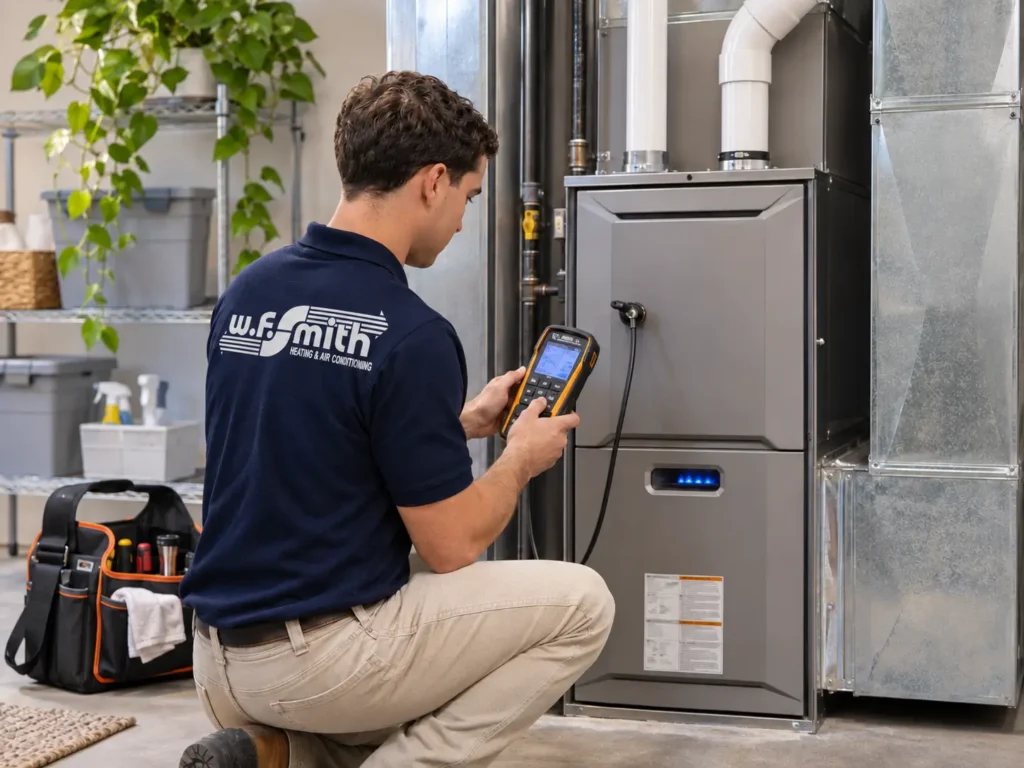
Most maintenance visits happen when the furnace appears to be working. That is exactly why the visit is useful. Small changes in ignition, airflow, startup sound, cycling, or control response can develop slowly enough that the homeowner adjusts to them before they become an obvious no-heat problem.
Fall maintenance gives the technician a chance to watch a full heating cycle, look at the condition of the equipment, and compare what the furnace is doing now with what healthy operation should look like. It is preventive service, not a promise that no part can fail later in the season.
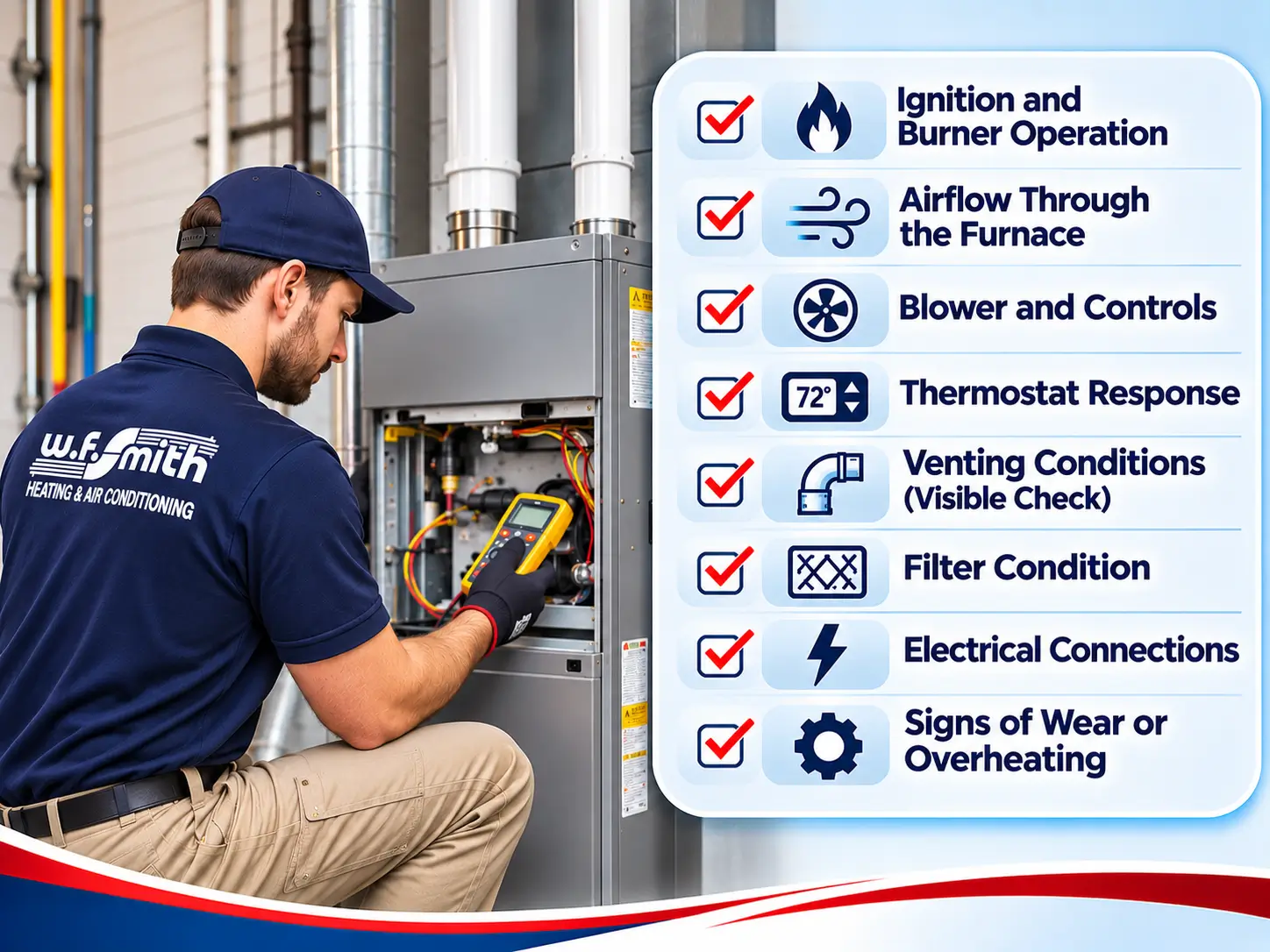
A furnace tune-up is centered on the parts of the system that have to work together every time the thermostat calls for heat. The technician looks at ignition and burner operation, airflow through the furnace, the blower and controls, thermostat response, visible venting conditions, filters, electrical connections, and signs of wear or overheating around the equipment.
The exact work depends on the furnace and what the technician finds. If maintenance uncovers a failing part, a venting concern, an airflow problem, or another condition that needs repair, that repair is explained and priced separately before additional work begins.

A furnace can sit through months of warm weather before the first real call for heat. By early fall, filters may be dirty, dust may have settled around the equipment, and a part that was already wearing last winter may be closer to failure. Checking the system before it has to run for hours at a time gives the homeowner more room to address problems without the pressure of a cold house.
The value is not only avoiding breakdowns. A maintenance history also makes future repair-or-replace conversations easier because the condition of the furnace has been observed over time rather than judged from one emergency visit.
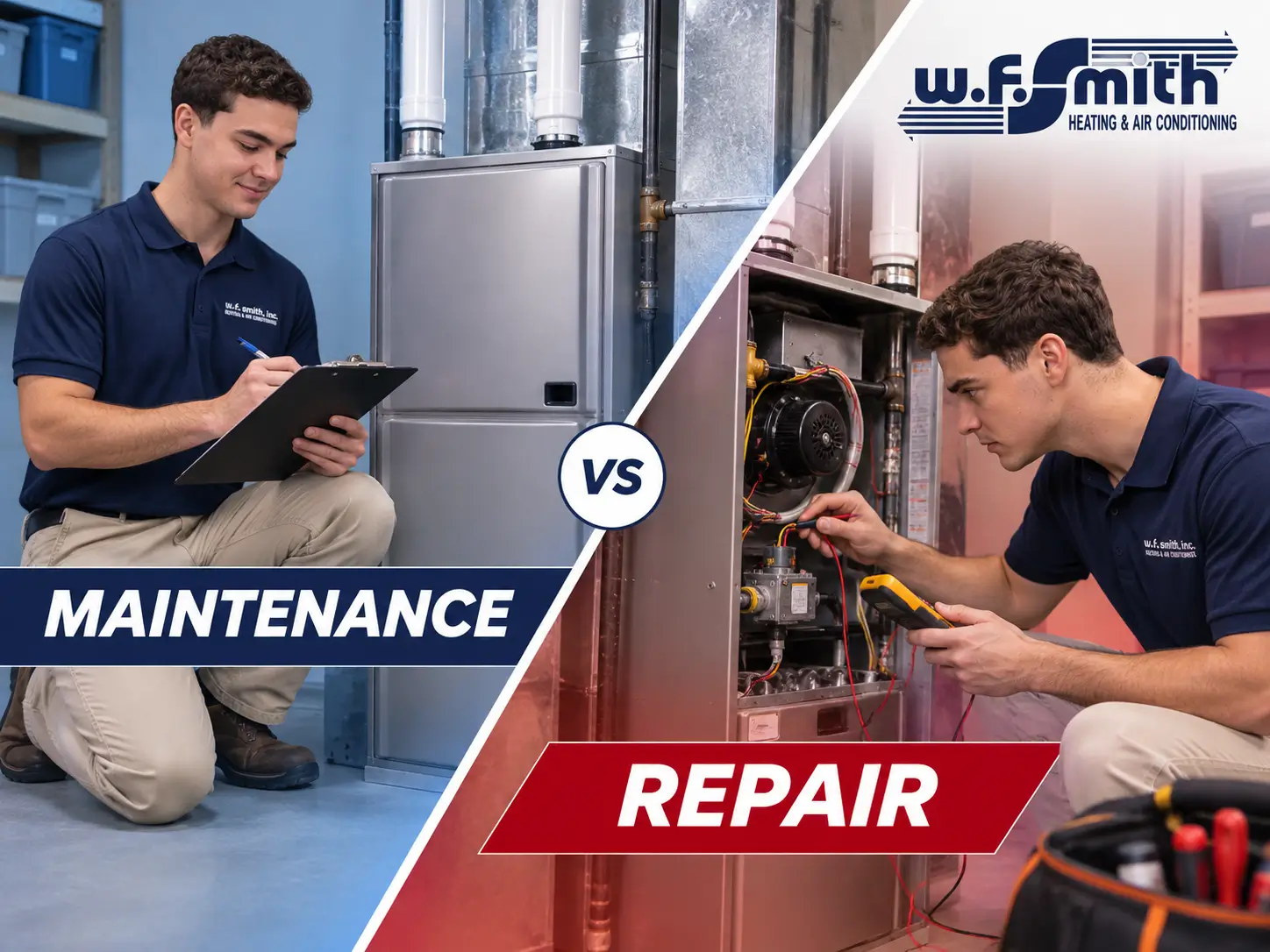
Maintenance belongs to a furnace that is operating and needs preventive attention. Repair belongs to a furnace with a specific fault: no heat, repeated shutdowns, ignition trouble, a breaker that keeps tripping, unusual odors, or another problem that is already affecting operation.
If a tune-up reveals a repair need, W.F. Smith explains what was found before the work changes from maintenance to repair. The homeowner should know when the visit has moved from preventive service into a separate repair decision.
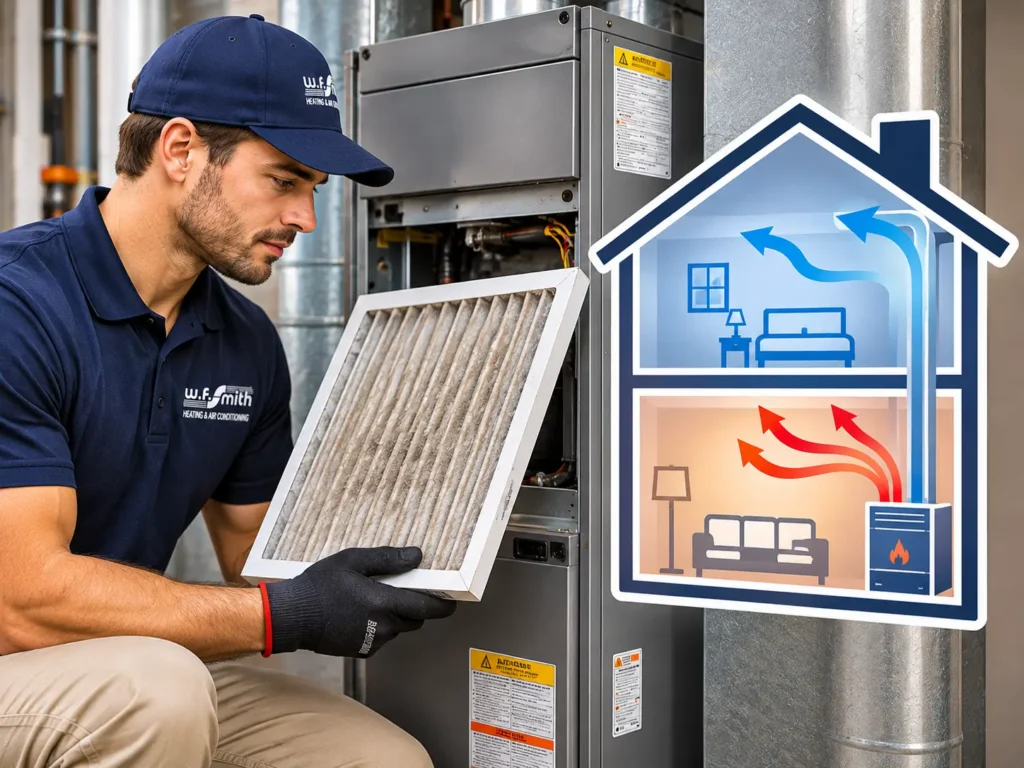
The filter is one of the simplest parts of the system, but airflow affects almost everything the furnace does. When the filter is heavily loaded or returns and supply paths are restricted, the furnace can run hotter, move less heat to the rooms, and cycle differently than it should. In multi-story Philadelphia homes, those airflow limits can show up first as a colder upper floor or longer run times.
Maintenance cannot redesign poor ductwork, but it can separate an equipment problem from a distribution problem. That distinction matters when the furnace itself is healthy and the real comfort issue lives in the ducts, returns, zoning, or layout of the home.
The furnace does not need a technical inspection every time the weather changes. What matters between visits is noticing when normal operation changes: a filter loading faster than expected, a new startup sound, longer heating cycles, frequent short runs, rooms that suddenly fall behind, or a smell that is different from the brief dusty odor some systems have on the first run of the season.
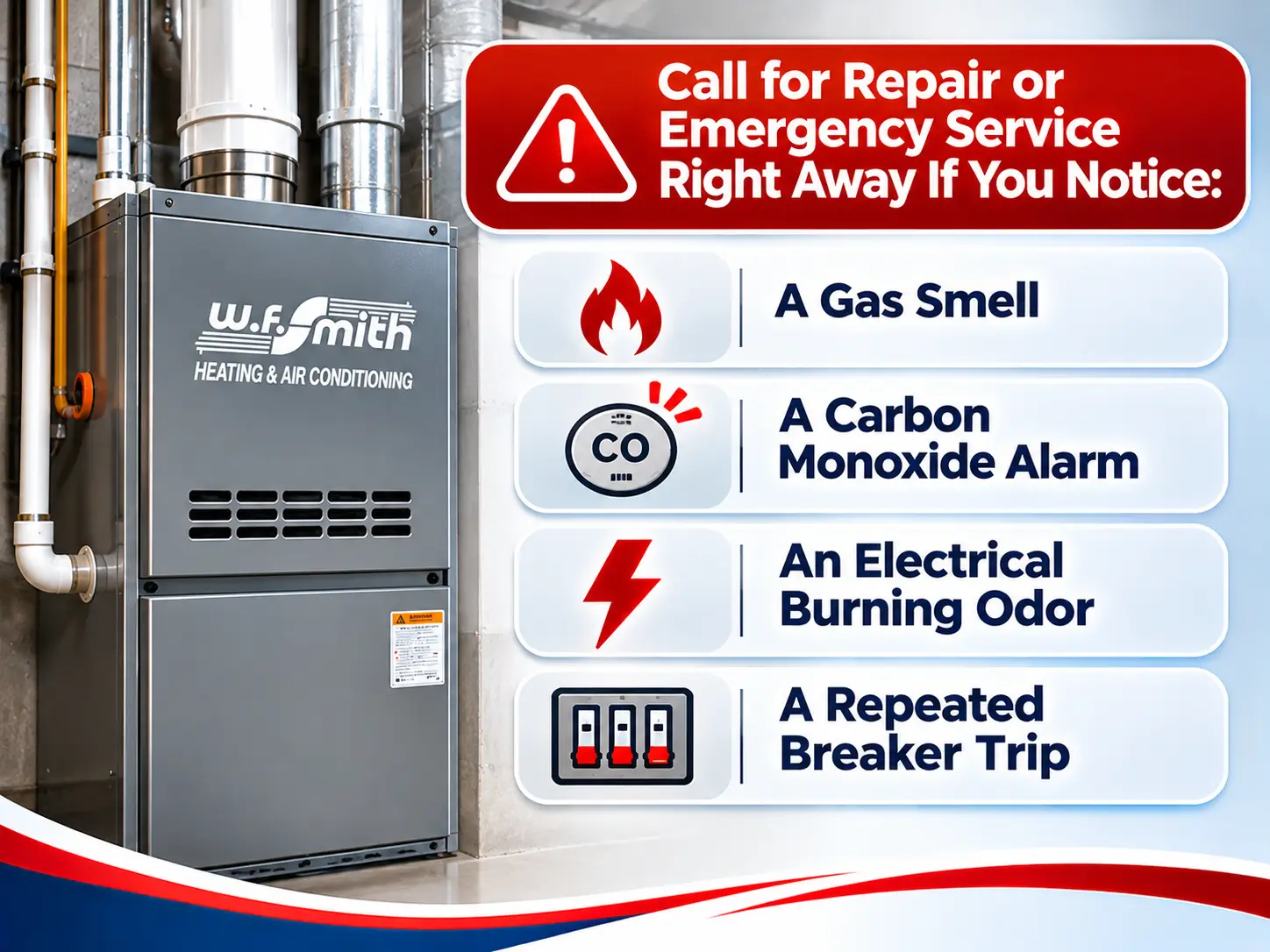
A gas smell, carbon monoxide alarm, electrical burning odor, or repeated breaker trip should not wait for routine maintenance. Those situations belong on the repair or emergency path instead.
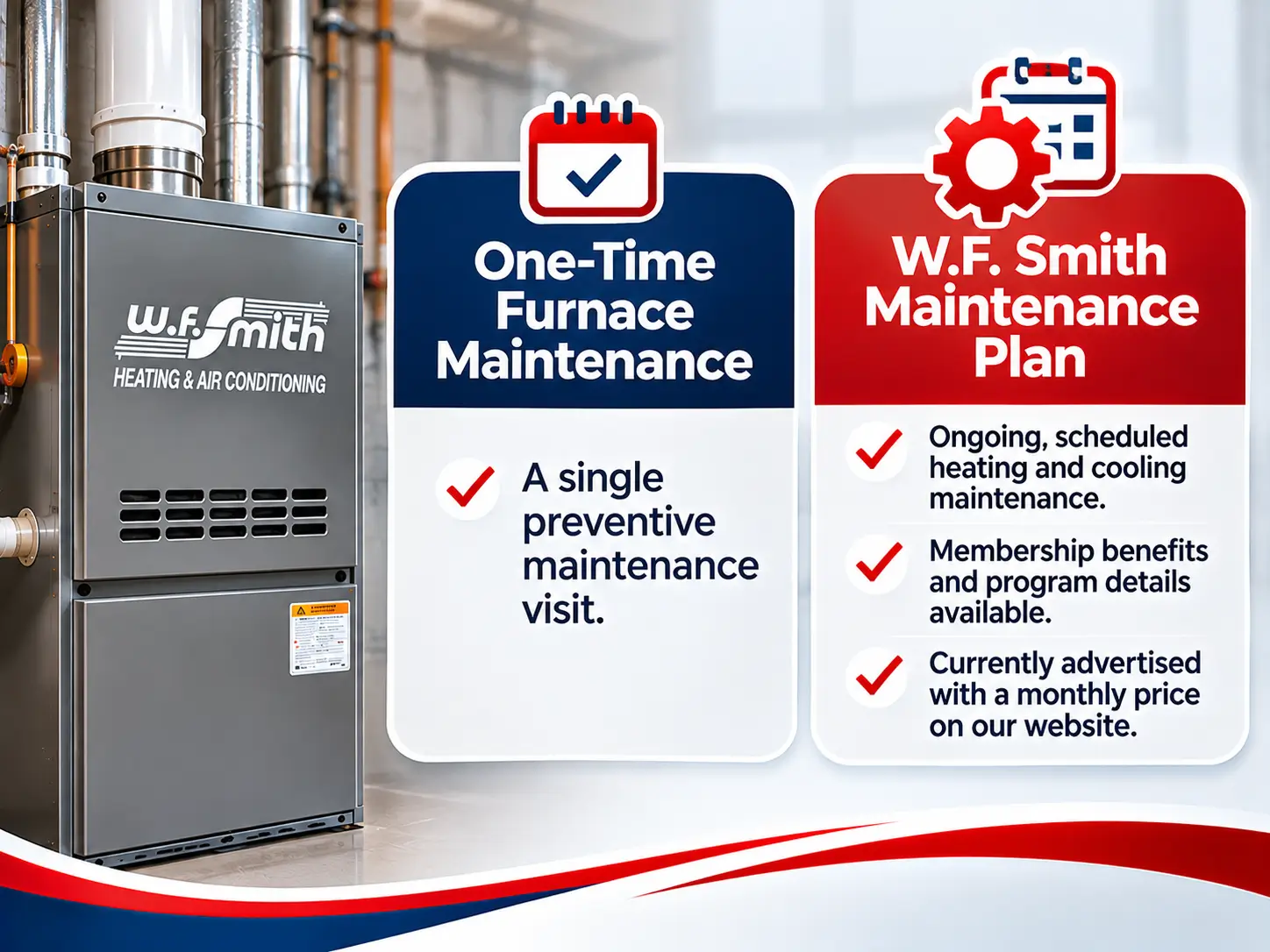
A homeowner can schedule a single furnace maintenance visit without joining an ongoing program. The W.F. Smith Maintenance Plan is different: it is the paid program that organizes regular heating and cooling maintenance under one membership and currently advertises a monthly price on the website. Plan-specific benefits, visit frequency, covered equipment, and terms belong on the Maintenance Plan page rather than being repeated here.