


Glenside HVAC for Twins, Singles, and Narrow Lots

A family business since 1946. W.F. Smith, Pennsylvania license PA003700.

A Local Family Shop Since 1946

W.F. Smith is a family-owned heating and cooling company that serves Glenside, PA. We install, fix, and take care of heating and cooling for homes across the whole 19038 ZIP code, out of a shop on State Road in Northeast Philadelphia that has been there since 1946.

Our office tells you the visit fee before we come out, and estimates for new systems are free. We work on air conditioners, gas furnaces, heat pumps, ductless systems, ducts, and indoor air quality. We do not work on boilers, water heaters, oil systems, or steam systems.

Most of our regular systems use Lennox, and most of our ductless systems use Mitsubishi Electric. Whatever brand is already in the basement, our technicians work on it.

Glenside grew up around a train station that opened in 1855, and the homes followed the tracks. Most of them were built between 1900 and 1930, as twin homes and modest single homes on narrow lots with short front yards and tiny side yards. These homes are smaller than the equipment that usually ends up installed in them.

Book AC service or a free replacement estimate

Common HVAC Problems in Glenside Homes

Complaints on these blocks repeat because the homes do too. A twin home built in 1922 has the same basement, the same stairs, and the same distance to its neighbor as the one three doors down. A fix that works on one often works on the whole block.

What we get called for most:

  • A system two sizes too big for the home. It cools the rooms in ten minutes, shuts off, and leaves the wet air behind. The home ends up cold and damp at the same time.
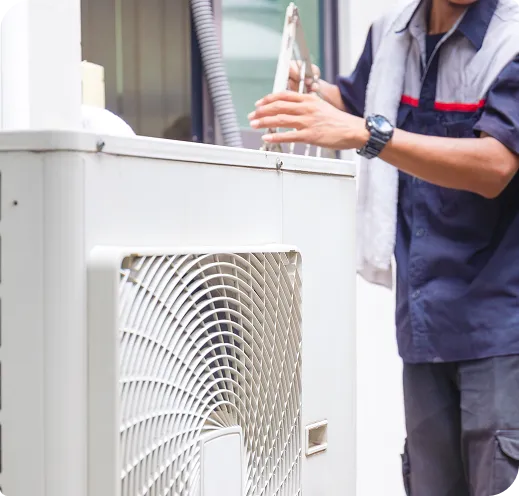
  • An outdoor unit boxed in on three sides. A fence, a hedge, and a neighbor’s wall sitting within a few feet leave no room to open a service panel or clean the coil.
  • Ducts hung under a seven-foot basement ceiling. Ducts added years after the home was built eat up headroom and often block the filter slot, so the filter goes unchanged for years.
  • A room over the front porch nobody can keep comfortable. Three walls facing outside, a floor over open air, and usually just one small vent at the end of the longest duct run.

Air conditioning

Heating and furnaces

Heat pumps and dual-fuel

Ductless mini-splits

After-Hours Emergency Service

Glenside calls tend to come in early in the evening. A twin home this size holds so little air that it loses its temperature within hours, so the phone rings the same day the system quits, not the next morning. W.F. Smith offers after-hours help for emergencies. We do not run regular service around the clock.

Our office answers calls Monday through Friday, 8:00 a.m. to 4:00 p.m. Outside those hours, an answering service reaches the technician on call, who calls you back.

Evening and Saturday visits cost more. Sundays and holidays cost even more than that. The technician tells you the price before leaving the shop. Customers with a maintenance plan get seen first. Parking is tight on these blocks, so let the dispatcher know if the home has a driveway.

Ductwork, air quality, and maintenance

These last three things all run into the same tight spaces:

Custom ductwork

Fitting supply and return ducts into a home with a seven-foot basement and one duct path means building to fit exactly what is there.

Indoor air quality

An older twin home leaks air around the basement rim and the attic hatch, and pulls in whatever the block produces. Air purifiers, dehumidifiers, and better filters earn their keep here, where the air inside is small in volume and turns over slowly.

Maintenance

An outdoor unit just a few feet from a fence collects grass clippings and leaves faster than one in an open yard. Get the cooling checked in spring and the heat checked in fall.

Ask about a maintenance visit before the season turns

Why a Glenside Twin Is Harder on HVAC Than Its Size Suggests

Small homes are not simple homes. Four things about these blocks decide most of the work here.
Four things drive the difference:
  • Just a few feet of side yard. How much space is open, where the property line sits, and which window the unit faces all decide where it can go. The choices are usually the side yard, the back yard, or a spot set away from the wall.
  • Equipment bigger than what the home needs. Short-cycling, where the system turns on and off too fast, is the standard problem on these blocks. It leaves humidity behind and wears out the parts that start and stop the most.
  • Basements built in the 1920s. A seven-foot ceiling, a narrow staircase, and a door built into the outside wall all decide which furnace or air handler can physically get down there.
  • Rooms that were never built with heating or cooling in mind. A half-story attic, an enclosed porch, and the room over the front porch all came before central air and got left out of the duct plan.

Where We Work in Glenside

The 19038 ZIP code covers parts of two townships, and the homes change as you move away from the train station.

We also cover Abington Township, Cheltenham Township, Jenkintown, Elkins Park, and more than 20 other communities across Bucks and Montgomery Counties, plus Lambertville, New Jersey.

The streets closest to Glenside Station (19038).

Tight lots and short front yards, with the smallest side yards and the hardest spots to place an outdoor unit on our whole list.

Keswick Village and the blocks near the old theater (19038).

Twin homes and small single homes close together, many still cooling with window units or a first duct system added late.

The Easton Road area (19038).

A mix of homes behind the main shopping street, where parking and access shape how we schedule a system swap.

Around the Arcadia University campus (19038).

A share of rental homes and homes split into units, often with older equipment and both a landlord and a tenant in the conversation.

The Abington Township side toward Ardsley and North Hills (19038).

Newer homes sitting right next to older ones, so two neighbors can need completely different work.

Our Experience in Glenside Homes

W.F. Smith has worked in Montgomery County homes since 1946, and the Smith family still owns the company. Our five owners have more than 140 years of work experience between them. Our main technicians have worked here for over 20 years each on average. We hold Pennsylvania Home Improvement Contractor license PA003700 and have been accredited by the BBB since 1991.

On a Glenside job, that long history shows up as knowing what will actually fit. We have carried furnaces down 1920s staircases that looked too narrow for them. We have set outdoor units in side yards measured in inches. We have replaced a bedroom full of window units with one system with several indoor units. Parts on repair work come with a one-year warranty, and new equipment is registered for its full warranty from the maker.

Why Glenside Homeowners Call W.F. Smith

We will tell you the home needs less, not more.

When measuring shows the old equipment was too big, our quote reflects that. A correctly sized system runs longer, pulls out more moisture, and costs less to buy.

We measure the stairs and the doorway first.

Equipment that cannot physically get to the basement is not an option, no matter what the spec sheet says, so we check the path during the estimate visit.

Noise is part of the plan, not an afterthought.

With a neighbor’s bedroom window just twelve feet from the pad, where the unit sits matters as much as what it can do.

One visit settles repair versus replace.

A technician prices the repair, tells you how much life the rest of the system has left, and gives you the replacement price on the same visit.

HVAC Questions From Glenside Homeowners

Where can the outdoor unit go if I only have three feet of side yard?

It has three realistic spots: the side yard where there is enough space, the back yard, or a spot along the back wall away from windows. An outdoor unit needs open air around the coil and above it, plus room for a technician to open the service panels. Property line rules apply too, so we confirm the current requirement with your township before placing the unit.
Because the home actually needs less. Equipment on these blocks was usually sized by just matching whatever came out before, and that old system was often sized for a home with different windows and less insulation. A system that is too big shuts off before it has pulled the moisture out of the air, so the home feels cold and damp at the same time. A correctly sized system runs longer and costs less to run.
Usually, but it is worth checking before you pick one out. A 1920s Glenside basement staircase is narrow and ends under a seven-foot ceiling. Furnaces and air handlers come in different widths and heights, and some can be taken apart for the trip down and put back together once they are in place. A technician measures the stairs, the outside door, and the space around the existing unit during the estimate visit.
There are two routes, and the home decides which one fits. Where there is a usable path and a basement to run ducts from, regular central air works, though the second floor then depends on one shared duct path. Where no path can be spared, a ductless system puts an indoor unit in each room that needs one. Either way, the window units come out.
It has more exposed surface than any other room in the house. Three walls face outside, the floor sits over open air, and the ceiling sits under a roof with little insulation. Most of these rooms were built with just one small vent at the end of the longest duct run, so they lose out on airflow before they even have a chance. A ductless unit or a dedicated supply and return vent is the usual fix.
Keeping the outdoor unit clear. A fence or hedge just a few feet away collects grass clippings and fallen leaves against the coil. That makes the system work harder and cool less on the hottest days. Rinse the coil off each spring and keep two feet of open space on every side. Change the filter every three months, and keep an eye on the drain line in a low Glenside basement.

Comfort in Glenside Often Comes Down to Airflow

Talk to a Glenside HVAC Contractor