
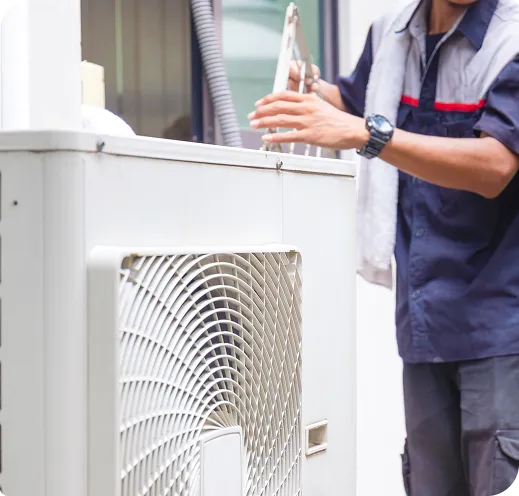
W.F. Smith is a family-owned heating and cooling company that serves Langhorne, PA. We install, fix, and take care of heating and cooling in Langhorne Borough, Langhorne Manor, Penndel, and the nearby Middletown Township. Our shop has been on State Road in Northeast Philadelphia since 1946.
Our office tells you the visit fee before we come out, and estimates for new systems are free. We work on air conditioners, furnaces, heat pumps, ductless systems, ducts, and indoor air quality. We do not work on boilers, water heaters, oil systems, or steam systems.
Most of our new systems use Lennox or Mitsubishi Electric. Our technicians also fix other big brands, and every new system starts by measuring your home first.
Langhorne really has two different kinds of homes in one ZIP code. The borough is a small area of old houses built before homes even had central heat. A mile away sit newer Middletown Township homes built from the 1960s on. A company that treats 19047 like one kind of place gets it wrong half the time.
Cooling a Langhorne home starts with a question most towns never have to ask: does the house even have room for ducts? Borough homes usually do not, and township homes usually do.
We fix, replace, install, and take care of central air conditioners on both sides of that line. Common calls are warm air at the vents, a frozen coil, a refrigerant leak, and an outdoor unit that will not turn on.
On the township side, most jobs are replacements, sized after years of new windows and extra insulation. On the borough side, the first question is usually whether to use regular ducts or go ductless.
Furnace work in Langhorne often runs into the chimney more than the furnace itself. Borough homes have brick chimneys built to vent a coal furnace, and a modern furnace cannot use one as it is. The fix is a metal liner inside the chimney or a vent through the wall. We never add that as a surprise cost later. We price it with the furnace from the start.
Township furnaces sit in basements and closets with more room to work in. Most no-heat calls there come from a problem starting the flame, a broken flame sensor, a bad thermostat, or a dirty filter. A technician checks each step the furnace goes through to find where it stops, instead of just swapping parts and hoping.
We do not work on boilers, steam systems, or oil heating. A borough home with one of those can still get its air conditioning taken care of by us.
A heat pump works well on the township side of Langhorne, but raises harder questions in the borough. Newer homes often already have the ducts, the space, and the electrical power needed. New heat pumps still work well even when it is well below freezing outside, so a heat pump alone can work well in a newer colonial home. If you want a backup, we can pair it with a gas furnace that switches on based on how cold it is outside.
In the borough, the real limit is usually finding a spot for the outdoor unit, not the equipment itself. Small backyards and close property lines put the unit near a neighbor’s wall, so we settle on space and noise before ordering anything.
Rebates from the Electrical Association of Philadelphia and from the equipment makers often apply, and payment plans are available for some jobs.
Ductless systems are the reason cooling is even possible in Langhorne Borough at all. A home with plaster walls, no space inside the walls, and radiators still in use has nowhere to run normal ducts. One outdoor unit feeds indoor units through a small hole in the wall for each room, with no boxed-in pipes, no lowered ceilings, and no lost closet space.
Mitsubishi Electric is the brand we install most here. One indoor unit can handle one problem room, and a system with several indoor units can cover a borough home floor by floor. Township homes often use ductless for a sunroom, a finished attic, or an extra room the main system never reached.
After-hours calls in Langhorne split the same way the housing does. Borough homes tend to lose heat in January, and newer homes tend to lose their air conditioner in July. W.F. Smith offers after-hours help for emergencies. We do not run regular service around the clock. Our office answers calls Monday through Friday, 8:00 a.m. to 4:00 p.m. Outside those hours, an answering service will reach the technician who is on call.
After-hours and Saturday visits cost more. Sundays and holidays cost even more than that. The technician tells you the price before leaving the shop. Customers with a maintenance plan get seen first.

We work the whole 19047 area, and a few parts of it keep us busiest.
We also cover Philadelphia and more than 20 other communities across Bucks and Montgomery Counties, plus Lambertville, New Jersey.
A small area of old houses, many still heated by radiators, where a ductless system is often the only real way to add cooling.
Bigger, older homes where the trees are thickest, and smaller homes where the spot for the outdoor unit depends on how close the neighbor's wall is.
Newer homes and split-level homes built from the 1960s on, where a too-hot second floor is the most common complaint.
Newer homes with proper ducts already built in, on wooded lots where cleaning the coil each fall is well worth it.
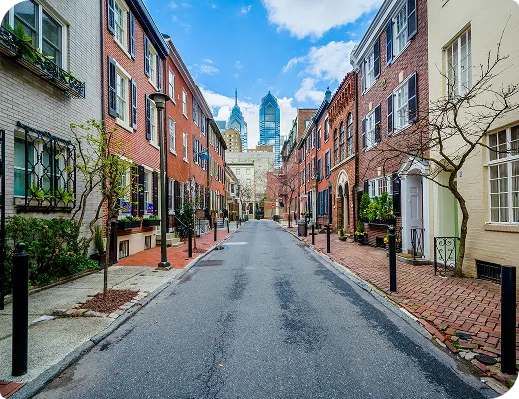
W.F. Smith has worked in Bucks County homes since 1946. The Smith family still owns and runs the company. Our five owners have more than 140 years of work experience between them, and our main technicians have worked here for over 20 years each on average. We hold Pennsylvania Home Improvement Contractor license PA003700 and have been accredited by the BBB since 1991.
On a Langhorne job, that long history shapes how the first visit goes. A crew that has worked on plaster-walled borough homes knows where pipes can run before anyone even opens a wall. Parts on repair work come with a one-year warranty, and new equipment is registered for its full warranty from the maker.