Gas Furnace Repair for Philadelphia Rowhomes and Twins

W.F. Smith has kept Philadelphia furnaces running since 1946. License PA003700.

Gas Furnace Repair for Philadelphia Homes

W.F. Smith repairs gas warm-air furnaces in Philadelphia homes. Our office confirms the residential diagnostic fee before a visit — lower through most of the city, higher in Center City ZIP codes, where parking and traffic stretch the visit. Neither figure comes off the repair. Replacement estimates are free.

A technician watches the ignition sequence and tests the suspect part before a price is named. You see the reading that condemns the part. Only then does the repair get quoted.

Boilers, steam systems, and oil equipment sit outside what we service, and the office says so on the first call. Lennox is the brand we install most, and our technicians work on the others.

Signs Your Furnace Needs a Technician

A furnace rarely dies without warning. Most of these signs show up weeks before the no-heat call comes in.
  • No heat and no response from the unit. Usually the furnace switch, the breaker, or dead thermostat batteries.
  • The burners light, then cut out within a minute. A dirty flame sensor, a blocked flue, or a pressure switch that can’t hold.
  • Banging, scraping, or a rumble through the party wall. Bearings, a cracked inducer wheel, or delayed ignition.
  • The furnace starts and stops every few minutes. Short cycling wears the ignitor and the blower motor.
  • A sharp smell of gas anywhere in the house. Leave first, then call the gas utility from outside.
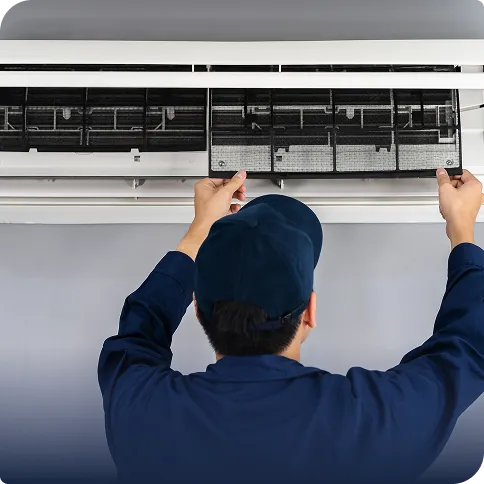
W.F. Smith HVAC technician inspecting the air filters inside a wall-mounted air conditioning unit during routine maintenance.

How We Track Down a No-Heat Call

A no-heat call is a sequence, not a hunt. City furnaces sit in basements, closets, and converted spaces. Clearance down there is tight. That changes how long the work takes, not the order it follows.
Five steps, every time:
  • Controls and power. Thermostat call, furnace switch, breaker, and door switch, since many no-heat calls end right here.
  • Ignition sequence. The technician watches the inducer, the pressure switch, the ignitor, and the flame signal in order.
  • Combustion and venting. Flue condition, draft, and combustion air, which matter more on an old masonry chimney.
  • Component testing. The suspect part gets a reading, not a verdict.
  • Quote and repair. The failed part and its price come to you first.
Parts are not fired at a furnace until the fault is proven. That’s what the diagnostic pays for.

The Faults We See Most in City Basements

Ignition faults lead the list. A dirty flame sensor, a cracked ignitor, or a gas valve that won’t open covers most December no-heat calls.

Airflow is second. A loaded filter or an undersized return drives temperature rise up until the limit switch drops the burners, and in a narrow rowhome the return path is often one grille doing the work of three.

Venting matters most for safety. Older city furnaces often vent into a masonry chimney shared with a water heater, and a bad liner shows as a pressure switch that won’t close or as staining at the draft hood.
Repair or Replace a Furnace

What Furnace Repair Costs in Philadelphia

Our office confirms the residential diagnostic fee before a visit — lower through most of Philadelphia, higher in Center City ZIP codes, where parking and traffic add time to every call. Neither is credited against the repair, and replacement estimates cost nothing.

Pricing follows the diagnosis, never precedes it. Three things decide the figure.
  • Which part failed. An ignitor and a control board sit at opposite ends of the range.
  • Availability. Parts for an older or discontinued model take a day to source.
  • Access. A furnace in a low basement or tight closet takes longer to open up.
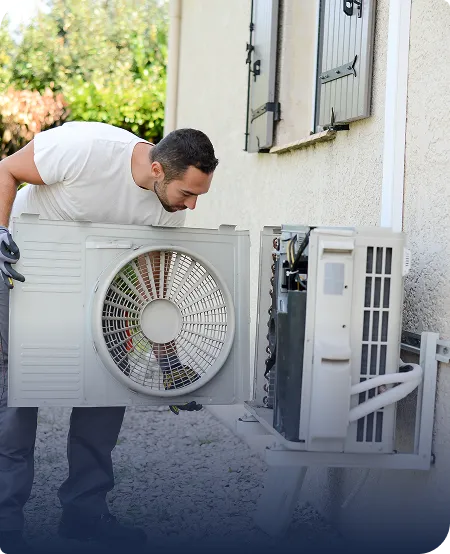
HVAC technician completing an air conditioning inspection checklist beside an outdoor AC unit to assess commercial cooling service needs.
Heating rates stay level all winter. A cold snap does not raise them, and a mild February does not cut them. Manufacturer and Electrical Association of Philadelphia rebates apply to replacement work, and financing is available.
HVAC technician completing an air conditioning maintenance checklist beside an outdoor residential AC unit.

Why Philadelphia Homeowners Choose W.F. Smith for Furnace Repair

  • Gas heat is our lane, and we name what’s outside it. Boilers, steam, and oil get ruled out on the phone.
  • The vent gets checked, never skipped. On an old shared chimney a no-heat call is a safety call too.
  • Parts are tested, not suspected. A reading gets taken and shown to you before anything is changed.
  • Heating rates hold through a cold snap. What a repair costs in January is what it costs in September.

Furnace Repair Questions We Get Asked

What does a no-heat call cost in Philadelphia?

Our office confirms the diagnostic fee before dispatch — lower across most of Philadelphia and higher in Center City ZIP codes, where parking and traffic add time to the call. It pays for a technician to find the fault and put a price on the repair. The fee stands whether you approve the work or not, and it doesn’t come off the repair. Replacement estimates are free.
That pattern usually means the burners lit and then dropped out. A dirty flame sensor is the most common cause, since it stops proving flame and the control shuts the gas within seconds. A blocked flue, a failing pressure switch, or an overheating limit produces the same behavior. The blower keeps running to clear the heat exchanger, which is the cold air you feel.
No. A cracked heat exchanger means replacing the exchanger or the furnace. It separates combustion gases from the air you breathe, and a crack lets those gases into the supply. A technician who finds one shuts the furnace down and tags it. Past 15 years the exchanger usually costs enough that a new furnace is the better spend.
Our office answers Monday through Friday, 8:00 a.m. to 4:00 p.m., and books the soonest slot open. Outside those hours an answering service reaches the technician on call, who rings back and quotes the overtime rate before setting out. Maintenance customers are worked in first. We don’t quote an arrival time before a technician is assigned.
Three causes cover most of it. A clogged filter or a blocked return starves the blower, the heat exchanger overheats, and the limit switch cuts the burners. A furnace oversized for a narrow rowhome heats the space faster than the thermostat can settle. A failing flame sensor or a misplaced thermostat will do it too.
It affects access and combustion air more than the repair itself. A technician needs room to pull the blower and reach the burner tray, so move anything stored against the cabinet. Tight closets also starve a furnace of combustion air, which shows up as sooting or a pressure switch that won’t close.
Yes. Lennox is what we install most, and our technicians service the other major brands as well. Give the office the model and serial number when you book, since that tells us the ignition type, the usual failure parts for that cabinet, and whether the equipment is still under manufacturer warranty.
Start at the thermostat. Confirm it’s set to heat, the setpoint sits above room temperature, and the batteries are fresh. Check that the furnace switch is on and that the breaker hasn’t tripped. Look at the filter, since a loaded one trips the limit and stops the burners. Confirm the gas is on at the meter.

When a No-Heat Call Becomes a Replacement Conversation

Get the Heat Back On