

Philadelphia HVAC Service From a Local Family Shop

W.F. Smith, heating and cooling on State Road since 1946

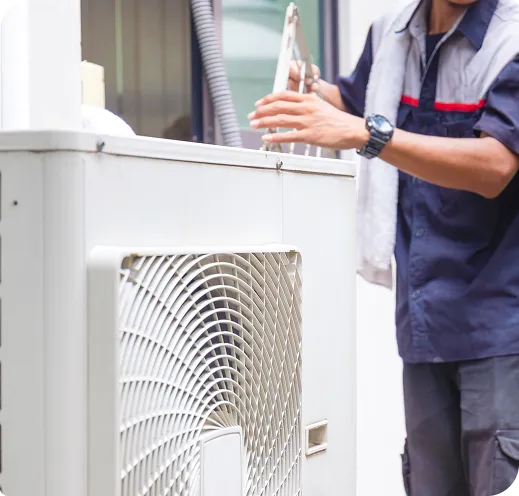
W.F. Smith is a family-owned HVAC company in Philadelphia, PA. The company installs, repairs, and maintains heating and cooling systems for homes across the city. Its shop has stood at 7310 State Road in Northeast Philadelphia since 1946.

A residential diagnostic visit costs $200 in most of Philadelphia and $300 in Center City ZIP codes. We cover air conditioning, furnaces, heat pumps, ductless mini-splits, ductwork, and indoor air quality. We do not work on boilers, water heaters, oil systems, or steam systems.

Most installs use Lennox or Mitsubishi Electric equipment. Our technicians service other major brands as well.

City HVAC work is its own problem. Rowhomes share walls, skip side yards, and often have no ductwork at all. That is why we size every system to the house instead of reaching for a standard one.

Book AC service or a free replacement estimate

Common HVAC problems in Philadelphia homes

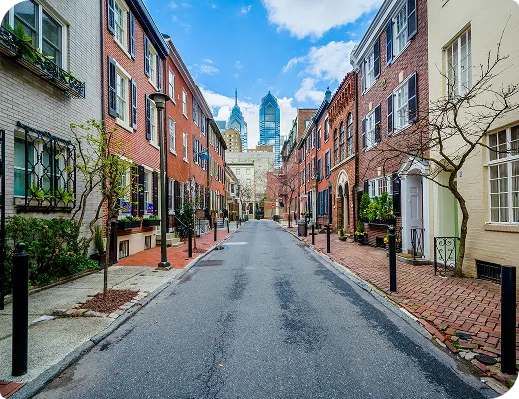
Philadelphia homes fail in predictable ways, and most of it traces back to age, humidity, and tight spaces. The city’s housing stock skews old, and summer dew points stay high from June into September. Both strain equipment in ways a newer suburban house never sees.

What we get called for most:

  • The third floor will not cool. Heat stacks up under a flat roof while the first floor sits comfortable. Usually a duct balance or sizing problem, sometimes a zoning fix.
  • The house feels clammy with the AC running. An oversized unit cools the air fast, shuts off, and never runs long enough to pull the moisture out. Our post on why a home stays humid with the AC on walks through the causes.
  • There is no ductwork anywhere. Plenty of older rowhomes were built for radiators. Adding cooling means new duct runs or a ductless system.
  • The condenser has nowhere to sit. No side yard leaves the roof, the rear alley, or wall brackets, and each has its own clearance rules.
  • A furnace short-cycles in a small rowhome. Equipment sized for a larger house switches on and off all day and wears out years early.

Air conditioning

Heating and furnaces

Heat pumps and dual-fuel

Ductless mini-splits

After-hours emergency service

W.F. Smith runs after-hours emergency service, not around-the-clock routine service. The office answers calls Monday through Friday, 8:00 a.m. to 4:00 p.m. Outside those hours an answering service reaches the technician on call.

After-hours and Saturday work bills at overtime rates, and Sundays and holidays bill higher again. The technician quotes those rates before coming out, so there is no surprise on the invoice. Existing maintenance customers get priority.

Ductwork, air quality, and maintenance

Three services tend to come up once the main equipment is sorted: 

Custom ductwork

Fitting duct into a rowhome takes fabrication, not off-the-shelf parts. We build and modify duct to fit the joist bays and chases a house actually has.

Indoor air quality

Whole-house air purifiers, dehumidifiers, and filtration help with the dust, pollen, and summer humidity that city homes trap.

Maintenance

Seasonal tune-ups catch small faults before a July heat wave turns them into a no-cool call. 

Ask about a maintenance visit before the season turns

Why Philadelphia is harder on HVAC than the suburbs

Philadelphia’s building stock and density change how equipment gets specified and installed. A system that drops into a Bucks County colonial will not work the same way in a Fishtown rowhome.

Four things drive the difference:
  • Party walls and no side yards. Condensers go on flat roofs, in rear alleys, or on wall brackets. Each placement carries clearance, noise, and access consequences.
  • Flat roofs and stack effect. Heat collects on the top floor, so a single-zone system almost always leaves the third floor behind.
  • Homes built before ductwork. Radiator-heated houses have no duct path, which pushes projects toward ductless or high-velocity systems.
  • Center City access. Traffic, permit parking, and loading restrictions add real time to every visit. That is why the diagnostic fee runs $300 in Center City ZIP codes and $200 elsewhere in the city. We would rather publish that than surprise you with it.
W.F. Smith HVAC replacement process showing estimate, measurement, written options, installation, and system commissioning.

Philadelphia neighborhoods we serve

Our crews work the whole city, and a few areas keep us busiest.

We also cover 22 more communities across Bucks and Montgomery Counties, plus Lambertville, New Jersey.

Queen Village and Bella Vista (19147).


Trinities and narrow rowhomes where ductless is often the only realistic route to cooling.

Graduate Hospital and Point Breeze (19146).

Heavy renovation activity, which means systems sized for the house as it was, not as it is now.

Fishtown, Northern Liberties, and Callowhill (19125, 19123, 19122).


New construction next to century-old housing, so the job varies block to block.

Fairmount and the Art Museum area (19130).


Tall, narrow homes where the top floor runs hot all summer.

Society Hill and Old City (19106).


Historic properties where exterior equipment placement needs care and discretion.

Rittenhouse and Center City (19103, 19107).


Access and parking shape scheduling more than the mechanical work does.

Mount Airy and Germantown (19119, 19144).


Large Victorian twins and stone houses with uneven room-to-room temperatures.

Roxborough, Manayunk, and East Falls (19128, 19129).


Steep lots and hillside homes that complicate condenser placement.

University City and South Philadelphia (19104, 19148).


A mix of rentals and long-held family homes, often with aging equipment.

Northeast Philadelphia (19111, 19114, 19115, 19116, 19136, 19152, 19154).


Our home turf. The shop is on State Road in 19136.

Our experience in Philadelphia homes

W.F. Smith has worked in Philadelphia houses since 1946, and the Smith family still owns and runs the company. Its five owners bring more than 140 years of combined industry experience, and the core technicians and installers average over 20 years each. The company holds Pennsylvania Home Improvement Contractor license PA003700 and has held BBB accreditation since 1991.

That history is specific rather than sentimental. Our crews have fitted duct into houses with 12 inches of joist depth, mounted condensers on flat roofs three stories up, and cooled attic conversions that no ductwork could ever reach. We know which Philadelphia housing types fight a standard install, because we have installed in all of them.

Why Philadelphia homeowners call W.F. Smith

Systems designed, not guessed

Every install starts with a load calculation and a duct assessment. No matching the old tonnage and hoping it works.

Pricing that does not move with the weather

Rates hold steady through a 95-degree week. We do not raise prices in a heat wave or cut them to the bone in the fall.

A family business, not a private equity roll-up

The Smith family owns the company and works in the office. The name on the truck belongs to people you can reach.

Straight answers on repair versus replacement

A technician tells you what failed, what it costs, and how long the rest of the system likely has. The choice stays yours.

Air conditioning questions we get asked

Why is my AC running but not cooling the house?

Four causes account for most of these calls. Refrigerant has leaked below the level the system needs. The condenser coil outside is caked with dirt and cannot release heat. The compressor is failing and no longer pressurizing the refrigerant. Or airflow is blocked by a clogged filter or a dirty evaporator coil. A technician can separate them by taking pressure and temperature readings, usually within the first half hour.

[VERIFY – state the diagnostic fee amount, whether it applies to every visit, and whether it is credited toward the repair if you approve the work.
Do not publish this answer until the client confirms the exact policy.]

Two things matter most: how old the system is and what the repair costs. [VERIFY typical service life range with the client.] When a repair costs a large share of a new system and yours is near the end of its life, replacing usually costs less over time.

[VERIFY – state the typical timeline for a standard changeout, for example one day, and what makes a job take longer, such as ductwork changes
or difficult access.]

[VERIFY – state the number of visits per year, what a technician checks on each visit, and any member discounts. Do not publish until the current
program is confirmed. See Section 8.]

Yes. We run an on-call process for urgent heating and cooling problems outside normal business hours. That is not the same as routine 24/7
service. Call us and we will walk you through what happens next.

Not right now. Call us or send a service request, and we will call you back to set a time. Our Instant Quote tool is separate and does not book a visit.

Not right now. Call us or send a service request, and we will call you back to set a time. Our Instant Quote tool is separate and does not book a visit.

Get your air conditioning sorted