Heat pump work in Langhorne is part of what W.F. Smith does, ducted and ductless alike. Neither the survey nor the real measurement is charged for. A repair diagnostic is separate — our office confirms the fee before a visit.
The first question is not which equipment. It’s what heats the house today, since the answer changes at the borough line. Gas at the curb is one project, radiators another.
Lennox is what we fit most on the ducted side, Mitsubishi Electric on the ductless.
Middletown Township streets have gas at the curb and a furnace in the basement. That furnace is worth keeping, so the straightforward move is dual-fuel.
Langhorne Borough gives nothing to build around. A house on radiators has no furnace to hand the cold nights to. A heat pump is the first system there doing both.
That changes what the project is for. In the township it upgrades what works. In the borough it delivers what was never there.
A dual-fuel system is two heat sources under one control. The heat pump runs the shoulder seasons and most of winter, the furnace the coldest stretch.
The changeover point is the outdoor temperature where that handover happens. Left where the thermostat shipped it, a system runs mostly on gas. We set it at commissioning and revisit after the first winter.
The furnace is not moved or touched, and goes on doing its job. Nothing here requires pulling it out, which is why dual-fuel suits a township house whose heating side is still sound and whose cooling side is finished.
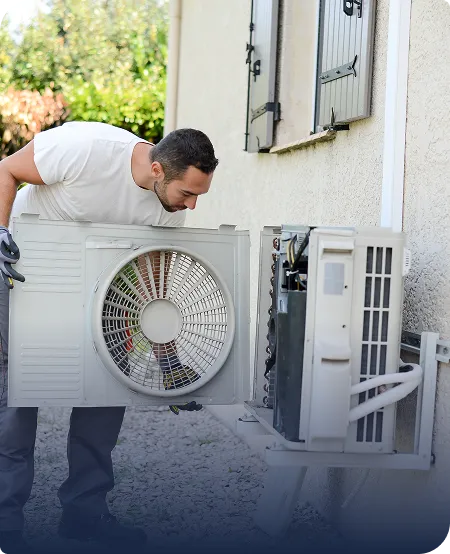
In the borough a heat pump does what the house has never done. Radiators heat and nothing cools, so equipment running both ways gives both.
The existing heat stays as it is. We do not service boilers, steam, or oil equipment, and a heat pump project need not touch them. The radiators keep their winter role. It carries summer, the shoulder months, and whatever winter share you set.
That’s a different decision from the township one. With no furnace to fall back on, sizing carries far more weight than it does across the borough line.