
Philadelphia AC Repair, Diagnosed Before It's Quoted

W.F. Smith has repaired Philadelphia air conditioning since 1946. License PA003700.

AC Repair for Philadelphia Homes

W.F. Smith repairs central air conditioning in Philadelphia homes. Our office confirms the residential diagnostic fee before a visit — lower across most of the city, higher in Center City ZIP codes, where parking and traffic add time to the call. Neither fee is credited toward the repair, and replacement estimates are free.

A technician finds the fault before anyone talks price. You get the failed part named and the repair costed in writing. Work starts only when you say so.

We repair Lennox and Mitsubishi Electric equipment most often, and our technicians service other major brands. 

Signs Your Air Conditioner Needs a Repair Visit

Cooling failures announce themselves. They arrive first as a comfort complaint. Read the signal early and the repair stays small.
  • Warm air from the vents while the condenser runs. Low refrigerant, a failing compressor, or a coil that can’t shed heat.
  • Ice on the line set or the indoor coil. Airflow is choked or the charge is low. Shut it down before the compressor takes damage.
  • The system runs all afternoon and never reaches the setpoint. Capacity has dropped, often from a slow leak.
  • Water around the air handler, or a stain on the ceiling under it. A plugged condensate drain or a cracked pan.
  • A hum from the condenser with the fan sitting still. Usually a failed capacitor or contactor.
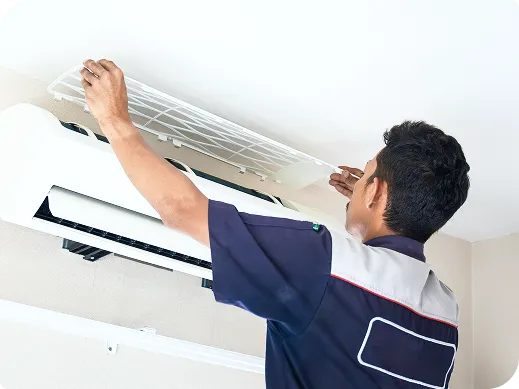
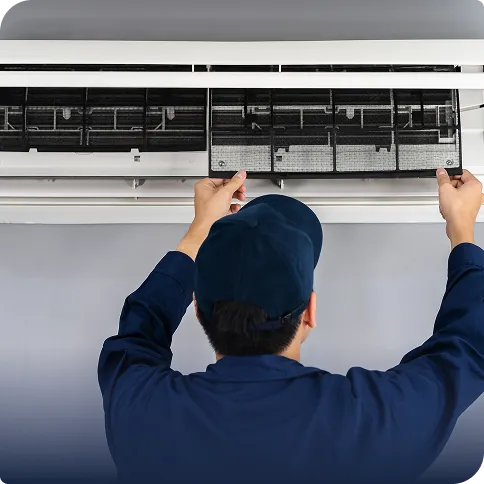
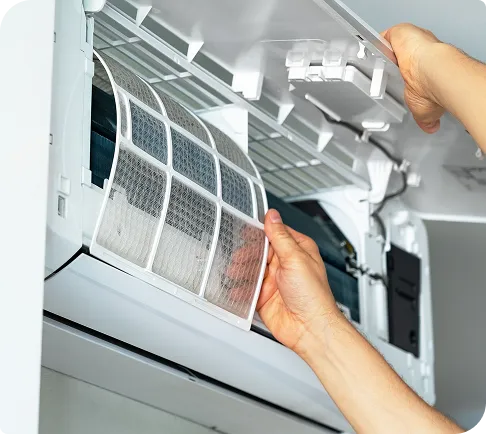
W.F. Smith HVAC technician inspecting the air filters inside a wall-mounted air conditioning unit during routine maintenance.

What Happens on a Philadelphia AC Repair Visit

The order of work never changes. It runs the same in a Fishtown trinity as a Northeast twin. What changes is the time it takes to reach the equipment — roof mounts and rear alleys add minutes before a gauge comes out.

Five steps, every visit.:
  • Access. The technician confirms where the condenser and air handler sit, since a city placement is rarely a slab.
  • Diagnosis. Pressures, temperatures, and electrical readings separate a refrigerant fault from an airflow fault.
  • Written quote. The failed part is named and the repair is priced. Declining stays a real option.
  • Repair. Common failure parts ride on the truck, so most single-part faults finish that visit.
  • Verification. Charge, airflow, and temperature split get rechecked, so the fix is proven.

The Faults We Find Most in City Homes

Refrigerant leaks lead the list. We locate and seal the leak rather than adding gas and driving away. A circuit that lost its charge once will lose it again.

Electrical parts come second. Capacitors, contactors, and condenser fan motors account for most of the sudden no-cool calls we take in July, and they’re also the cheapest repairs on the list. Knowing which one failed beats replacing all three.

Airflow problems are the quiet ones. A loaded filter, a crushed flex run, or a dust-packed blower wheel starves the coil until it freezes.
Repair or Replace, and How We Tell

What AC Repair Costs in Philadelphia

Our office confirms the residential diagnostic fee before a visit — lower across most of Philadelphia, higher in Center City ZIP codes, where parking and traffic add time to every call. Neither is credited toward the repair, and replacement estimates are free.

The repair gets priced once the fault is known. Three things move that number.
  • The part. A capacitor and a compressor are not in the same range.
  • The refrigerant. Older types cost more as production winds down.
  • Access. A condenser on a flat roof or behind a locked gate adds labor.


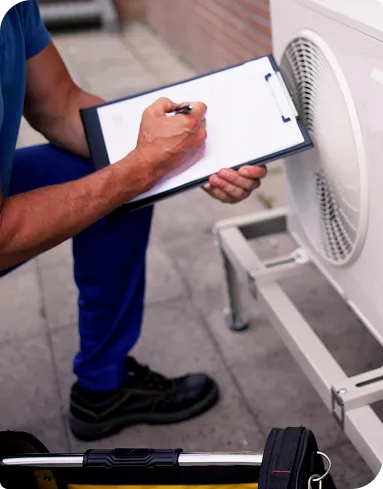
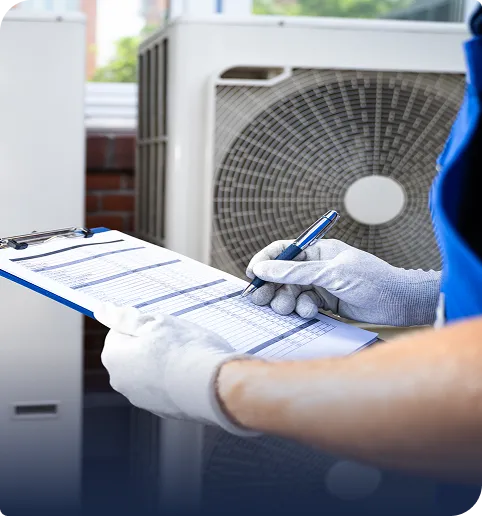
HVAC technician completing an air conditioning inspection checklist beside an outdoor AC unit to assess commercial cooling service needs.

Prices hold steady from June to September. A heat wave does not move them. Manufacturer and Electrical Association of Philadelphia rebates apply to replacements, and financing is available.
HVAC technician completing an air conditioning maintenance checklist beside an outdoor residential AC unit.

Why Philadelphia Homeowners Choose W.F. Smith for AC Repair

  • The fault gets named. You hear which part failed, not a verdict about the system being old.
  • Leaks get found, not topped up. Refrigerant added without finding the leak is a repair with an expiry date.
  • One visit where one will do. Common failure parts travel on the truck.
  • The price doesn’t follow the forecast. A repair costs the same in July as in April.

AC Repair Questions We Get Asked

What does an AC repair visit cost in Philadelphia?

Our office confirms the diagnostic fee before dispatch — lower across most of the city and higher in Center City ZIP codes, where parking and traffic add time to the call. It covers the time to trace the fault and put a written price on the repair. It’s charged whether or not you go ahead, and it’s not credited to the repair. Estimates on replacement systems are free.
Most leaks can be repaired. A technician traces the circuit, finds the failure point, and prices the fix against the age of the equipment. Fittings, service valves, and line set joints are routine work. A leaking evaporator coil is a bigger job, and past 15 years that coil often costs enough that replacement makes better sense.
It changes the visit more than the repair. The technician needs a safe route up and clear roof access, so tell us at booking how the roof is reached. Once he’s at the unit, a capacitor is a capacitor. Roof placement does raise the odds of a leak at the upper line set fittings, so those get checked early on a rooftop call.
Most repairs finish in the same visit. A capacitor, a contactor, a condenser fan motor, or a blocked condensate line usually finishes quickly, including the diagnosis. A leak search across a long line set takes longer, and a coil or compressor replacement gets scheduled for another day once the part arrives.
Ice means the coil has dropped below freezing, and two things cause it: either airflow across the coil is restricted, or the refrigerant charge is low. A dirty filter, a crushed duct, or a dust-caked blower wheel will starve it. A slow leak does the same from the other side. Switch the system off and the fan on to thaw it, then call.
It depends on what else is under the hood. A compressor is the most expensive single part in the system, and past 15 years the coil and the refrigerant circuit are as old as the part that failed. Under 10 years, with the rest sound, a swap is usually worth doing. We put the repair price beside a replacement estimate so the comparison is real.
Yes. Our technicians work on Lennox and Mitsubishi Electric equipment daily and service the other major brands too. What helps is the model and serial number when you book, since that tells us the refrigerant, the usual failure parts, and whether the equipment still sits inside its manufacturer warranty.
Four things take five minutes. Confirm the thermostat is calling for cooling and its batteries are good. Look at the filter, since a loaded one causes more no-cool calls than any single part. Check the breaker for the condenser and the switch by the air handler. Then look outside for leaves, bags, or a dirty coil. If those are clear, it needs gauges.

Repair, Airflow Fix, or Replacement?

Get Your Air Conditioning Cooling Again