Emergency Furnace Repair in Philadelphia, PA: What to Do First
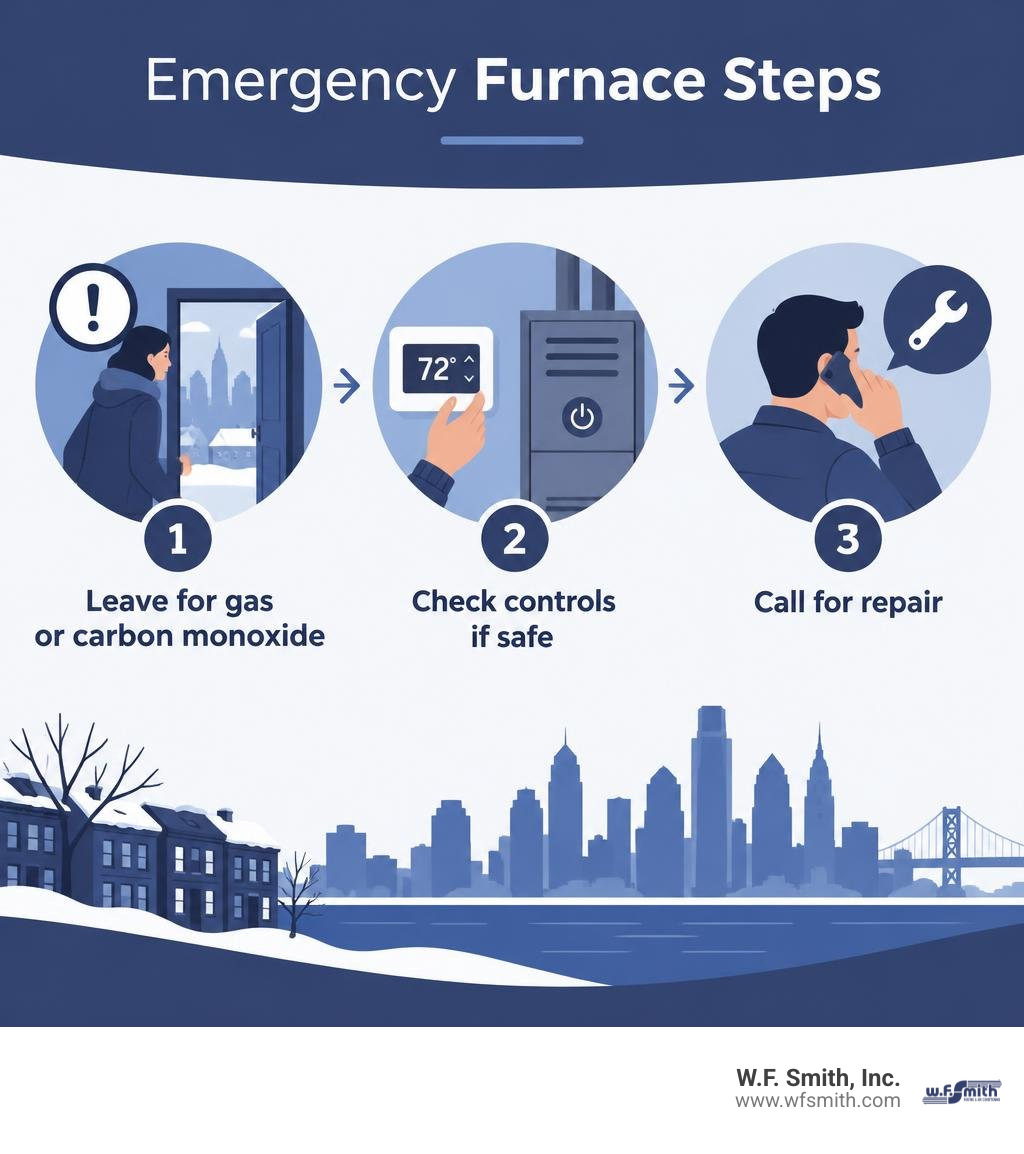
If you smell gas or a carbon monoxide alarm sounds, leave the home immediately. Do not touch switches or try to restart the furnace. Call 911 from outside.
If the furnace has stopped heating but there is no sign of danger, check the thermostat setting and whether the furnace has power. If heat does not return, call our emergency heating team for 24/7 furnace repair in Philadelphia, PA. While you wait, keep warm with blankets and close off unused rooms.
When to Call for Furnace Emergency Repair in Philadelphia, PA
When freezing temperatures settle across the Delaware Valley, a broken heating system is more than an inconvenience. It quickly becomes a threat to your property and health. Knowing whether an issue is an immediate emergency or a minor glitch helps you take swift action.
If your home experiences total heat loss while outside temperatures plummet into the teens or twenties, pipes can freeze and burst within hours. Beyond temperature loss, unusual mechanical symptoms often demand prompt attention. Learning about the 5 furnace noises you shouldn’t ignore can help you identify grinding motors, booming delayed ignition, or high-pitched squeals before they cause catastrophic system failure.
Immediate Safety Hazards Requiring Furnace Emergency Repair in Philadelphia, PA
Certain furnace issues require you to treat the situation as an urgent safety hazard rather than an ordinary maintenance task:
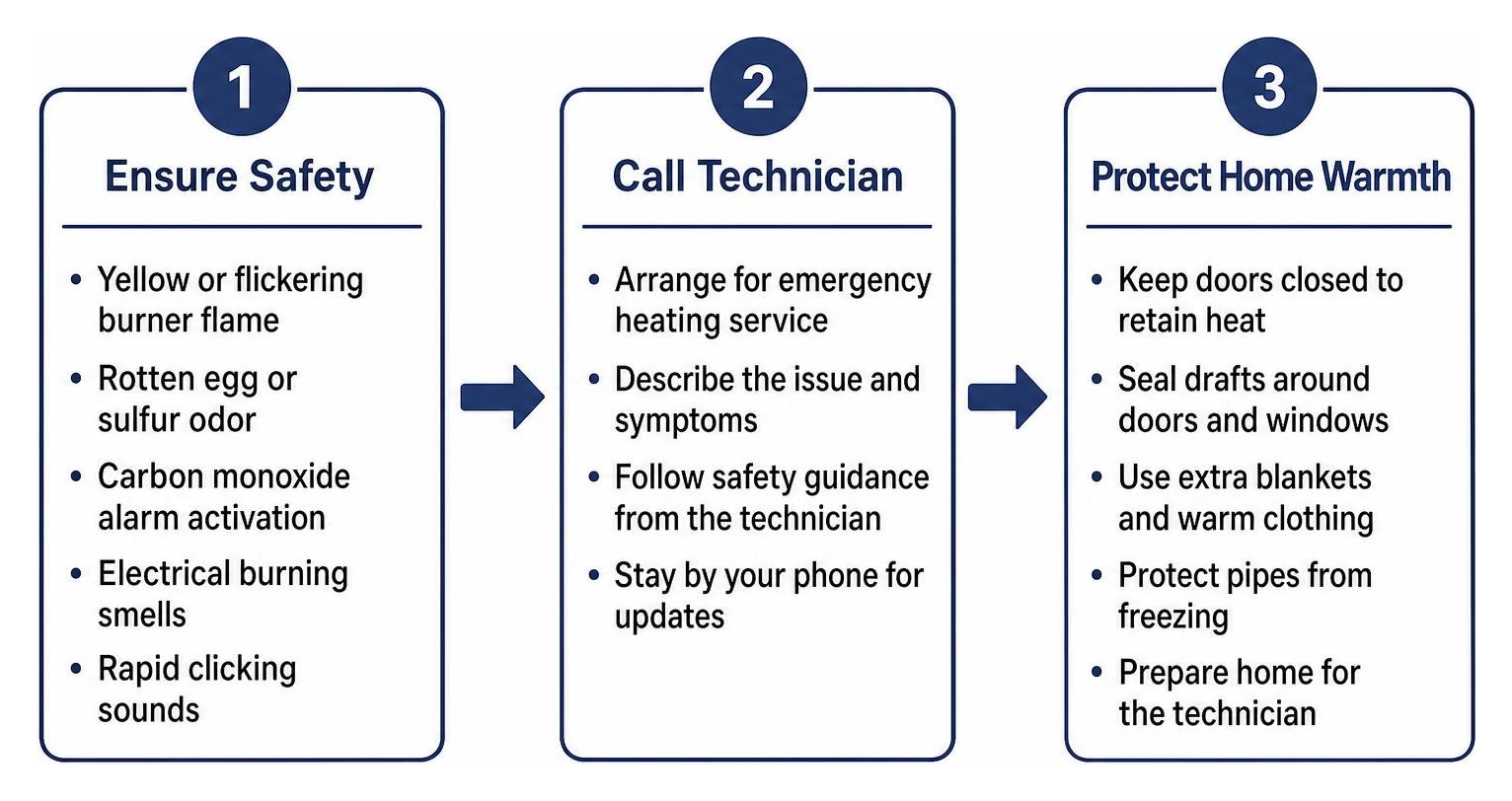
- Yellow or Flickering Burner Flame: A healthy natural gas flame burns a crisp, steady blue. A yellow, dancing, or weak flame indicates incomplete combustion, which produces dangerous carbon monoxide (CO). Think of a blue flame as your system running cleanly, while yellow is a distinct warning sign.
- Rotten Egg or Sulfur Odor: Natural gas is naturally odorless, but utility providers add mercaptan to create a distinct sulfur smell. If you detect this scent near your equipment or living areas, shut off the gas supply if it is safe to do so, leave the building, and call your gas utility or 911 immediately.
- Carbon Monoxide Alarm Activation: Carbon monoxide is completely invisible and odorless. Never assume a sounding CO detector is a false alarm. Evacuate everyone from the home, get into fresh air, and call emergency responders.
- Electrical Burning Smells: Acrid plastic or electrical odors often indicate melting wire insulation, overheated circuit boards, or a seized blower motor trying to draw current.
- Rapid Clicking Sounds: If your system repeatedly clicks without firing up, you might wonder why does my heating system click; this is frequently tied to an ignition lockout designed to prevent unburned gas buildup.
Critical Mechanical and Operational Failures
Not every breakdown involves an immediate gas leak or fire hazard, but several mechanical failures still require swift heating repair to restore warmth before your home freezes:
- Blower Motor Seizure: When the blower motor burns out or its capacitor fails, your furnace may ignite normally but cannot distribute warm air through the ductwork. The heat builds up inside the cabinet until internal safety limit switches trip the system off.
- Faulty Electronic Ignitor or Dirty Flame Sensor: If the hot surface ignitor cracks or the flame sensor is coated in oxidation, the burners may cycle on for two seconds and shut down immediately.
- Severe Short Cycling: If your equipment turns on and off every couple of minutes without warming your rooms, troubleshooting furnace short cycling will reveal that restricted airflow, clogged filters, or failing high-limit switches are cutting the cycle short.
- Tripped Circuit Breakers and Blown Control Board Fuses: An electrical surge or motor drawing high amperage can trip your breaker box. Resetting it once is fine, but if it trips immediately a second time, keep it off to prevent electrical damage.
- Thermostat Communication Failure: A dead thermostat, loose low-voltage wiring, or a failed relay board leaves your furnace unable to receive heating calls.
Step-by-Step Actions While Waiting for Emergency Heating Service
Once you have arranged for service, taking the right steps keeps your home comfortable, safeguards your plumbing, and prepares the space for your technician.
Before your technician arrives, reviewing basic winter furnace troubleshooting tips can help you confirm the power switch was not bumped accidentally.
Essential Safety Precautions at Home
While waiting for our technician to arrive, follow these best practices:
- Maintain Clear Ventilation: If you had a faint odor that has passed or you need to air out stale indoor air, ensure vents remain unobstructed. Never run fuel-burning outdoor gear indoors.
- Operate Space Heaters Safely: Portable electric space heaters can keep a single bedroom warm. Place them on flat, hard surfaces at least 3 feet away from curtains, bedding, or furniture. Never plug a space heater into an extension cord or power strip.
- Never Heat Your Home with a Gas Oven or Stove: Using an open kitchen oven for warmth creates an extreme fire risk and rapidly builds up toxic carbon monoxide indoors.
- Prevent Frozen Water Pipes: Open cabinet doors under kitchen and bathroom sinks so remaining indoor warmth circulates around your plumbing. Let faucets connected to exterior walls maintain a slow, steady trickle of cold water to keep water moving and relieve line pressure.
- Conserve Heat in a Central Living Zone: Close doors to unused guest rooms, bathrooms, and laundry rooms. Hang thick blankets over drafty windows and place rolled towels at the base of exterior doors.
What to Expect During an Emergency Service Call
When you schedule an urgent service call with our team, here is how the appointment unfolds:
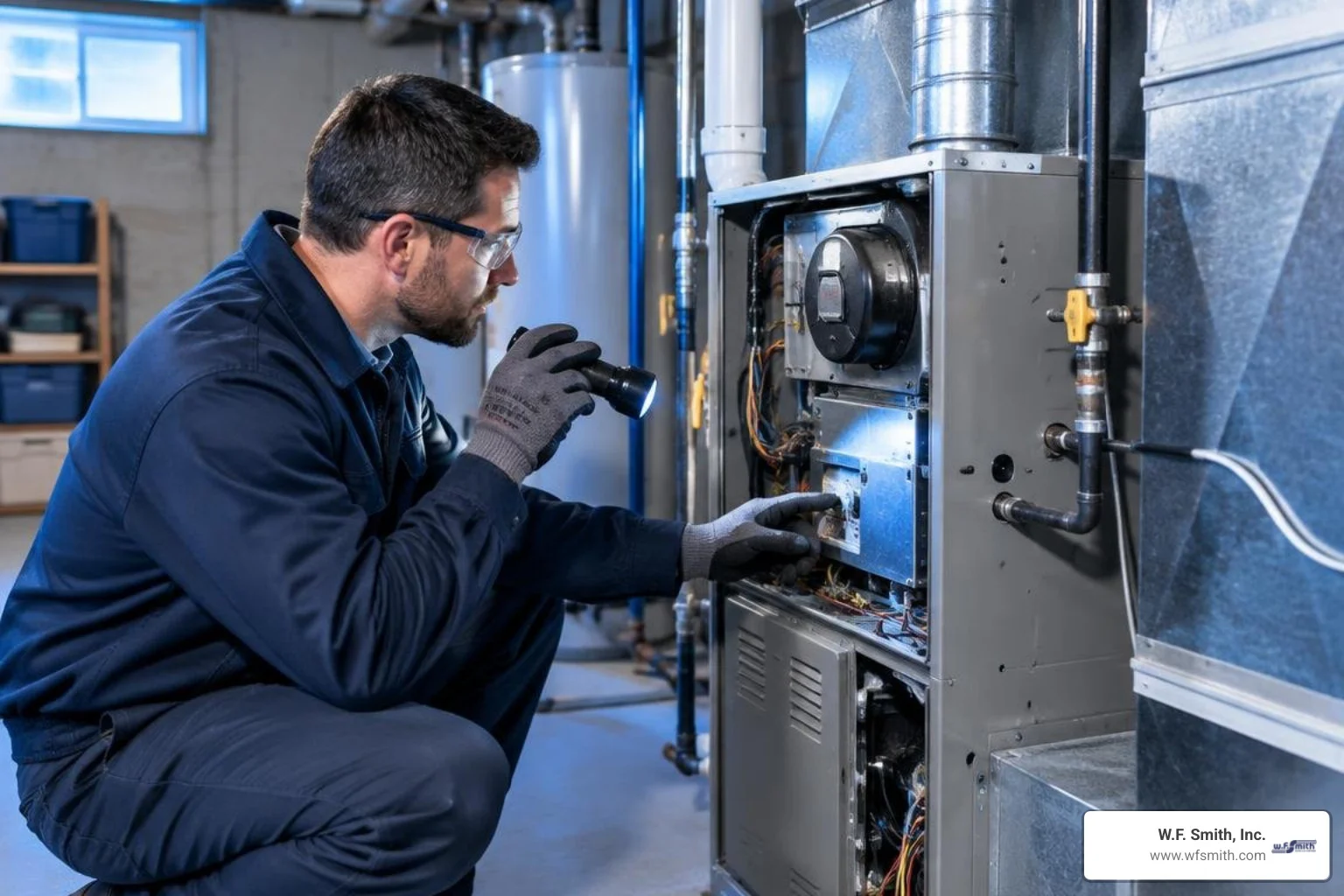
- Arrival and Diagnostic Assessment: Our technician arrives with specialized testing equipment to inspect electrical circuits, test ignition sequences, evaluate gas pressure, and verify heat exchanger integrity.
- Transparent Repair Estimate: Once we pinpoint the failure, we explain what caused the breakdown and provide a clear quote before starting any work.
- Stocked Mobile Inventory: Our service vehicles carry universal ignitors, flame sensors, limit switches, transformers, blower capacitors, and common control boards to complete most repairs in a single visit.
- Safety Testing and Restored Comfort: After installing the replacement part, we cycle the furnace through a complete operating sequence, measuring airflow temperatures and combustion levels to confirm the system runs safely and reliably.
Philadelphia Emergency Heating Costs and Assistance Programs
Emergency repair costs reflect the urgency, technical skill, and specialized parts needed to restore heat outside standard business hours.
Average Cost of Furnace Emergency Repair in Philadelphia, PA
Standard HVAC diagnostic service calls in Philadelphia generally range from $200 to $300. When you require urgent night, weekend, or holiday service, overall emergency repairs typically range between $300 and $1,200, depending on the component involved.
| Repair Category | What Can Affect the Final Cost | Common Examples |
|---|---|---|
| Minor Electrical and Sensor Repairs | Diagnostic time, part availability, and whether service is needed after hours | Flame sensor service, thermocouple replacement, thermostat wiring |
| Ignition and Safety Controls | The failed component, system accessibility, and emergency dispatch timing | Hot-surface ignitor, pressure switch, high-limit safety switch |
| Major Mechanical Components | Motor or control-board replacement, labor complexity, and parts availability | Draft inducer assembly, blower motor, control board |
| Comprehensive Diagnostics | The time required to trace the issue and complete safety testing | Electrical troubleshooting, gas-manifold testing, combustion analysis |
A routine daytime diagnostic call typically takes one to two hours to evaluate and resolve straightforward part failures. Reputable providers always offer upfront estimates before completing repairs, preventing surprises on your final invoice.
City Resources and Low-Income Heater Assistance
If you own a home in Philadelphia and face a heating crisis with limited household income, free and low-cost emergency repair resources are available:
- The Philadelphia Heater Hotline: Managed by the Energy Coordinating Agency (ECA) and funded through local community development initiatives, this program provides emergency heater repairs for eligible low-income homeowners. You can contact the Heater Hotline at (215) 568-7190. If lines are busy during major winter storms, leave a message for a prompt callback.
- PHDC Basic Systems Repair Program (BSRP): If the Heater Hotline evaluates your heating equipment and determines that it cannot be safely repaired, your application may be referred to the Philadelphia Housing Development Corporation (PHDC) for emergency system replacement support.
- City Services Portal: You can view full eligibility criteria, household income tiers, and documentation guidelines directly on the City of Philadelphia’s page for emergency home heater repairs.
Repair vs. Replacement: Making the Right Decision for Your Home
When facing a major equipment failure on an older heating system, you must decide whether an emergency repair makes financial sense or if replacing the unit is the wiser long-term investment.
With proper annual care, a standard gas furnace lasts 15 to 20 years, while heat pumps and ductless mini-split systems generally last 10 to 15 years. If your system is approaching or exceeding these age benchmarks, frequent component breakdowns signal that key parts are nearing the end of their service life.
To make an objective choice, consider these evaluation guidelines:
- The 50% Rule: If an emergency repair approaches half the cost of a new system, replacement may be the wiser long-term investment. The same may be true when an older system needs a costly repair.
- Recurrent Service Visits: If you find yourself scheduling emergency calls every winter, recurring repair bills will quickly outpace the cost of modern equipment. Look out for the classic 10 signs your furnace needs replacement before an unrepairable mid-winter breakdown occurs.
- Energy Efficiency Improvements: Older furnaces often run at 60% to 70% Annual Fuel Utilization Efficiency (AFUE), losing 30 to 40 cents of every fuel dollar up the chimney. Modern condensing furnaces achieve 95% to 98% AFUE, significantly reducing winter heating bills.
- Rebates and Financing: When upgrading your equipment, check for currently available local utility rebates from your energy provider and seasonal manufacturer promotions from leading brands like Lennox to help reduce upfront installation costs.
If a replacement is the most cost-effective path forward, we guide you through high-efficiency furnace replacement options tailored to your home’s layout and heating requirements.
How to Choose a Trusted Emergency HVAC Contractor
When your furnace quits in the middle of a freezing night, you need a dependable contractor who answers the phone, arrives equipped, and stands behind their craftsmanship.
To choose a reliable heating contractor in the Philadelphia area:
- Verify Genuine 24/7 Dispatch: Many services use answering services that simply schedule appointments for the next business morning. Choose an HVAC contractor with true round-the-clock emergency technicians on call.
- Confirm Licensing and Insurance: Ensure your contractor holds active Pennsylvania home improvement contractor registrations, municipal licensing, and comprehensive liability and workers’ compensation coverage.
- Seek Deep System Expertise: Philadelphia’s diverse housing stock ranges from historic rowhomes to suburban single-family houses, so choose a team experienced with central split systems and rooftop units (RTUs). (Note: Our team services split systems and RTUs in residential and commercial properties, but does not service high-rise buildings.)
- Prioritize Long-Standing Local Track Records: A company with decades of dedicated service brings deep familiarity with local building styles, common duct layouts, and regional winter weather patterns.
- Protect Your Investment with Maintenance: Once your emergency is resolved, regular seasonal checkups keep equipment running smoothly. Scheduling professional furnace maintenance every autumn helps catch cracked ignitors, clogged condensate lines, and dirty burners before they leave you without heat.
Frequently Asked Questions About Emergency Furnace Repair
Can technicians perform furnace emergency repairs at night or on weekends?
Yes. Professional emergency HVAC companies operate dedicated after-hours service divisions 24 hours a day, 7 days a week, 365 days a year. Service vehicles are stocked with universal parts such as control boards, hot surface ignitors, blower capacitors, and safety switches to resolve heating failures overnight or during holiday weekends.
How fast can an emergency heating technician arrive at my Philadelphia home?
Response times typically range from 1 to 3 hours depending on your exact neighborhood, current road conditions, and call volumes during severe weather. Local dispatchers prioritize no-heat calls involving vulnerable family members, freezing indoor temperatures, or active safety risks.
What is the most common cause of sudden furnace failure in winter?
A severely clogged air filter is the most common culprit. Restricted airflow causes the internal heat exchanger to overheat rapidly, tripping the high-limit safety switch and shutting down the burners. Other frequent causes include dirty flame sensors failing to detect ignition, burned-out ignitors, dead thermostat batteries, or condensate drain line backups on high-efficiency units.
Restoring Warmth and Safety to Your Philadelphia Home
A sudden heating breakdown during a freezing Pennsylvania winter can be stressful, but you do not have to handle it alone. Recognizing warning signs early, taking basic safety precautions, and contacting experienced professionals ensures your heating system is restored quickly and safely.
For 80 years, our family-owned HVAC team has delivered dependable residential and commercial comfort across the greater Philadelphia area, backed by a 100% satisfaction guarantee. When cold weather hits and your equipment fails, contact our emergency heating repair specialists to arrange prompt, safe service for your home.