How the Heat Pump Defrost Cycle Works
Heat pump defrost cycle problems require professional repair when the outdoor unit remains encased in solid ice after a full defrost cycle, when the reversing valve sticks and prevents the system from switching out of heating mode, or when the indoor air stays cold because the auxiliary heat strips fail to engage during defrost. A light, even layer of frost that clears on its own is normal, but thick ice that blocks airflow, bends fins, or causes the system to run constantly in emergency heat signals a fault that needs a technician’s attention.
During winter, a heat pump extracts ambient thermal energy from outdoor air to warm your home. To pull warmth from cold air, the outdoor coil must operate at temperatures 10 to 20 degrees colder than the surrounding atmosphere. When outdoor moisture contacts these frigid metallic fins, moisture naturally condenses and freezes.
Without an automated removal system, accumulated frost quickly insulates the coil, blocks incoming airflow, and chokes off heat transfer. The defrost cycle is the engineered safeguard that prevents this buildup.
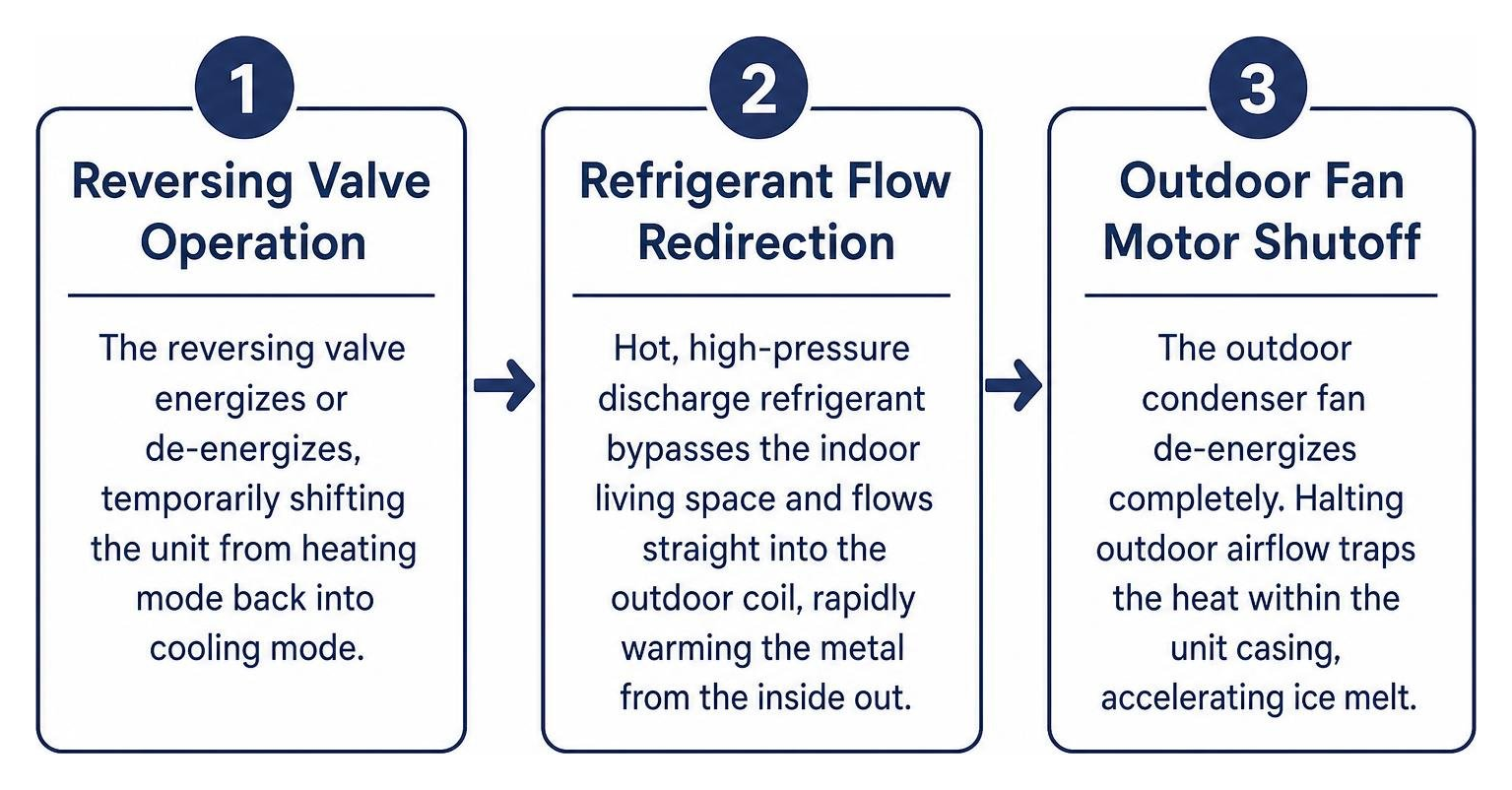
When the system enters defrost mode, several mechanical and electrical events occur simultaneously:
- Reversing Valve Operation: The reversing valve energizes or de-energizes, temporarily shifting the unit from heating mode back into cooling mode.
- Refrigerant Flow Redirection: Hot, high-pressure discharge refrigerant bypasses the indoor living space and flows straight into the outdoor coil, rapidly warming the metal from the inside out.
- Outdoor Fan Motor Shutoff: The outdoor condenser fan de-energizes completely. Halting outdoor airflow traps the heat within the unit casing, accelerating ice melt.
- Auxiliary Heat Engagement: Because the system operates briefly in cooling mode, indoor electric resistance heat strips (or secondary auxiliary heating) turn on automatically to temper the indoor air so cold drafts do not blow through your supply registers.
Under standard operations, the cycle initiates once the coil drops to approximately 32°F (or triggers a demand sensor algorithm) and terminates once the outdoor coil temperature reaches roughly 57°F, or when an internal safety timer limits the defrost run time to a maximum duration (often 10 to 15 minutes). Managing this sequence requires precise communication across the circuit board, sensors, and relays. Understanding how these components communicate helps explain why a fault in one part of the sequence can lead to winter freeze-ups.
| Feature | Time-and-Temperature Defrost | Demand Defrost Systems |
|---|---|---|
| Trigger Mechanism | Fixed mechanical timer combined with a low-temperature sensor | Solid-state sensors measuring coil and outdoor ambient temperature differential |
| Typical Intervals | Every 30, 60, or 90 minutes of compressor run time | Only when actual frost buildup reduces heat transfer efficiency |
| Cycle Duration | 5 to 15 minutes (or until reaching ~57°F coil target) | Dynamic run time; ends as soon as frost clears (~50°F to 57°F) |
| Energy Efficiency | Lower; can initiate when no frost is present | Higher; eliminates unnecessary cycles, lowering electrical consumption |
| Sensor Types | Bi-metal mechanical thermostats or fixed timers | Negative Temperature Coefficient (NTC) thermistors & optical sensors |
Time-and-Temperature vs. Demand Defrost Systems
Modern residential heat pumps utilize one of two core strategies to manage ice removal:
- Time-and-Temperature Systems: Found primarily on older or standard-efficiency split systems, this method relies on a mechanical timer and a simple bi-metal thermostat. The thermostat closes when the outdoor coil drops around 30°F to 32°F. Once closed, the timer counts cumulative compressor runtime (typically configured via board pins to 30, 60, or 90 minutes). When the interval elapses, a defrost cycle runs regardless of how much ice is actually on the fins.
- Demand Defrost Systems: Modern, high-efficiency equipment uses microprocessor-controlled demand defrost. By continuously monitoring ambient air temperature, outdoor coil temperature, and operational pressures using sensitive thermistors, the control board calculates real-time heat transfer efficiency. A defrost cycle only initiates when ice genuinely obstructs heat transfer, preventing unnecessary wear and tear while conserving significant electrical energy.
Normal Frost vs. Problematic Ice Buildup
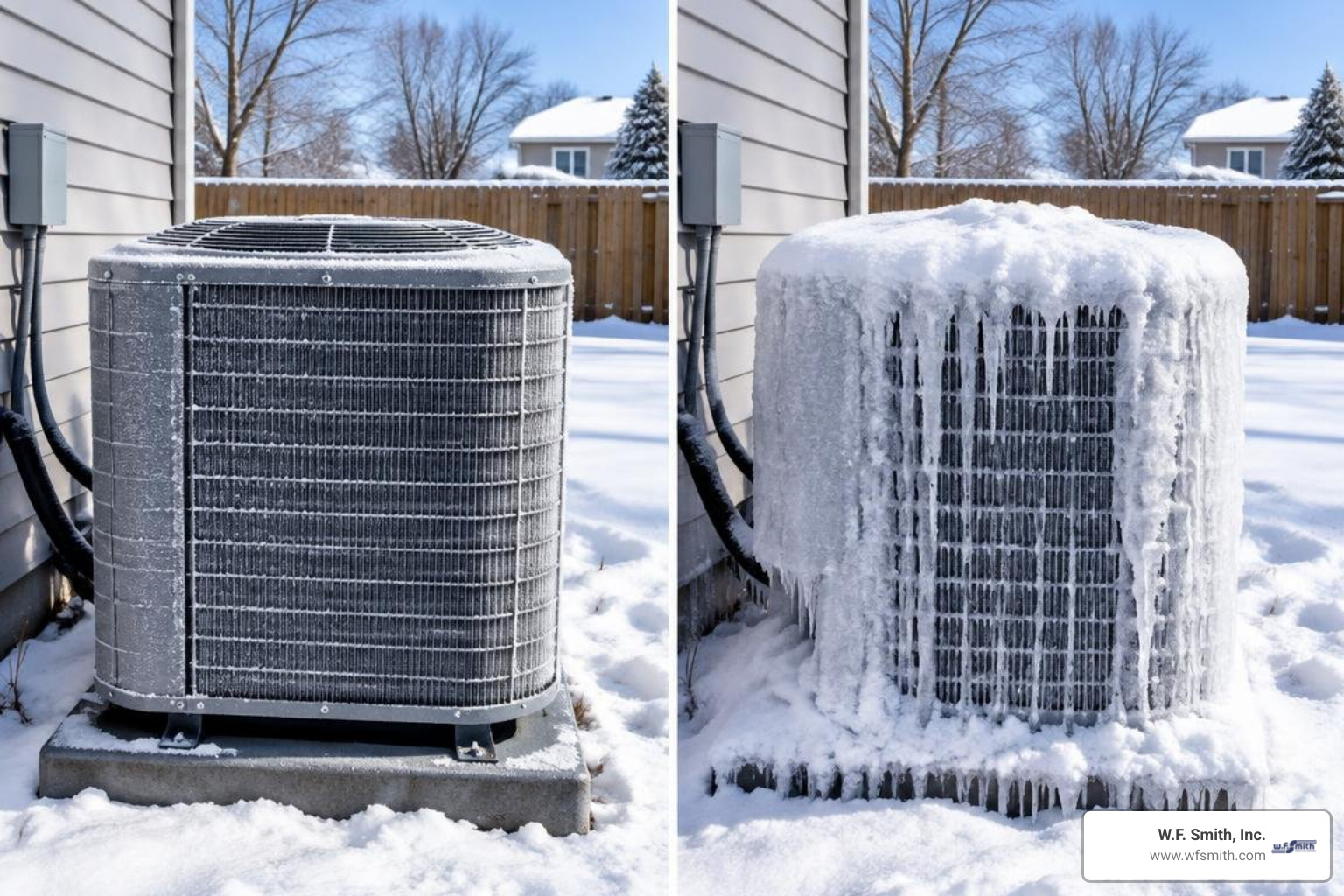
It is completely normal to see a light, even dusting of white frost across the outdoor coil during damp, chilly days. As long as the unit regularly cycles through defrost and leaves the coil largely clear, your system is operating as designed.
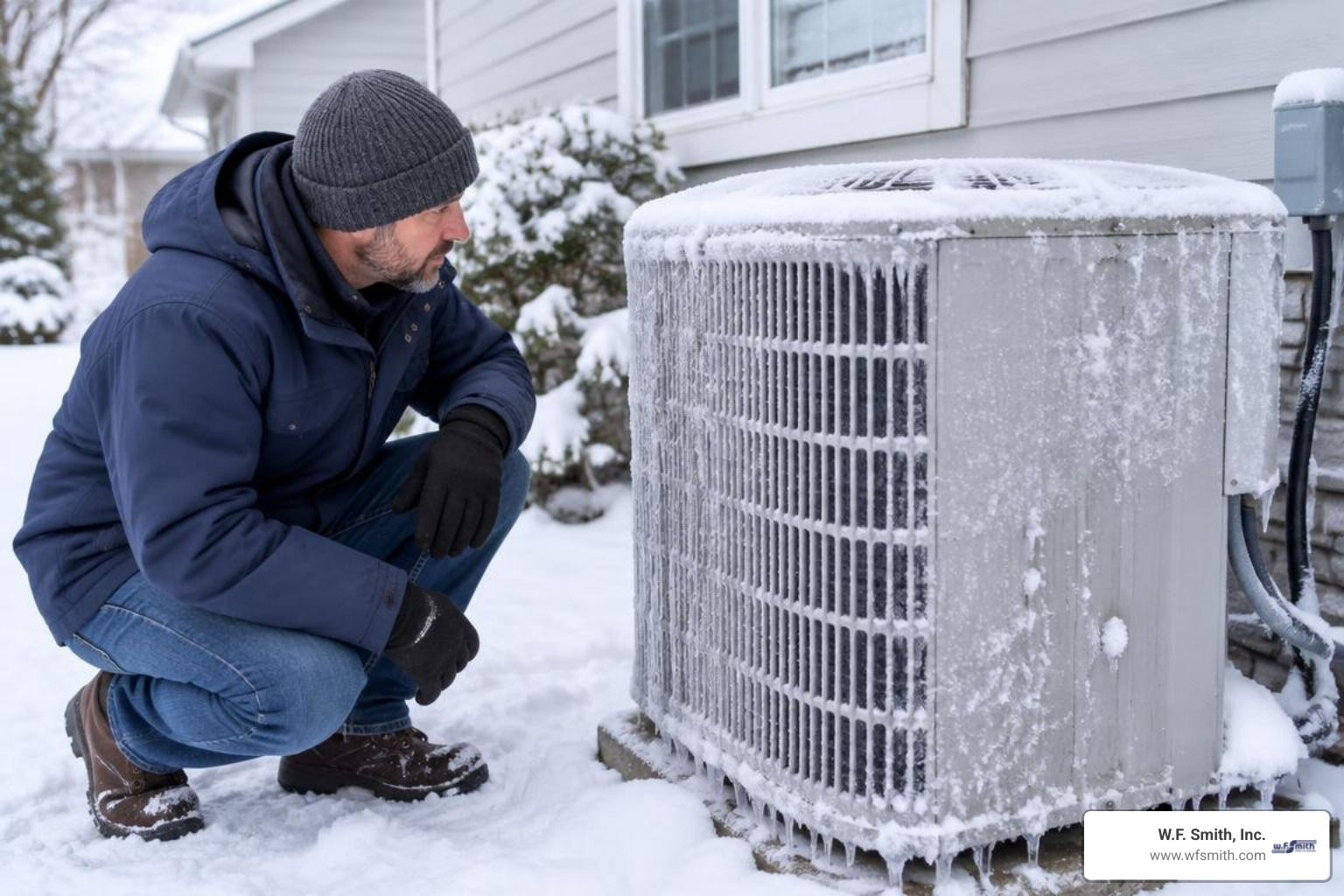
Problems arise when frost morphs into a thick, solid shell of dense white or clear ice. When ice encases the top, sides, and internal fan shroud, air can no longer pass through the fins. Left unchecked, the expanding ice can bend delicate aluminum fins, fracture copper refrigerant lines, crush fan blades, or cause catastrophic compressor failure. Addressing airflow restrictions early can help prevent escalating ice buildup, as explained in W.F. Smith’s article on keeping a heat pump from freezing.
Identifying Heat Pump Defrost Cycle Problems Early
Catching defrost issues before they lead to emergency no-heat situations saves money and prevents unnecessary component stress. Watch for these common signs. W.F. Smith’s explanation of common heat pump noises and what they mean can help distinguish ordinary operating sounds from warning signs, while its overview of signs of heat pump problems outlines when a service call may be appropriate:
- Steam vs. Electrical Smoke: A brief cloud of water vapor (steam) rising from the outdoor unit accompanied by a whooshing sound is normal defrost operation. However, dark, acrid-smelling smoke or continuous vapor that never stops indicates electrical issues or a stuck cycle.
- Cold Indoor Drafts: If your indoor vents blow cool air for extended periods while your outdoor unit runs, your system may be stuck in defrost mode with non-functioning auxiliary heat strips.
- Non-Stop Emergency Heat: When a heat pump freezes up, the outdoor unit cannot extract ambient heat, forcing your thermostat to run expensive auxiliary or emergency heat constantly.
- Unusual Grinding or Thumping Sounds: Ice expanding into the fan cage can cause the fan blades to strike solid ice. Grinding or thumping calls for prompt attention to prevent damage to the fan assembly.
- Persistent Ice Encasement: If the outdoor unit remains wrapped in ice after hours of operation, arrange prompt professional service.
Common Causes of Heat Pump Defrost Cycle Problems
Defrost malfunctions typically stem from a mix of electrical faults, mechanical breakdowns, or low refrigerant charges. Professional HVAC technicians use electrical and refrigerant diagnostics to isolate the root cause safely.
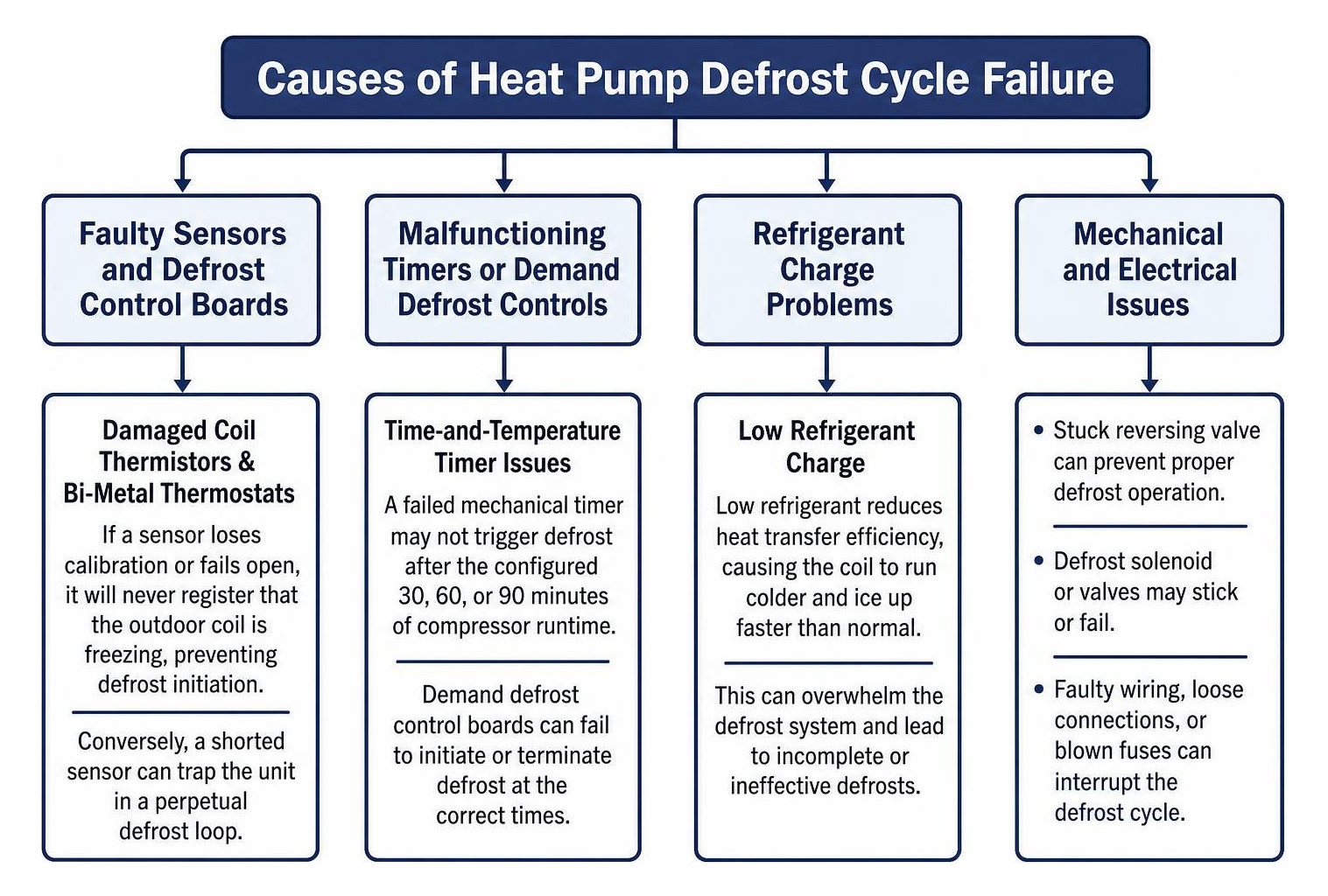
Faulty Sensors and Defrost Control Boards
The defrost control board acts as the central brain for winter management. If this board or its connected sensors fail, the defrost cycle will either never activate or never shut off:
- Damaged Coil Thermistors & Bi-Metal Thermostats: If a sensor loses calibration or fails open, it will never register that the outdoor coil is freezing, preventing defrost initiation. Conversely, a shorted sensor can trap the unit in a perpetual defrost loop.
- Defrost Control Board Failure: Burnt relay contacts, corroded traces, or microprocessor glitches prevent signals from routing to the reversing valve, auxiliary heat, or outdoor fan motor.
- Pest and Moisture Intrusion: Winter conditions often drive insects or rodents into warm control boxes. Chewed wires or insect nests bridging the 24V terminals (such as test pins or sensor inputs) frequently trigger intermittent electrical faults.
Reversing Valve and Refrigerant Leaks
The reversing valve physically redirects refrigerant pathways between heating and cooling. Mechanical failure within this valve halts defrost capability entirely:
- Stuck Reversing Valve Slide: If the internal mechanical slide binds or the electrical solenoid coil fails, the system cannot switch into cooling mode to direct warm refrigerant to the outdoor coil.
- Low Refrigerant Charge: A refrigerant leak reduces internal operating pressures. As pressure drops, the outdoor coil runs significantly colder than normal, causing severe and rapid frost accumulation. Furthermore, a system low on refrigerant lacks the thermal mass required to heat the outdoor coil to the 57°F termination threshold during a defrost cycle.
When physical components or refrigerant lines degrade, professional heat pump repair is required to restore balanced pressures and safe operation.
What to Do When Your Heat Pump Is Frozen
If you walk outside and find your outdoor unit encased in heavy ice, take direct, careful steps to protect the equipment from mechanical damage.
Troubleshooting Heat Pump Defrost Cycle Problems Safely
Before calling in a technician, perform these basic checks. A clean filter and a clear outdoor unit support reliable operation, and W.F. Smith’s heat pump maintenance tips explain how routine care can reduce avoidable airflow issues. If repeated freeze-ups raise concerns about the system’s condition, the company’s article on repairing or replacing a heat pump explains the factors technicians evaluate:
- Switch to Emergency Heat at the Thermostat: This shuts down the frozen outdoor compressor while engaging indoor heat sources to keep your home warm and prevent further coil strain.
- Clear Snow and Outdoor Debris: Ensure at least two feet of clearance around the outdoor unit. Remove snowbanks, fallen leaves, and winter debris that obstruct intake airflow.
- Check Your Air Filter: A clogged indoor air filter restricts airflow across the indoor coil, disrupting system pressures and temperature balances. Clean or replace filters regularly to support proper airflow.
- Inspect Overhead Gutters: Ensure leaking gutters are not dripping water directly onto the top of the outdoor unit, where it can quickly freeze into solid sheets over the fan motor and grille.
- Never Chip or Scrape Ice: Never use screwdrivers, ice picks, knives, or hammers to break ice off the coil. Aluminum fins and copper refrigerant tubing are thin and easily punctured, turning a simple electrical repair into an expensive coil replacement.
When to Call an HVAC Professional for Repair
If simple airflow checks do not resolve the issue and the system remains frozen after cycling, schedule heat pump repair with a licensed HVAC technician. Certified technicians can perform electrical tests across board terminals and safely measure refrigerant pressures. Ongoing preventive care through heat pump maintenance and inspections can also help identify developing defrost issues before they lead to a no-heat emergency.
Frequently Asked Questions About Heat Pump Defrost Issues
How long should a normal heat pump defrost cycle last?
A standard defrost cycle runs between 5 and 15 minutes. It terminates as soon as the outdoor coil sensor reaches approximately 57°F or when the control board’s maximum override timer (typically 10 to 14 minutes) is reached.
Why is steam coming from my outdoor heat pump in winter?
Steam rising from the unit is normal. When hot refrigerant melts ice off the coil while the outdoor fan is de-energized, the rapid temperature rise vaporizes moisture, creating visible steam that dissipates quickly once the fan restarts.
Can restricted airflow cause a heat pump to freeze over?
Yes. Blocked outdoor air pathways from leaves or snow, as well as severely clogged indoor return air filters, prevent proper heat exchange. This pressure and temperature imbalance causes operating temperatures to drop well below design limits, leading to rapid, heavy icing.
Restoring Reliable Winter Heating
A functioning defrost cycle is vital for preserving heating efficiency and shielding your compressor from damage throughout the winter months. Recognizing the difference between normal operating frost and heavy ice buildup allows you to address mechanical and electrical issues before they compromise your home’s comfort.
For over 80 years, the family-owned team at W.F. Smith, Inc. has delivered trusted residential and commercial heating and cooling solutions across the greater Philadelphia area. Backed by 24/7 emergency service and a 100% satisfaction guarantee, our technicians provide precision diagnostics, prompt repairs, and comprehensive system tune-ups. To schedule seasonal service, contact our professional heat pump technicians and keep your home warm and efficient all winter long.