Is a Dual Fuel Heating System Worth It in Pennsylvania?
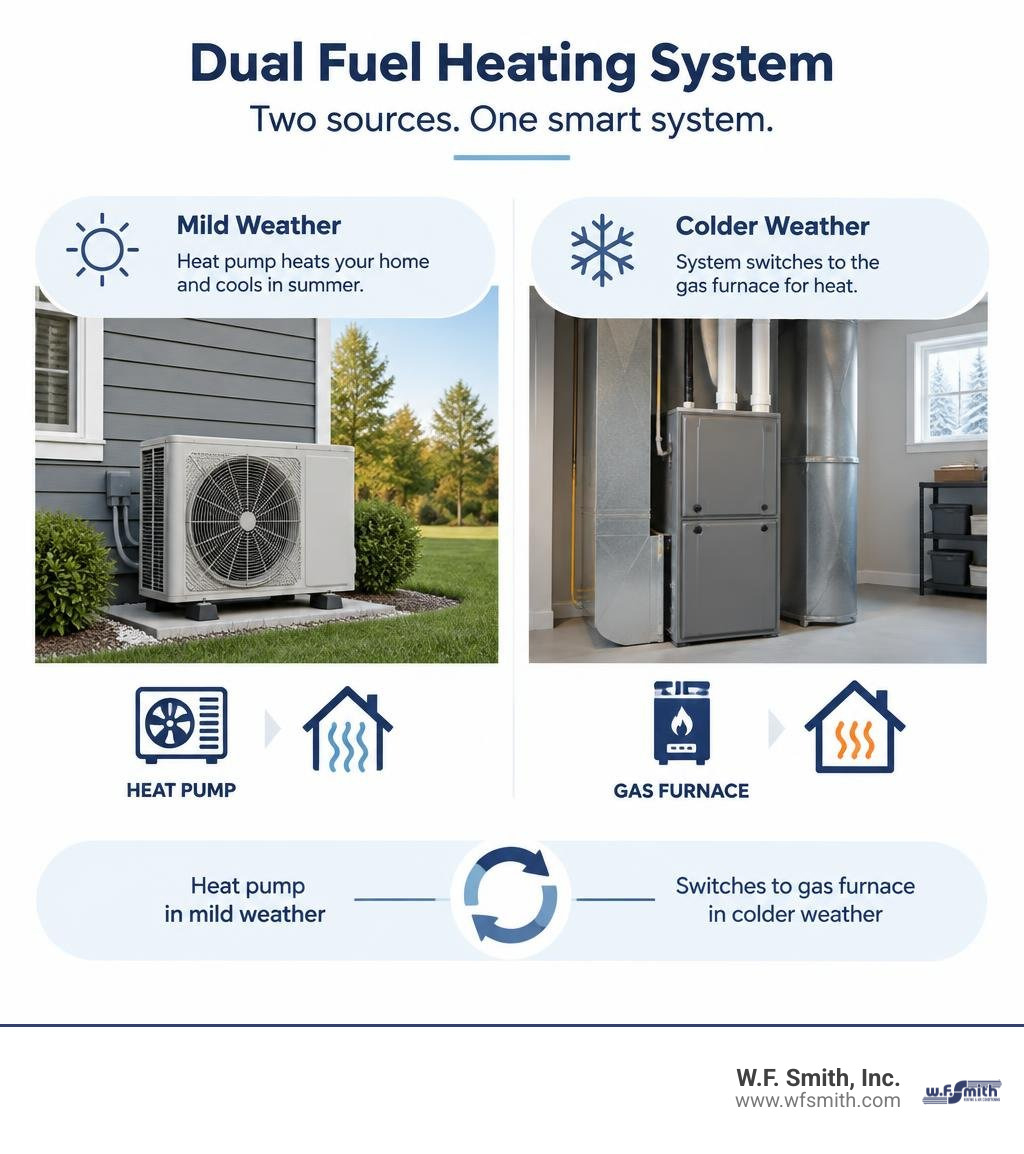
A dual fuel heating system pairs an electric heat pump with a gas furnace. The heat pump heats your home in milder weather and cools it in summer. When outdoor temperatures fall below a set point, the system switches to the furnace for heat.
For Philadelphia-area homeowners, that flexibility can mean lower heating costs without giving up comfort on cold winter days. But savings are not guaranteed. They depend on your electric and gas rates, your home’s heating needs, and how the system is set up. This guide will help you decide whether the added upfront cost makes sense for your home.
How a Dual Fuel Heating System Works in Pennsylvania Climates
Living in the Greater Philadelphia area means experiencing all four distinct seasons. Our autumn afternoons can sit comfortably at 55°F, while a January cold snap can send the thermometer plunging into the teens. Traditional single-source heating systems often struggle to handle this wide temperature variance efficiently. An electric heat pump operates with incredible energy efficiency during mild weather, but it has to work significantly harder as outdoor temperatures drop. Conversely, a gas furnace is built to deliver fast, powerful heat in bitter cold, but running it during a mild 50°F day uses more fuel than necessary.
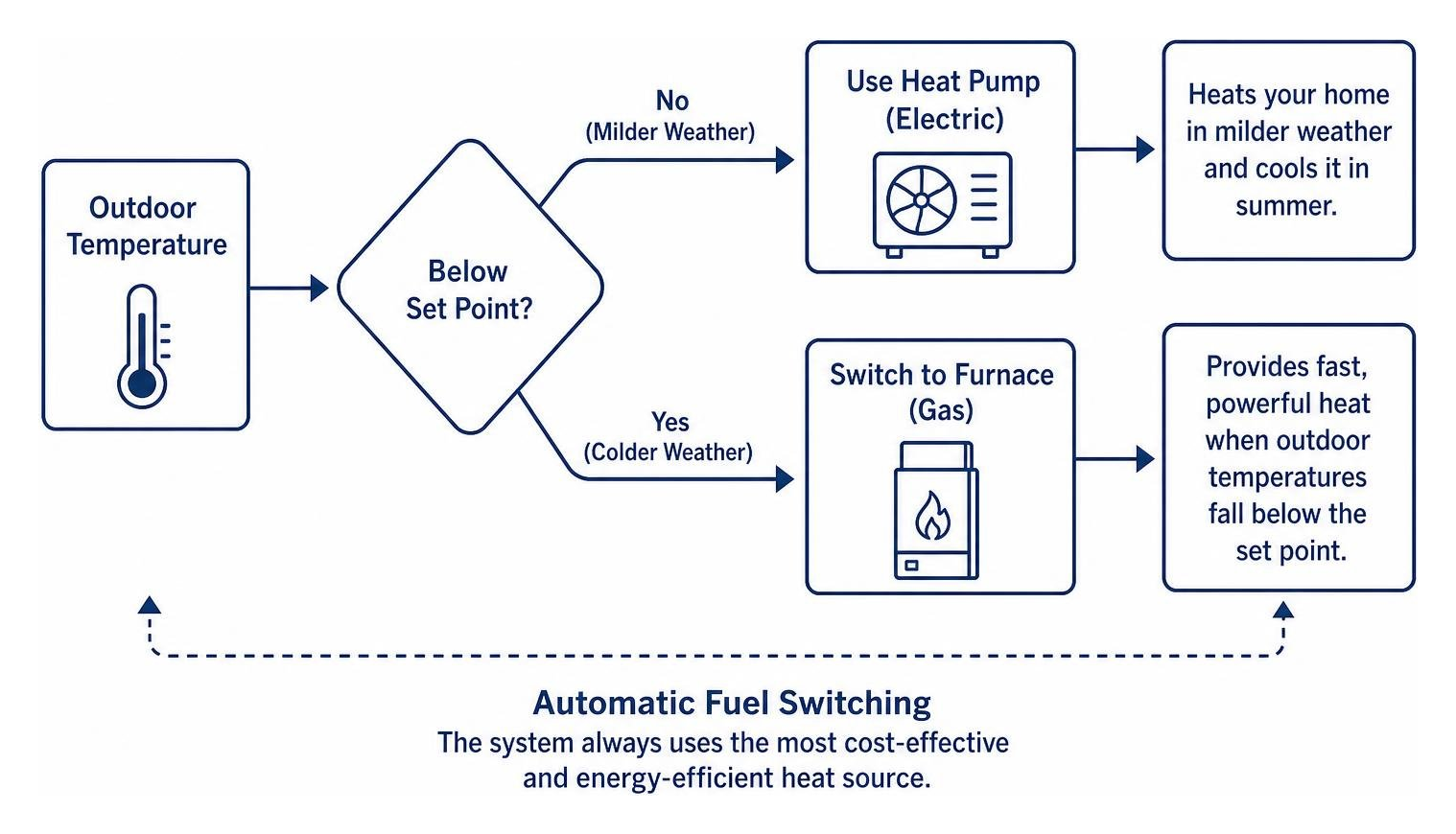
This is where understanding how dual fuel systems work becomes invaluable for local homeowners. A hybrid heating setup functions much like a hybrid automobile. Under mild conditions, the system relies on clean, highly efficient electricity. When outdoor conditions become severe, the equipment seamlessly hands the heating load over to clean-burning natural gas or propane.
Professional heating services can calibrate this transition so that your home always uses the most cost-effective and energy-efficient source of heat available at any given moment.
The Core Components of a Dual Fuel Heating System
A standard residential dual fuel setup is configured as an advanced split system consisting of four primary components:
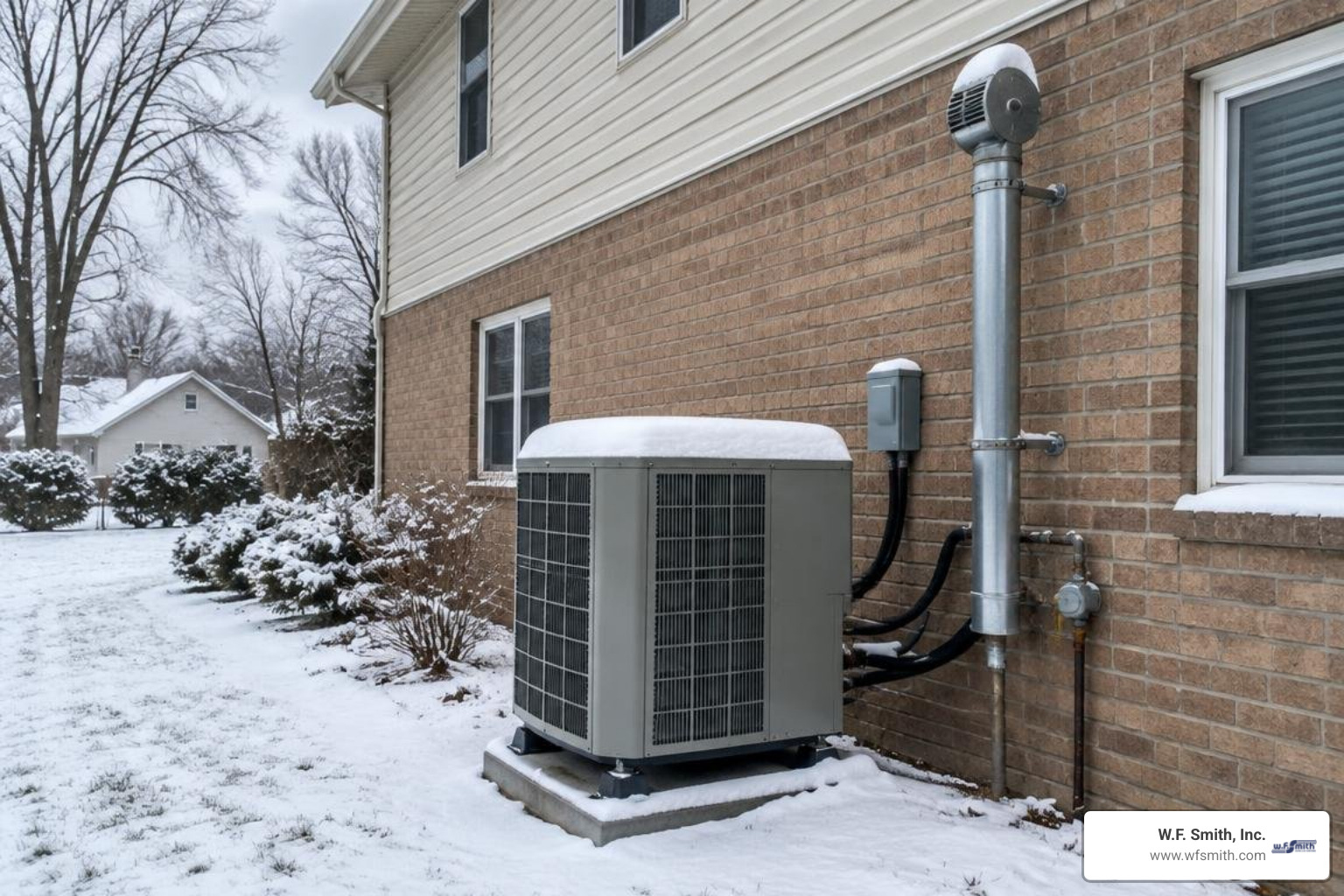
- Electric Heat Pump: Installed outside, the heat pump functions as a standard air conditioner in the summer by pulling heat out of your home. In the spring, fall, and early winter, it reverses the refrigeration cycle, extracting thermal energy from the outdoor air and transferring it inside. Modern units often use eco-friendly refrigerants like R32 to provide exceptional thermodynamic efficiency.
- Gas Furnace: Installed inside (typically in a basement, garage, or dedicated mechanical room), gas furnaces serve as the primary air handler for the entire system and supply robust secondary heating when winter weather turns severe.
- Indoor Evaporator Coil: Mounted directly above or within the furnace cabinet, this coil allows refrigerant from the outdoor heat pump to heat or cool indoor airflow before it is distributed throughout your home’s ductwork.
- Intelligent Hybrid Thermostat: The control center of your system. It constantly monitors indoor comfort levels and outdoor temperature readings, deciding precisely when to switch between electric heat and fuel combustion.
The Thermal Balance Point: When the System Switches from Heat Pump to Furnace
The transition between heating modes revolves around a critical threshold known as the thermal balance point. This is the specific outdoor temperature where the heating output of your heat pump matches the natural heat loss of your home.
In most Pennsylvania homes, the economic and thermal balance point sits between 30°F and 40°F (typically right around 35°F). Above this temperature, an electric heat pump can operate at a Coefficient of Performance (COP) of 3.0 or higher. This means it delivers over 300% efficiency by moving three units of heat energy for every single unit of electricity consumed.
Below 30°F, air-source heat pump efficiency naturally begins to decline, requiring longer operating cycles to maintain indoor setpoints. At this programmed threshold, the intelligent thermostat signals the heat pump to power down and instructs the furnace to take over. You enjoy uninterrupted warmth from high-temperature gas heat without running up high electric bills, showcasing the real-world advantages of dual fuel heating.
Heat Pump vs. Gas Furnace vs. Hybrid Systems
Choosing the best HVAC configuration requires comparing how each system performs across efficiency, operational lifespan, and cold-weather reliability.
| Feature / Metric | Standalone Heat Pump | Standalone Gas Furnace | Dual Fuel Heating System |
|---|---|---|---|
| Cooling Capability | Yes (Built-in Central AC) | No (Requires Separate AC Unit) | Yes (Heat Pump Provides High-Efficiency AC) |
| Mild-Weather Heating Efficiency | Up to 300%+ (COP > 3.0) | 80% to 98% AFUE | Up to 300%+ (Operates on Heat Pump) |
| Extreme Cold Performance (<20°F) | Decreased efficiency; may need electric resistance heat | Excellent, rapid high-temperature heat output | Excellent (Switches automatically to gas) |
| Average Expected Lifespan | ~15 Years (Runs all four seasons) | 20+ Years (Operates winter only) | Heat Pump: ~15 Years; Furnace: 20+ Years |
| Indoor Humidity Balance | Preserves natural indoor moisture | Can produce dry indoor air | Balanced comfort across all seasons |
| Fuel Source | 100% Electricity | Natural Gas or Propane | Electricity + Natural Gas/Propane |
Many homeowners considering a dual fuel heating system installation weigh it against an all-electric setup. While an all-electric setup works well for many homes, pairing the two technologies provides strong reliability during extreme winter freezes.
Comparing Efficiency and Operational Lifespan
Efficiency ratings can be confusing, but understanding how they translate to energy usage is straightforward. Cooling efficiency is measured by SEER2 ratings, as detailed in our guide on understanding SEER ratings. Heating efficiency for fuel combustion is measured by Annual Fuel Utilization Efficiency (AFUE). A high-efficiency furnace converts 90% to 98% of its fuel directly into usable warmth, while older standard units might operate closer to 80%. You can explore the financial impacts of these ratings further in our breakdown of how AFUE affects heating costs.
Because heat pumps transfer existing heat rather than generating it from scratch, they routinely achieve efficiency ratings of 200% to 300% under ideal conditions. According to the U.S. Department of Energy (DOE), modern heat pumps can reduce electricity use for heating by approximately 75% compared to electric resistance furnaces or baseboards.
Regarding equipment lifespan, a standalone heat pump handles both heating and cooling duties, which means it runs year-round and typically has an operational lifespan of around 15 years. Gas furnaces, by comparison, sit idle for roughly six months of the year, often lasting 20 years or longer. In a dual fuel setup, the furnace incurs far less operational wear and tear since the heat pump handles up to 85% of the annual heating load.
Evaluating a Dual Fuel Heating System for Winter Comfort and Humidity
Beyond utility expenses, day-to-day comfort is a major consideration for Bucks, Montgomery, and Philadelphia County residents.
Gas furnaces release air from supply registers at high temperatures (often between 120°F and 140°F). While this delivers a fast blast of warmth, it can also lead to temperature swings and dry out indoor air, causing static electricity, dry skin, and sinus irritation. Heat pumps deliver air closer to 90°F to 100°F. This steady, gentle circulation maintains a more even ambient temperature and helps preserve comfortable indoor relative humidity during mild weather.
When evaluating these factors, reviewing the heat pump pros and cons for winter helps clarify how hybrid heating gives you the best of both worlds: comfortable air when it is cool, and high-output heat when it is freezing.
Are Dual Fuel Systems Cost-Effective? Upfront Costs, Rebates, and ROI
The initial cost of installing a dual fuel heating system is generally higher than replacing a single component, such as installing only an air conditioner or only a gas furnace. A complete hybrid split system installation typically ranges from $9,000 to $18,000 or more, depending on system capacity, equipment efficiency tiers, and ductwork modifications.
For property owners moving away from oil heat or evaluating another equipment upgrade, a dual fuel installation can offer a faster return on investment.
Pennsylvania Utility Rebates and Manufacturer Incentives in 2026
When evaluating installation budgets in 2026, it is important to review current local programs. While former federal Section 25C tax credits for HVAC equipment expired at the end of 2025, homeowners have access to attractive local incentives:
- Local Electric Utility Rebates: Pennsylvania utilities like PECO often offer substantial cash rebates for high-efficiency heat pump installations that replace inefficient electric resistance systems or supplement fossil fuels.
- Gas Utility Rebates: Regional natural gas providers frequently provide equipment rebates when installing ENERGY STAR certified gas furnaces with an AFUE rating of 95% or higher.
- Manufacturer Promotions: Leading brands such as Lennox frequently run seasonal promotional discounts and rebates on qualifying premium hybrid split systems.
- Flexible Financing: Many certified HVAC contractors offer low-interest or promotional financing options that allow you to spread the initial investment over manageable monthly payments while enjoying immediate utility savings.
Seasonal Energy Savings and Long-Term Payback
Because a dual fuel system runs on electricity upwards of 80% to 85% of the total heating season, your gas consumption drops dramatically. During mild autumn and spring days, you avoid firing up a fuel-burning appliance entirely.
When you consider why you should replace your gas furnace with a heat pump pairing, the economic logic becomes clear. If natural gas prices spike, you can adjust your thermostat’s switchover setpoint lower to run on electric heat longer. If electricity rates fluctuate, you can adjust the balance point upward. This fuel flexibility insulates your household budget against energy market volatility, often yielding an attractive payback timeline over the system’s operational life.
Installation, Sizing, and Essential Maintenance
A hybrid split system requires proper design and technical expertise to deliver its full performance potential.
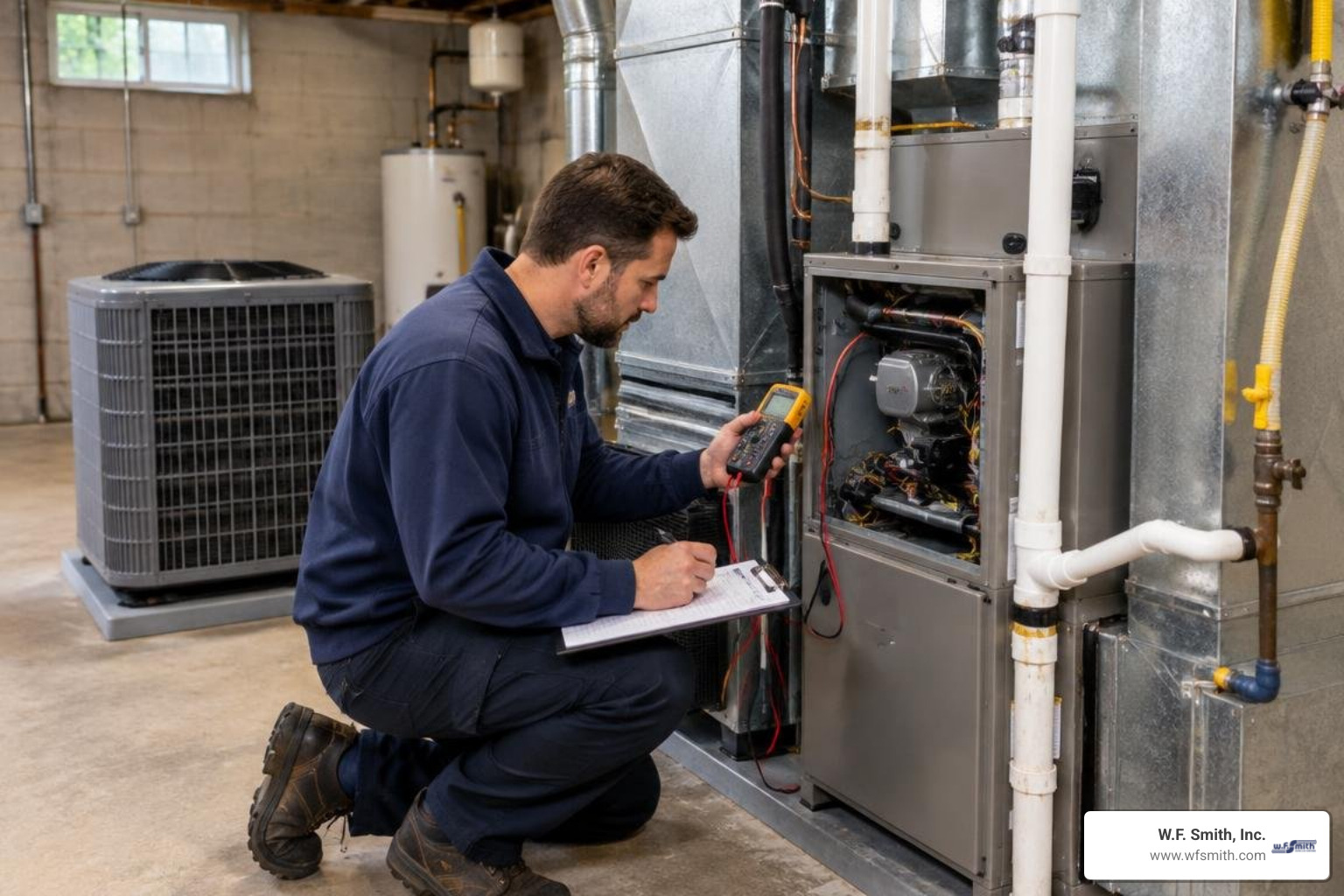
When planning an upgrade, confirm that your home’s electrical capacity, ductwork, drainage, and equipment location are ready for the new system.
Professional Sizing and Smart Thermostat Integration
Proper sizing using ACCA Manual J load calculations is essential. An oversized heat pump will short-cycle, failing to dehumidify effectively in summer, while an undersized unit will rely too heavily on the gas furnace, diminishing your seasonal energy savings.
Equally important is control staging. The smart thermostat must be configured with a lockout mechanism that prevents the heat pump and gas furnace from running at the same time. Working with a qualified HVAC professional is critical because proper configuration protects comfort, efficiency, and equipment safety.
Year-Round Upkeep for Dual Systems
Because a dual fuel system handles both heating and cooling across all four seasons, routine maintenance is necessary to keep warranties valid and ensure peak efficiency.
- Replace Air Filters Regularly: Check 1-inch filters monthly and replace them every 30 to 90 days. Dirty filters restrict airflow, causing furnace heat exchangers to overheat and heat pumps to lose efficiency.
- Clear the Outdoor Heat Pump: Keep leaves, snow, grass clippings, and garden debris at least 2 feet away from the outdoor unit to maintain unrestricted airflow.
- Inspect Condensate Drain Lines: Ensure the cooling coil drain line is clear and flowing freely to prevent water damage during summer operation.
- Schedule Bi-Annual Professional Tune-Ups: Book a professional cooling inspection in the spring for the heat pump and a heating inspection in the fall for the gas furnace. Technicians will clean burners, check electrical terminals, measure refrigerant charge, and test safety limit controls.
Frequently Asked Questions About Dual Fuel Heating
Can a heat pump and gas furnace run at the same time?
No. A dual fuel system must never run both heating modes simultaneously. In a standard split configuration, the indoor evaporator coil sits directly in the warm airflow path above the furnace heat exchanger. If the gas furnace and heat pump were to operate at the exact same time, the extreme heat produced by the furnace would blow across the coil, causing refrigerant pressures to spike dangerously. Modern hybrid thermostats and integrated control boards feature automatic safety lockouts to ensure only one heat source operates at any time.
At what outdoor temperature does a dual fuel system switch to gas?
Most residential systems in the Philadelphia area are programmed to switch over between 30°F and 35°F. However, this is fully customizable. Your HVAC technician can adjust this balance point based on the efficiency rating of your heat pump and current local utility rates to optimize your monthly heating costs.
Is a dual fuel system suitable for older homes in the Philadelphia area?
Yes, provided the home has an existing central duct system. Many historic homes throughout Philadelphia and Montgomery County that previously converted to forced-air heating make ideal candidates for a dual fuel retrofit. The outdoor heat pump connects seamlessly to an indoor furnace and matching cased coil, upgrading both your heating efficiency and summer air conditioning in a single installation.
Conclusion
For homeowners in Southeastern Pennsylvania, a dual fuel heating system delivers an ideal combination of year-round comfort, energy efficiency, and operational flexibility. By pairing an electric heat pump for mild temperatures with a dependable gas furnace for freezing winter conditions, you protect your home against unpredictable weather and volatile energy prices.
The W.F. Smith, Inc. team has delivered trusted residential and commercial heating and cooling services across Philadelphia and surrounding communities for over 80 years. As a family-owned contractor specializing in split systems and rooftop units (RTUs), the team supports installations and maintenance with 24/7 emergency service and a 100% satisfaction guarantee.
If you are evaluating your heating options, contact our dual fuel heating system specialists to schedule an in-home assessment and discover the right comfort solution for your home.