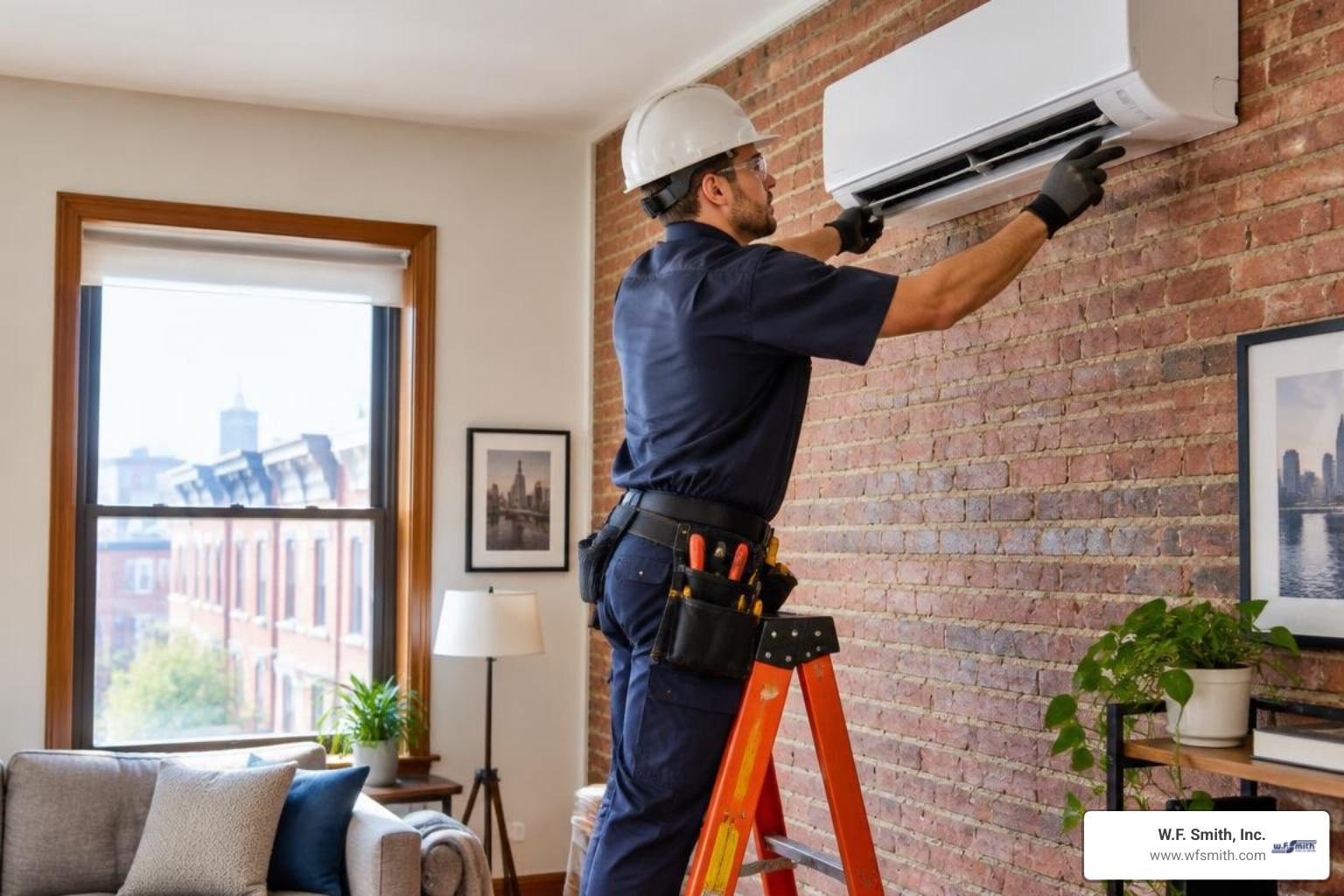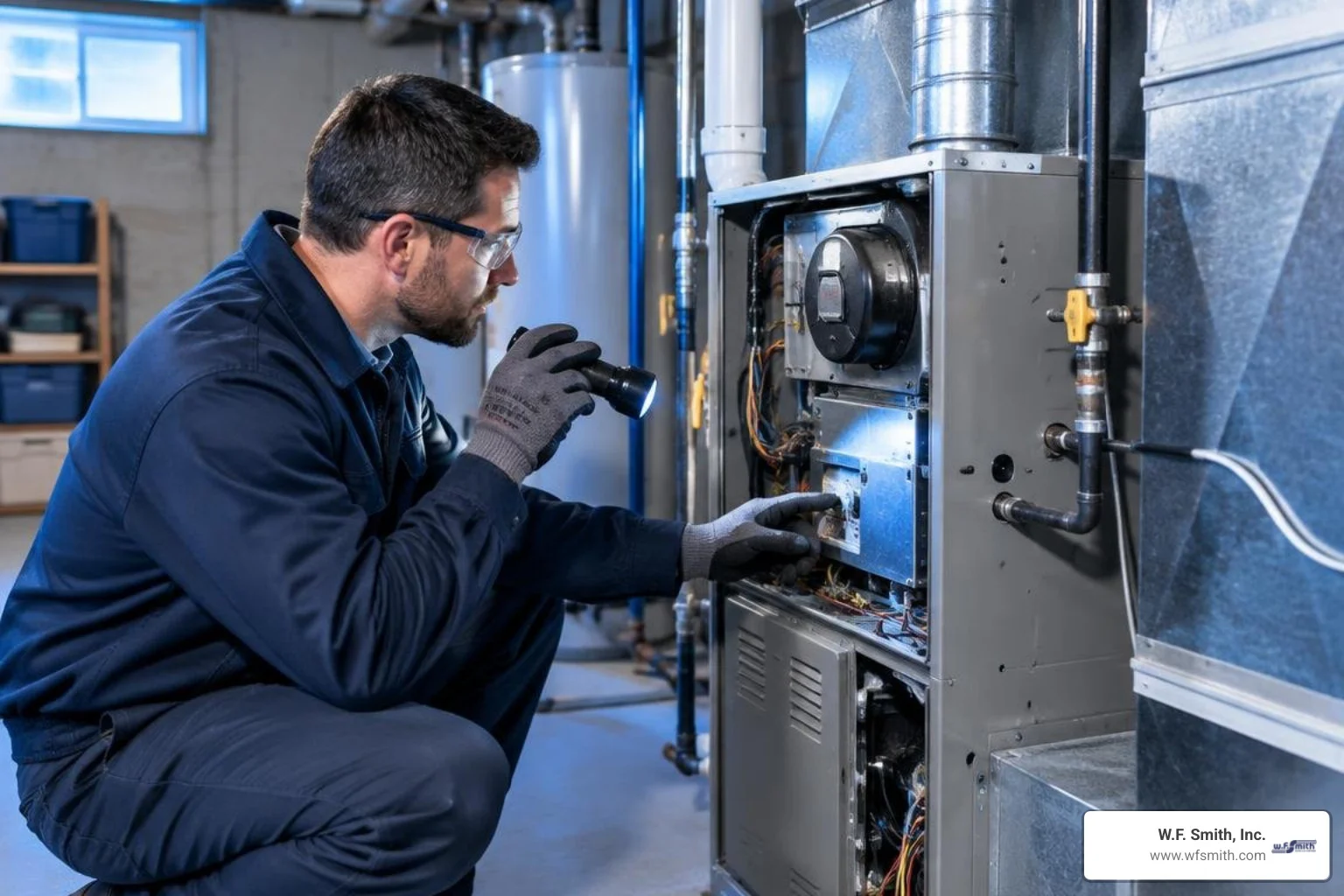
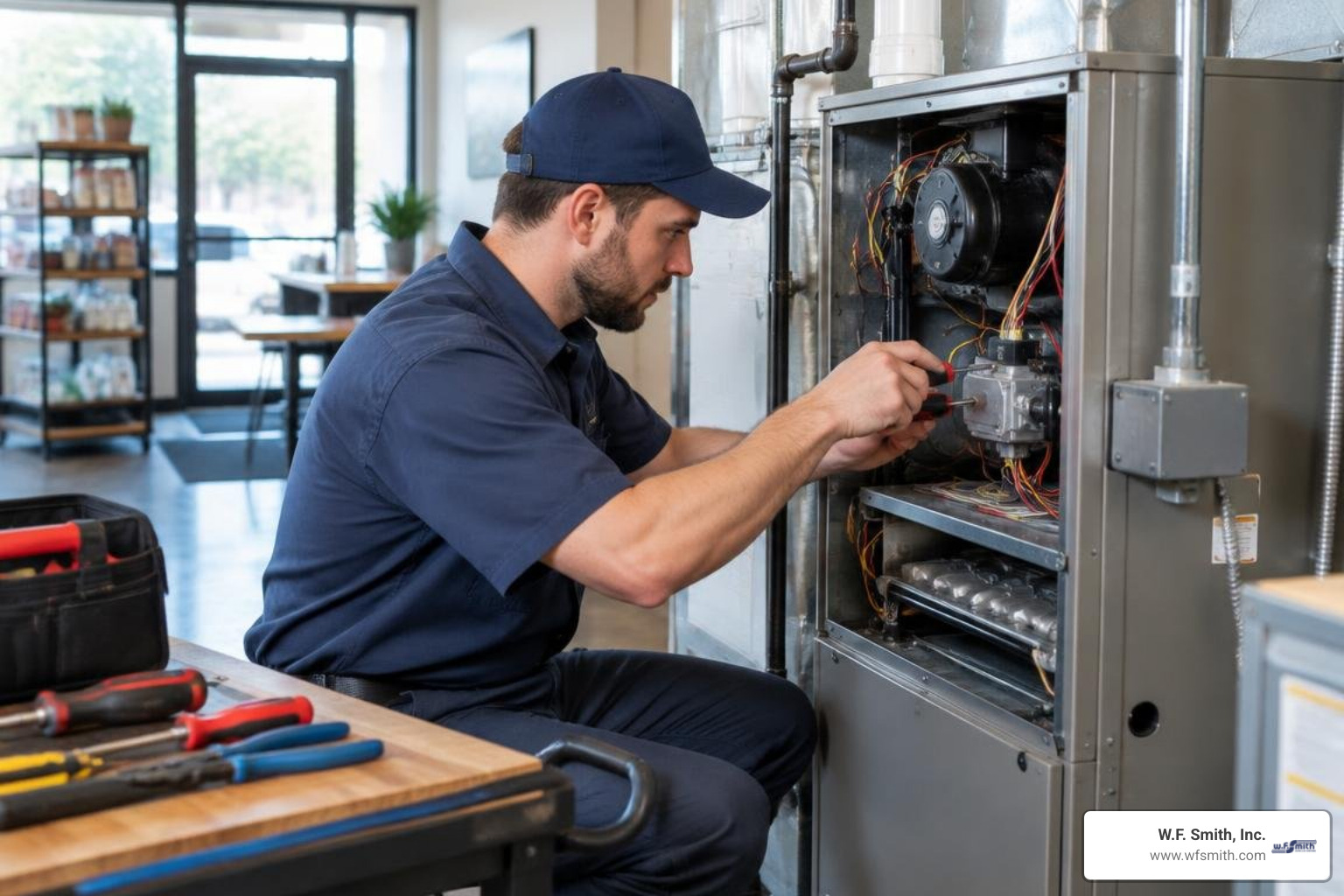
Keep Commercial HVAC Reliable Through Every Philadelphia Season
Commercial HVAC maintenance is a planned, seasonal process of inspecting, cleaning, testing, and documenting your heating and cooling equipment before small issues become costly breakdowns. For Philadelphia businesses, a practical baseline is to schedule service before summer cooling demand and winter heating demand, then add quarterly visits for heavily used rooftop units or critical equipment.
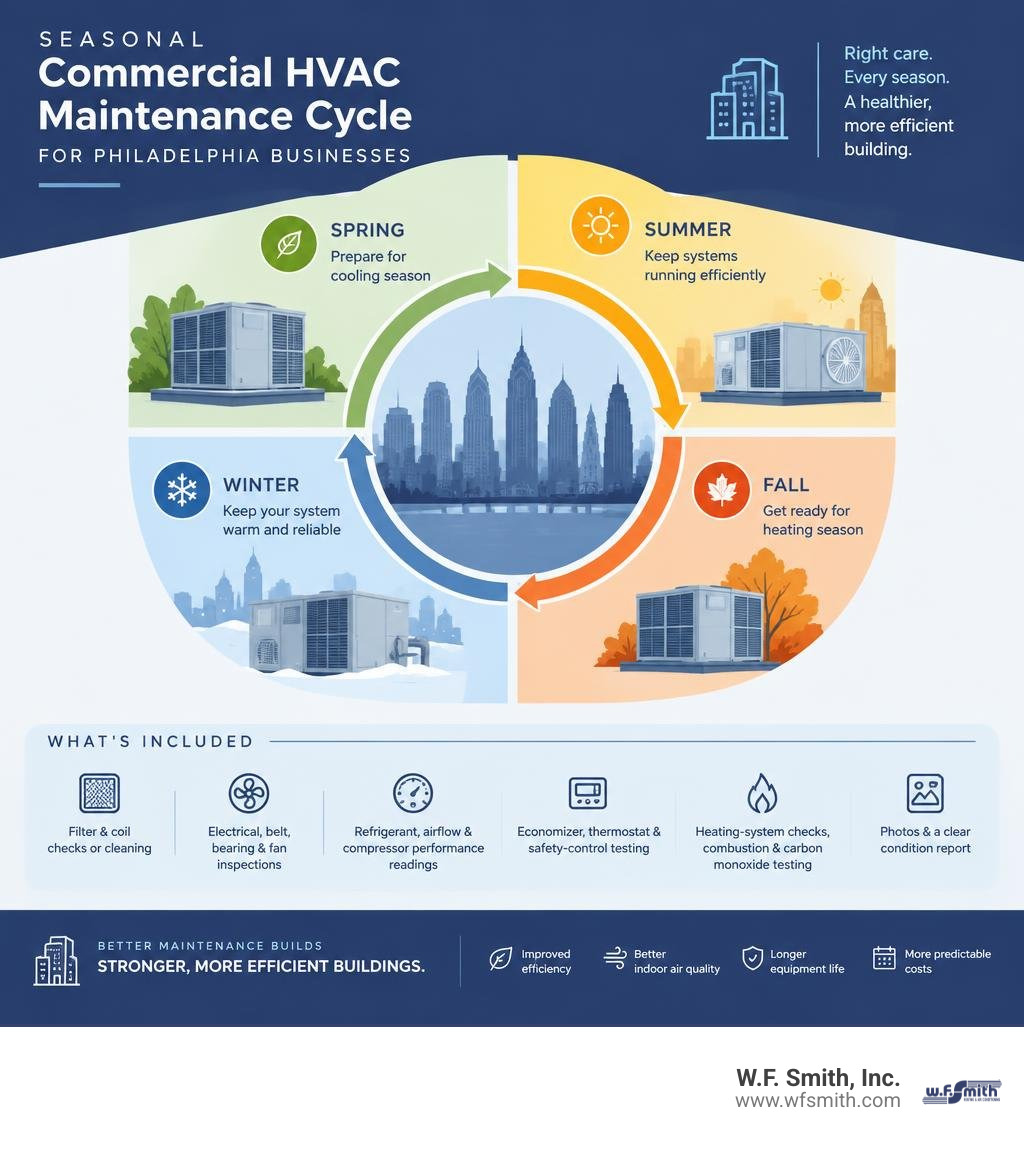
A strong maintenance visit should include:
- Filter and coil checks or cleaning
- Electrical, belt, bearing, and fan inspections
- Refrigerant, airflow, and compressor performance readings
- Economizer, thermostat, and safety-control testing
- Heating-system checks, including combustion and carbon monoxide safety testing
- Photos and a clear condition report for budgeting repairs
Philadelphia’s hot, humid summers and cold winter weather put different stresses on commercial systems. Routine care can improve efficiency, support indoor air quality, and help extend equipment life by 5 to 10 years. It also makes costs more predictable: emergency repairs are usually more expensive than the preventive maintenance meant to avoid them.
Why Commercial HVAC Maintenance Matters for Building Performance and ROI
Operating a commercial facility in the Greater Philadelphia area requires balancing tenant comfort, energy consumption, and strict operating budgets. When heating and cooling systems operate without maintenance, energy efficiency can degrade quickly. Clogged coils force blowers and compressors to work harder, drawing excess amperage and increasing monthly utility bills.
Aligning your facility’s mechanical operations with modern energy benchmarks, such as ASHRAE Standard 90.1-2022 and recent International Energy Conservation Code (IECC) guidelines, is not merely about regulatory compliance. It can also help protect your building’s net operating income (NOI). Routine, documented maintenance helps facility managers standardize procedures across rooftop equipment and mechanical rooms while identifying performance issues before they become disruptive.
Understanding the True Costs of Deferred Maintenance
Skipping regular service might look like an easy way to save a few dollars this quarter, but deferred maintenance creates compounding financial risks. A dirty outdoor coil or a worn contactor may be visible weeks before it fails. Left unaddressed, a minor electrical issue can escalate into a compressor failure during a mid-July heat wave.
An emergency repair is almost always more expensive than the annual cost of HVAC preventive maintenance that could have prevented it. Emergency dispatches can involve after-hours labor premiums, expedited freight fees for replacement components, and potential revenue loss from business downtime or inventory spoilage. Regular maintenance makes it easier to replace worn belts, weak capacitors, and failing contactors on a planned schedule.
Key Business Benefits of Documented Commercial HVAC Maintenance
Effective commercial maintenance is defined by thorough documentation. Modern commercial facility management demands transparent reporting supported by equipment readings and visual evidence.
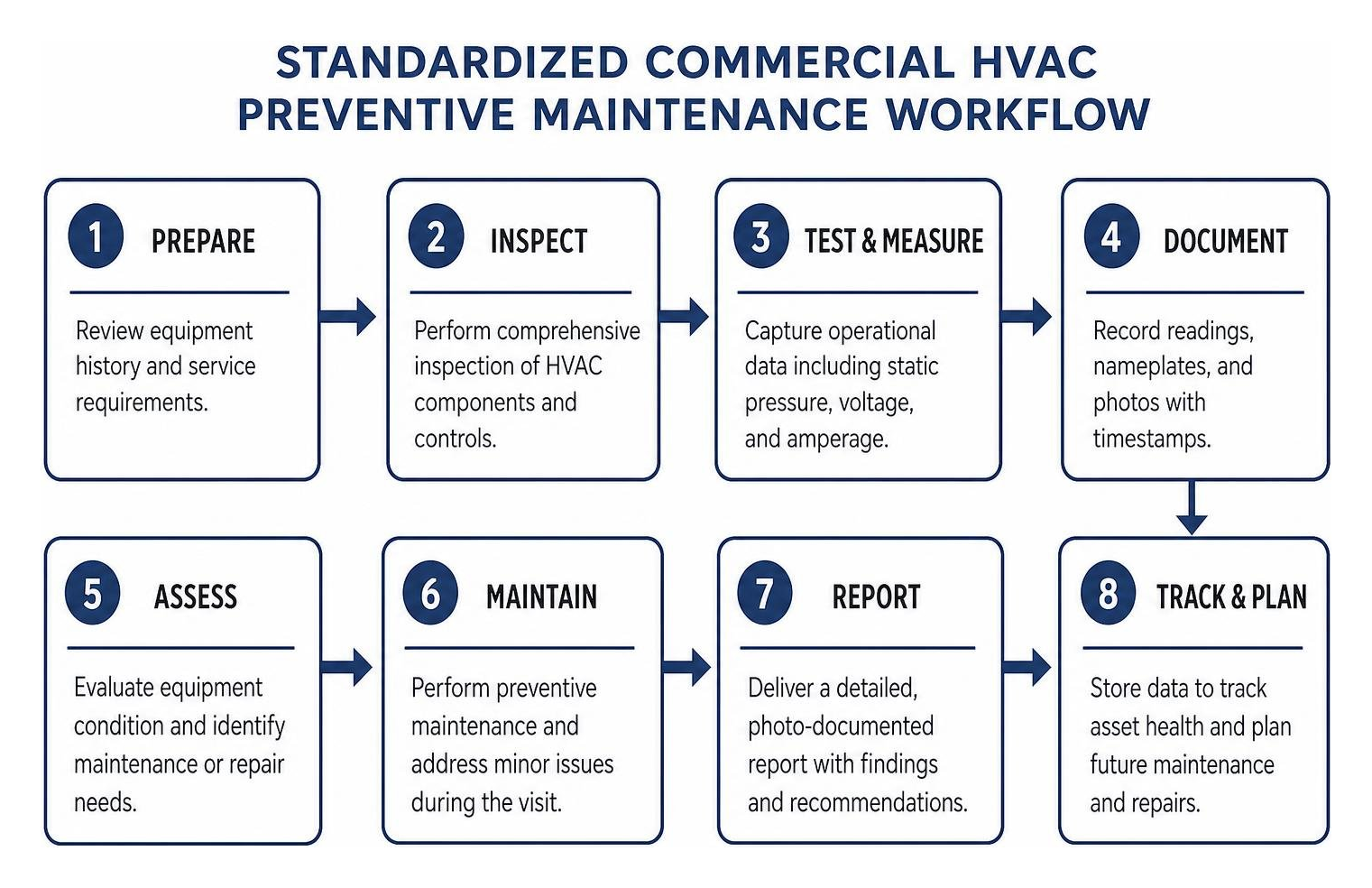
When technicians use standardized digital reporting to capture equipment nameplates, static-pressure readings, voltage balance, and photos of internal components, building owners receive tangible value:
- Comprehensive Asset Tracking: Track the operating health and degradation curve of every rooftop unit (RTU) and split-system component across your portfolio over time.
- Enhanced Indoor Air Quality (IAQ): Documented visual inspections can identify biological growth and clogged filters early.
- Clear Repair Justification: A detailed condition report with timestamped photos helps facility teams evaluate and prioritize necessary repairs before smaller mechanical issues become major outages.
- More Predictable Budgeting: Commercial service agreements can include defined labor rates and coverage structures, helping reduce exposure to unpredictable emergency service fees.
Complete Seasonal Checklist for Philadelphia Commercial Properties
Philadelphia’s climate presents unique operational challenges. The Delaware Valley experiences freeze-thaw cycles in late winter, high humidity throughout the summer, and sharp temperature swings during shoulder seasons. Commercial rooftop units and split systems must transition reliably between heating and cooling demands. A well-structured commercial HVAC maintenance plan helps ensure that key components receive attention before seasonal conditions expose a problem.
Spring and Summer: RTU and Split-System Cooling Preparation
Before outdoor temperatures rise, commercial cooling equipment should receive a comprehensive operational tune-up:
- Coil Care: Remove seasonal buildup from indoor and outdoor coil surfaces so RTUs and split systems can move heat efficiently.
- Refrigerant Performance: Review operating readings and inspect accessible refrigerant piping for signs that warrant further diagnosis.
- Outdoor-Air Controls: Cycle economizers and dampers where present, confirming that they respond appropriately to changing conditions.
- Air-Movement Components: Examine belts, pulleys, bearings, blower sections, and measured air pressure for conditions that can restrict circulation.
- Drainage Protection: Flush condensate paths and verify that drain pans and overflow safeguards can direct water away from occupied areas.
- Electrical Reliability: Look over terminals, relays, capacitors, conductors, and fan-motor connections for damage, heat stress, or loose connections.
Fall and Winter: Heating, Airflow, and Freeze-Protection Checks
As autumn arrives, the focus shifts to dependable heating performance and protective controls on commercial RTUs and split systems:
- Heating-Section Inspection: Inspect gas-fired RTU heating components for corrosion, proper ignition, flame-sensor operation, and safe venting.
- Combustion and Safety Testing: Verify manifold gas pressure, inspect ignition components, clean flame sensors, and test limit switches and other safety controls.
- Airflow and Filter Service: Replace filters as needed, inspect blower assemblies, and confirm supply and return airflow remain within the equipment’s intended operating range.
- Freeze Protection and Damper Operation: Test freeze-stat sensors, outdoor-air dampers, and control sequences to help protect coils during cold Philadelphia weather.
- Carbon Monoxide Monitoring: Test ambient mechanical-room carbon monoxide sensors and relevant safety interlocks where installed.
Equipment Protocols and Agreement Structures
Commercial RTUs and split systems need service intervals and procedures that match their operating hours, equipment condition, and exposure to Philadelphia weather. The table below outlines common maintenance approaches for the equipment W.F. Smith services.
| Equipment Type | Typical PM Cadence | Key Inspection and Service Tasks | Service-Scope Considerations |
|---|---|---|---|
| Small Commercial RTU | Seasonal visits | Replace filters, inspect wiring and fan components, clean accessible coils, and confirm basic operation. | Unit location, rooftop access, and the maintenance history shape the visit. |
| Medium Commercial RTU | Two to four visits each year | Evaluate refrigerant operation, verify airflow, inspect economizer functions where present, and test electrical controls. | The equipment’s age, daily runtime, and control setup determine the work needed. |
| Large Commercial RTU | Seasonal visits | Review staged cooling and heating response, examine vibration and airflow, and test protective controls. | Capacity, operating demands, and the number of zones affect the maintenance approach. |
| Commercial Split System | Spring and fall visits | Inspect line sets, clean indoor and outdoor sections, clear condensate drainage, and test blower and thermostat operation. | Indoor access, the quantity of connected equipment, and observed performance guide the service scope. |
For example, a commercial strip center with multiple RTUs can benefit from a scheduled maintenance agreement that matches visit frequency and service scope to its equipment, occupancy, and operating hours. This routine care helps protect capital equipment while uncovering minor component fatigue before it interrupts daily commerce.
Maintenance Protocols for Commercial RTUs and Split Systems
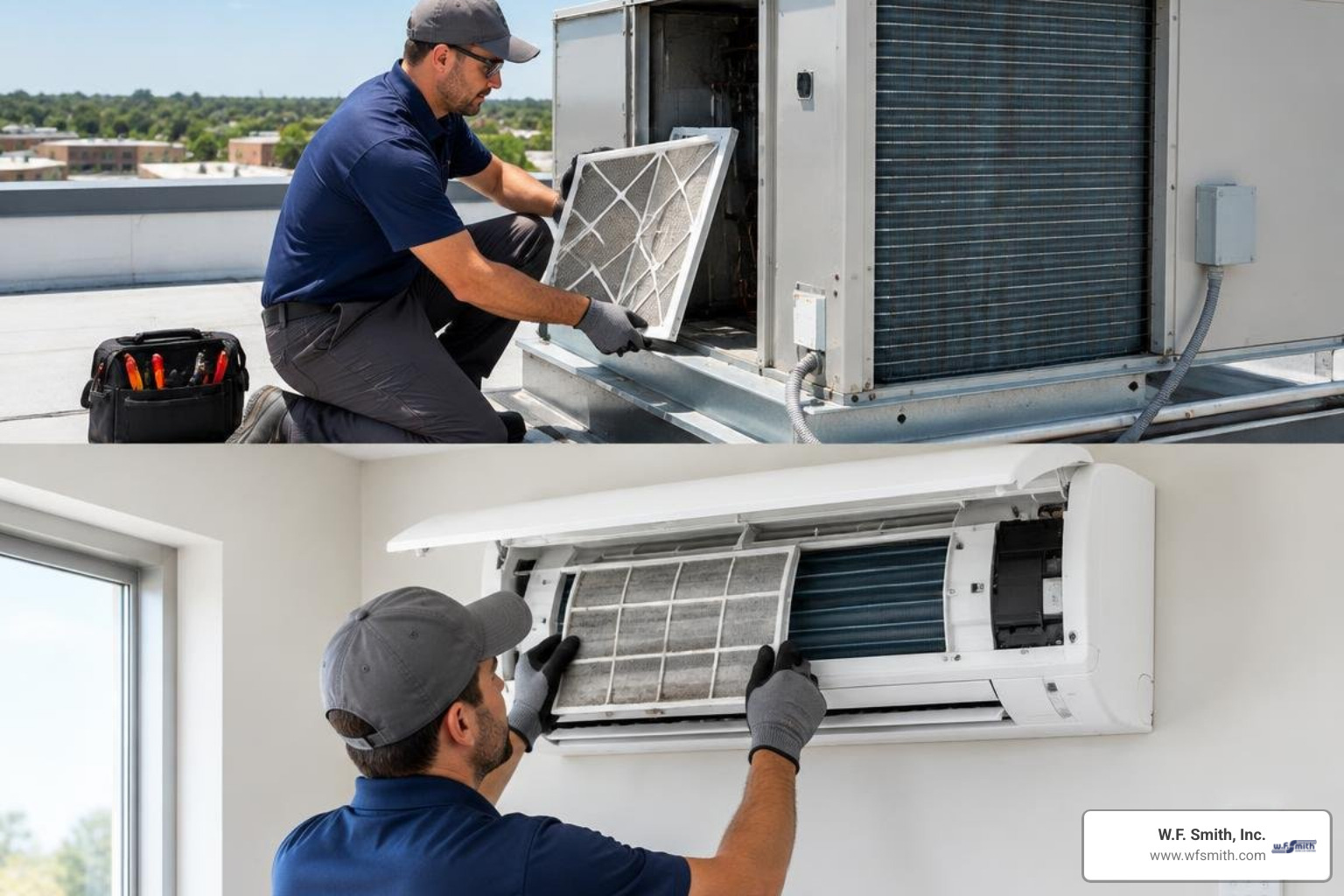
Effective commercial HVAC maintenance should match the equipment configurations W.F. Smith services:
- Packaged Rooftop Units (RTUs): Commercial RTUs sit outdoors through Philadelphia’s heat, rain, wind, and winter conditions. Maintenance focuses on cabinet integrity, electrical components, filters, belts, blower operation, compressor readings, and economizer performance where installed.
- Commercial Split Systems: These systems benefit from attention to indoor and outdoor coils, line sets, condensate drainage, blower assemblies, electrical connections, and thermostat response. Reviewing those components helps uncover airflow, drainage, and refrigerant concerns before they disrupt comfort.
Controls, Airflow, and Safety Checks for RTUs and Split Systems
Commercial RTUs and split systems rely on correctly operating controls and protective devices. Seasonal maintenance should include:
- Thermostat and Control Verification: Confirm that thermostats, control boards, and staging sequences respond correctly to heating and cooling calls.
- Economizer and Damper Checks: Inspect outdoor-air dampers and economizer controls where installed to support appropriate ventilation and efficient cooling operation.
- Airflow and Filtration: Check filters, blower motors, belts, and static pressure to help maintain dependable airflow and indoor comfort.
- Condensate and Freeze Protection: Test drain safety switches, condensate pathways, freeze-stat sensors, and outdoor-air damper operation where applicable.
- Electrical Safety: Inspect disconnects, wiring, contactors, capacitors, and safety switches for signs of wear, overheating, or unreliable operation.
A planned commercial HVAC maintenance program gives Philadelphia facility teams a dependable framework for seasonal inspections, equipment documentation, and repair prioritization.
When maintenance identifies an urgent fault, prompt HVAC repair service can help restore reliable heating or cooling before the issue affects tenants, staff, or operations.
Facility managers reviewing coil condition and cooling performance can use the team’s explanation of AC evaporator coil leaks to better understand why refrigerant-side problems can reduce capacity and increase operating costs.
Humidity complaints may also point to airflow, drainage, or cooling-system issues. The article on why a building can feel humid with the AC running explains common causes that can inform a more focused service conversation.
Frequently Asked Questions About Commercial HVAC Maintenance
What affects the cost of commercial HVAC maintenance visits?
Commercial maintenance costs vary based on equipment type, tonnage, age, roof or mechanical-room accessibility, and the scope of work required. Sites with more equipment, difficult roof or mechanical-room access, and specialized testing needs generally require more labor and technical expertise.
An annual preventive maintenance agreement can help facility managers plan expenses by defining visit frequency, included tasks, and service terms in advance. A qualified commercial HVAC contractor can assess the equipment and provide a maintenance proposal tailored to the building’s needs.
How often should commercial HVAC systems in Philadelphia be serviced?
A quarterly maintenance cadence is the industry standard for most commercial facilities in the Philadelphia area. Because the local climate transitions through four distinct seasons, quarterly visits align closely with operational demands:
- Spring: Cooling startup, coil cleaning, and control checks.
- Summer: Mid-season high-load cooling inspections and filter servicing.
- Fall: Heating startup, ignition checks, and safety-control testing.
- Winter: Freeze protection, belt checks, and economizer winterization.
Facilities with high occupant turnover, retail spaces with high foot traffic, or critical manufacturing cleanrooms may require monthly filter replacements and more frequent diagnostic evaluations.
What is included in a standard commercial preventive maintenance agreement?
A standard commercial preventive maintenance agreement includes:
- Multi-point mechanical, electrical, and refrigeration diagnostic inspections.
- Filter replacements based on agreed MERV ratings.
- Drive belt replacements and sheave alignments.
- Bearing, blower, and motor lubrication.
- Safety switch, limit control, and freeze-stat testing.
- Digital documentation containing operating readings, photos, and recommendations for worn parts.
- Priority emergency dispatch and service terms for unscheduled repair needs.
Protect Your Commercial Facility with Trusted Local Experts
Proactive facility management pays dividends every day through lower energy bills, reduced tenant turnover, and reliable climate control throughout Philadelphia’s hottest summers and coldest winters. Partnering with an experienced mechanical contractor helps your heating and cooling equipment deliver dependable performance year after year.
The W.F. Smith, Inc. team has delivered commercial and residential mechanical solutions across the Greater Philadelphia region for more than 80 years. As a family-owned business, the team provides 24/7 commercial emergency support, factory-trained technicians, and a 100% satisfaction guarantee.
Whether you manage an office complex, a retail shopping center, or an industrial facility, the team can build a maintenance program around your equipment and operational goals. To discuss your facility’s needs, contact our commercial HVAC maintenance specialists to schedule a comprehensive facility assessment.