Estimate Mini Split Energy Usage for Horsham Winter Heating
A mini split’s winter electricity use depends on its size, efficiency, outdoor temperature, and how well your home holds heat. For a common 12,000 BTU ductless heat pump, active heating power may range from roughly 400 to 1,200 watts at moderate conditions, but can rise during colder Horsham, PA weather and defrost cycles.
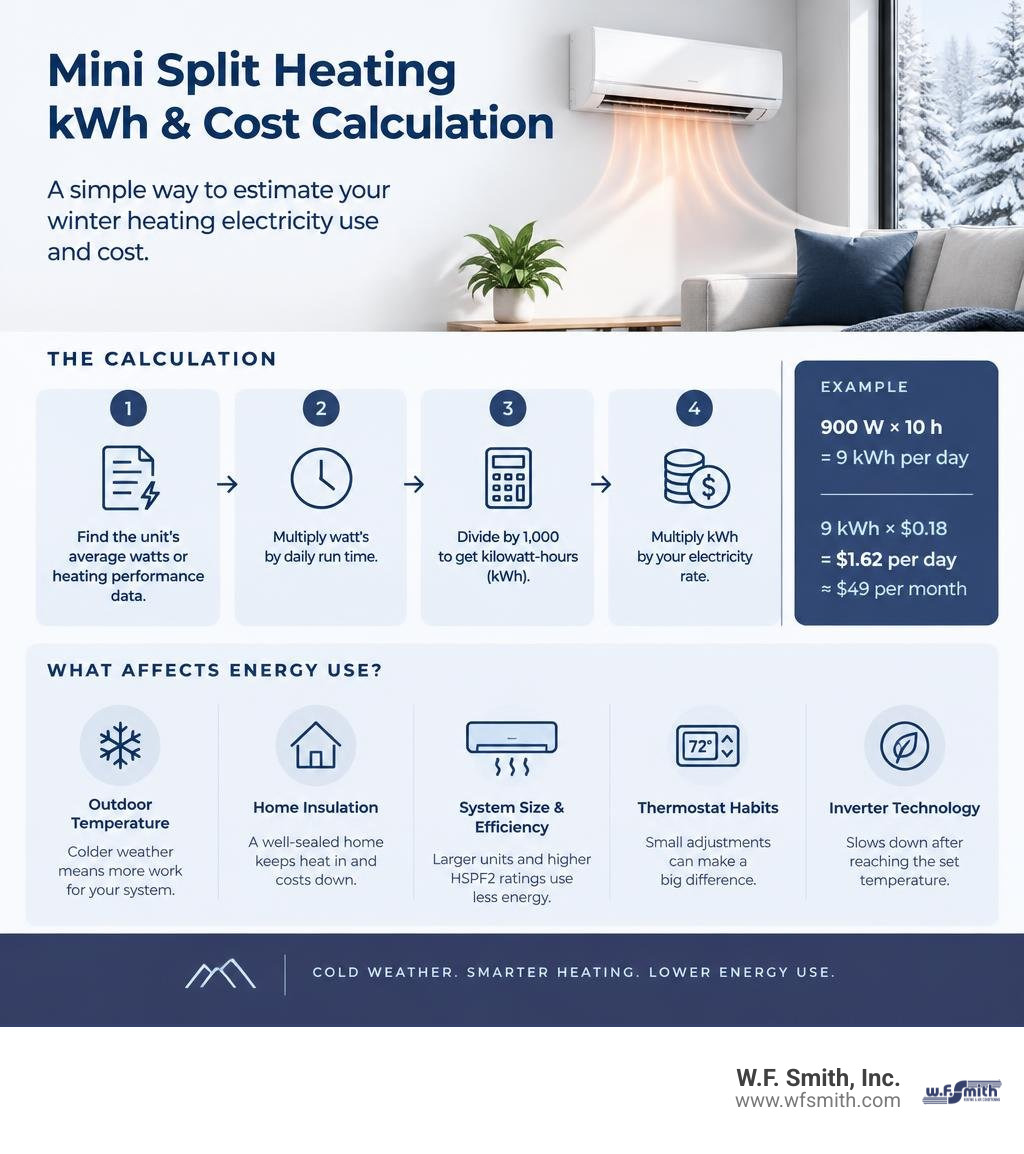
To estimate your mini split energy usage:
- Find the unit’s average watts or heating performance data.
- Multiply watts by daily run time.
- Divide by 1,000 to get kilowatt-hours (kWh).
- Multiply kWh by your PECO electricity rate.
For example, a system averaging 900 watts for 10 hours per day uses about 9 kWh daily. At an electric rate of $0.18 per kWh, that is about $1.62 per day or roughly $49 per month. Real costs can be lower or higher because inverter-driven systems slow down after reaching the set temperature, while cold snaps make the system work harder.
This guide explains what local winter conditions, HSPF2 ratings, installation quality, and everyday thermostat habits mean for ductless heating costs in Horsham.
Understanding Mini Split Energy Usage in Cold Weather
When evaluating cold-weather performance, many homeowners ask whether ductless heating is effective in Pennsylvania. Modern cold-climate heat pumps are designed to handle northeastern winters while maintaining strong efficiency.
Traditional heating equipment generates heat through combustion, such as oil or natural gas, or through electrical resistance. Ductless heat pumps move available thermal energy from outdoor air into the home. Even in very cold weather, the refrigerant cycle can capture and concentrate that energy for indoor comfort.
The metric that helps explain this efficiency is the coefficient of performance (COP). A standard electric resistance baseboard has a COP of 1.0, meaning it produces about 1 watt of heat for every watt of electricity it uses. An inverter-driven mini split operating in mild winter conditions can often achieve a much higher COP, delivering several units of heat for each unit of electricity consumed.
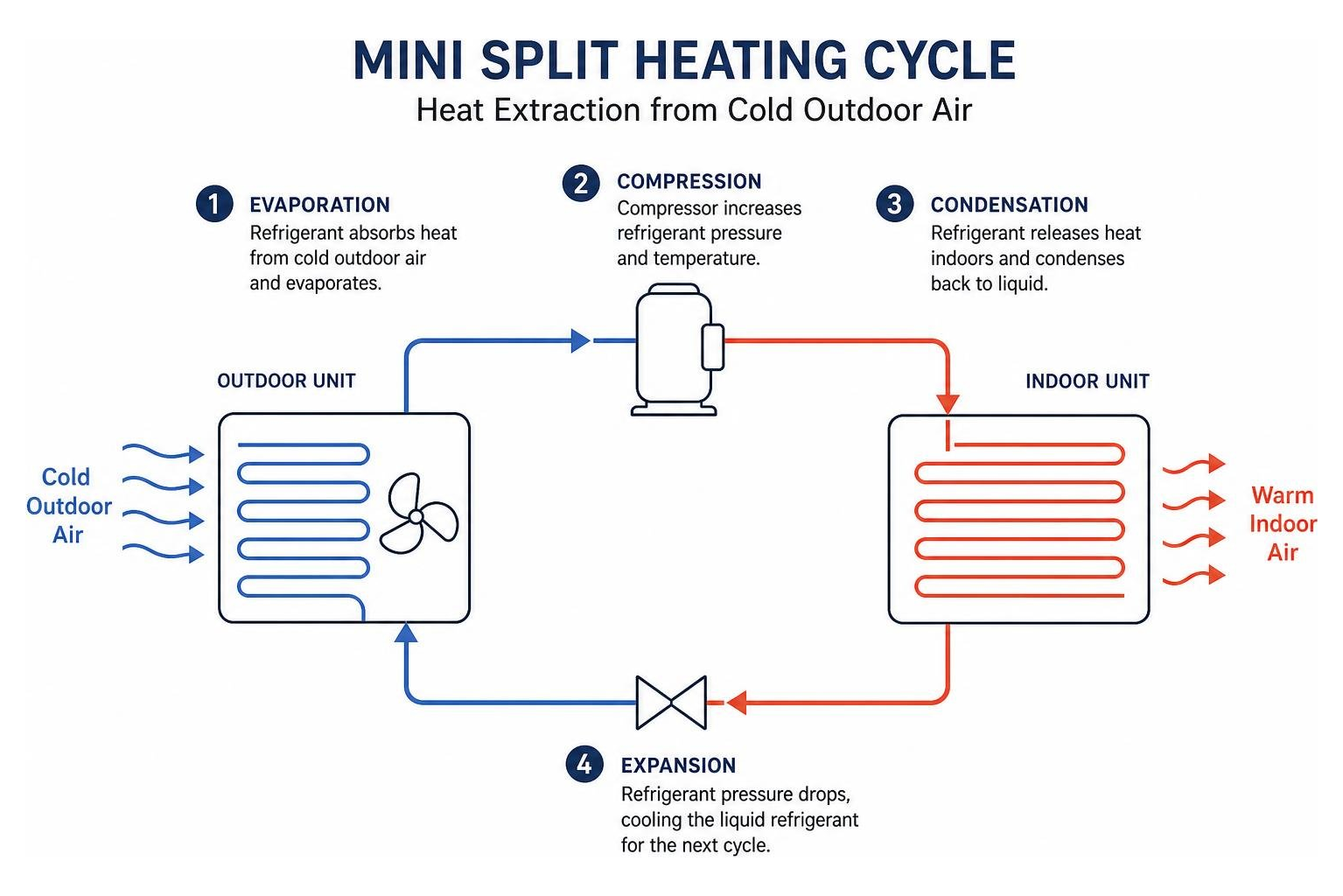
The key is the inverter-driven compressor. Instead of repeatedly running at full capacity and shutting off, it adjusts its speed to match the room’s heating demand. Once the desired temperature is reached, the system can reduce its output and use less electricity to maintain comfort.
Calculating Heating-Mode Mini Split Energy Usage by System Size
Mini split capacity is measured in British thermal units per hour (BTU/h). Although a unit’s rated capacity indicates its maximum output, actual wattage changes with outdoor conditions, indoor demand, and compressor modulation.
For a neutral reference on how capacity, runtime, and temperature affect operating demand, see this mini split electricity-use overview.
| System Capacity (BTU/h) | Typical Full-Load Input (Watts) | Inverter-Modulated Range (Watts) | Estimated Daily Energy (10 hrs at 50% load) | Estimated Monthly Winter Cost (at $0.18/kWh) |
|---|---|---|---|---|
| 9,000 BTU | 800 to 1,100 W | 250 to 650 W | 4.5 kWh | $24.30 |
| 12,000 BTU | 1,000 to 1,400 W | 350 to 900 W | 6.0 kWh | $32.40 |
| 18,000 BTU | 1,500 to 2,100 W | 500 to 1,300 W | 9.0 kWh | $48.60 |
| 24,000 BTU | 2,000 to 2,800 W | 700 to 1,800 W | 12.5 kWh | $67.50 |
| 36,000 BTU (Multi-Zone) | 3,000 to 4,200 W | 900 to 2,600 W | 17.5 kWh | $94.50 |
To estimate your own usage:
- Step 1: Daily kWh = (average operating watts × hours running) ÷ 1,000
- Step 2: Monthly cost = daily kWh × 30 × electricity rate ($/kWh)
Key Factors Affecting Winter Power Consumption
Several structural and environmental factors determine whether a unit operates near its efficient baseline or closer to full capacity:
- HSPF2 rating: HSPF2 measures seasonal heating output relative to electrical energy used. Higher-rated equipment can use less electricity during a Pennsylvania winter.
- Thermal envelope and air infiltration: Leaky windows, uninsulated attics, and drafty doors increase heat loss, forcing the compressor to work harder.
- Temperature difference: When Horsham temperatures fall, the greater gap between outdoor and indoor temperatures increases heating demand.
- Correct sizing and load matching: An undersized unit may run at maximum output without keeping up, while an oversized system may cycle inefficiently. Homeowners planning room-by-room comfort can use this overview of how many mini split systems a home may need to understand why a professional load calculation matters.
Heating Efficiency and Monthly Operating Costs in Horsham, PA

In Horsham, PA, homeowners receive electric service primarily through PECO. Your actual operating cost depends on your current electricity supply rate, system size, runtime, insulation, and the outdoor temperature.
Professional ductless HVAC services can help match equipment capacity and indoor-unit placement to the rooms you want to heat. Proper sizing helps prevent a system from operating at unnecessarily high wattage.
Cooling vs. Heating Energy Requirements
Ductless mini splits are highly efficient for both cooling and heating, but a Pennsylvania winter typically creates a larger temperature gap for the system to overcome.
- Temperature-lift differences: On a warm summer day, the difference between outdoor air and a 72°F indoor setting may be modest. In winter, maintaining a comfortable indoor temperature during a freeze requires more compressor work.
- Defrost cycles: In cold, humid weather, frost can accumulate on the outdoor coil. A ductless heat pump periodically reverses refrigerant flow for a few minutes to remove frost and protect heat transfer.
- Performance metrics: Cooling performance is rated by SEER2, while winter heating performance is measured by HSPF2 and low-temperature COP.
Estimated Monthly Heating Costs by Home Size
How do these factors translate into monthly utility costs in Horsham?
- Single-zone addition or primary suite (12,000 BTU): Heating a 400 to 600 sq. ft. space at a moderate setpoint may average roughly 500 to 700 watts during active operation. At 12 hours per day, that can equal about 7.2 kWh daily, or approximately $35 to $45 per month at the example rate used in this article.
- Multi-zone system for a typical Horsham Colonial (36,000 BTU with 3 to 4 heads): When several indoor heads operate, energy use can vary widely with zoning, weather, and building heat loss. Turning down unused rooms can reduce total runtime and cost.
Mini Splits vs. Conventional Heating: Efficiency and Environmental Impact
Many older homes in Bucks and Montgomery Counties have uneven temperatures and rooms that are difficult to keep comfortable. Comparing heating approaches starts with how efficiently they deliver warmth into the spaces people use every day.
Ductless Heat Pumps and Room-by-Room Comfort
Ductless heads deliver heat directly into the room, which can make them especially useful for additions, converted spaces, and rooms with uneven comfort. Homeowners considering a room-by-room solution can see the practical tradeoffs in this comparison of central AC and ductless heating.
A properly selected ductless heat pump can move more heat than the electricity it consumes. Savings vary by home and weather, but efficient zoning and correct sizing can help reduce winter electricity use.
Environmental Benefits and Reduced Emissions
Professional heat pump services give homeowners a way to reduce reliance on on-site fuel combustion while maintaining reliable comfort. A qualified HVAC team can help determine whether a ductless heat pump fits the home’s layout and comfort goals.
Heat pumps can reduce a home’s direct combustion emissions, and their operating emissions can decline as the electric grid adds lower-carbon generation. Homes with solar may also offset part of the electricity used for heating. For more context on the environmental considerations, this explanation of heat pumps and home emissions outlines the factors homeowners should weigh.
Best Practices to Optimize Ductless Heating Performance
Getting the lowest practical electricity consumption from your mini split requires smart operating habits and basic maintenance.
Operational Habits That Lower Mini Split Energy Usage
Ductless systems operate differently from older boilers and furnaces. These common ductless mini split myths and facts explain why steady operation and realistic expectations often matter more than frequent thermostat changes.
- Keep a steady setpoint: Large temperature setbacks can require a long recovery period. A stable, comfortable setting, often around 68°F to 70°F, lets the inverter adjust gradually to the heating load.
- Use independent zoning: Set back unused guest rooms or storage areas while prioritizing the rooms your family uses most.
- Select Heat mode in winter: Choosing Heat mode instead of Auto can prevent unnecessary switching during sunny winter afternoons.
- Aim louvers downward: Because warm air rises, directing airflow toward the floor can help distribute warmth more evenly.
For homes with additions, older window units, or hard-to-condition rooms, this overview of whether ductless AC is right for your home explains where room-by-room zoning can be especially useful.
Maintenance Practices for Maximum Efficiency
Neglecting basic upkeep can restrict airflow and make the system work harder.
- Clean indoor mesh filters regularly: Remove and rinse reusable filters every two to four weeks, then let them dry completely before reinstalling them.
- Keep the outdoor unit clear: Remove leaves, tall grass, snow, and ice buildup. Maintain the manufacturer-recommended clearance around the coil for airflow.
- Schedule professional seasonal tune-ups: A professional HVAC visit can verify coil condition, drain performance, electrical connections, and refrigerant operation.
Homeowners replacing a noisy window unit can see how the upgrade process works in this article about replacing a window AC with a mini split. For a broader look at efficiency and comfort benefits, this discussion of residential mini split efficiency connects equipment selection with long-term home performance.
Frequently Asked Questions About Ductless Heating in Pennsylvania
Does a mini split use more electricity when heating than cooling?
Often, yes. In Pennsylvania, mini splits may use more electricity during the peak heating season than during the peak cooling season because the winter temperature difference is larger and periodic defrost cycles add demand. Actual usage depends on the equipment, weather, thermostat setting, and home’s insulation.
Is it cheaper to leave a mini split running all day in winter?
In many homes, maintaining a steady temperature can be more efficient than turning the system off for long periods and forcing it to recover. Inverter compressors can reduce their output after the room reaches the setpoint. A modest setback may still make sense for an unoccupied space, but extreme temperature swings can increase recovery demand.
How much does it cost to run a mini split 24/7 in Pennsylvania?
The monthly cost varies by system size, outdoor temperature, insulation, runtime, and your current electricity rate. A 12,000 BTU single-zone system that runs continuously does not run at maximum wattage all day because the inverter can reduce output once the room reaches the desired temperature. Review your utility bill and the unit’s performance data for a more accurate household estimate.
Conclusion
Understanding mini split energy usage helps you manage winter heating costs without giving up comfort. Variable-speed inverter compressors, strong HSPF2 performance, correct sizing, and reduced duct losses can make ductless systems a practical option for Southeastern Pennsylvania winters.
The W.F. Smith team provides heating, cooling, and indoor air quality solutions throughout Montgomery, Bucks, and Philadelphia Counties. As a family-owned HVAC contractor with more than 80 years of experience, the team installs and services Lennox and Mitsubishi ductless systems and provides 24/7 emergency service.
Whether you want to zone an addition, improve a cold room, or replace inefficient electric baseboards, contact our ductless HVAC specialists to discuss the right mini split solution for your home’s layout and comfort goals.