- 24/7 Emergency HVAC Repair
- Financing Available
- We Accept All Major Credit Cards

Heat Pump Pros and Cons for Bucks County Homeowners Before Winter
What Are the Advantages and Disadvantages of a Heat Pump?
When considering a major HVAC upgrade, many Bucks County homeowners ask: what are the advantages and disadvantages of a heat pump? Heat pumps are among the most versatile comfort systems available today, but like any mechanical equipment, they bring clear trade-offs.
| Factor | Heat Pump Advantages | Heat Pump Disadvantages |
|---|---|---|
| Efficiency | Can reach over 300% to 400% efficiency; moves heat rather than burning fuel. | Efficiency declines in sub-freezing weather and requires more electricity when temperatures plummet. |
| Versatility | Delivers both heating and central AC in a single all-electric system. | Relies entirely on electricity, requiring backup planning during winter storm outages. |
| Operating cost | Can significantly reduce heating bills when replacing oil, propane, or electric baseboards. | Cost savings depend on local electric-to-gas price ratios and may be modest against inexpensive gas. |
| Safety and emissions | No indoor combustion, no risk of carbon monoxide leaks, and a lower carbon footprint. | Uses chemical refrigerants that require tight containment and professional handling. |
| Comfort | Provides consistent, steady air circulation and effective summer dehumidification. | Supply air feels milder than the intense heat produced by a furnace. |
| Upfront investment | May qualify for energy-efficiency rebates and utility incentives. | Equipment and installation can cost more than a standalone furnace replacement. |
When evaluating heat pumps, the headline benefit is usually energy efficiency. Because a heat pump transfers thermal energy rather than creating it through combustion, it can deliver several units of heat for every unit of electricity it uses in moderate conditions. However, upfront cost and winter weather performance remain the two biggest considerations for homeowners in Southeastern Pennsylvania.
For a system designed around your home’s layout, ductwork, and comfort goals, professional heat pump installation helps ensure the equipment is properly selected and commissioned.
Evaluating What Are the Advantages and Disadvantages of a Heat Pump for Winter Heating
To understand how a heat pump performs in January, it helps to understand the refrigeration cycle. Outside air still contains usable heat in cold weather. The outdoor coil absorbs that heat into a low-boiling refrigerant, the compressor raises the refrigerant temperature, and the indoor coil releases the concentrated warmth throughout your home.
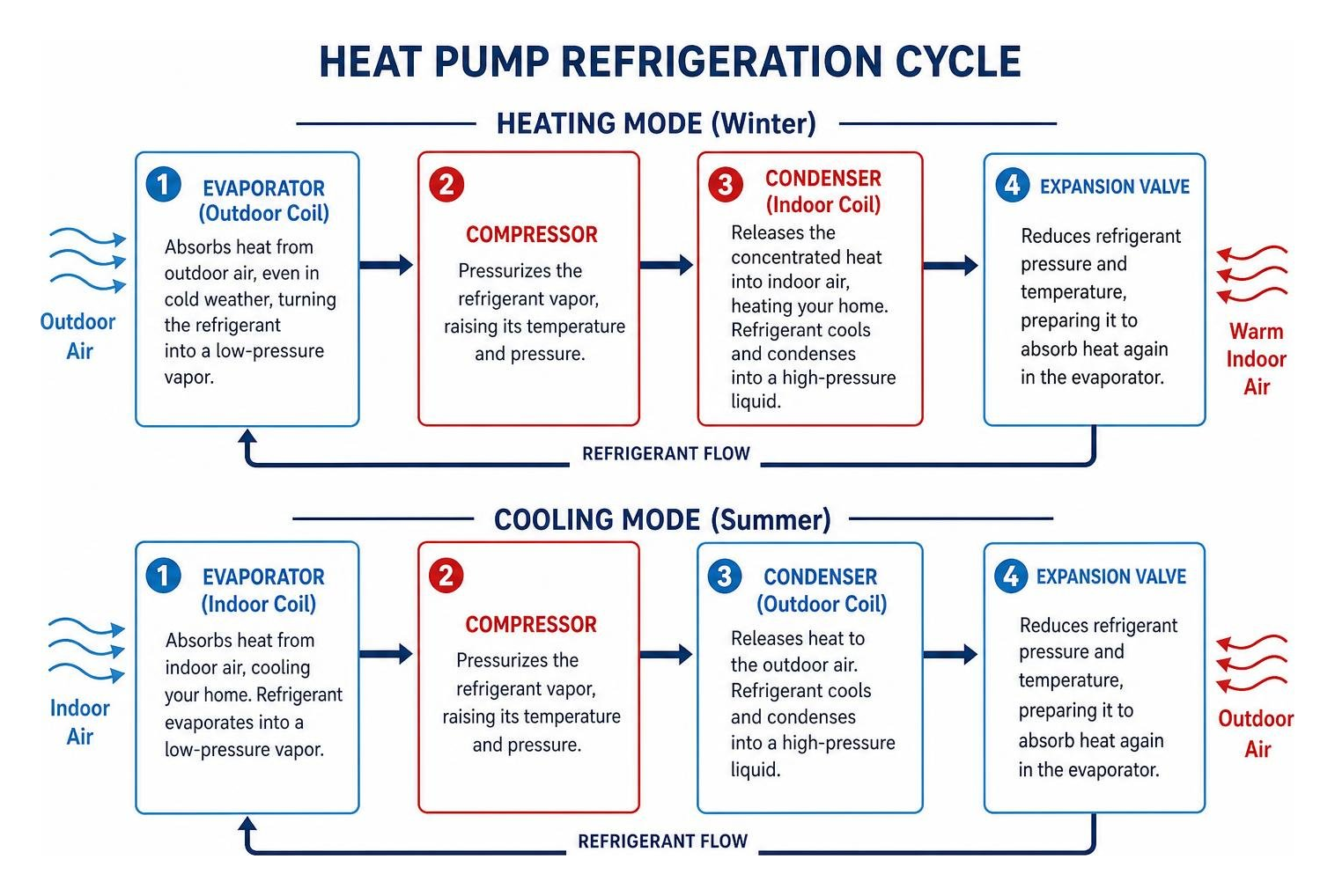
Outdoor temperature directly affects performance. As the temperature falls, a heat pump’s capacity and efficiency decline, and the system may need supplemental heat during extended cold snaps.
During humid, sub-freezing days, moisture can freeze on the outdoor coil. The system periodically enters a defrost cycle to melt frost while auxiliary heat helps maintain indoor comfort.
Cost Breakdown: What Are the Advantages and Disadvantages of a Heat Pump Financially?
The financial equation depends on your baseline fuel source, your home’s thermal envelope, and local utility rates. Homeowners replacing oil, propane, or electric baseboard heat may see stronger operating-cost benefits than those replacing an efficient natural-gas system.
Savings also depend on careful sizing, insulation, thermostat settings, and maintenance. Properly installed heat pump systems commonly last 15 to 20 years and provide both summer cooling and winter heating.
Comparing Heat Pump Types: Air-Source, Ground-Source, and Hybrid Systems
Not all heat pump installations look or function the same. Choosing between air-source, geothermal, and hybrid dual-fuel systems depends on your yard size, existing heating infrastructure, and budget.
Air-Source Heat Pumps and Ductless Solutions
Air-source heat pumps are the most widely installed type because they adapt well to suburban homes. Modern units use variable-speed inverter compressors that adjust output in small increments, reducing the stop-start cycling associated with older equipment.
For older Bucks County properties without existing ductwork, or homes with persistent hot and cold spots, ductless mini-split systems offer room-by-room zoning. Each indoor unit operates independently, which can reduce losses associated with leaky ducts.
Geothermal Ground-Source Heat Pumps
While air temperatures fluctuate through the year, ground temperatures below the frost line remain relatively stable. Ground-source systems circulate fluid through buried loops to exchange heat with the earth.
Geothermal systems can reduce heating energy use compared with electric resistance systems. Installation requires excavation or drilling, which increases the initial investment, but the underground loops can provide decades of reliable operation.
Hybrid Dual-Fuel Heating Systems
For homeowners who want strong efficiency without relying exclusively on electric resistance backup during extreme cold, hybrid systems offer a practical middle ground. A dual-fuel system pairs an electric air-source heat pump with an auxiliary gas or oil furnace.
When outdoor temperatures are moderate, the heat pump handles the heating load efficiently. When temperatures fall sharply, the system can automatically switch to the furnace for higher-output heat.
A dual-fuel heating system gives homeowners a professionally integrated option for combining electric heat-pump efficiency with dependable furnace backup.
For a closer look at when each fuel source may be the better choice, our article on the advantages of dual-fuel heating systems explains how these systems respond to changing outdoor temperatures.
Environmental Impact, Safety, and Home Upgrades
Modern heating choices carry lasting environmental and safety implications. Unlike fossil-fuel furnaces and boilers, heat pumps do not create heat through on-site combustion.

Choosing a heat pump can reduce:
- Carbon monoxide risks: Because no combustion occurs inside the unit, there is no risk of carbon monoxide leaks or backdrafting flue gases from the heat pump itself.
- On-site exhaust emissions: Heat pumps do not release particulate matter, sulfur dioxide, or nitrogen oxides at the home.
- Fuel-storage concerns: Reducing dependence on gas or oil can also reduce concerns about fuel lines and oil storage.
For more context on the environmental benefits and trade-offs, our team explains why heat pumps can be an environmentally friendly choice.
To maximize these benefits, the house must function as an integrated system. Sealing air leaks around attics, basements, and windows reduces the heating load. Converting an older all-gas home to all-electric heating may also require an electrical-panel upgrade to handle the compressor, air handler, and auxiliary heating elements.
Key Sizing and Maintenance Considerations for Optimal Efficiency
A heat pump cannot perform at its rated efficiency if it is improperly sized or poorly maintained. Bigger is not better in HVAC design. An oversized heat pump can short-cycle, causing uneven temperatures, poor summer humidity control, and premature compressor wear. An undersized unit may rely too heavily on costly auxiliary heat.
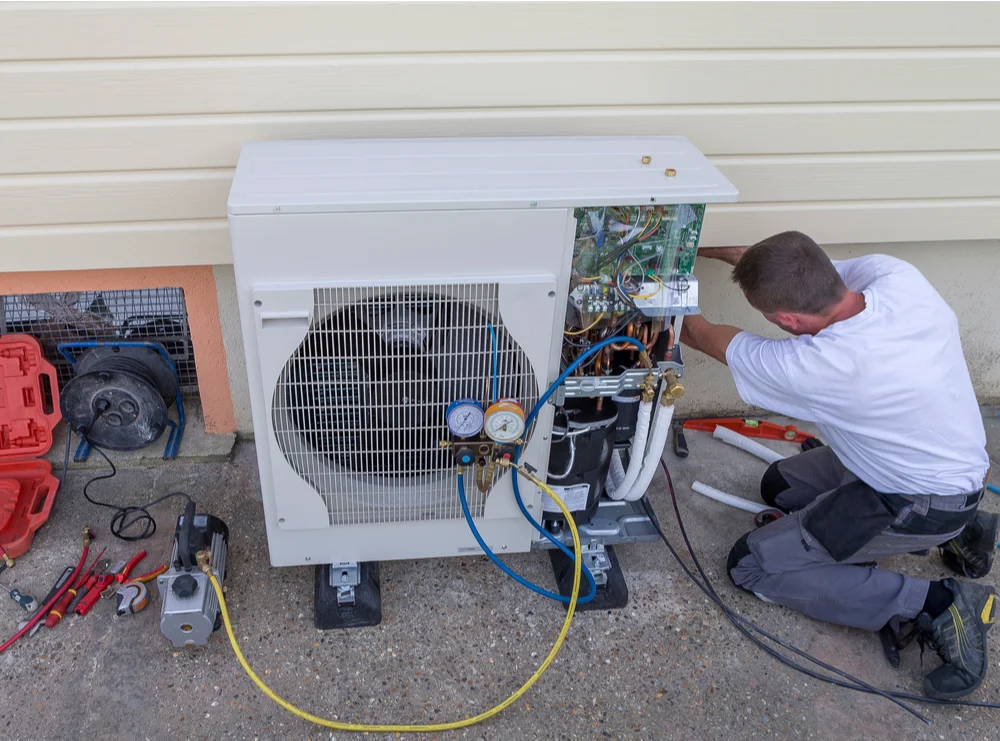
W.F. Smith’s HVAC team calculates heating and cooling loads using ACCA Manual J standards, factoring in:
- Total square footage and ceiling height
- Window orientation, framing, and glazing types
- Insulation levels across attics, exterior walls, and crawlspaces
- Air-duct sizing, layout, and static-pressure limits
Because a heat pump provides both summer cooling and winter heating, regular heat pump maintenance and inspections help protect efficiency, comfort, and equipment life.
If you are comparing a heat pump with a gas furnace, our guide on replacing a gas furnace with a heat pump outlines the home, budget, and comfort factors worth reviewing before you decide.
Frequently Asked Questions About Heat Pumps in Winter
Can a heat pump keep a Pennsylvania home warm during sub-zero cold snaps?
Yes. Modern cold-climate heat pumps equipped with variable-speed inverter compressors can maintain heating capacity down to -15°F (-26°C) or lower. For standard heat pump systems, built-in electric resistance heating elements (or a companion gas furnace in a hybrid configuration) automatically engage during extreme weather to satisfy thermostat demand.
How much can I save annually by switching to a heat pump?
Savings vary based on your existing equipment. Replacing an outdated oil furnace, propane system, or electric baseboards with an efficient heat pump can save between $500 and $1,400 per year. When replacing a natural gas furnace, operating cost differences depend heavily on prevailing local electric and natural gas rates.
Do I need to replace my existing ductwork when installing a heat pump?
Not necessarily. Many homes can use existing ductwork, provided it is properly sized, sealed, and capable of handling heat pump airflow requirements. If ductwork is leaky, undersized, or entirely absent, ductless mini-split systems offer an energy-efficient alternative without requiring costly modifications to your home.
Conclusion
Choosing the right heating and cooling system comes down to matching technology to your specific home, comfort preferences, and long-term financial goals. While heat pumps require a thoughtful upfront plan for sizing, insulation, and winter extremes, their year-round versatility, efficiency, and clean operation can make them a smart investment for many homes.
At W.F. Smith, Inc., our team has helped homeowners across Bucks County, Montgomery County, and Philadelphia stay comfortable through winter cold snaps and summer heat for more than 80 years. As a family-owned company offering 24/7 emergency service and a 100% satisfaction guarantee, we are ready to help you evaluate your options.
To discuss the right system for your home, contact our professional heat pump technicians to schedule an in-home heating assessment.

W.F. Smith was great. They worked very professionally and neatly. They were extremely knowledgeable about the equipment and all specific HVAC practices. Would recommend them to the world!