- 24/7 Emergency HVAC Repair
- Financing Available
- We Accept All Major Credit Cards

Central Heat Pump Installation: A Complete Homeowner Guide
Central Heat Pump Installation: A Quick Overview
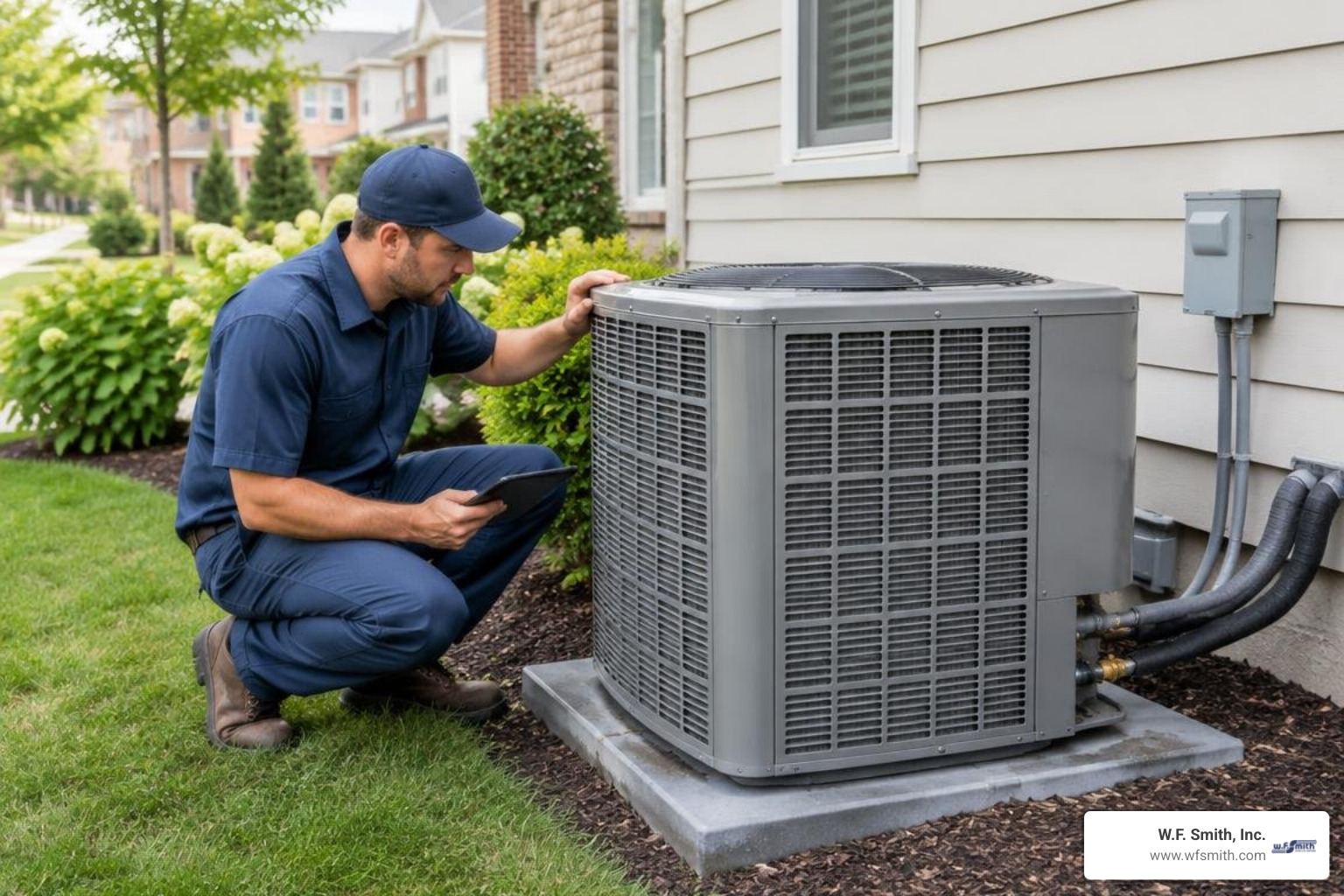
Central heat pump installation replaces or works alongside your existing heating and cooling equipment with one electric system that can heat your home in winter and cool it in summer.
A central heat pump does not create heat by burning fuel. It uses refrigerant to move heat: outdoors in warm weather and indoors in cold weather. For many Philadelphia-area homes with usable forced-air ductwork, it can be a practical upgrade from an aging furnace and air conditioner.
Here is the quick version:
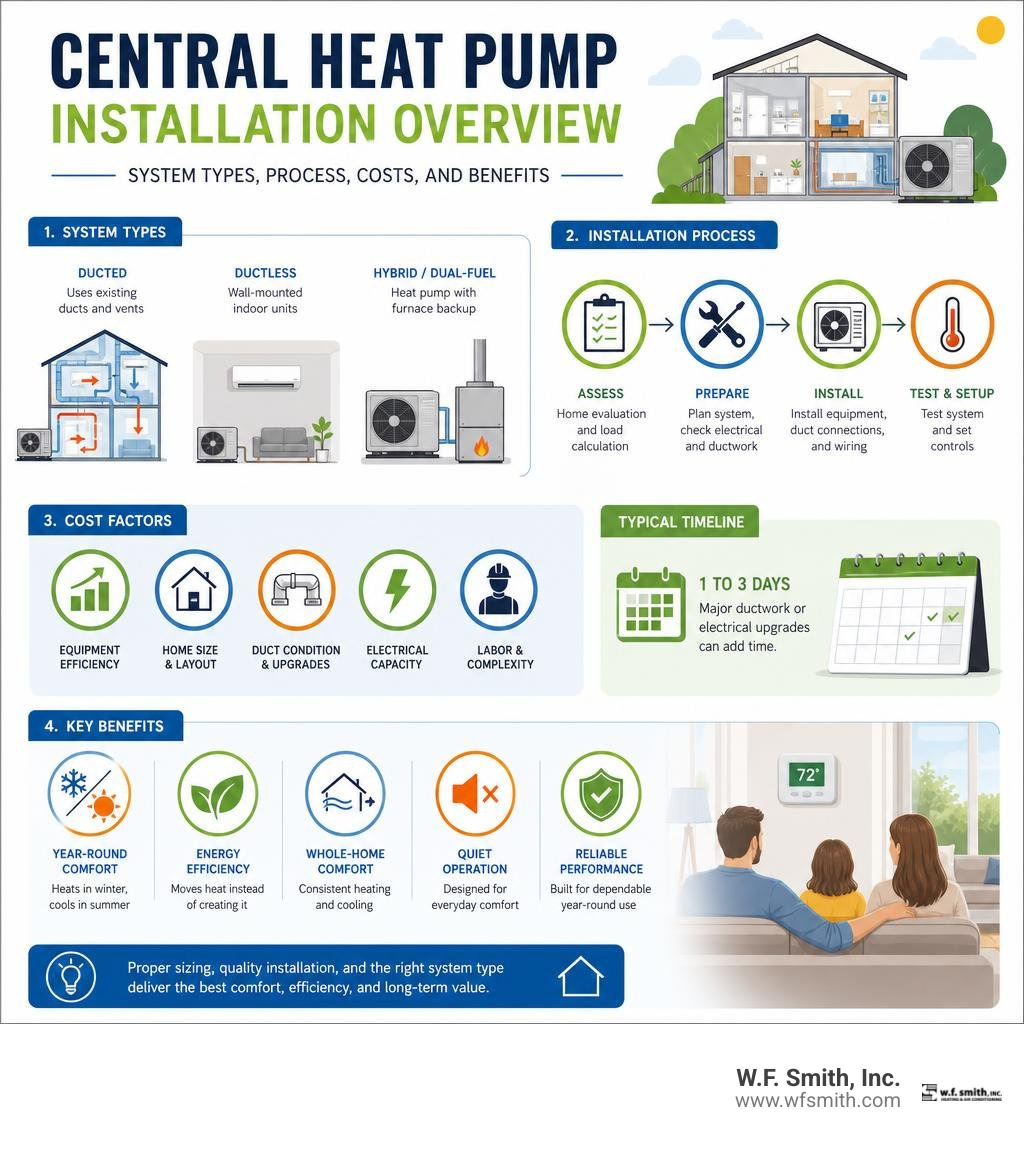
- Ducted systems use your home’s existing ducts and vents to provide whole-home comfort.
- Ductless systems use wall-mounted indoor units and are useful where ducts are unavailable or impractical.
- Hybrid or dual-fuel systems pair a heat pump with a gas furnace for backup heat during very cold weather.
- Installation usually takes 1 to 3 days, though major ductwork or electrical upgrades can add time.
- Correct sizing matters more than square footage alone. A professional Manual J load calculation helps prevent high bills, uneven temperatures, and short cycling.
- Project scope varies with equipment efficiency, home size, duct condition, electrical capacity, and local labor requirements.
Modern cold-climate heat pumps can work effectively through Philadelphia winters when the system, ductwork, controls, and backup-heating plan are designed for the home.
Understanding Central Heat Pumps: Types, Efficiency, and Operation
To understand how a central heat pump keeps your home comfortable year-round, it helps to realize that heat pumps do not generate heat through combustion or electric resistance elements during normal operation. Instead, they operate on a reversible refrigerant cycle.
During hot summer months, the indoor coil acts as an evaporator, extracting heat from your indoor air and pumping it outside through copper refrigerant lines. In winter, a reversing valve alters the direction of the refrigerant flow. The outdoor unit absorbs low-temperature thermal energy from the outdoor air, compresses it to increase its temperature, and transfers that energy into your home. Even when ambient outdoor air feels freezing, it still contains thermal energy that modern refrigerants, such as R-454B and R-32, can capture and use.
When evaluating system performance, two efficiency ratings are crucial:
- SEER2 (Seasonal Energy Efficiency Ratio 2): Measures cooling efficiency over a typical cooling season. Federal regional standards require a minimum baseline that varies by geographic location. Higher SEER2 ratings indicate greater summer operating efficiency.
- HSPF2 (Heating Seasonal Performance Factor 2): Measures winter heating efficiency. Higher HSPF2 ratings generally indicate lower electricity use while maintaining a warm indoor environment.
A properly sized system begins with an accurate load calculation, not a rough square-footage estimate. W.F. Smith’s article on installing HVAC with load calculations explains why this step helps prevent uneven temperatures, poor humidity control, and unnecessary equipment wear.
For homeowners planning a whole-home upgrade, W.F. Smith’s heat pump services can help match equipment, ductwork, and controls to the home’s comfort needs.
Ducted, Ductless, and Hybrid Dual-Fuel Heat Pump Systems
Every home layout presents distinct airflow requirements. Choosing the right central heat pump configuration depends heavily on your existing infrastructure:
- Centrally Ducted Heat Pumps: If your home already has standard ductwork and a central AC unit or forced-air furnace, a centrally ducted split heat pump is usually the most seamless upgrade. An outdoor unit pairs directly with an indoor air handler or fan coil connected to your supply and return vents.
- Multi-Head Ductless Mini-Splits: For historic homes, additions, or structures without room for ductwork, ductless mini-splits use an outdoor condenser connected to individual wall-mounted or recessed-ceiling indoor air handlers via small refrigerant line sets.
- Hybrid Dual-Fuel Systems: A hybrid system combines an electric central heat pump with a high-efficiency gas or propane furnace. The system switches between heat sources based on outdoor temperatures. During moderate cold, the heat pump can provide efficient warmth; during severe cold snaps, the furnace can provide high-output backup heat.
Homes without usable central ductwork may be better served by ductless heating and cooling options, especially for additions, older rooms, or targeted comfort zones.
Central Heat Pumps vs. Traditional Furnaces and AC Systems
Replacing separate heating and cooling systems with a single central heat pump can improve efficiency. Because heat pumps move thermal energy rather than generating it through fuel combustion, they can deliver more heat energy than the electricity they consume under mild to moderate winter conditions.
Here is a side-by-side comparison of central heat pump systems versus traditional heating and AC setups:
| System Parameter | Central Heat Pump System | Traditional AC + Gas/Oil Furnace |
|---|---|---|
| Primary Energy Source | Electricity using a refrigerant cycle | Electricity for AC plus natural gas, oil, or propane for heat |
| System Equipment | Outdoor unit paired with an indoor air handler or coil | Separate outdoor AC unit and indoor furnace |
| Efficiency Metric | SEER2 and HSPF2 | SEER2 and AFUE |
| Cold-Climate Performance | Variable-capacity models can provide heat at very low outdoor temperatures | Delivers dependable high heat output in severe cold |
| Project Scope | Varies with equipment, ductwork, electrical capacity, and controls | Varies with equipment selection and installation requirements |
Central Heat Pump Installation Costs, Sizing, and Incentives
Understanding the financial commitment for a central heat pump installation means looking beyond the equipment itself. Total project scope depends on the system selected, the home’s heating and cooling load, duct condition, electrical capacity, permitting, and any required comfort upgrades.
System capacity is measured in tons, with one ton equal to 12,000 BTUs per hour of cooling capacity. The right capacity should be determined by a professional load calculation rather than by home size alone.
Homeowners comparing system capacity can also benefit from W.F. Smith’s explanation of BTU ratings and why they matter. Matching capacity to the home helps support balanced temperatures, efficient operation, and reliable humidity control.
Key Cost Factors and System Sizing Requirements
A proper installation plan accounts for site preparation as well as the equipment itself. Several variables shape the final project scope:
- Manual J Load Calculations: Never size a system based on rules of thumb or square footage alone. A qualified HVAC contractor should perform an ACCA Manual J calculation that considers insulation, windows, ceiling heights, home orientation, and local climate data.
- Ductwork Modifications: Older duct systems designed around a gas furnace may restrict airflow for a heat pump. Adjusting duct sizing, reducing static pressure, and sealing leaks supports quiet, reliable operation.
- Electrical Capacity: Heat pumps and backup electric heat may require dedicated circuits or an electrical-panel upgrade. A contractor should evaluate available capacity before installation.
- Low-GWP Refrigerants: Newer heat pump equipment uses lower-global-warming-potential refrigerants that require appropriate tools, procedures, and safety practices during installation.
A straightforward replacement using compatible ductwork and electrical service is usually less involved than a whole-home comfort upgrade that includes duct modifications, panel work, zoning controls, or dual-fuel backup. An experienced HVAC team can identify these requirements during the home evaluation.
Rebates, Tax Credits, and Energy Incentives
Available incentives can reduce the upfront cost of a qualifying heat pump installation, but eligibility, funding, and application requirements vary by program. Check current federal, state, municipal, and utility guidance before committing to equipment.
Your installation team can also help you confirm the equipment information and documentation typically needed for available rebates or tax incentives.
What to Expect During a Central Heat Pump Installation
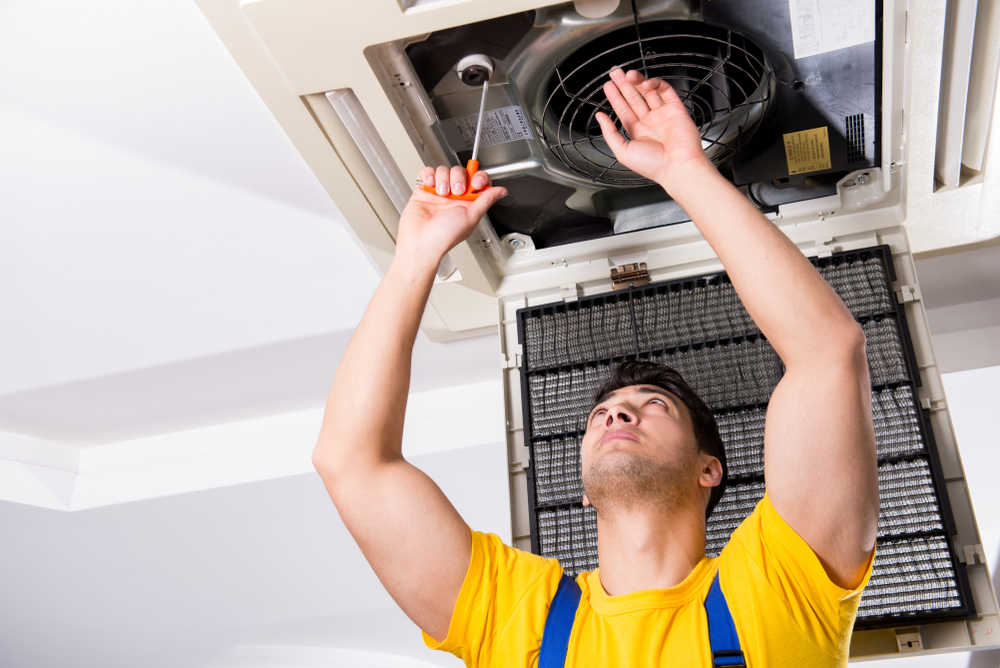
A smooth central heat pump installation begins with setting expectations for installation day. A standard, straightforward replacement takes 1 to 3 business days, while complex retrofits requiring electrical panel upgrades or extensive duct reconstruction may take up to 3 days.
Before work commences, proper local municipal mechanical and electrical permits must be secured. On installation morning, technicians protect your living space with drop cloths and floor runners before removing the old equipment.
EPA Section 608 regulations strictly mandate the safe recovery and recycling of existing refrigerants (like legacy R-22 or R-410A) using certified recovery cylinders to prevent environmental release. Old outdoor condensers, furnaces, and coils are then safely disconnected, removed, and recycled.
The Step-by-Step Central Heat Pump Installation Process
Here is the step-by-step process our technicians follow to install and commission your central heat pump system:
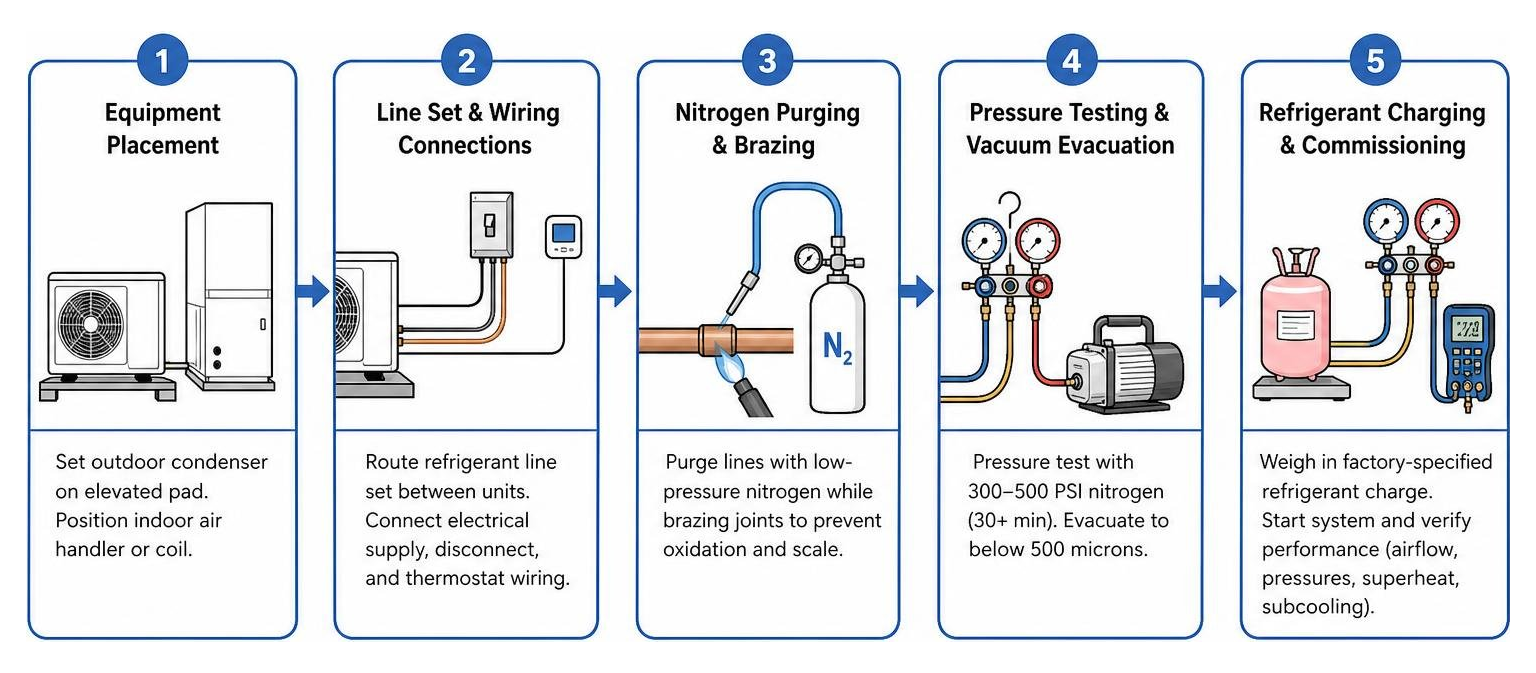
- Equipment Placement: The new outdoor heat pump condenser is placed on an elevated equipment pad (shielded from snow accumulation and floor water runoff). The indoor air handler or evaporator coil is positioned inside.
- Line Set & Wiring Connections: Refrigerant copper line sets are routed between indoor and outdoor units. Electrical supply lines, high-voltage disconnect boxes, and low-voltage thermostat control wiring are connected.
- Nitrogen Purging & Brazing: During copper line joint brazing, low-pressure nitrogen is continuously purged through the lines. This critical step prevents copper oxidation scale from forming inside the line set, which could otherwise clog the system’s expansion valves and damage the compressor.
- Pressure Testing & Vacuum Evacuation: The refrigerant lines are pressure-tested under 300 to 500 PSI of dry nitrogen for at least 30 minutes to verify leak-free joints. Technicians then connect a digital micron gauge and draw a deep vacuum down below 500 microns to remove all trapped moisture and non-condensable air.
- Refrigerant Charging & Commissioning: Technicians weigh in the precise factory-specified refrigerant charge based on line set length. The system is booted up, and full commissioning tests measure static pressure split, airflow CFM, subcooling, and superheat to verify peak efficiency.
Common Pitfalls in Central Heat Pump Installation and How to Avoid Them
Improper installation can severely degrade a high-efficiency system’s performance. Here are common installation pitfalls and how we prevent them:
- Equipment Oversizing: Installing a heat pump that is too large causes rapid “short cycling.” The unit turns on and off frequently, failing to dehumidify the air properly and causing premature component failure. Prevention: We always run a precise Manual J calculation.
- High External Static Pressure: Connecting a modern variable-speed blower to undersized or restricted ductwork creates backpressure above 0.5 inches w.c. This increases fan noise, reduces airflow, and damages the blower motor. Prevention: We evaluate duct capacity using Manual D calculations prior to system installation.
- Improper Outdoor Unit Clearance: Placing the outdoor condenser too close to walls, under roof eaves without snow guards, or directly on the ground causes ice buildup during winter defrost cycles. Prevention: We mount outdoor units on elevated snow risers with clear airflow clearance on all sides.
Longevity, Warranties, and Ongoing Maintenance
When properly sized, installed, and maintained, a central heat pump has an expected lifespan of 15 to 20 years. Because heat pumps handle both summer cooling and winter heating, they operate for more total annual hours than a standalone AC unit or furnace. Consistent routine maintenance is essential for maximizing longevity.
To protect your equipment investment, major HVAC manufacturers provide 10-year limited parts warranties upon timely online registration, often within 60 days of installation. Quality installation contracts should also include a clear labor warranty from the contractor.
Essential maintenance tasks include:
- Filter Replacements: Replace standard 1-inch return-air filters every 30 to 90 days, or 4-inch media filters every 6 to 12 months, to maintain proper airflow across the indoor coil.
- Outdoor Coil Cleaning: Keep the outdoor condenser clear of leaves, grass clippings, dirt, and snow buildup. Maintain adequate clear space around the outdoor unit.
- Professional Maintenance: Schedule a tune-up in spring before cooling season and again in fall before heating season to clean condensate drain lines, check electrical connections, test defrost controls, and verify refrigerant charge.
Signs It Is Time to Replace Your HVAC System
If you are unsure whether to repair or replace your existing HVAC equipment, consider these common signs:
- Age Over 15 Years: Older units lose efficiency and are more likely to need major repairs, such as compressor replacement or heat-exchanger work.
- Surging Utility Bills: Steadily rising energy costs can indicate mechanical wear or declining system efficiency.
- Frequent, Costly Repairs: Repeated major repairs can make replacement the more practical long-term option.
- Uneven Temperatures and Poor Humidity Control: Persistent hot or cold spots and clammy indoor air can point to airflow problems or incorrect equipment capacity.
- Refrigerant Phase-Out: Systems that use phased-out R-22 refrigerant can be costly to repair after a leak. Upgrading to newer equipment can improve comfort and serviceability.
Frequently Asked Questions About Heat Pumps
How long does a central heat pump installation take?
A standard ducted replacement generally takes 1 to 2 days. If your installation requires substantial duct modifications, electrical panel upgrades from 100 to 200 amps, or multi-zone smart control wiring, the complete project usually spans 2 to 3 days.
Can a central heat pump work effectively in cold climates?
Yes! Modern cold-climate heat pumps feature advanced inverter-driven, variable-speed compressors that dynamically adjust operating speed. These systems deliver efficient, effective heating down to sub-zero temperatures (often -13°F or lower). For regions experiencing severe sub-zero cold snaps, backup electric heat strips or a hybrid gas furnace configuration ensure complete winter comfort.
How do I choose a qualified HVAC contractor for the job?
Look for licensed, insured contractors whose technicians hold NATE (North American Technician Excellence) certification. Ensure the company performs an in-person home site evaluation, provides a written Manual J load calculation, issues a full commissioning report upon startup, and stands behind their craftsmanship with clear labor guarantees.
Conclusion
Upgrading your home to a modern central heat pump system can support home electrification, lower energy use, and year-round indoor comfort. By selecting the right system size, addressing duct static pressure, and working with an experienced installation team, you can set up your home for quiet, efficient heating and cooling.
At W.F. Smith, Inc., our team brings more than 80 years of HVAC experience to homeowners across the Philadelphia area. Whether you are considering Lennox or Mitsubishi equipment, our certified technicians support every project with 24/7 emergency service and a 100% satisfaction guarantee.
Ready to explore a central heat pump installation for your home? Contact our professional heat pump installation technicians to schedule a site evaluation.

W.F. Smith was great. They worked very professionally and neatly. They were extremely knowledgeable about the equipment and all specific HVAC practices. Would recommend them to the world!