- 24/7 Emergency HVAC Repair
- Financing Available
- We Accept All Major Credit Cards

Furnace and Air Conditioner Replacement Cost Breakdown for Homeowners
2026 Furnace and AC Replacement Cost Overview
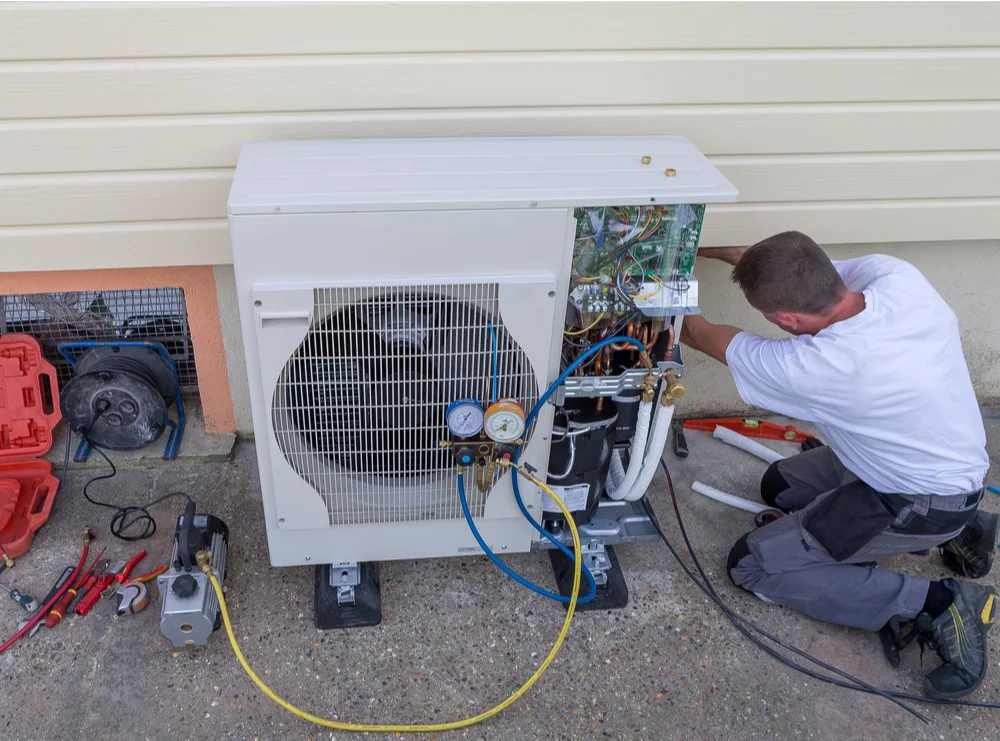
Replacing a furnace and central AC system is a major home investment. Total cost varies with equipment efficiency, system capacity, installation complexity, and the updates needed to bring the job up to local code.
| System Efficiency Tier | Cooling Efficiency (SEER2) | Heating Efficiency (AFUE) | Typical Installed Price Range |
|---|---|---|---|
| Standard Entry-Level | 14.3 to 15.0 SEER2 | 80% AFUE | $7,500 to $10,500 |
| Mid-Tier High Efficiency | 15.2 to 16.5 SEER2 | 92% to 96% AFUE | $9,500 to $14,800 |
| Premium Variable-Speed | 17.0 to 21.0+ SEER2 | 96% to 98%+ AFUE | $14,500 to $22,000+ |
In a standard residential changeout, equipment hardware makes up a substantial share of the invoice, while labor, permits, code compliance, and refrigerant handling account for the rest. A two-technician installation crew may need a full day or more, depending on access, ductwork, and the scope of the replacement.
How Home Size Impacts Furnace and AC Replacement Cost
System sizing directly drives equipment pricing. AC systems are measured in tons of cooling capacity, with one ton equal to 12,000 BTUs per hour, while furnaces are rated by total BTU heat output. An undersized system can run constantly without keeping the home comfortable, while an oversized system may short-cycle, increase utility costs, and leave the air feeling humid.
Professional contractors use Manual J load calculations to account for square footage, window orientation, insulation, local climate, and ceiling height before recommending equipment capacity.
For homeowners comparing cooling options, our AC replacement services help match the new system to the home’s comfort needs, existing ductwork, and long-term efficiency goals.
A realistic budget should also account for equipment tier, labor, permits, and potential duct upgrades. Our guide to budgeting for a new HVAC system explains how those project details can affect a replacement estimate.
- 1,000 to 1,200 sq ft (1.5 to 2.0 tons / 40,000 to 60,000 BTUs): $8,000 to $14,400
- 1,500 to 1,800 sq ft (2.5 to 3.0 tons / 60,000 to 80,000 BTUs): $8,700 to $15,900
- 2,000 to 2,500 sq ft (3.0 to 4.0 tons / 80,000 to 100,000 BTUs): $9,500 to $17,800
- 3,000+ sq ft (4.0 to 5.0 tons / 100,000+ BTUs or dual systems): $10,900 to $24,000+
Pricing by System Configuration and Fuel Type
Your home’s heating infrastructure dictates the system configurations available:
- Gas Furnace and Split Central AC: This is a common configuration in the Mid-Atlantic. Standard 80% AFUE furnaces may vent through an existing chimney, while high-efficiency condensing furnaces generally use PVC venting through an exterior wall.
- Electric Air Handler and Heat Pump: Heat pumps provide heating and cooling through one outdoor unit paired with an indoor air handler. Standard air-source heat pump packages generally cost less than specialized cold-climate inverter models designed for lower outdoor temperatures.
- Dual-Fuel Hybrid Systems: These systems pair an electric heat pump with an auxiliary gas furnace and switch fuels based on outdoor conditions to balance comfort and operating costs.
Cost Breakdown of Replacing Both Systems vs. One Unit
When an AC unit or furnace fails, homeowners often wonder whether to replace only the broken component or install a matched system at the same time.
A standalone AC replacement commonly costs less up front, but the final price depends on the cooling capacity, efficiency rating, refrigerant requirements, electrical work, and condition of the indoor coil.
When the furnace is nearing the end of its service life, professional furnace replacement can be a better long-term fit than installing a new AC unit around an aging blower and heating system.
Replacing both units as one matched project can reduce duplicated labor, simplify permitting, and help the indoor coil, blower, and outdoor condenser work together as designed. Purchased separately at different times, the combined cost can be higher than a coordinated replacement.
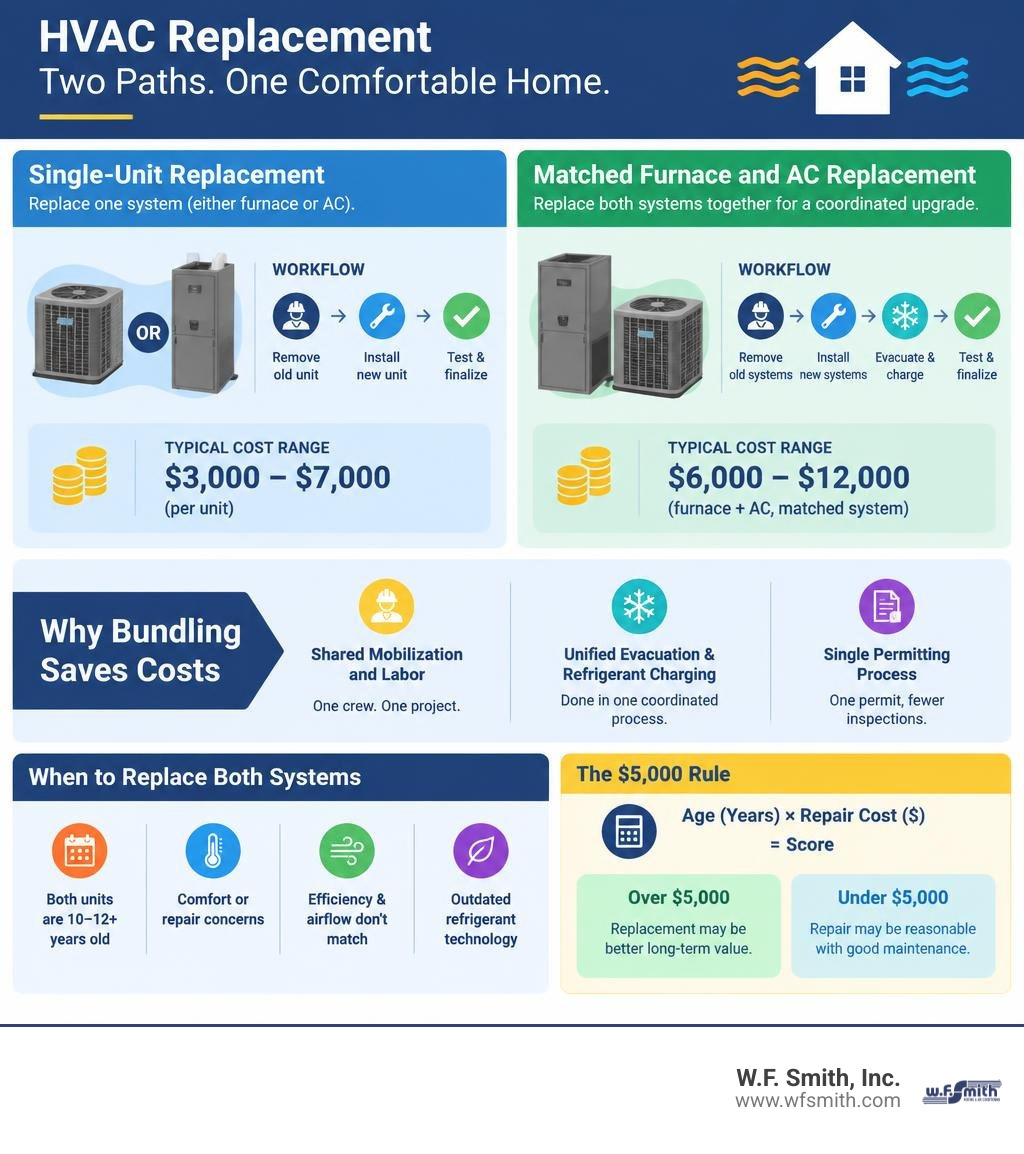
Bundling reduces costs because:
- Shared Mobilization and Labor: The crew completes demolition, sheet metal transitions, electrical hookups, and safety tests during one project rather than two separate visits.
- Unified Evacuation and Refrigerant Charging: Technicians can install the new evaporator coil with the new furnace plenum in one coordinated process.
- Single Permitting Process: A combined project may require one mechanical permit instead of separate permit applications and inspections.
When to Replace Both Systems Simultaneously
Replacing both heating and cooling units at the same time is often worth considering when:
- Both units are over 10 to 12 years old: AC systems often last 12 to 15 years, while furnaces commonly last 15 to 20 years. If one fails after many years of service, the other may also be nearing replacement.
- There are repeated comfort or repair concerns: Frequent breakdowns, uneven temperatures, and loud operation can signal that the overall system needs attention.
- Efficiency and airflow no longer match: Modern high-SEER2 AC systems may need an ECM blower in the furnace to manage airflow and dehumidification effectively.
- The equipment uses outdated refrigerant technology: A matched indoor coil and outdoor unit can support correct refrigerant performance and warranty requirements.
Frequent repairs are one reason homeowners begin comparing a repair with replacement. Our overview of signs that a furnace may need replacement can help homeowners recognize when a recurring issue deserves a full system evaluation.
Applying the $5,000 Rule for HVAC Systems
When deciding whether to repair or replace aging equipment, many homeowners use the HVAC $5,000 Rule as a quick starting point:
$$\text{Age of System (Years)} \times \text{Estimated Repair Cost (\$)} = \text{Score}$$
- Score over $5,000: Replacement may provide better long-term value.
- Score under $5,000: Repair may be reasonable when the equipment has been maintained and has useful service life remaining.
Example: A 12-year-old AC system needs a $600 blower motor. The calculation is $12 \times 600 = \$7,200$. Because that exceeds $5,000, it may be a good time to compare the repair cost with a replacement quote.
Critical Factors That Impact Total Installation Price
Factors That Influence Furnace and AC Replacement Cost
Every home has different heating and cooling requirements, and several variables affect the final quote:
- Efficiency Ratings (SEER2 and AFUE): SEER2 measures cooling efficiency, while AFUE tracks furnace combustion efficiency. Moving from base efficiency to a high-efficiency system can increase the initial equipment cost while reducing monthly energy use.
- Blower and Compressor Mechanics: Single-stage systems operate at full capacity whenever they run. Two-stage and variable-speed systems adjust more gradually to outdoor conditions, helping maintain steadier temperatures and quieter operation at a higher upfront cost.
- Smart Thermostat Integration: Modern multi-stage HVAC equipment may require compatible communicating thermostats to coordinate staging and dehumidification cycles.
Labor, Permitting, and Ductwork Considerations
Equipment list prices account for only part of the investment. Installation logistics also shape total costs:
- Duct Modifications: If existing ductwork is undersized, leaking, or uninsulated, airflow drops and energy is lost. Duct sealing and partial supply or return modifications can add to the project total.
- Complex Installations: Equipment in tight crawlspaces, finished attics, or older basement mechanical rooms requires more labor for safe placement and venting.
- Permits and Inspections: Local mechanical and electrical permits add to the project cost while helping ensure the installation meets applicable safety and building codes.
Financing can make a planned replacement more manageable when a system reaches the end of its useful life. Our article on financing a new HVAC system outlines options homeowners can consider before moving ahead with installation.
2026 Regulatory Changes, Refrigerants, and Incentives
The HVAC industry has seen notable regulatory shifts that influence equipment engineering and pricing. Under federal environmental guidelines, manufacturers transitioned to low-Global Warming Potential (GWP) A2L refrigerants, primarily R-454B and R-32, replacing R-410A.
Because A2L refrigerants carry a mild flammability rating (Class A2L), manufacturers redesigned equipment with integrated leak sensors, shielded electrical controls, and revised coil architectures. These updates, alongside raw material tariffs on copper, aluminum, and steel, have added an estimated 5% to 15% premium to cooling equipment costs. Contractors also maintain dedicated, spark-proof recovery machines, digital manifolds, and vacuum pumps to service these systems safely.
Federal Tax Credits and Surviving Rebate Programs
Homeowners researching incentives should note key policy updates:
- Federal Section 25C Expiration: The previous federal Energy Efficient Home Improvement Credit (Section 25C), which offered up to $2,000 for qualifying heat pumps and air conditioners, expired on December 31, 2025. Installations do not receive federal Section 25C tax credits.
- State HEAR / HEEHRA Programs: Federally funded, state-administered Home Electrification and Appliance Rebates (HEAR) provide point-of-sale discounts up to $8,000 on qualifying heat pump conversions for income-eligible households.
- Electric & Gas Utility Rebates: Regional electric and natural gas utilities continue to offer direct rebates ranging from $250 to $1,500 when homeowners install qualifying high-efficiency condensing furnaces (96%+ AFUE) and advanced central cooling systems.
- Shoulder Season Pricing: Booking your installation during the spring or early autumn often yields lower equipment pricing and more flexible contractor availability compared to peak summer or winter periods.
Frequently Asked Questions About HVAC Replacement
Is it cheaper to replace a furnace and AC together?
Yes. Replacing both systems simultaneously saves 5% to 15% on total project expenses compared to hiring contractors for two separate installations. Bundling shares labor mobilization, allows for a single municipal permit, uses one refrigerant charge, and ensures the indoor coil and furnace blower match properly from day one.
What size HVAC system is needed for a 2,000-square-foot house?
A typical 2,000-square-foot home generally requires a 3-ton (36,000 BTU) air conditioner paired with an 80,000 to 100,000 BTU furnace. However, exact sizing depends on your local climate zone, home insulation levels, window exposure, and duct design, which a certified technician confirms using a Manual J load calculation.
Are there federal tax credits available for HVAC replacement in 2026?
No. The federal Section 25C tax credit expired at the end of 2025. However, homeowners can still reduce out-of-pocket costs through state-administered HEAR/HEEHRA electrification rebates and direct high-efficiency equipment rebates from local utility providers.
Conclusion and Next Steps
Replacing a furnace and AC system is a major home investment that affects day-to-day comfort and long-term energy costs. Equipment efficiency and system size matter, but installation quality is equally important for safe, quiet, dependable performance.
For more than 80 years, the W.F. Smith, Inc. team has helped homeowners throughout the greater Philadelphia region evaluate replacement options and choose heating and cooling systems that fit their homes. To discuss a matched system replacement with our team, contact our professional HVAC technicians.

W.F. Smith was great. They worked very professionally and neatly. They were extremely knowledgeable about the equipment and all specific HVAC practices. Would recommend them to the world!