- 24/7 Emergency HVAC Repair
- Financing Available
- We Accept All Major Credit Cards

Do You Need Special Ductwork for a Geothermal Heat Pump?
Does a Geothermal Heat Pump Need Special Ductwork?
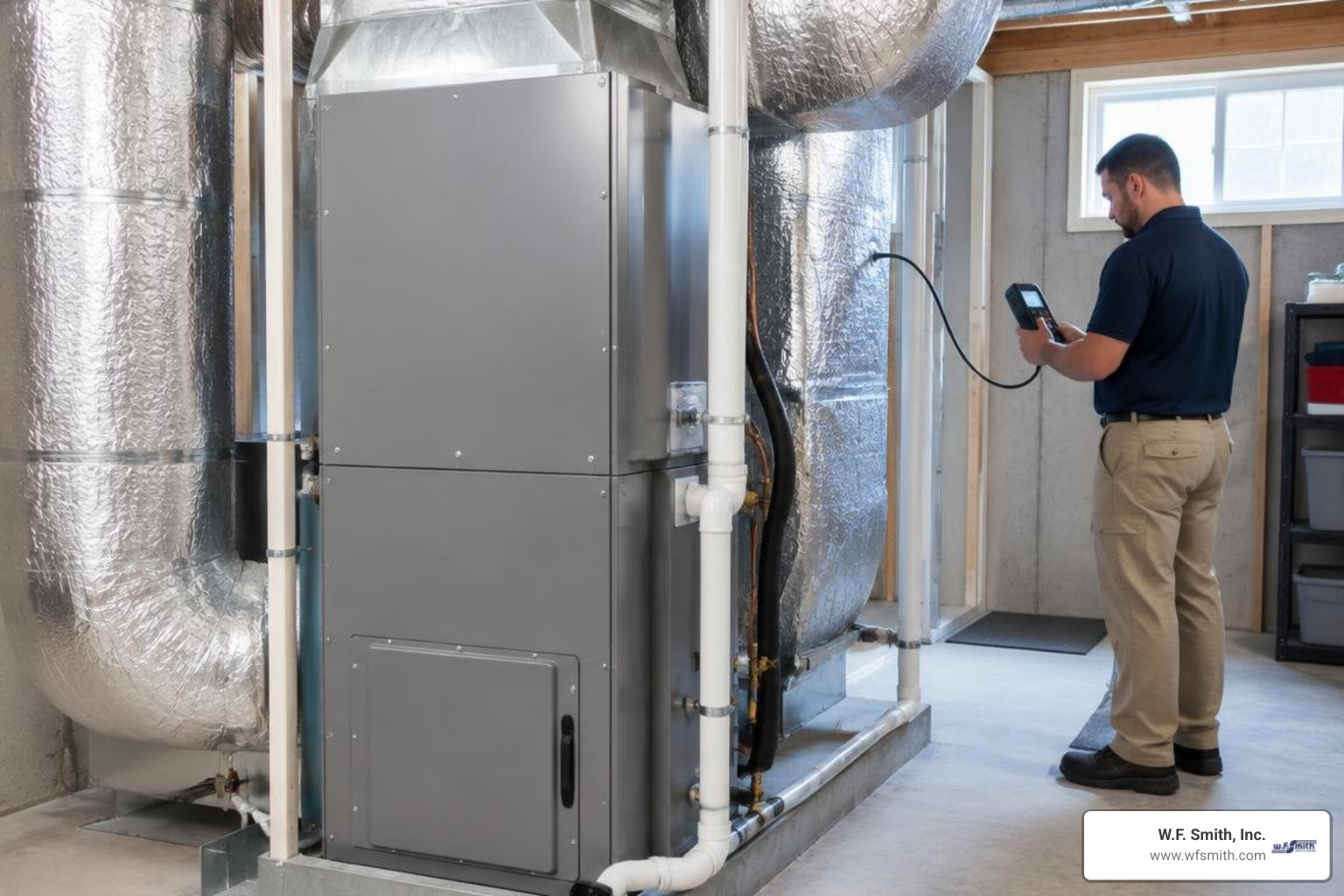
Geothermal heat pump ductwork does not always need to be replaced, but it does need to be checked before installation. A geothermal system moves more steady airflow at a lower supply-air temperature than a gas or oil furnace. That means ducts that worked with an older furnace may be too small, too leaky, or poorly insulated for the new system.
In many homes, existing ducts can be sealed, insulated, and adjusted rather than rebuilt. A contractor should confirm that the ducts can deliver roughly 400 CFM of airflow per ton of heat pump capacity, with enough return-air space and low enough static pressure.
| Quick ductwork answer | What it means |
|---|---|
| Existing forced-air ducts | Often usable after testing and targeted modifications |
| Older or undersized ducts | May need larger trunks, returns, or registers |
| Leaky attic or crawlspace ducts | Should be sealed and insulated to protect efficiency |
| Homes with boilers or radiators | Can add ducts, use radiant hydronic geothermal, or use fan coils |
Geothermal heat pumps typically supply heating air around 95-115 F, compared with roughly 130-160 F from a fossil-fuel furnace. The air may not feel as hot at the register, but a properly designed system runs longer and more evenly to keep rooms comfortable.
The key is not whether your ducts are old. It is whether they can move the right amount of air quietly and efficiently.
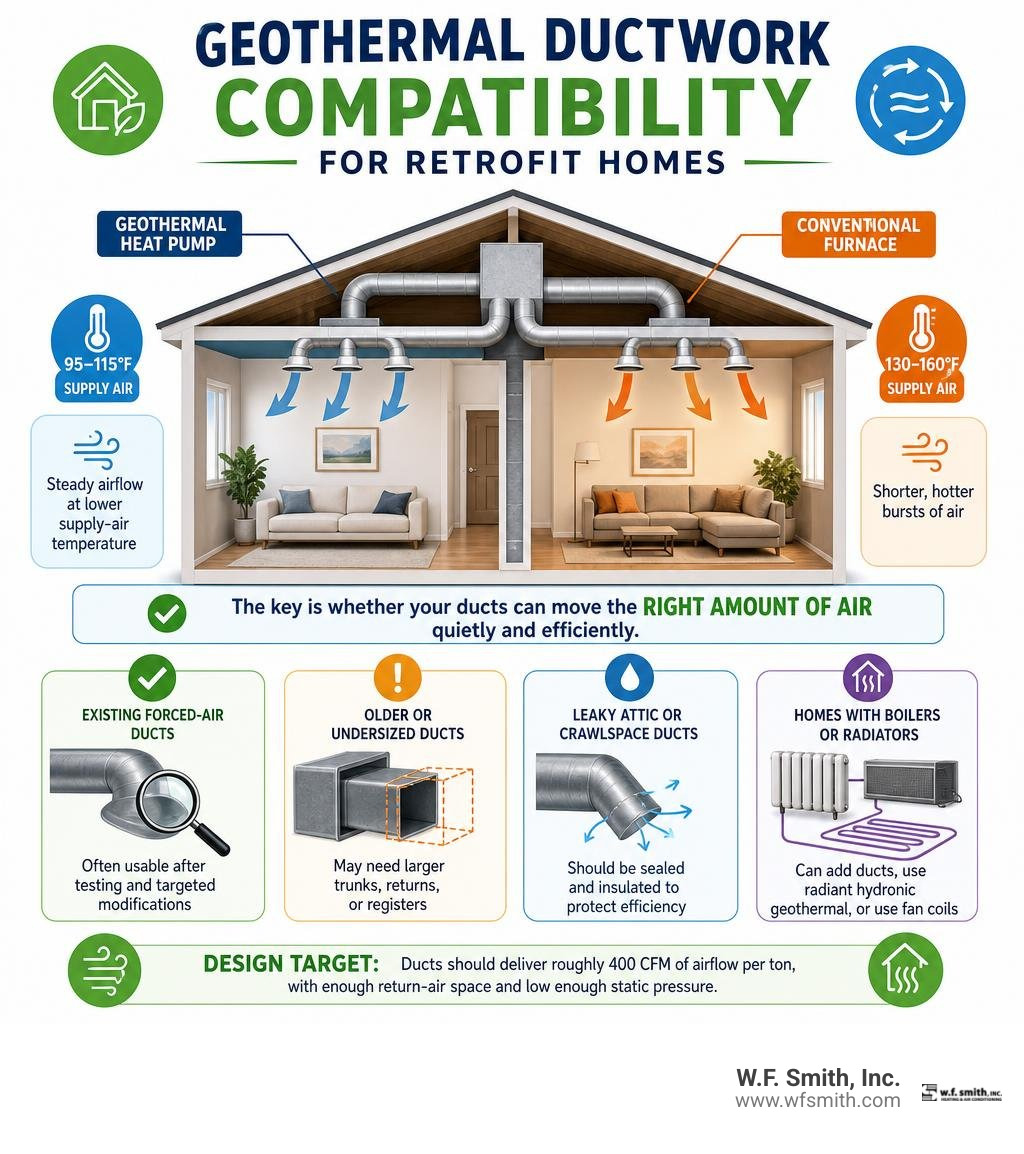
Geothermal Heat Pump Ductwork vs. Conventional System Requirements
When upgrading to a ground-source system, many homeowners wonder if their current duct network can handle the transition. The short answer is yes, but the way a geothermal system moves air across your living space is fundamentally different from a traditional fossil fuel furnace.
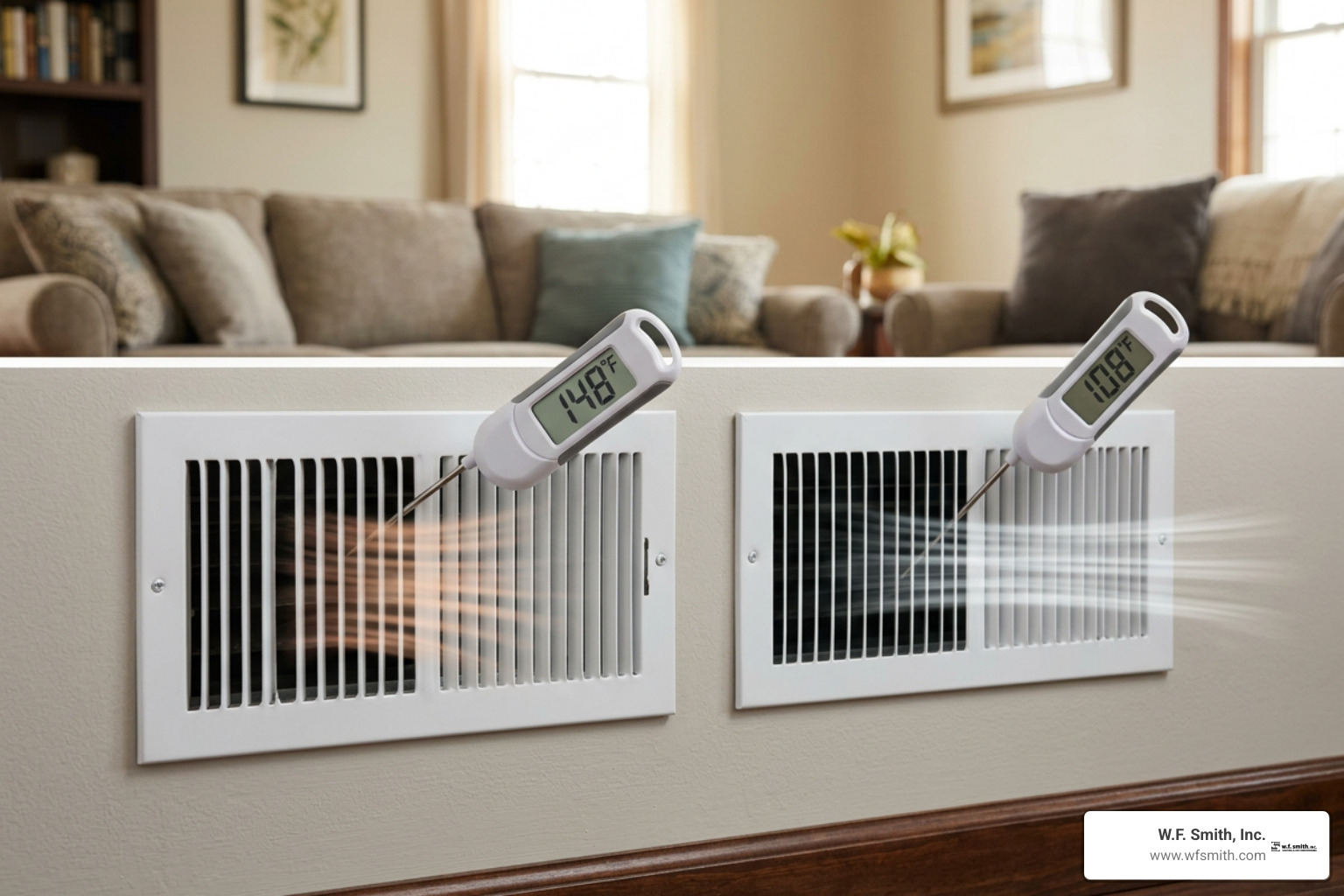
Conventional gas or oil furnaces operate like a burst of intense heat. They fire up, push scorching air through small channels at high speed, heat the space rapidly, and shut off. Geothermal systems, by contrast, rely on gentle, continuous, high-volume air distribution to deliver efficient, even comfort over longer runtimes.
Understanding these mechanical differences is key to ensuring your geothermal heat pump ductwork delivers maximum home comfort. Geothermal coil configurations and airflow dynamics call for a thoughtful duct evaluation rather than standard furnace assumptions.
Lower Supply Air Temperatures and Continuous Airflow
A standard gas furnace delivers supply air temperatures between 130°F and 160°F. When you stand near a supply register on a cold winter day, you feel a blast of direct heat.
A geothermal heat pump delivers supply air at a milder 95°F to 115°F range. Because ground-source heat pumps extract thermal energy from the earth rather than burning fuel, they operate most efficiently by delivering steady heat over longer runtime cycles.

While 100°F air is comfortably warmer than normal indoor temperatures (70°F), it can feel cooler to human skin if it travels at high velocity. If your ductwork is undersized, the blower motor increases air velocity, creating a drafty sensation at supply registers. Enlarging trunk lines or registers slows the air down, helping rooms stay consistently warm without noticeable drafts or noisy blower operation.
Airflow Volume (CFM) and Static Pressure Demands
To deliver the same overall heating capacity as a high-temperature furnace, a geothermal heat pump must move a higher total volume of air, measured in cubic feet per minute (CFM).
- Airflow requirement: Geothermal systems often require approximately 400 CFM per ton of cooling and heating capacity. A 4-ton system may require about 1,600 CFM of uninterrupted airflow.
- Static pressure control: Pushing higher CFM through restrictive, undersized ducts builds excessive static pressure. High static pressure forces variable-speed electronically commutated motors (ECM) to work harder, increasing electrical consumption and blower motor noise.
- Coil face area: Geothermal units feature large, flat refrigerant-to-air coils. Slowing air speed across the coil face can minimize pressure drops and support effective thermal exchange.
Evaluating and Retrofitting Existing Home Ductwork
Many geothermal heat pump installations are retrofits in existing homes rather than new construction. Because most existing homes were originally built for fossil fuel combustion, evaluating duct compatibility is a critical first step of installation.
Retrofitting a ground-source heat pump into an established residence means balancing existing structural constraints with modern airflow standards.
Sizing Existing Geothermal Heat Pump Ductwork for Retrofits
Before connecting a new heat pump unit to existing sheet metal, an experienced technician should perform detailed calculations:
- ACCA Manual J load calculation: Determines the precise heating and cooling load of your home based on insulation, window orientation, and square footage.
- ACCA Manual D duct design: Evaluates whether existing duct dimensions can support the required CFM without exceeding recommended static pressure limits.
- Return-air capacity check: Older ductwork often has undersized return-air drops. A geothermal system needs dedicated return pathways to prevent negative-pressure imbalances.
If an existing trunk line is too narrow, air velocity spikes, creating air turbulence and static resistance that can penalize system efficiency.
For Philadelphia homeowners planning a ground-source upgrade, W.F. Smith’s geothermal heat pump services can help determine whether the existing distribution system can support the new equipment.
If testing identifies persistent airflow restrictions or aging components, our heat pump services team can recommend practical equipment and ductwork improvements that fit the home.
Correct equipment sizing starts with the home’s actual heating and cooling load, which is why our article on why HVAC load calculations matter is useful context before comparing system options.
Matching capacity to the home also affects comfort and operating costs; our overview of BTU ratings and why they matter explains why larger equipment is not automatically better.
Duct Modifications, Sealing, and Project Considerations
In most retrofits, homeowners do not need to tear out all their existing sheet metal. Instead, targeted modifications optimize air distribution.
The average home can lose 20% to 30% of its conditioned airflow to duct leaks. Sealing leaky joints and insulating ducts running through unconditioned spaces, such as attics or crawlspaces, helps ensure that energy harvested from the ground reaches your living rooms.
| Ductwork Project Type | Typical Scope of Work | What Affects the Investment |
|---|---|---|
| Duct air sealing | Mastic tape and aerosol sealing for air leaks | Duct accessibility, leakage severity, and system layout |
| Duct insulation wrap | Adding R-8 insulation in unconditioned attics or crawlspaces | Duct length, location, and insulation condition |
| Standard retrofit modifications | Enlarging return drops, adding return pathways, upsizing grilles | Required airflow changes and access to existing ducts |
| Partial system redesign | Replacing severely undersized trunk lines, common in pre-1980 homes | Scope of replacement and structural constraints |
| Complete new duct installation | Installing brand-new ductwork in homes with no existing ducts | Home layout, access, zoning needs, and distribution method |
Adding R-8 duct wrap to exposed ductwork in an attic can reduce energy losses, protecting your investment and supporting total system performance year-round. A contractor can provide a project-specific estimate after completing the load calculation, duct assessment, and equipment design.
Options for Homes Without Existing Ductwork
If your home currently uses a hydronic boiler, cast-iron radiators, or baseboard electric heat, you might assume a geothermal heat pump is out of the question. Fortunately, that is not the case. You have several options for integrating earth-coupled heating and cooling into homes without pre-existing air ducts.
Installing New Forced-Air Ducts vs. Hydronic Radiant Distribution
Homeowners converting from non-ducted heating systems can choose between two main distribution methods:
1. Installing New Ducts
Installing brand-new rigid sheet metal or flexible ductwork allows you to enjoy central AC alongside geothermal heating. High-velocity mini-ducts or dropped-ceiling chase networks can often be incorporated cleanly into multi-story historic homes. The final project scope depends on the home’s layout, access points, and comfort goals.
2. Water-to-Water Hydronic Geothermal Systems
Rather than heating air, a water-to-water geothermal heat pump conditions liquid circulated through a closed piping loop. Hydronic heat pumps can transfer thermal energy directly into:
- In-floor radiant heating: Tubing embedded in subfloors provides uniform warmth underfoot.
- Hydronic fan coils: Room-by-room fan coil units provide localized heating and cooling without requiring central home ductwork.
- Baseboard radiator panels: Low-temperature hydronic radiators engineered specifically for heat pumps.
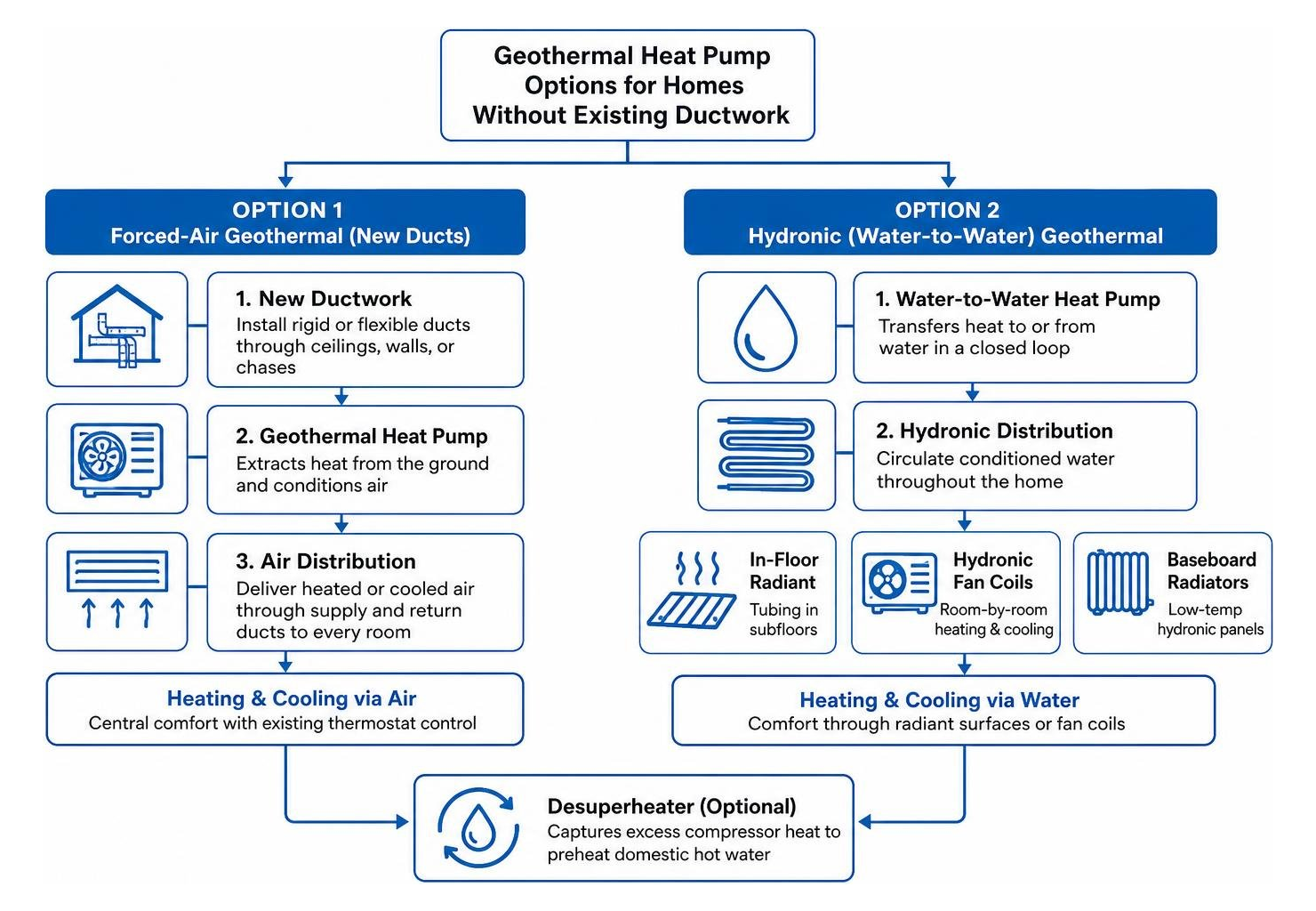
Integrating Desuperheaters with Geothermal HVAC Systems
Whether you install forced-air ductwork or hydronic distribution, you can maximize your geothermal investment by adding a desuperheater.
A desuperheater is an auxiliary heat exchanger that intercepts excess heat from the heat pump’s compressor and transfers it directly into your home’s domestic hot water tank.
- Installation considerations: The added equipment, plumbing configuration, and water-heater setup influence the installation scope.
- Energy savings: It can reduce domestic water-heating costs.
- Payback period: Payback depends on hot-water demand, equipment configuration, utility rates, and local conditions.
During summer cooling, the desuperheater can recover heat from the system and transfer it to the water heater while the system cools the home.
Key Assessment Factors and Replacement Signs
Evaluating geothermal heat pump ductwork requires specialized tools and diagnostic tests. Certified HVAC contractors look closely at airflow mechanics to support quiet, trouble-free operation.
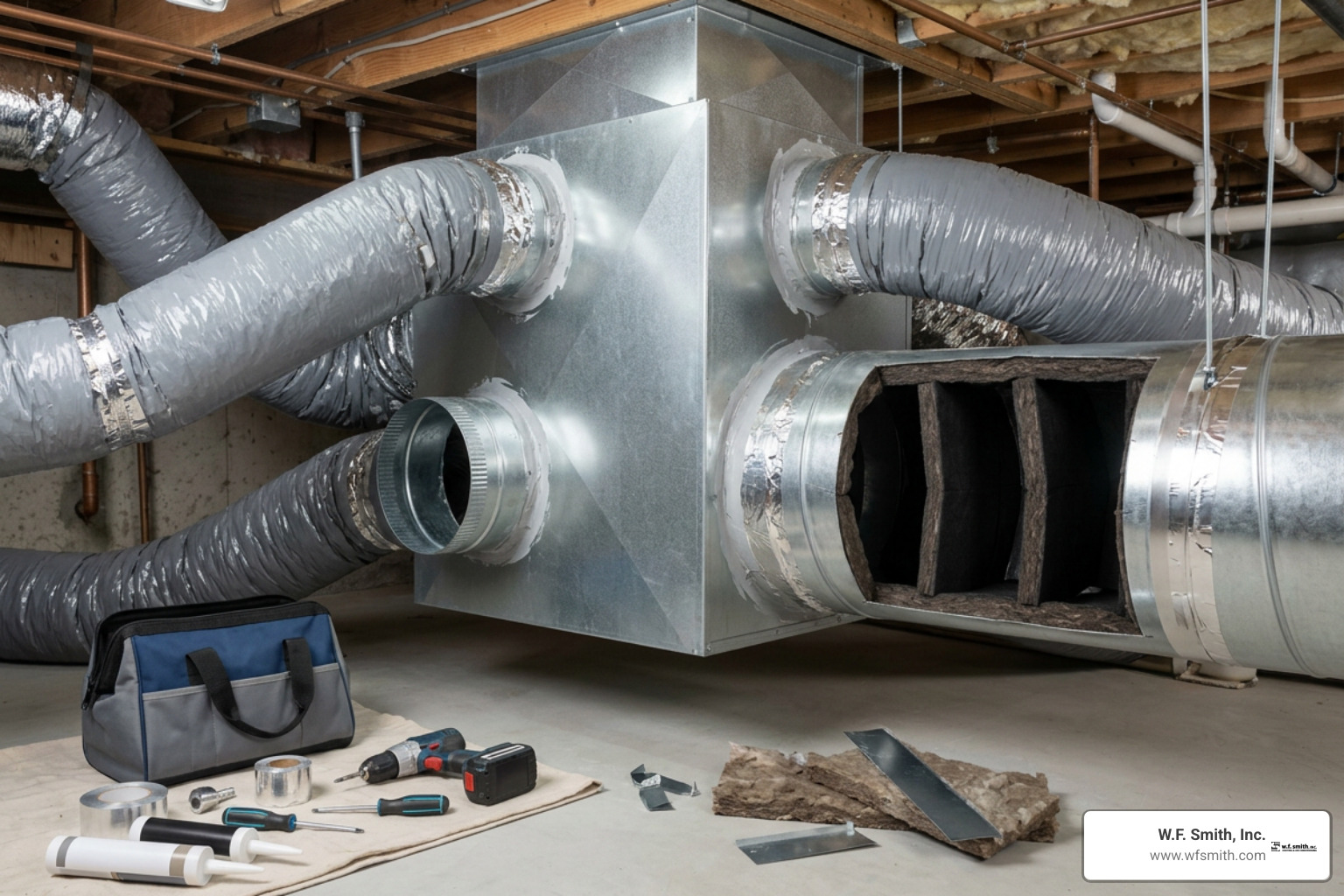
What Contractors Look for During a Duct Assessment
When the W.F. Smith team assesses a home for a geothermal retrofit, the evaluation includes several key diagnostic procedures:
- Blower door and duct blaster testing: Measures airflow leakage across duct connections and plenum seams.
- Total external static pressure (TESP) checks: Evaluates static resistance to help ensure the blower motor operates within manufacturer guidelines.
- Acoustic and sound-baffling requirements: Flexible duct connectors between the cabinet and sheet metal trunks can limit vibration transfer. Return-air paths may also need turns or other design measures to reduce direct blower sound transmission into living areas.
Signs Your Geothermal Heat Pump Ductwork Needs Replacement
While minor modifications resolve many airflow issues, complete duct replacement is occasionally necessary. Signs that your existing sheet metal may need full replacement include:
- Homes built before 1980: Older homes may feature small, uninsulated 4-inch supply branch lines designed for high-heat furnaces, which can restrict heat pump airflow.
- Severe air leakage: Disconnected joints inside inaccessible wall chases where manual sealing is not practical.
- Uninsulated metal in damp spaces: Rusting, uninsulated sheet metal that is prone to condensation during summer cooling.
- Crushed or collapsed flex ducting: Damaged flexible ducts in attics or crawlspaces that permanently restrict air volume.
Frequently Asked Questions About Geothermal Ductwork
Can I use my existing ductwork for a geothermal heat pump retrofit?
Yes, in most cases. Many geothermal installations are retrofits. However, your existing ductwork must be assessed for airflow capacity (400 CFM per ton), static pressure, and leakage. Minor modifications, such as adding return-air grilles or sealing leaky seams, are usually sufficient.
What affects the cost to modify ductwork for a geothermal heat pump?
The scope of ductwork modifications depends on the home’s existing duct condition, required airflow, accessibility, and whether trunk lines or return-air pathways need to be enlarged. Air sealing and insulation are often straightforward improvements, while partial redesigns or new duct installation require more extensive planning. A contractor can provide an accurate estimate after reviewing the system design and the home’s layout.
Do geothermal systems require larger ductwork than fossil fuel furnaces?
Because geothermal heat pumps deliver continuous heat at 95°F to 115°F, compared with 130°F to 160°F from gas furnaces, they require a larger volume of moving air to distribute heat effectively. Sizing ductwork for 400 CFM per ton supports low air velocity, quiet blower operation, and draft-free home comfort.
Conclusion
Optimizing your home’s air distribution system is key to the comfort and potential energy savings of ground-source technology. Existing sheet metal can often be repurposed, but proper airflow volume, low static pressure, and thorough duct sealing make a meaningful difference in long-term performance.
At W.F. Smith, Inc., our team brings 80+ years of experience serving Philadelphia homeowners with reliable HVAC, heating, cooling, and geothermal expertise. Whether you need a comprehensive duct evaluation, duct sealing, or a complete geothermal heat pump retrofit, we provide 24/7 emergency support and a 100% satisfaction guarantee.
Ready to explore clean, renewable earth-coupled heating for your home? Contact our geothermal heat pump specialists to schedule your assessment.

W.F. Smith was great. They worked very professionally and neatly. They were extremely knowledgeable about the equipment and all specific HVAC practices. Would recommend them to the world!