- 24/7 Emergency HVAC Repair
- Financing Available
- We Accept All Major Credit Cards
Signs Your Furnace Needs Repair Before Cold Weather Arrives
A Simple First Step for Furnace Repair
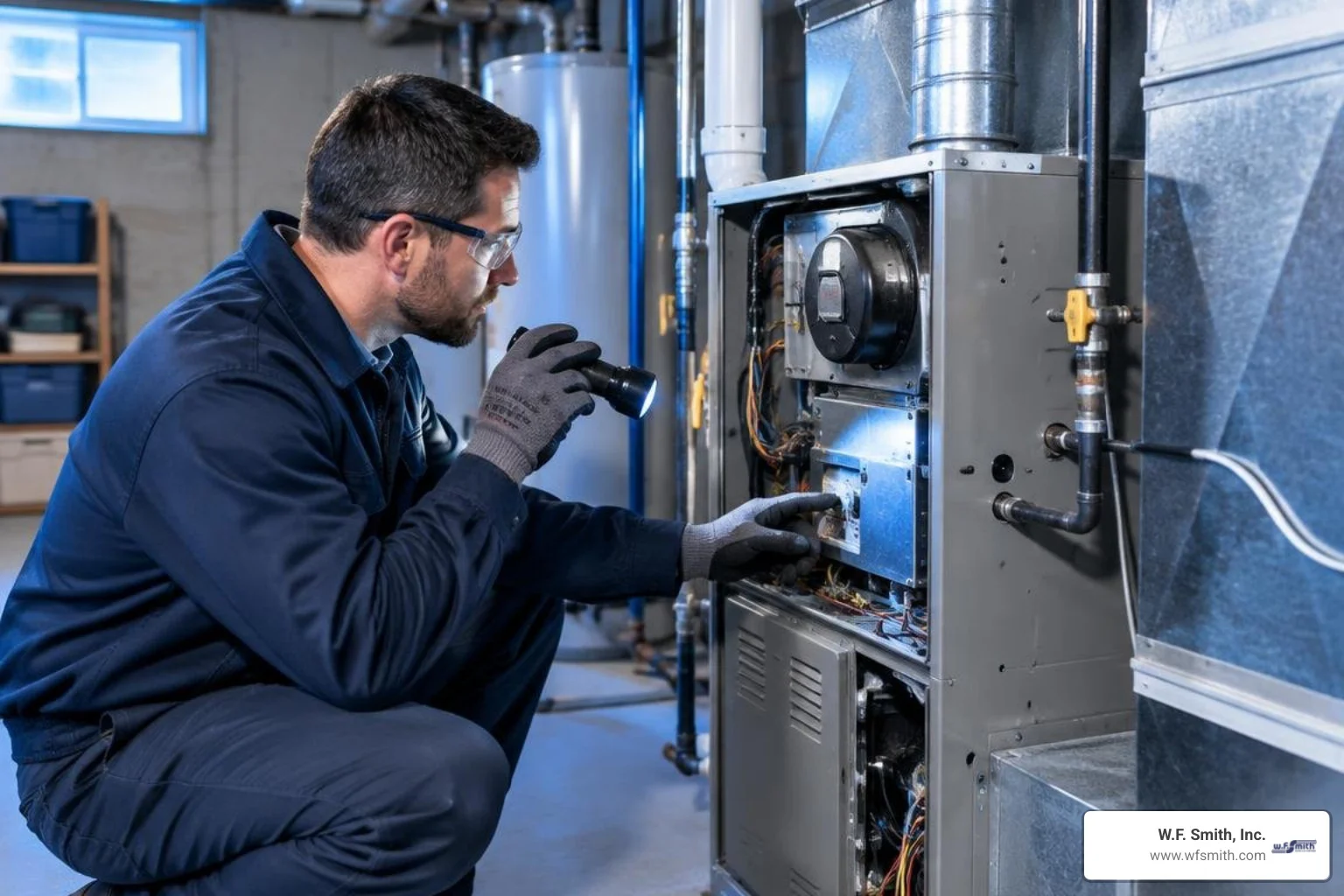
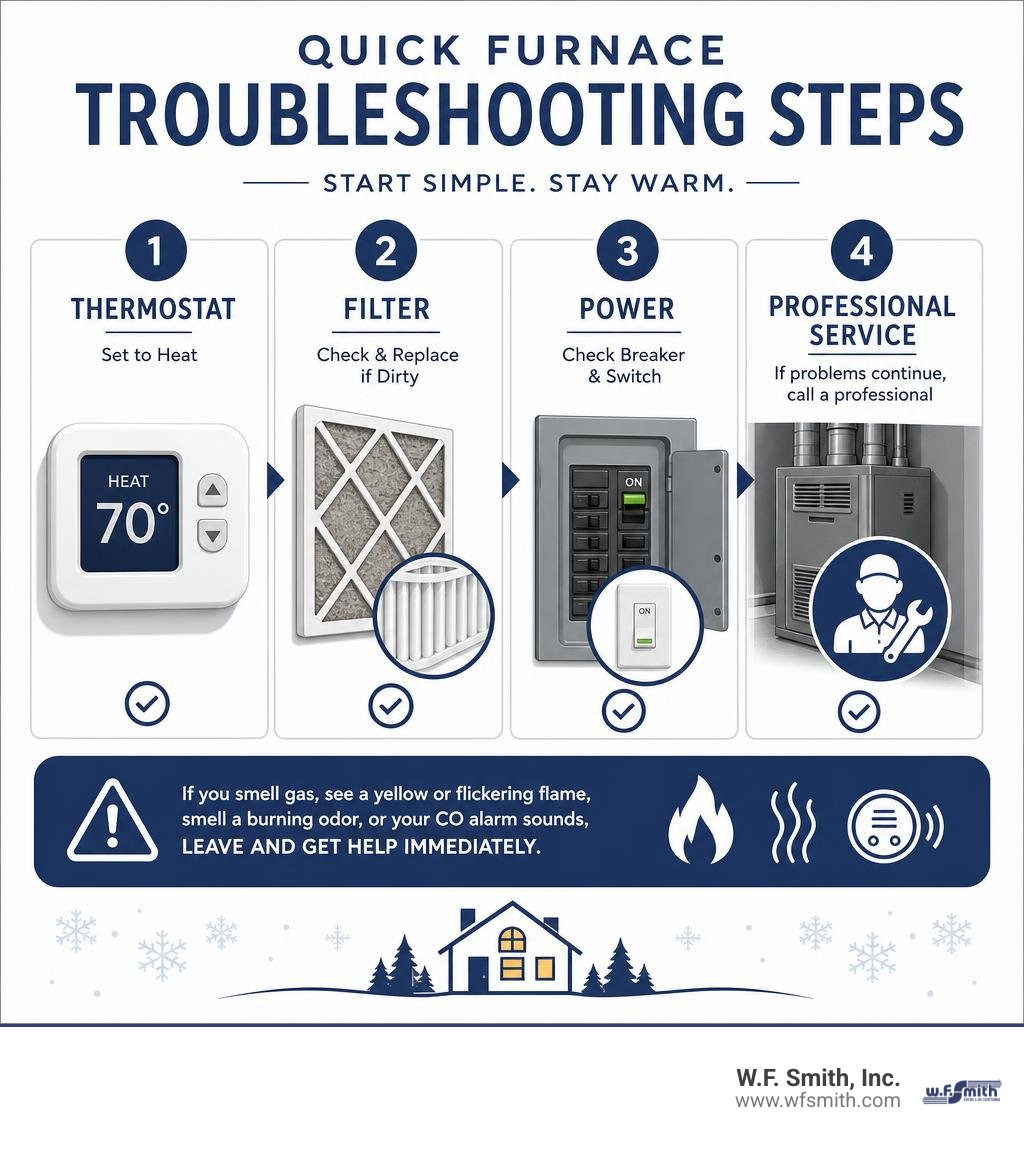
If your furnace is not heating, start with three safe checks: make sure the thermostat is set to Heat, replace a dirty air filter, and check that the furnace breaker and nearby power switch are on. These simple steps can solve a thermostat, airflow, or power problem quickly.
If the furnace still blows cool air, cycles on and off, makes loud noises, or will not start, schedule professional furnace repair. Do not attempt to repair gas, burner, or electrical parts yourself.
For a gas furnace, a yellow or flickering flame, a burning smell, or a carbon monoxide alarm needs immediate attention. Leave the home and call for emergency help from outside if you smell gas.
A fast check can restore comfort, but it can also reveal when a small issue needs attention before it becomes a no-heat emergency.
Fast Troubleshooting and Signs You Need Professional Furnace Repair
When winter weather takes hold, a sudden drop in indoor temperature makes everyone uncomfortable fast. Understanding common furnace problems can help you distinguish a minor airflow issue from a mechanical problem that needs professional attention.
If basic checks do not restore heat, our furnace repair service team can diagnose the system safely and explain the recommended next steps before work begins.
Furnaces provide subtle, and sometimes noisy, warning signs when components begin to wear down. Recognizing these symptoms early keeps a small fix from turning into a major breakdown in the middle of a freezing night:
- Inconsistent airflow and weak air: If certain rooms feel drafty while others are warm, or if air barely trickles from your registers, your system may be struggling with blower motor strain, ductwork obstructions, or a severely clogged filter.
- Blowing cool or lukewarm air: When the blower fan runs continuously but only pushes cool air through the vents, the heating cycle may not be establishing a sustainable flame or the heating elements may not be engaging.
- Unusual operational sounds: Furnaces should run with a steady hum. Squealing, metal-on-metal grinding, rattling, or loud banging can indicate a worn or failing component. A distinct boom or bang at the start of a heating cycle can point to delayed ignition.
- Rapid system cycling: Short cycling occurs when your furnace turns on, runs for only a minute or two, and shuts down before reaching the set temperature. This can be caused by overheating, restricted airflow, or a safety-control issue.
- Unexplained utility-bill increases: A struggling furnace loses efficiency and may use more electricity or fuel to produce the same level of heat.
Gas Combustion Safety and Burner Flame Indicators
Combustion safety is the most critical element of heating-equipment operation. Modern gas furnaces rely on clean fuel burning to generate warmth safely without releasing hazardous byproducts into your living space.
A healthy gas furnace produces a steady, crisp blue flame. This coloration indicates that the burner is receiving the proper ratio of oxygen and natural gas for clean combustion. If you look through the burner sight glass and observe a yellow, orange, or heavily flickering flame, your system may be experiencing incomplete combustion.
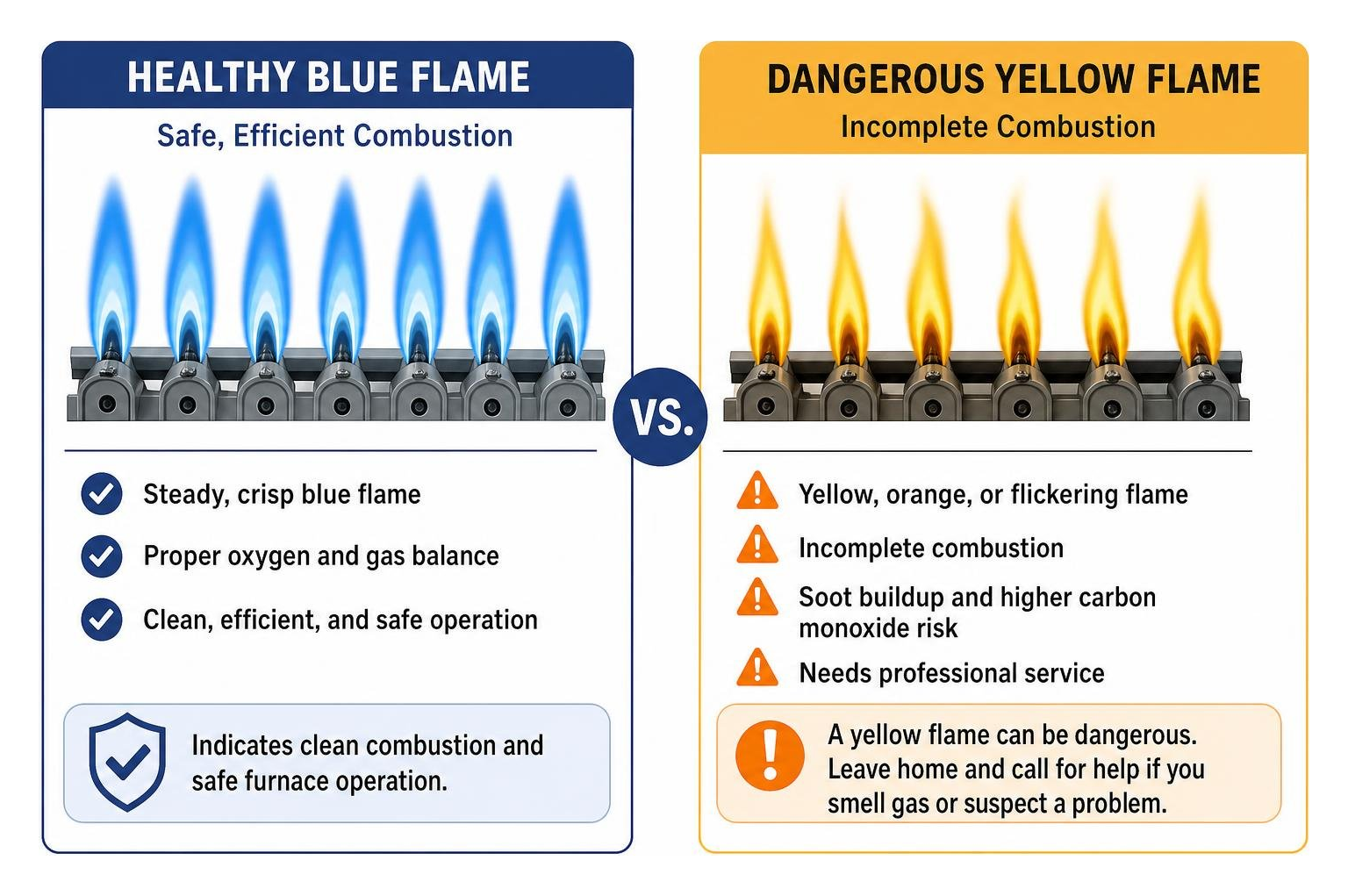
Incomplete combustion can create soot buildup along burner ports and may generate dangerous levels of carbon monoxide. If your system is failing to ignite cleanly, leave repairs to a qualified HVAC professional.
Essential Pre-Service Electrical Checks
Before calling our team for a service visit, there are several simple electrical and safety checks you can safely perform on your own:
- Inspect the thermostat settings: Ensure the interface is set to Heat and the target temperature is at least 3 to 5 degrees above the current room temperature. Dead batteries can also interrupt communication.
- Verify filter cleanliness: A blocked air filter restricts airflow and can trigger high-limit safety switches. Replace the filter according to the manufacturer’s guidance and your home’s dust and pet levels.
- Check the dedicated breaker and power switch: Furnaces have a power switch on or near the cabinet that resembles a standard light switch. Ensure it has not been bumped off, then check that the circuit breaker has not tripped.
- Inspect the blower access door: Furnaces feature a safety interlock switch on the blower-compartment door. If the panel is loose or was not reinstalled flush after a filter change, the system can remain unpowered.
Component Diagnostics and Heating System Expenses

When basic checks do not resolve the issue, diagnosing the internal workings of a modern forced-air system requires specialized tools. Furnaces rely on an integrated sequence of operations in which every safety switch and mechanical sensor must confirm proper operation before the system allows fuel to flow.
During a professional diagnostic evaluation, technicians inspect key operational parts:
- Flame sensors and thermocouples: A flame sensor sits directly in the burner path to confirm ignition. Over time, carbon oxidation can coat the metal rod. When the sensor cannot detect the electrical current produced by the flame, it signals the gas valve to shut down within seconds to prevent raw-gas accumulation. Older systems may use a thermocouple instead.
- Hot-surface ignitors: Modern systems use silicon nitride or silicon carbide ignitors that glow white-hot to light the gas. These components endure extreme thermal expansion and contraction and can eventually crack or lose continuity.
- Draft inducer motors: Before fuel enters the combustion chamber, the draft-inducer motor pulls air through the heat exchanger and expels lingering exhaust gases through the flue. If the motor fails, or a pressure switch detects an exhaust blockage, the furnace will not initiate the ignition sequence.
- High-limit safety switches: These switches monitor the internal temperature of the supply plenum. If airflow drops because of a clogged filter or failing blower motor, the limit switch trips to help protect the heat exchanger from overheating.
Typical Component Costs for Professional Furnace Repair
Understanding typical repair expenses helps homeowners budget effectively and avoid surprises when service is needed:
- Minor repairs ($150 to $400): Common minor repairs include flame-sensor cleaning or replacement, hot-surface-ignitor replacement, basic thermostat replacement, limit-switch replacement, or air-pressure-switch replacement.
- Mid-range repairs ($400 to $900): These services generally involve motorized mechanical parts or specialized electronics, such as replacement of the integrated control board, gas control valve, draft-inducer assembly, or blower motor.
- Major structural repairs ($1,000 to $2,500+): Major repairs can include variable-speed ECM blower assemblies or replacement of a cracked heat exchanger. Because the heat exchanger is the central core of the furnace, replacing it requires extensive equipment disassembly and labor.
What to Expect During an Emergency Furnace Repair Service Call
When your heat cuts out unexpectedly, our licensed technicians follow a thorough diagnostic protocol:
- Safety and fuel inspection: We inspect the combustion chamber, verify gas-line integrity, and check for hazardous carbon-monoxide leakage.
- Sequence and electrical diagnostics: Using digital multimeters and pressure manometers, we evaluate control-board voltages, safety-limit circuits, capacitor ratings, and static pressure across the duct system.
- Upfront written estimates: Before repair work begins, a member of our team provides a clear, itemized explanation of the required parts and labor costs.
- Component repair and full-cycle testing: After installing appropriate parts, our technicians run the furnace through a complete heating cycle, monitoring startup, burner ignition, fan delays, temperature rise, and clean shutdown at the thermostat.
Deciding Between Equipment Overhaul and System Replacement
At some point, investing more money into an aging heating unit no longer makes financial sense. Homeowners often struggle to decide whether an unexpected breakdown warrants another repair or a complete system upgrade.
To make an objective decision, the HVAC industry often uses the 50% rule: if your furnace is under 15 years old and the repair cost is less than 50% of the cost of a new system, repair may be the smarter financial choice. However, if the equipment is 15 to 20 years old, requires frequent service calls, or has a cracked heat exchanger, replacement may be more economical over the long term.
| Decision factor | Favor equipment repair | Favor system replacement |
|---|---|---|
| Equipment age | Less than 10 to 12 years old | More than 15 to 20 years old |
| Repair-cost frequency | First repair in several seasons | Frequent breakdowns year after year |
| Repair-to-new ratio | Repair cost is under 30% to 50% of a new unit | Repair cost exceeds 50% of a new system |
| Heat-exchanger integrity | Heat exchanger is intact and crack-free | Heat exchanger is cracked, rusted, or compromised |
| Comfort and air distribution | Even heating across household rooms | Persistent cold spots and drafty living areas |
| Monthly operating costs | Stable, predictable winter utility bills | Steadily climbing energy expenses |
If your furnace has recurring issues, these signs that furnace replacement may be needed can help you assess its overall condition and weigh repair against replacement.
When a new system is the better long-term option, our furnace replacement service team can help you compare equipment options, efficiency ratings, and installation considerations for your home.
Energy Efficiency, Rebates, and Fuel Transitions
Investing in a new heating system can offer substantial efficiency benefits that help offset the initial installation cost. Older furnaces may operate at 60% to 70% Annual Fuel Utilization Efficiency (AFUE), meaning a significant share of the fuel used is lost as waste heat.
Modern condensing furnaces can achieve AFUE ratings of 95% to 98%, which can reduce fuel waste and lower monthly heating costs when paired with the right installation and maintenance plan.
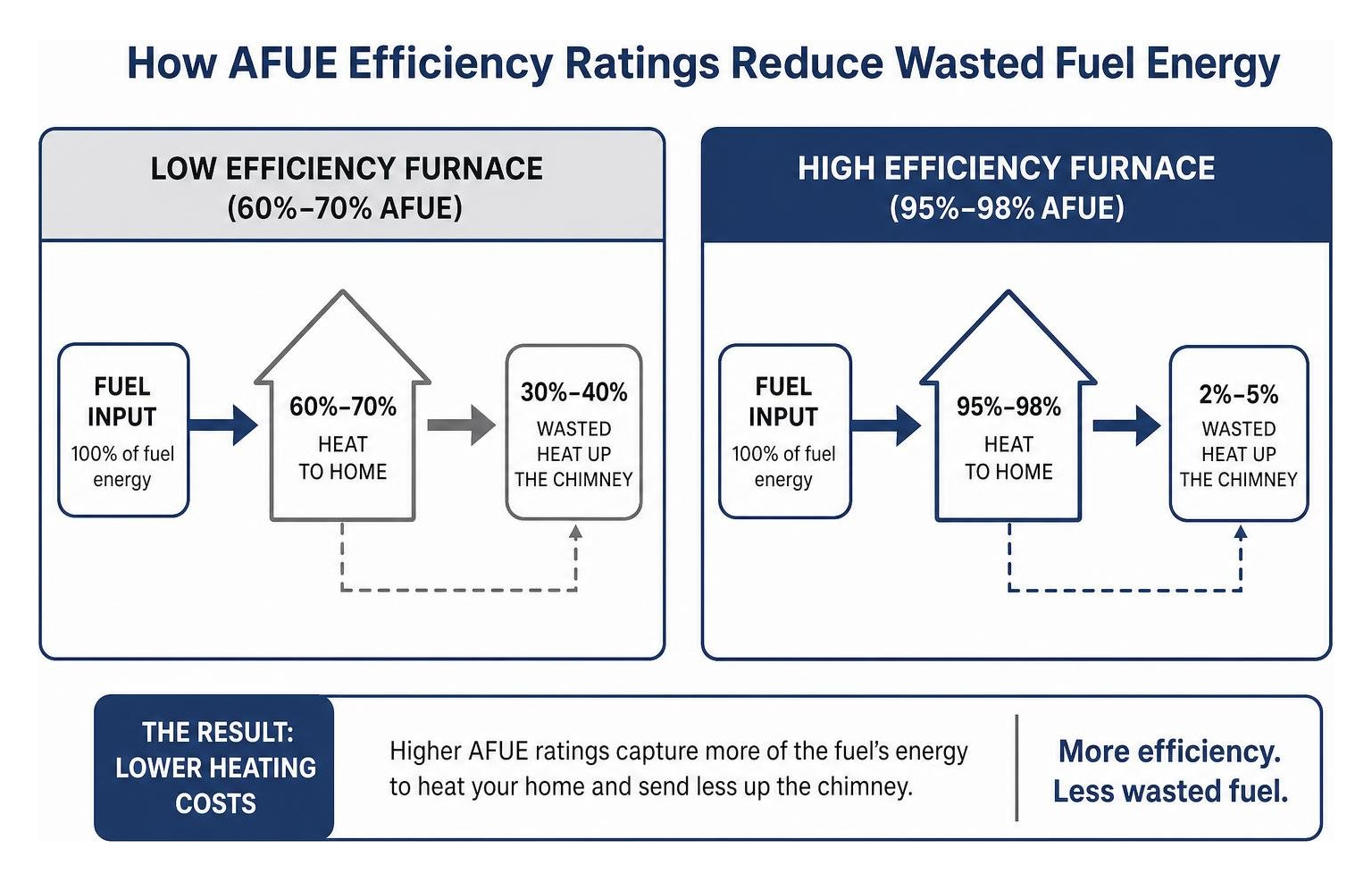
Homeowners may also be eligible for federal energy-efficiency tax credits or local utility rebates for qualifying upgrades. Some Philadelphia-area households also explore cold-climate heat pumps or dual-fuel systems to balance comfort and energy use based on outdoor temperatures.
Preventive Maintenance and Long-Term System Protection
The most effective way to handle a furnace breakdown is to prevent it from happening in the first place. Furnaces stop working primarily because of normal wear and tear or a lack of routine maintenance.
Planned seasonal maintenance helps keep equipment running smoothly, catches worn parts before they fail, lowers utility bills, and can help preserve manufacturer warranty coverage.
Fall Tune-Up Checklist and Homeowner Best Practices
We recommend scheduling a professional heating tune-up in early autumn, ideally September or October, before cold weather sets in.
A comprehensive professional fall tune-up includes:
- Cleaning and inspecting burner assemblies and ignition systems
- Polishing the flame-sensor rod to remove carbon buildup
- Inspecting the heat exchanger for structural fractures, rust, and pinholes
- Measuring blower-motor amp draw, cleaning fan blades, and checking capacitors
- Testing high-limit switches, rollout sensors, and pressure switches
- Verifying proper venting, flue draft, and combustion-air intake
- Calibrating the thermostat and checking overall system cycling
Between professional maintenance visits, keep supply registers open, make sure return-air grilles are not blocked by furniture, and keep the area around the furnace clear of storage boxes, paint cans, and household clutter.
Selecting a Qualified HVAC Contractor
When your heating system requires service, hiring the right company protects both your wallet and your household safety.
Always look for the following qualifications when choosing an HVAC contractor:
- Licensing and insurance: Verify that the company holds valid state trade licenses and carries liability and workers’ compensation coverage.
- Experienced technicians: Choose a company whose technicians receive regular factory training and background checks.
- Transparent, upfront pricing: A trustworthy service provider provides clear written estimates before beginning repairs, without hidden trip fees or surprise charges.
- Warranty and satisfaction guarantees: Look for a team that stands behind its work with meaningful warranties on replacement parts and labor.
Frequently Asked Questions About Heating Repairs
How quickly can an emergency technician arrive when the heat goes out?
During freezing weather, a complete heating breakdown is an urgent emergency that can quickly lead to frozen plumbing and uninhabitable indoor temperatures. Our dispatch team prioritizes no-heat calls during extreme cold snaps and provides 24/7 emergency service to respond as quickly as possible.
What should I do immediately if I smell gas near my heater?
Natural gas is treated with an artificial mercaptan additive that produces a distinctive sulfur or rotten-egg odor. If you smell gas near your furnace:
- Do not operate electrical switches, turn lights on or off, or use household phones, as an electrical arc could ignite the gas.
- Evacuate all household members and pets from the building immediately, leaving doors open behind you to help ventilate the space.
- Call your local gas utility emergency hotline and 911 from a safe location outside the house.
- Do not re-enter the home until emergency personnel have thoroughly tested the air and confirmed it is safe.
Do electric heating units experience the same issues as gas models?
While electric furnaces do not have gas burners, fuel valves, or flues, they share many of the same mechanical and airflow components as gas systems. Electric furnaces can suffer from failing blower motors, clogged filters, and faulty limit switches. Specific electrical components that require service include heat sequencers, which stage heating elements to prevent electrical overloads, and individual electric-resistance heating elements that can burn out over time.
Conclusion
Understanding how your heating system operates and taking proactive care of minor warning signs keeps your home safe and warm all winter long. Simple steps, such as changing filters every few months and scheduling professional fall tune-ups, can prevent small component wear from becoming an expensive middle-of-the-night heating failure.
When your furnace requires professional diagnostic service, choose a local team with proven expertise. At W.F. Smith, Inc., our family-owned company brings more than 80 years of heating, cooling, and indoor-air-quality experience to homes throughout the Philadelphia area. Our team combines experienced technicians, 24/7 availability, and a 100% satisfaction guarantee to support homeowners when comfort and safety matter most.
If your furnace is blowing cold air, making strange noises, or failing to turn on, do not wait in the cold. Contact our professional furnace repair technicians for dependable help from a trusted Philadelphia HVAC team.

W.F. Smith was great. They worked very professionally and neatly. They were extremely knowledgeable about the equipment and all specific HVAC practices. Would recommend them to the world!