- 24/7 Emergency HVAC Repair
- Financing Available
- We Accept All Major Credit Cards

How to Find a Reliable Philadelphia Heating Repair Service Before Winter
Fast Help for Philadelphia Heating Repair Service Needs
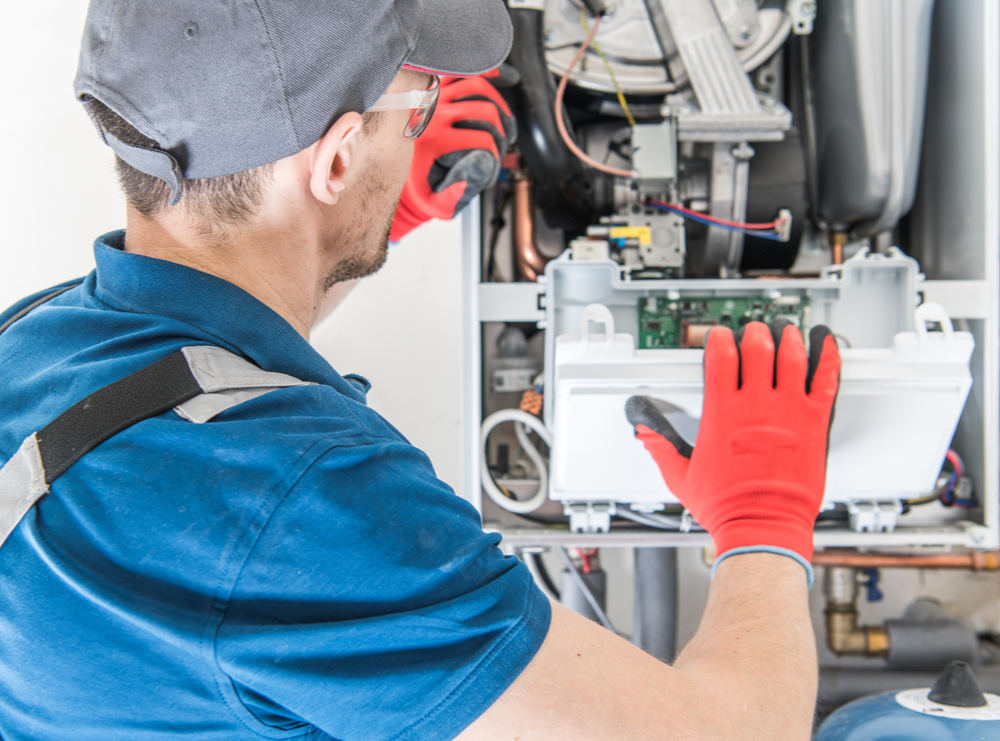
A Philadelphia heating repair service can restore safe, reliable heat when your furnace, boiler, heat pump, or water heater fails, especially during a cold Philadelphia winter.
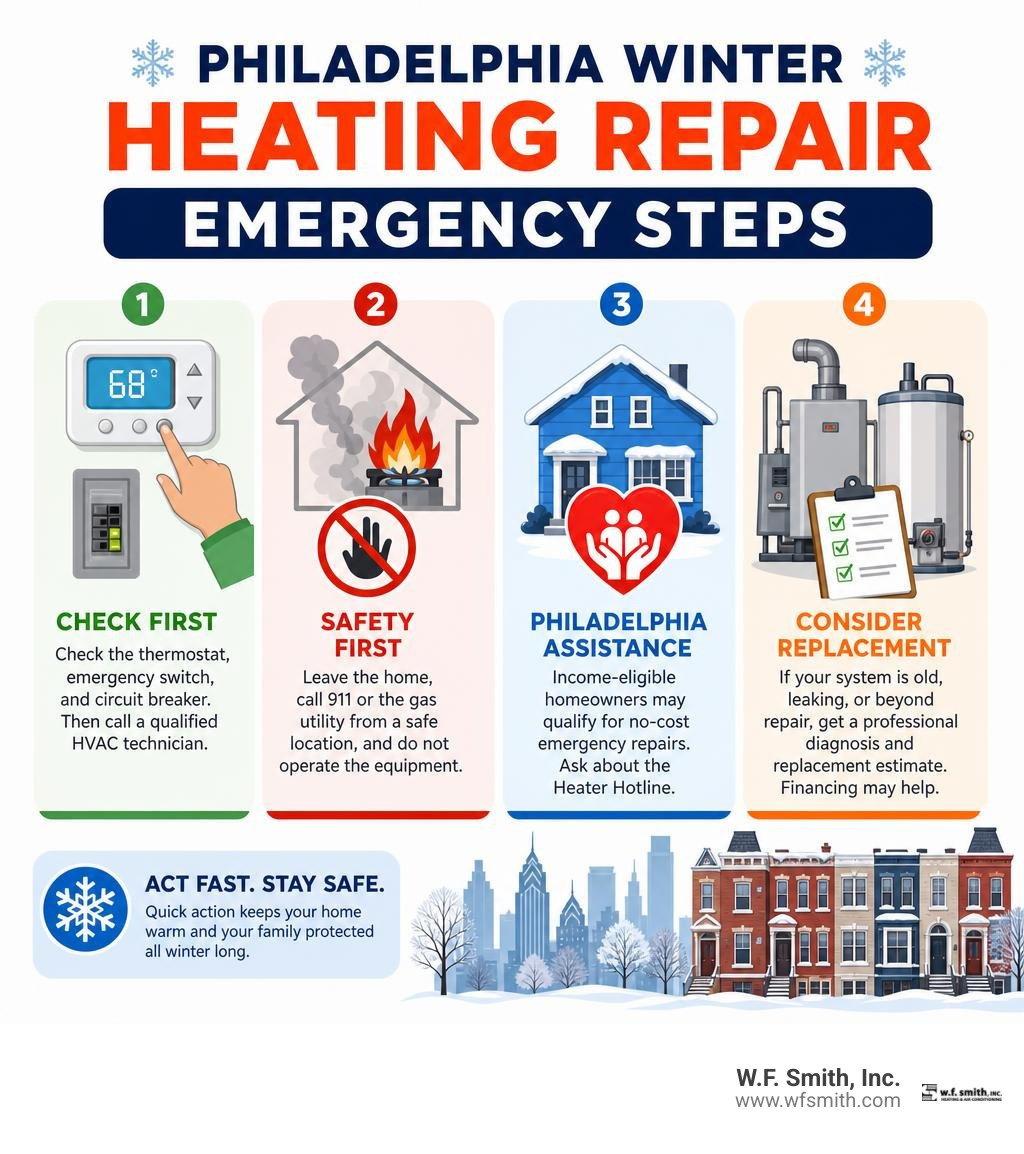
| If this is happening | Best next step |
|---|---|
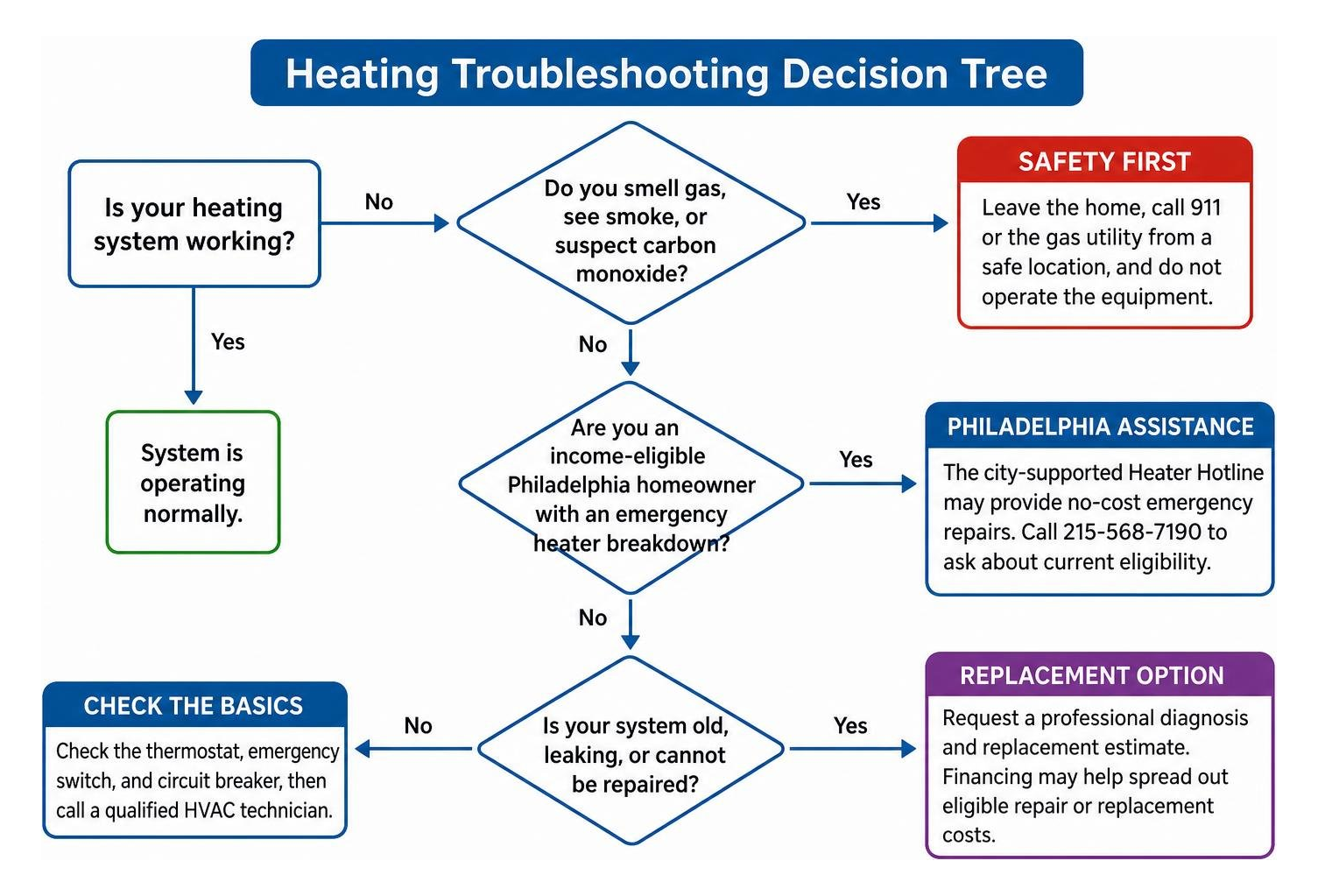
| No heat, but no gas smell or safety concern | Check the thermostat, emergency switch, and circuit breaker, then call a qualified HVAC technician. |
| You smell gas, see smoke, or suspect carbon monoxide | Leave the home, call 911 or the gas utility from a safe location, and do not operate the equipment. |
| You are an income-eligible Philadelphia homeowner with an emergency heater breakdown | The city-supported Heater Hotline may provide no-cost emergency repairs. Call 215-568-7190 to ask about current eligibility. |
| Your system is old, leaking, or cannot be repaired | Request a professional diagnosis and replacement estimate. Financing may help spread out eligible repair or replacement costs. |
A heating failure is more than an inconvenience. It can affect your family’s comfort, pipes, and safety. This guide explains what to check first, when to call for emergency help, how Philadelphia assistance programs work, and what to know about heating and water heater repairs.
Emergency Troubleshooting for Philadelphia Heating Repair Service Needs
When cold temperatures hit the Delaware Valley, a sudden loss of indoor heat can quickly turn your home into an icebox. Before assuming the worst, there are several straightforward checks you can perform safely on your own. Many emergency service calls turn out to be minor operational issues that can be resolved without waiting for a technician.
First, check your thermostat settings. Ensure the device is switched to “Heat” mode and set the temperature target at least 5 degrees above the current room temperature. If your thermostat uses batteries, replace them to rule out power failure.
Second, check the emergency shut-off switch. This switch often resembles a standard light switch, frequently marked with a red switch plate, located at the top of your basement stairs or directly adjacent to the furnace or boiler unit. It can easily be bumped off by accident.
Third, verify your electrical panel. Residential heating systems rely on electricity to power blowers, ignition modules, and safety controls. Most standard residential heaters operate on a dedicated 15-amp circuit breaker. Check if the breaker has tripped to the center or “Off” position. Reset it once by switching it firmly to “Off” and back to “On.” If it trips again immediately, do not force it, as this indicates an electrical fault requiring professional inspection.
For oil heating systems, verify that your fuel tank has adequate oil levels. For gas units with a standing pilot light, check whether the flame has gone out.
If these basic steps do not restore operation, arrange for Philadelphia emergency heating repair to restore warmth safely.
Basic Mechanical and Electrical Diagnostics
Understanding the difference between simple user checks and complex mechanical repairs can save you time and keep you safe. Safe DIY troubleshooting is limited to high-level observations.
Never press the reset button on an oil burner more than once. Repeatedly pressing the reset button pumps unburned oil into the combustion chamber, creating a hazardous fire risk and potential delayed ignition when the unit finally fires up. Similarly, if your gas equipment does not feature clear lighting instructions posted directly on the cabinet, do not attempt to light the pilot manually.
| Troubleshooting Task | DIY Friendly? | Action Required |
|---|---|---|
| Thermostat Batteries & Settings | Yes | Replace batteries; confirm system is set to “Heat.” |
| Main Electrical Panel Check | Yes | Check for a tripped 15-amp breaker; reset once. |
| Emergency Power Switch | Yes | Confirm the wall switch near the heater is turned ON. |
| Gas Pilot Relighting (Modern Units) | Caution | Follow cabinet instructions only; never force gas valves. |
| Oil Burner Prime / Reset Button | Caution | Press the reset button once only. Never repeat. |
| Blower Motor or Capacitor Replacement | No | Contact a qualified HVAC technician. |
| Cracked Heat Exchanger | No | Contact a qualified HVAC technician immediately. |
Philadelphia Emergency Heating Assistance: Heater Hotline and LIHEAP
For residents facing financial hardship during freezing weather, local public programs offer essential support. For over 30 years, the Energy Coordinating Agency (ECA) has operated Philadelphia’s dedicated emergency hotline for income-eligible households dealing with heater failures in winter.
Supported by the Division of Housing and Community Development (DHCD), the Philadelphia Heater Hotline serves as a vital safety net. Additionally, the Low Income Home Energy Assistance Program (LIHEAP) provides federally funded cash grants and crisis funding. LIHEAP is generally open annually from November through April, though exact dates vary each season. You can reach the LIHEAP Energy Assistance Office directly at 215-560-1583.
For routine maintenance or non-emergency system concerns, our heating services team can assess your equipment and recommend the appropriate next step.
Qualifying for Free Repairs via the Philadelphia Heating Repair Service Hotline
To qualify for free emergency heating system repairs through ECA’s Heater Hotline, applicants must satisfy clear municipal guidelines:
- Income Limit: Household income must not exceed 150% of the Federal Poverty Level.
- Homeownership: You must own and occupy a single-family home in Philadelphia as your primary residence.
- Property Ownership: You cannot own additional residential or commercial property.
- Repairable Unit: The existing system must be repairable rather than requiring total replacement.
Eligible repairs through the hotline cover a broad array of critical system components, including oil burners, automatic gas valves, room thermostats, heating controls, chimney flues, draft regulators, circulator pumps, blowers, and damaged heating pipes.
To apply for free emergency heater repairs, contact the Heater Hotline directly at 215-568-7190. During peak winter operational periods, you can leave a detailed message with the answering service to secure a prompt callback from the dispatch team.
Handling System Replacement and Public Resources
When an emergency technician determines that a heating system is cracked, severely rusted, or beyond safe mechanical repair, a basic component repair will not suffice.
In cases where complete system failure occurs in an eligible low-income household, the Heater Hotline program forwards the application to the Philadelphia Housing Development Corporation (PHDC) Basic Systems Repair Program for full system replacement. Renters and non-qualifying homeowners facing emergency situations can also apply for LIHEAP Crisis Grants to help cover immediate utility restoration or fuel purchases.
For homeowners not eligible for government assistance, a modern high-efficiency system replacement can lower monthly energy costs and provide long-term peace of mind.
Comprehensive Heating System Diagnostics and Solutions
When an HVAC contractor arrives at your property, they conduct a rigorous diagnostic assessment to pinpoint the root cause of the failure. Heating equipment relies on intricate interactions between fuel lines, high-voltage electricity, delicate safety controls, and air delivery ducts.
Common issues our team encounters across Philadelphia homes include:
- Faulty Ignition Systems: Damaged hot surface igniters or faulty spark modules preventing gas ignition.
- Clogged Condensate Lines: High-efficiency furnaces shut down automatically when condensate drains freeze or block up.
- Defective Flame Sensors: Dirty or oxidized sensors preventing the gas valve from remaining open.
- Blower Motor Capacitors: Failed start capacitors keeping warm air from circulating through your living spaces.
- Cracked Heat Exchangers: Dangerous structural cracks that pose a direct carbon monoxide risk, requiring immediate unit shutdown.
Addressing these issues promptly prevents minor mechanical failures from compounding into total system breakdowns during severe cold snaps.
Gas Furnaces and Heat Pump Repairs
Gas furnaces remain the predominant heating method in older Philadelphia homes, while electric heat pumps are rapidly growing in popularity across modern residences and rowhouse renovations.
When a furnace begins short-cycling, making new noises, or heating rooms unevenly, these warning signs your furnace needs a tune-up can help you recognize when professional attention is appropriate.
Before deciding whether to repair or replace older equipment, understanding how furnaces work can make conversations about ignition, airflow, and efficiency easier to follow.
Never ignore strange clicking noises, soot around burner doors, or unusual burning smells. Routine air duct inspections and timely air filter changes keep air delivery systems running efficiently while relieving strain on internal motors.
Selecting a Trusted Philadelphia Heating Repair Service Provider
Choosing the right service provider makes all the difference when your comfort and safety are on the line. Look for contractors who possess full state licensing, extensive insurance coverage, and deep familiarity with Philadelphia’s unique housing architecture, from historical brick rowhomes to modern mid-rise condos.
A qualified local HVAC team should provide rapid dispatch for unexpected heating breakdowns, clear diagnostic pricing, warranties for eligible parts and labor, and preventive adjustments that support long-term system performance.
Water Heater Repair, Maintenance, and Financing in Philadelphia
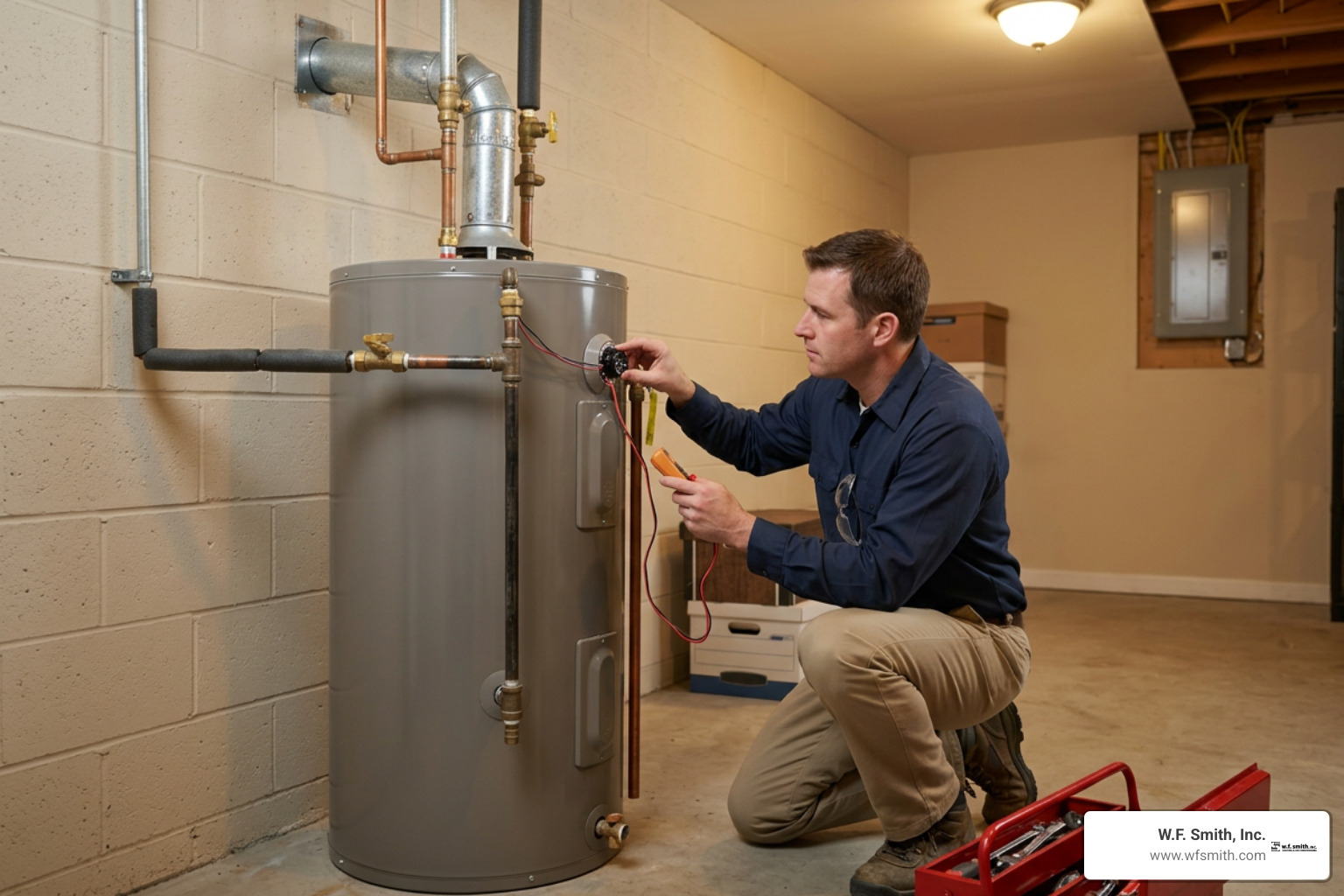
Your water heater is an equally vital part of your home’s daily heating setup. Water heaters typically have an operational lifespan of 8 to 12 years. However, with routine care and maintenance, their performance and life expectancy can extend well beyond that window.
Philadelphia’s cold winter municipal water temperatures put extra stress on domestic water heaters. When cold water enters the tank, the burner or heating elements must work significantly harder to reach comfort levels, making winter maintenance crucial.
Common Water Heater Problems and Solutions
Homeowners frequently experience several warning signs indicating a water heater is approaching failure:
- Inadequate Hot Water: Often caused by burnt-out electric heating elements, faulty gas control valves, or excessive sediment buildup in the tank base.
- Knocking or Rumbling Noises: Mineral deposits settle at the bottom of the tank over time. As water trapped underneath the sediment boils, it creates loud knocking or popping sounds.
- Fluctuating Temperatures: Indicates failing thermostats or broken dip tubes mixing cold inlet water with hot water top layers.
- Water Leaks Around the Base: A leaking tank casing cannot be repaired and requires immediate unit replacement to prevent structural water damage.
- Faulty Pilot Light: Drafts, dirty thermocouple sensors, or clogged pilot orifices can extinguish the burner flame.
Checking the sacrificial anode rod, often referred to as the “sacrifice rod,” is one of the most effective ways to preserve tank integrity. The anode rod deliberately attracts corrosive minerals in the water to protect the interior steel tank liner. When the anode rod degrades to under 50% of its original thickness, it should be replaced immediately.
Maintenance Best Practices and Financing Options
To keep hot water flowing reliably and minimize utility costs, follow these proven maintenance practices:
- Flush the Tank Annually: Drain several gallons of water from the drain valve once a year to flush out settled mineral sediment.
- Set Optimal Water Temperature: Adjust your water heater thermostat setting to 120°F (49°C). This temperature strikes the perfect balance between preventing scalding, minimizing energy usage, and suppressing bacterial growth like Legionella.
- Inspect the Pressure Relief Valve: Periodically lift the lever on the Temperature and Pressure Relief (T&P) valve to verify that it releases water smoothly and reseals completely.
- Insulate Older Tanks: For older water heaters located in unheated basements, adding an external insulation blanket conserves standby heat loss. (Note: Units manufactured after 2015 include dense factory insulation built in.)
When unexpected repairs or full system replacements exceed your immediate budget, flexible financing options can help. Many top-tier HVAC service contractors offer low-monthly-payment financing plans, allowing you to install efficient new equipment immediately while managing costs comfortably over time.
Frequently Asked Questions About Philadelphia Heating Systems
How do I contact the Philadelphia Heater Hotline for emergency repairs?
You can reach the Philadelphia Heater Hotline by calling 215-568-7190. The hotline is managed by the Energy Coordinating Agency (ECA) with support from Philadelphia’s Division of Housing and Community Development (DHCD). Income-eligible single-family homeowners who qualify (at or below 150% of the Federal Poverty Level) can receive free emergency repairs on critical components like gas valves, oil burners, thermostats, and circulators.
What steps should I take if my heater suddenly stops working in winter?
If your heat shuts off suddenly, perform these safe initial steps:
- Verify that your thermostat is switched to “Heat” mode and set above room temperature.
- Locate the emergency red-plate shut-off switch and confirm it is turned “ON.”
- Check your main circuit breaker box for a tripped 15-amp breaker and reset it once.
- Check fuel levels if you heat with oil, or check pilot status on older gas furnaces.
- If the system still does not ignite, call a licensed heating contractor or contact emergency support right away.
How long do water heaters last and when should they be replaced?
Standard tank-style water heaters generally last between 8 and 12 years. You should consider replacing your unit if it is over 10 years old, shows visible corrosion or water leaks around the tank base, produces rusty water continuously, or makes persistent rumbling sounds caused by heavy sediment accumulation. Replacing an aging unit proactively prevents sudden tank ruptures and basement flooding.
Conclusion
A reliable heating system is vital for surviving cold Philadelphia winters safely and comfortably. Whether you need an emergency repair on a freezing night, public heating assistance through local hotlines, or routine preventive maintenance, taking action quickly protects your property and your loved ones.
At W.F. Smith, Inc., our team brings over 80 years of trusted experience to homes across the greater Philadelphia area. As a family-owned HVAC contractor, our certified technicians provide 24/7 emergency response, expert equipment repair, and high-efficiency system installations backed by our 100% satisfaction guarantee.
Don’t wait for a total freeze-up to address your home’s heating equipment. If your system is making strange noises, failing to keep up with target temperatures, or refusing to start, contact our professional heating repair technicians at W.F. Smith, Inc. today.

W.F. Smith was great. They worked very professionally and neatly. They were extremely knowledgeable about the equipment and all specific HVAC practices. Would recommend them to the world!