- 24/7 Emergency HVAC Repair
- Financing Available
- We Accept All Major Credit Cards

Air Conditioner Refrigerants: A Complete Guide
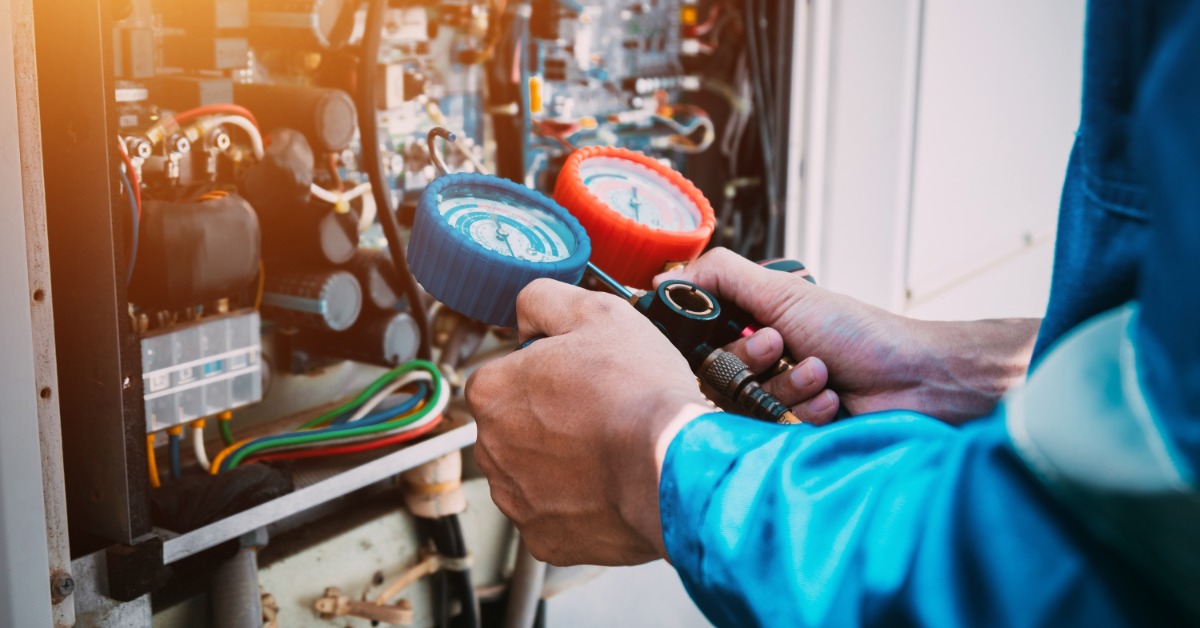
Most homeowners only hear about refrigerant after their air conditioner stops performing properly, turning a simple service call into a technical and potentially expensive matter. Refrigerant absorbs indoor heat and releases it outside during the cooling cycle. When its charge drops or the system relies on an older, less available refrigerant, both comfort and repair costs are affected quickly.
Homeowners don’t need every technical detail, but understanding the basics of refrigerants makes repair decisions easier. Here is a complete guide to air conditioner refrigerants.
What Refrigerant Does in Your Air Conditioner
Your air conditioner does not create cold air out of thin air. Refrigerant moves through the system, changes pressure and temperature, absorbs heat indoors, and releases heat outdoors. This cycle depends on the right charge, steady airflow, and equipment built for the refrigerant listed on the unit. When charge drops or parts fail, cooling output falls, and system strain rises.
Why Refrigerants Changed Over Time
Older refrigerants raised serious environmental concerns, prompting industry changes. R-22, for example, damaged the ozone layer by releasing chlorine when it leaked. Higher-GWP refrigerants contribute to climate change because they trap heat when released into the atmosphere. This led to a phaseout of R-22, followed by restrictions on higher-GWP refrigerants in new residential equipment. For homeowners, today’s refrigerant choice depends on the system’s age, repair costs, and when it might need replacement.
What Is Global Warming Potential or GWP
Global warming potential (GWP) is a measure of how much heat a refrigerant traps in the atmosphere over a given period, relative to carbon dioxide, which has a GWP of 1. If refrigerants with a high GWP are released, they have a greater impact on climate change, which is why regulations encourage the use of alternatives with lower GWP values.
The Main Types Homeowners Still Hear About
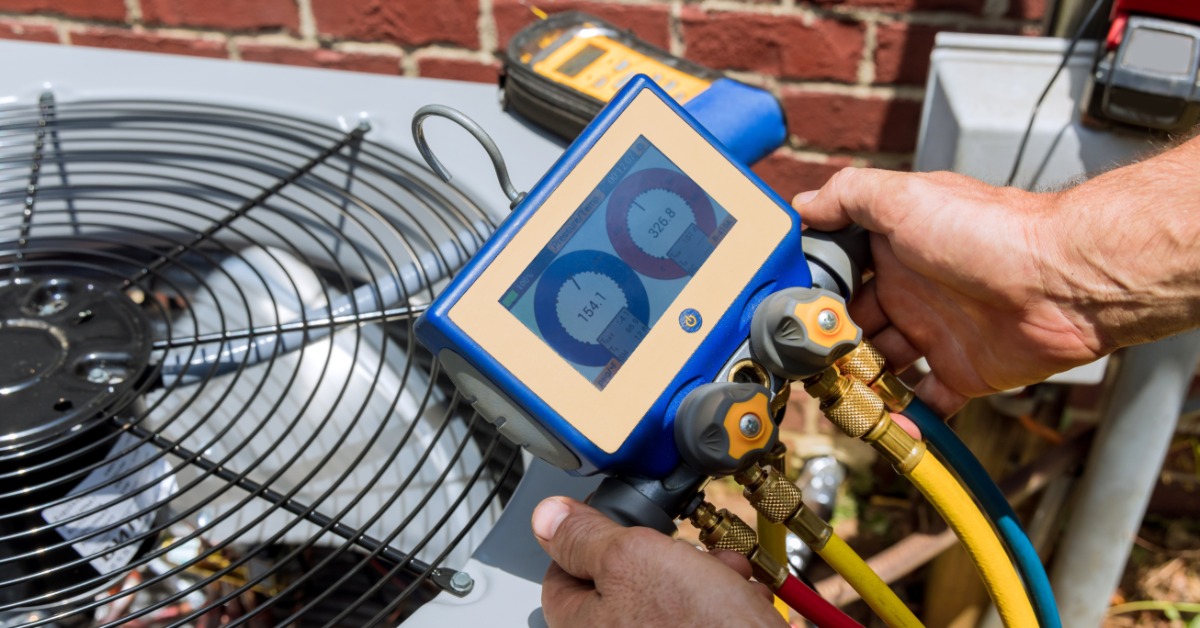
Homeowners typically encounter a few refrigerant names during discussions on repair or replacement. Each is suited to a specific equipment era and service rules, with the most common being R-22, R-410A, R-454B, and R-32.
R-22
R-22 is used in many residential systems built before 2010, and many homeowners still know it by the brand name Freon. U.S. production and imports ended on January 1, 2020, so any remaining supply comes from recovered or reclaimed stock. Homeowners with an R-22 system do not face an immediate legal requirement to replace it, yet repairs often cost more when a leak appears because supply is limited.
R-410A
R-410A became the standard refrigerant in many air conditioners and heat pumps made from 2010 forward. It replaced R-22 in new residential systems, but the industry is now beginning another transition because newer options have lower global warming potential.
EPA restrictions for certain new residential air-conditioning and heat pump equipment took effect January 1, 2025, with a sell-through path for some inventory made before that date into 2026. For homeowners, that means many existing R-410A systems still receive service, while new equipment shopping now brings different refrigerant labels.
R-454B and R-32
Today, homeowners are hearing more about R-454B and R-32 as next-generation refrigerants in residential cooling equipment. Manufacturers moved in this direction because lower-GWP refrigerants support newer environmental standards while still delivering strong cooling performance.
These refrigerants are not direct replacements for older systems made for R-410A or R-22. Therefore, the choice of refrigerant depends on the equipment design. When you replace an HVAC system, the new refrigerant is already included with the new unit; you cannot simply upgrade the refrigerant on its own.
How to Tell Which Refrigerant Your System Uses
The outdoor unit data plate, model information, and installation year often point you in the right direction. Pre-2010 equipment is often R-22, while many systems installed after that point use R-410A; a technician should confirm the exact refrigerant before service begins.
What a Refrigerant Leak Means for Your System
A refrigerant leak is not a minor nuisance. Low charge levels reduce cooling and put more strain on major components as summer demand rises. Because EPA rules govern refrigerant handling and venting, only trained technicians should diagnose the problem and recharge the system correctly.
Signs to watch for:
- Warm air from the vents
- Ice on the indoor coil or refrigerant lines
- Longer cooling cycles
- Hissing or bubbling near the equipment
- Higher electric bills without a clear reason
What Not to Do With Refrigerant Problems
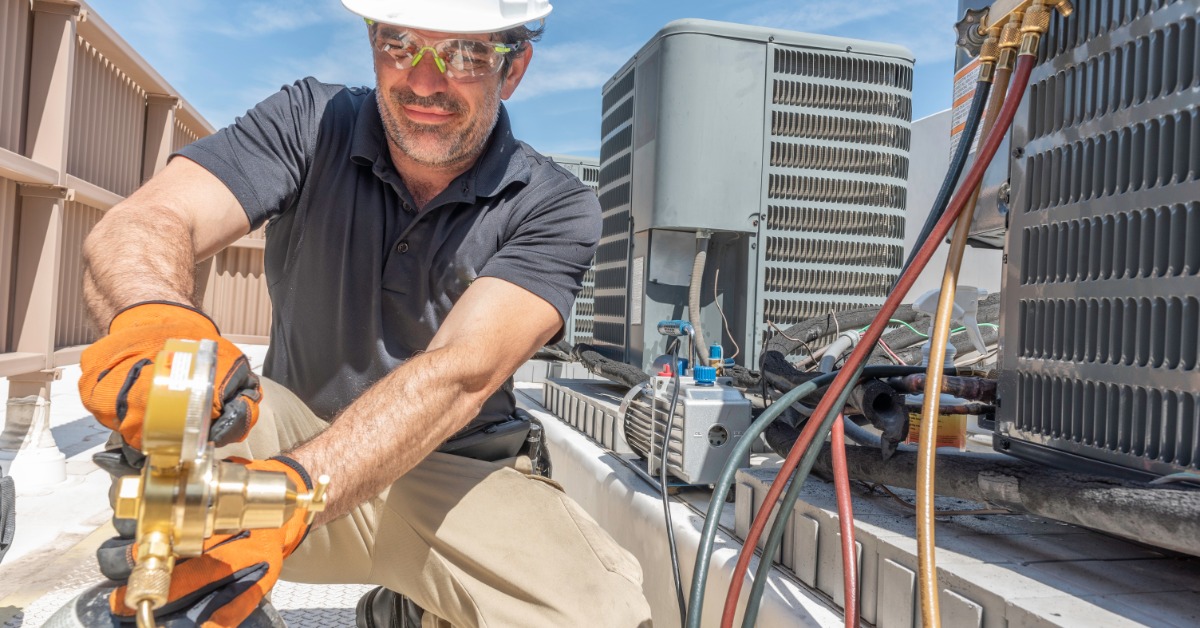
When refrigerant issues occur, avoid assuming it’s just a matter of adding more refrigerant. An air conditioner is designed as a closed, or sealed, loop that continuously circulates refrigerant; if the refrigerant level is low, this usually indicates a leak or another underlying issue. A licensed technician should inspect the system, confirm the correct refrigerant type, repair the root cause of the problem, and refill the refrigerant to the exact level specified by the manufacturer.
Repair vs. Replacement for Older Equipment
Repair still makes sense in some cases, especially when the system is newer, and the issue sits in an accessible spot. The decision shifts when an older R-22 unit needs major work, because reclaimed refrigerant costs more, and the rest of the system is likely near the end of its service life. A good replacement discussion considers the entire system, your comfort needs, and your budget over the next several years.
What the Refrigerant Transition Means for Costs
Older refrigerants often lead to higher repair bills when supply is tight, while newer equipment prices reflect updated design standards. At the same time, current product lines give homeowners a better path than sinking money into aging systems with shrinking parts and refrigerant options. The smartest move starts with diagnosis, then a straight comparison between repair costs today and ownership costs over the next few seasons.
Questions to Ask Before Service or Replacement
A service visit goes better when you ask focused questions. Ask which refrigerant your system uses and whether the charge is low because of a leak. Ask how equipment age affects the repair cost and your replacement options if you plan to upgrade.
- Which refrigerant does my system use?
- Did you find a leak, or only a low charge?
- Is this repair worth the cost at this system’s age?
- What refrigerant will a new system use?
- How will this choice affect future service costs?
When to Call a Professional
You should call a licensed HVAC professional any time cooling drops sharply, ice forms on the equipment, or a contractor mentions refrigerant loss. Refrigerant work is not a DIY job; homeowners should never open the sealed system or add refrigerant on their own.
The Right Next Step for Your Home
Refrigerants affect more than a label on the side of your condenser. They shape repair cost, replacement timing, environmental impact, and the long-term value of the system in your home. This complete guide to air refrigerants should serve only as a basis of information. For installation or repairs, leave it to the trained professionals.
Looking for expert AC installation contractors you can trust? Choose W.F. Smith for honest advice and a smooth upgrade built around your home’s long-term needs. If your current system uses an older refrigerant or is leaving you with costly repairs, our team will help you. Schedule your service with W.F. Smith and get professional support from your first estimate to final installation.

W.F. Smith was great. They worked very professionally and neatly. They were extremely knowledgeable about the equipment and all specific HVAC practices. Would recommend them to the world!