- 24/7 Emergency HVAC Repair
- Financing Available
- We Accept All Major Credit Cards
Why Is My AC or Furnace Leaking Water? Common Causes and When to Call for Repair
Why an AC Furnace Leaking Water Usually Starts With the Air Conditioner
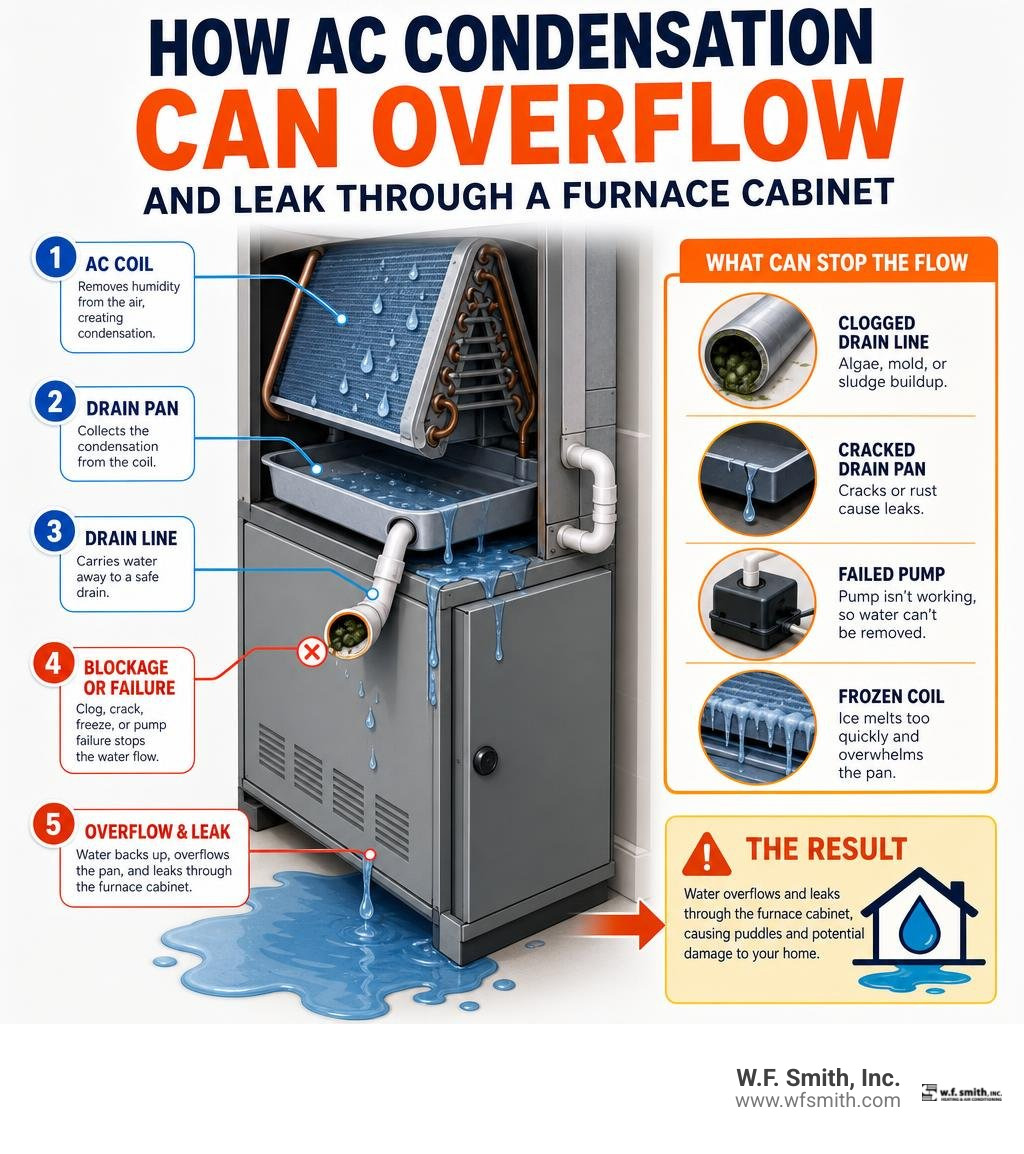
An AC furnace leaking water while the cooling is on usually points to an AC condensate problem, not a failed furnace. Your indoor AC coil sits above or near the furnace cabinet. As it removes humidity from the air, it creates water that should flow into a drain pan and out through a condensate line.
When that path is blocked, damaged, frozen, or unable to pump water away, the overflow can appear to come from the furnace.
- Most likely cause: A clogged condensate drain line, often from algae, mold, or sludge.
- Other possible causes: A cracked drain pan, failed condensate pump, or frozen evaporator coil that melts and overwhelms the pan.
- What to do now: Turn off the AC, protect nearby belongings, and dry pooled water. Do not keep operating the system if water is near electrical components.
- Why it matters: A central AC can create 5 to 20 gallons of condensation each day in humid weather. Wet materials can begin supporting mold growth within 24 to 48 hours.
The puddle may look alarming, but the source is often a drainage issue in the shared indoor HVAC system. Quick action can help protect your furnace controls, basement, and budget.
Emergency Protocol: What to Do When Water Appears
Finding an unexpected puddle around your heating and cooling equipment is enough to make any homeowner freeze in their tracks. Water spreads quickly and can damage expensive property. When you notice an AC furnace leaking water, taking immediate, systematic action protects both your home and your HVAC equipment from serious harm.
Here is the step-by-step emergency protocol our team recommends following the moment you spot liquid beneath your equipment:
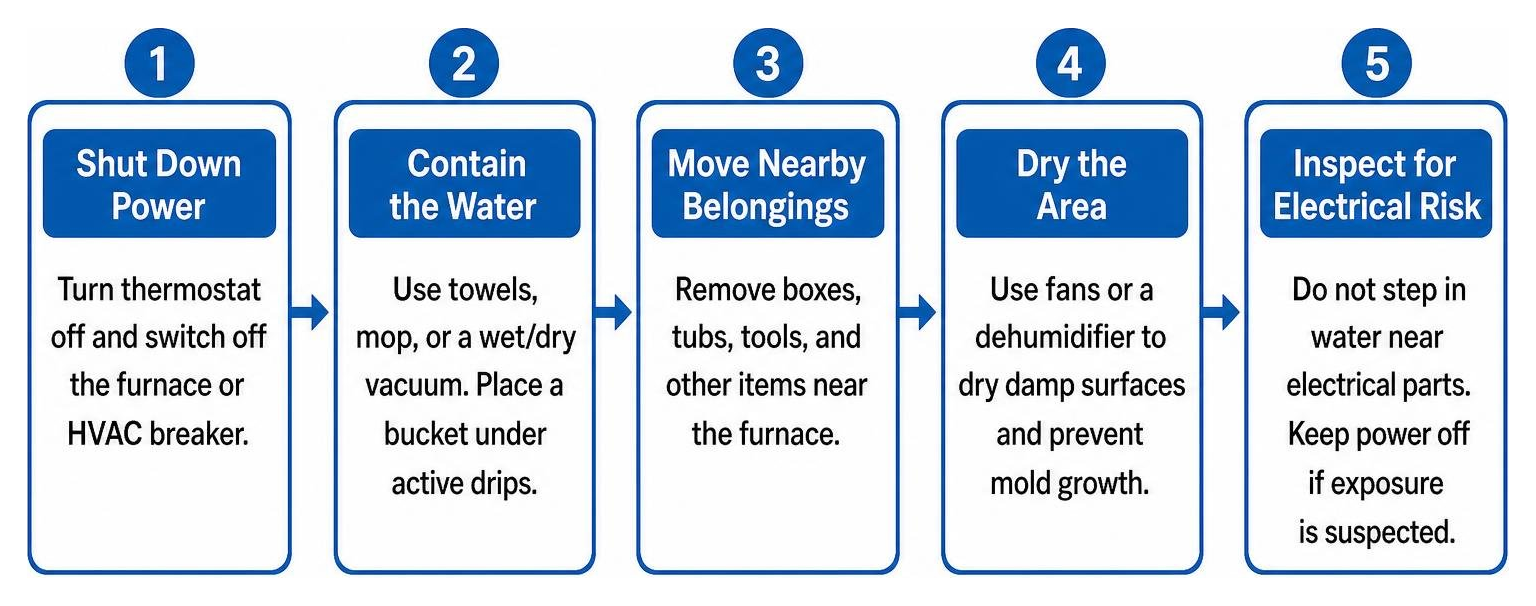
- Shut Down System Power Immediately: Turn your thermostat to the “Off” position right away. Next, flip the electrical safety switch located directly on the side of your furnace cabinet, or switch off the dedicated HVAC breaker at your main breaker panel. Cutting power stops the AC from producing fresh condensation and reduces the risk of electrical short circuits.
- Contain the Water Spillage: Grab old towels, a mop, or a wet/dry shop vacuum to contain and collect standing water. If water is actively dripping from the cabinet, place a wide plastic bucket directly under the leak.
- Move Nearby Personal Belongings: Clear away cardboard boxes, storage tubs, tools, or furniture sitting near the base of your furnace. Water travels fast across concrete basements and subfloors, seeping behind baseboards long before it becomes obvious.
- Dry Out the Surrounding Area Thoroughly: Use fans or a dehumidifier to dry any damp drywall, subflooring, or carpet padding. Moisture left on building materials can support mold growth within 24 to 48 hours.
- Inspect for Electrical Exposure: Never step into standing water if electrical wires, control boards, or power outlets are submerged. If liquid has entered the lower furnace compartment where the control board and blower motor reside, leave the system powered down.
A blocked condensate line is one of the most common reasons clear water collects around indoor equipment. Our explanation of why your AC is leaking water can help you recognize the warning signs while you wait for a safe repair.
Running an AC while water pools around the unit can damage electronic circuitry or cause structural water damage. Shutting down the system buys you time to identify the root cause without risking further damage.
Why Is My AC Furnace Leaking Water During Summer?
It might feel illogical to talk about furnace problems during the hottest days of summer. After all, your furnace is not actively heating your home. So why is there water pooling around the bottom of the furnace cabinet?
The answer lies in how the equipment works together. In modern central HVAC setups, your furnace and central AC share critical cabinet housing, blower fan components, and ductwork. The AC evaporator coil, the cold metal component responsible for absorbing heat and pulling moisture out of your indoor air, is installed directly on top of or immediately adjacent to the furnace’s sheet metal blower cabinet.
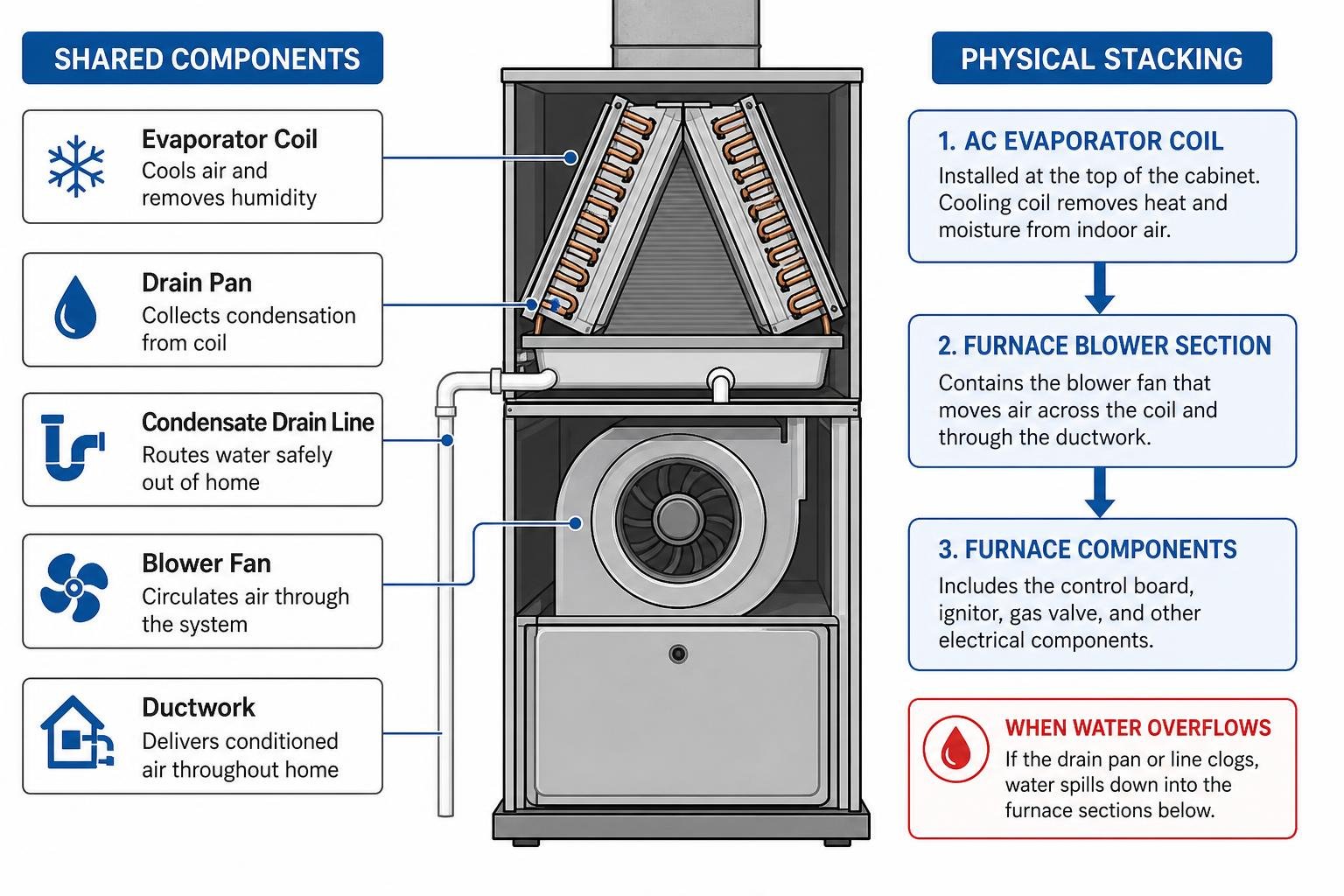
During intense summer humidity, your cooling system acts as a high-volume dehumidifier. A typical residential central AC unit extracts anywhere from 5 to 20 gallons of water per day from indoor air. All of that moisture drips down the fins of the evaporator coil into a plastic or metal primary drain pan, which routes the liquid safely out of your home through a 3/4-inch PVC condensate line.
When liquid accumulates inside the cabinet because the drainage path fails, gravity takes over. The trapped water spills out of the drain pan and trickles down through the internal furnace components.
How Water Damages Your Furnace Cabinet
Water dripping down through an HVAC cabinet is not just an inconvenience. Condensation can contribute to corrosion and electrical damage inside the heating system:
- Heat Exchanger Oxidation: Water contacting cold steel heat exchangers can accelerate rust and surface oxidation, potentially shortening the lifespan of your heating system.
- Circuit Board Short-Circuits: Moisture entering the control board wiring can burn out transformers, blow fuses, or damage the main integrated furnace control board.
- Blower Motor Damage: Water pooling in the bottom of the blower compartment can damage the blower motor and its electrical components.
- Drain Pan Stress: Years of winter heating followed by summer cooling can subject plastic condensate pans to repeated thermal expansion and contraction, eventually producing hairline fractures and leaks.
If water may have reached electrical components or the leak keeps returning, the safest next step is to have an HVAC technician inspect the system.
Primary Causes of an AC Furnace Leaking Water
Understanding why an AC furnace leaking water occurs starts with looking at the condensate evacuation path. While multiple failures can cause an overflow, these four primary culprits account for nearly all summer HVAC water issues:
1. Clogged Condensate Drain Line
A blocked drain pipe is a common cause of furnace water leaks during the cooling season. Because condensate drain lines carry warm, dark moisture continuously, they can collect algae, mold, fungus, and dust buildup. Over time, this mixture can form a thick sludge plug inside the standard 3/4-inch PVC pipe or drain trap. Once the path is blocked, new water backs up into the pan and cascades over the edges onto your furnace.
2. Dirty Air Filters and Airflow Restrictions
A common cause of water leaks is a neglected air filter. When an air filter becomes coated in dust and pet hair, it restricts airflow across the AC evaporator coil. Without sufficient warm indoor air moving across the coil, the refrigerant inside cannot absorb heat properly.
As a result, the coil can drop below freezing temperatures, turning ambient moisture into ice. When the ice eventually thaws, it can flood the drain pan faster than the pipe can drain.
A frozen coil deserves prompt attention because it may point to an airflow or refrigerant issue. See our guidance on what to do when your A/C freezes up for safe first steps before restarting the equipment.
3. Rusted or Cracked Drain Pans
The primary drain pan catches cold condensate directly beneath the evaporator coil. Older systems often feature metal pans that rust out over time, leaving holes that allow water to drop directly into the furnace. Modern systems often feature plastic drain pans, but thermal stress can cause hidden hairline cracks.
4. Malfunctioning Condensate Pump
If your furnace sits in a basement or an area where gravity cannot drain water to the outdoors, your system uses an electric condensate pump to lift water up and out of your home. If the pump motor burns out, the float switch fails, or the check valve jams, the pump reservoir can overflow onto your floor.
Water Leak vs. Refrigerant Leak Diagnostics
When homeowners see liquid pooling near their HVAC system, a common fear is that refrigerant is leaking. Water leaks and refrigerant leaks are different issues that require different responses.
Here is a quick reference table to help you identify what type of leak you are dealing with:
| Symptom / Characteristic | Condensate Water Leak | Refrigerant Leak |
|---|---|---|
| Physical Appearance | Clear, thin water; pools around base | Oily or greasy residue on copper lines or cabinet |
| Odor | Musty or odorless | May have a faint chemical odor |
| Accompanying Sound | Splashing, dripping, or trickling water | Hissing, whistling, or bubbling sound |
| Cooling Performance | System may cool normally until overflow occurs | System loses cooling capacity or blows warm air |
| Primary Root Cause | Clogged PVC line, broken pump, or iced coil | Corroded copper coils or pinhole line leaks |
| Immediate Concern | Water damage and mold growth | Compressor damage and loss of cooling |
If you observe greasy spots on copper lines along with reduced cooling performance, turn off the system and schedule certified AC refrigerant recharging. If the liquid is clear and odorless, the problem is more likely a condensate overflow.
Diagnostic and Repair Guide for HVAC Water Leaks
Before jumping into repairs, you need to systematically diagnose where the water is escaping. Put on protective gloves, grab a reliable flashlight, and follow these diagnostic steps:
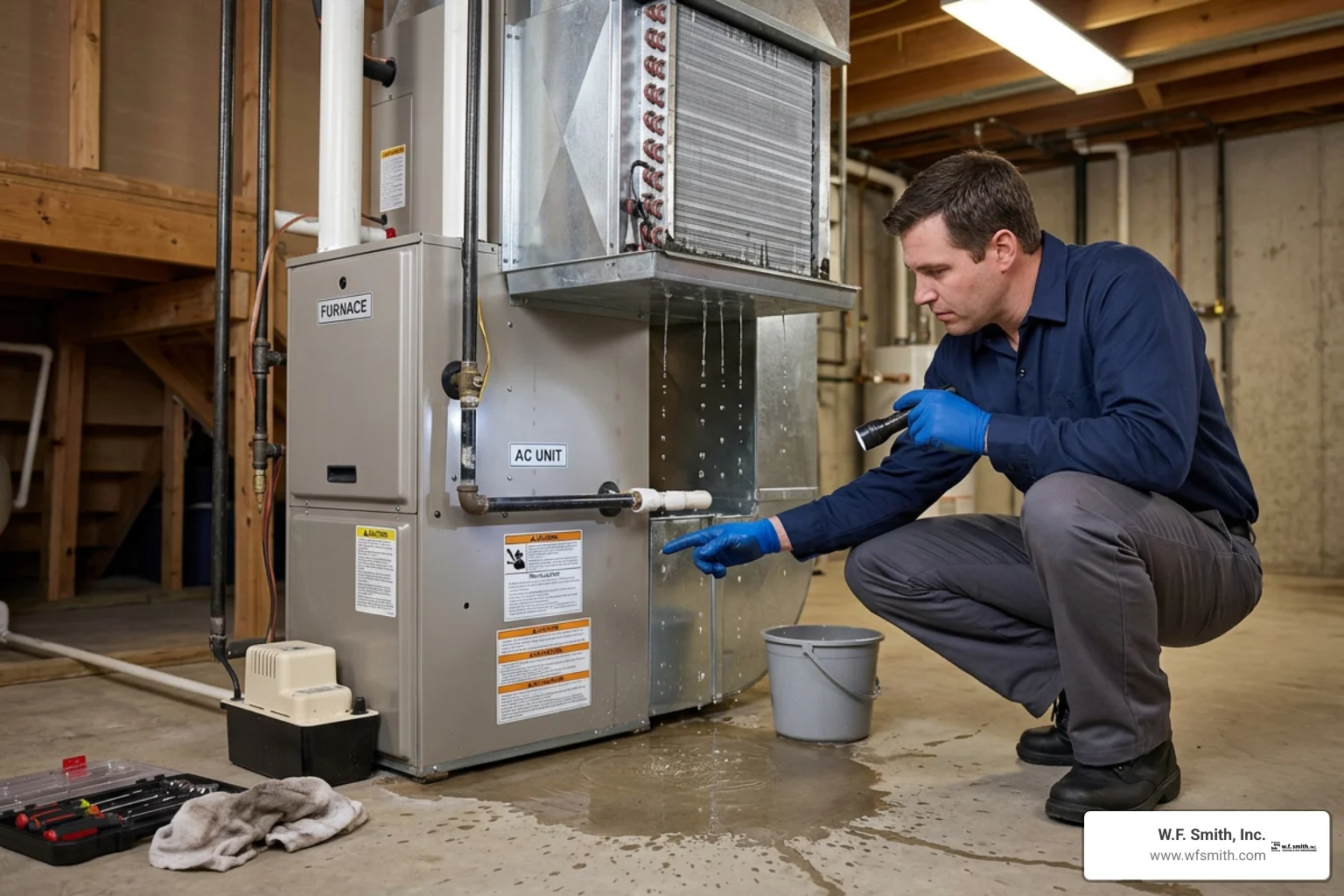
- Perform a Visual Pan Inspection: Look into the primary drain pan beneath the evaporator coil. If it is filled with standing water, you may be dealing with a clogged drain line or pump failure.
- Conduct a Food Coloring Dye Test: If the pan looks dry but water is pooling below the unit, pour water mixed with a few drops of red or blue food coloring into the drain pan. Watch closely with your flashlight to spot hairline pan cracks or seam leaks.
- Inspect the Evaporator Coil for Ice: Open the access door if it is safe to do so, or inspect the copper refrigerant lines leading into the cabinet. If you see white frost or ice buildup, the leak may be caused by thawing ice.
- Test the Condensate Pump Motor: If your setup includes a condensate pump, manually pour water into the pump reservoir. The float switch should rise and trigger the motor. If the motor hums without pumping or remains silent, the pump needs repair or replacement.
If you are unsure about the source of the leak, keep the system off and arrange professional service rather than opening sealed components or handling electrical parts.
Troubleshooting Steps for an AC Furnace Leaking Water
If you have isolated the problem to a clogged PVC condensate drain line, you can often clear light organic blockages yourself using simple tools.
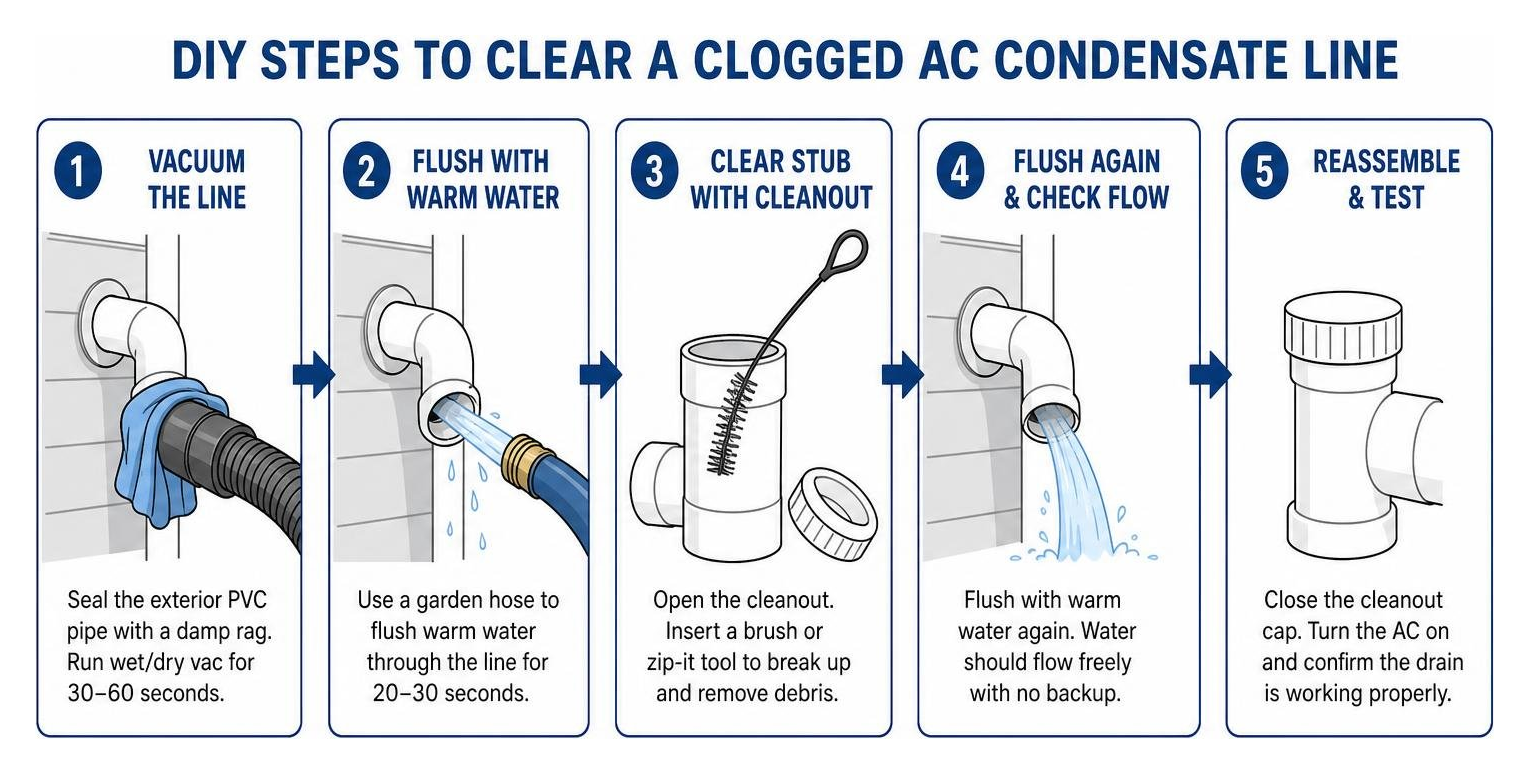
Here is how to safely clear a clogged drain line step-by-step:
Step 1: Extract the Clog with a Wet/Dry Shop Vacuum
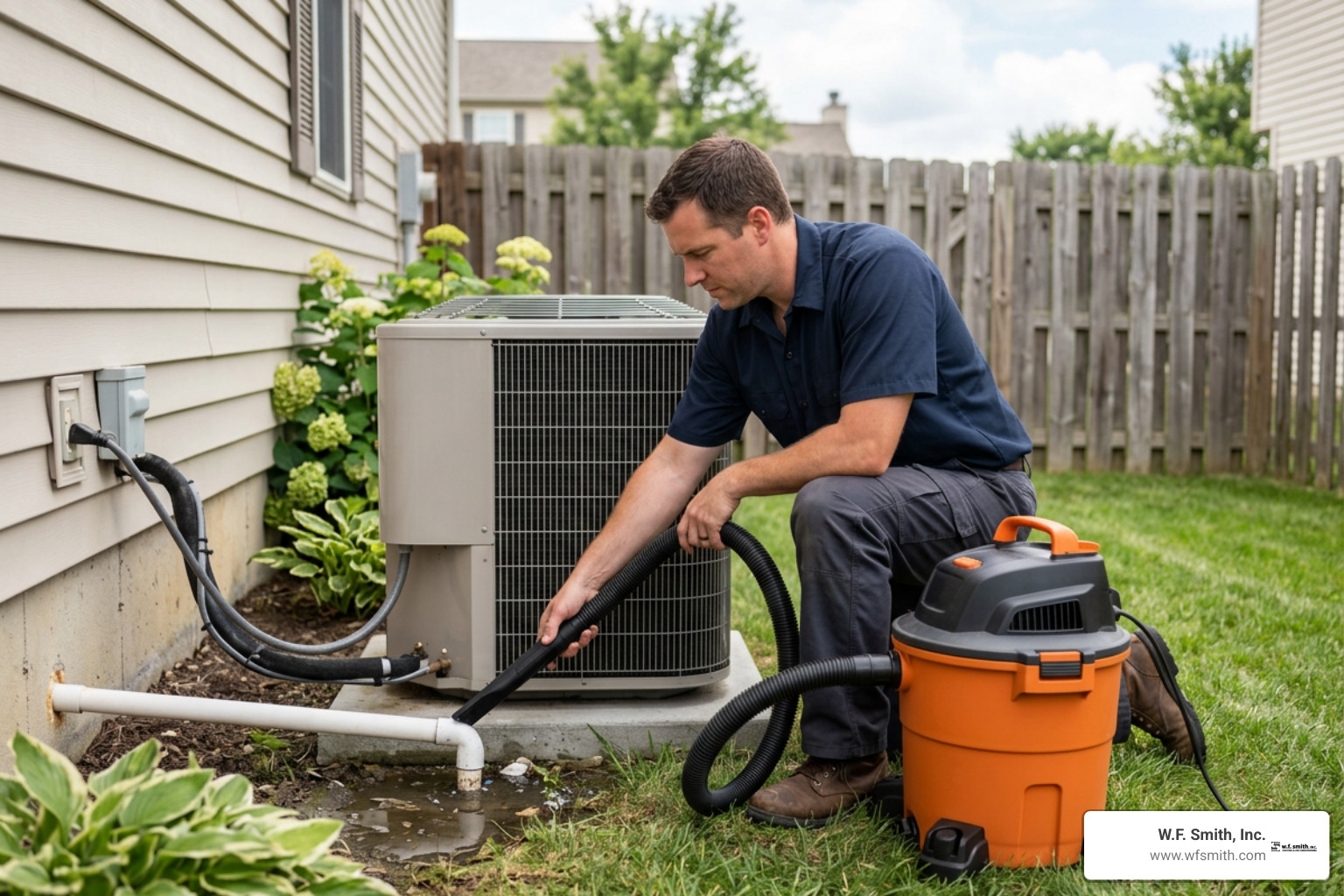
Go to the exterior of your home where the 3/4-inch PVC drain pipe exits through your foundation wall. Wrap a damp rag around the pipe opening and press your wet/dry shop vacuum hose tightly against it to create an airtight seal. Turn the shop vac on for 30 to 60 seconds. This method can pull out algae plugs and trapped water without pushing debris deeper into your home’s indoor plumbing.
Step 2: Clear Internal Access Fittings
Locate the T-shaped PVC cleanout port on the drain line near your furnace cabinet. Remove the unglued plastic cap. Use a flexible bottle brush or pipe cleaner to gently scrub out buildup from the immediate trap fittings.
Step 3: Flush the Line with Vinegar
Slowly pour one to two cups of distilled white vinegar down the cleanout access port. Let the vinegar sit for 30 minutes to break down residual buildup. Follow up with clean warm water to confirm that liquid drains freely to the outdoors.
Step 4: Consider Installing a Safety Float Switch
If your system lacks a safety shut-off switch, ask a technician to install a condensate float switch. This device installs directly into your secondary drain pan or PVC line. If water backs up, the float rises and automatically shuts down power to the AC before liquid can overflow onto your furnace.
If clearing the line does not restore proper drainage, timely air conditioner repair can help prevent water from damaging internal electrical components.
Preventive HVAC Maintenance and Seasonal Care
The best way to address an AC furnace leaking water is to prevent line clogs and pan overflows before they occur. Incorporating a few simple habits into your regular home maintenance routine keeps your cooling system running smoothly all summer long.
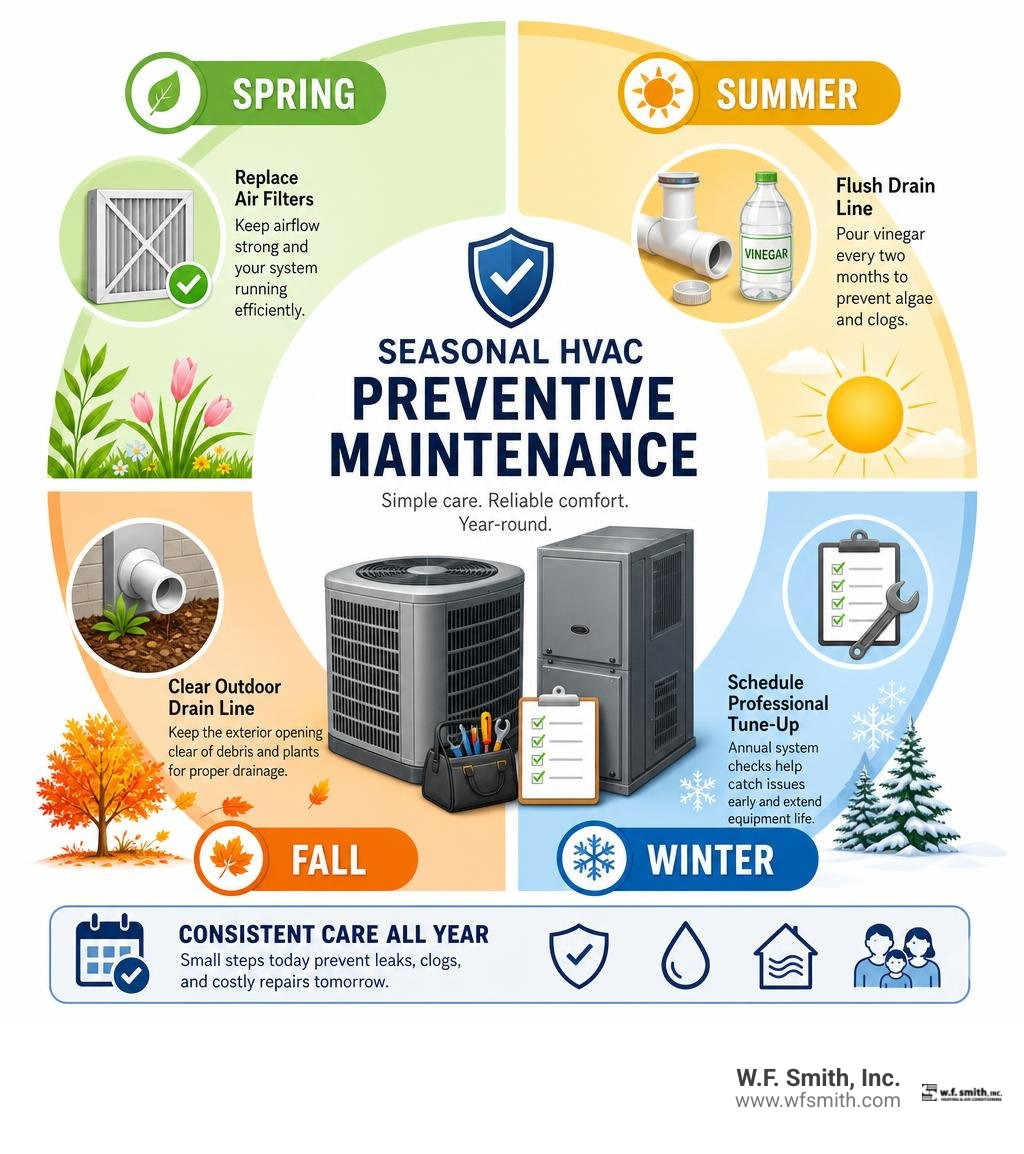
- Stick to Filter Change Schedules: Replace standard 1-inch furnace air filters every 30 to 60 days during peak summer and winter months. High-efficiency pleated filters should be inspected monthly and replaced as recommended by the manufacturer.
- Perform Routine Vinegar Flushes: During the cooling season, periodically pour white vinegar into the condensate cleanout T-pipe to help limit buildup in the drain line.
- Clear Outdoor Termination Lines: Periodically check the exterior end of your PVC drain pipe. Keep mulch, garden soil, grass clippings, and plant growth away from the pipe opening to prevent external blockages.
- Schedule Pre-Season Professional Care: Have a certified technician perform annual system checks every spring. A comprehensive tune-up includes cleaning the indoor evaporator coil, checking refrigerant pressures, testing pump float switches, and flushing primary drain lines.
Regular air conditioner maintenance helps our team catch drainage, airflow, and pump problems before they lead to a leak.
Frequently Asked Questions About Furnace Leaks
Is it safe to keep running my AC if the furnace is leaking water?
No, it is not safe to keep running your AC while water is leaking. Continuing to run the system can create additional condensate, accelerate structural floor damage, support mold growth, and risk dripping into live furnace control circuitry.
Furthermore, if the leak is caused by an iced-over evaporator coil, running the system can place added strain on the cooling equipment. Turn off your system at the thermostat immediately until the source of the leak is repaired.
How do I know if the leak is from a clogged drain, a cracked pan, or a frozen coil?
You can identify the source by conducting three simple visual tests:
- Check for Ice (Frozen Coil): Turn off the system and inspect the copper lines entering the indoor cabinet. If you see thick white frost, ice chunks, or heavy condensation dripping off the outside sheet metal, your coil may be frozen. As it thaws, it can overwhelm the drain system.
- Check Water Level in Pan (Clogged Drain): Look inside the drain pan under the coil. If the pan is filled with standing water that is not moving down the PVC pipe, your drain line or condensate pump may be clogged.
- Dye Test the Reservoir (Cracked Pan): If the primary pan is empty but water continues pooling directly beneath the cabinet floor, the drain pan may have hairline rust holes or thermal stress cracks letting liquid leak straight down.
If you are unsure about what you are seeing, leave the system off and have a qualified HVAC technician diagnose the problem.
When should I call a professional technician instead of fixing it myself?
While vacuuming an exterior PVC pipe can be a reasonable DIY step, call a certified HVAC technician immediately under any of the following circumstances:
- Water Touched Electrical Wiring: Liquid has dripped onto the furnace circuit board, transformer, or blower motor wiring.
- Recurring Drain Blockages: The drain line clogs again within days or weeks of being cleared, which may indicate a deeper obstruction or improper pipe pitch.
- Suspected Refrigerant Leaks: You hear continuous hissing, notice oily residue on copper connections, or discover ice forming even with a fresh air filter.
- Cracked Internal Drain Pan: Replacing an integrated primary drain pan may require removing plenum ductwork and working around refrigeration components.
- Dead Condensate Pump: The pump fails to run despite receiving power.
Conclusion
Discovering an AC furnace leaking water can cause a moment of panic, but understanding how your system works can keep the situation in perspective. In many cases, a summer furnace leak is an AC condensate drainage issue looking for an escape path.
By shutting off system power, containing standing water, and systematically diagnosing the cause, you can stop minor drain clogs from turning into major property repairs. Whether the fix requires a filter change, a shop-vac extraction, or professional component replacement, addressing moisture issues right away helps protect your indoor air quality, subfloors, and heating system.
When DIY steps are not enough, the W.F. Smith, Inc. team brings more than 80 years of experience to homeowners across Greater Philadelphia, with 24/7 emergency support and a 100% satisfaction guarantee. If you need help resolving a persistent leak, contact our professional AC repair technicians to schedule an expert diagnostic visit.

W.F. Smith was great. They worked very professionally and neatly. They were extremely knowledgeable about the equipment and all specific HVAC practices. Would recommend them to the world!