- 24/7 Emergency HVAC Repair
- Financing Available
- We Accept All Major Credit Cards
Annual Furnace Maintenance: A Fall Checklist for Philadelphia Homeowners
Annual Furnace Maintenance Starts With a Simple Fall Plan
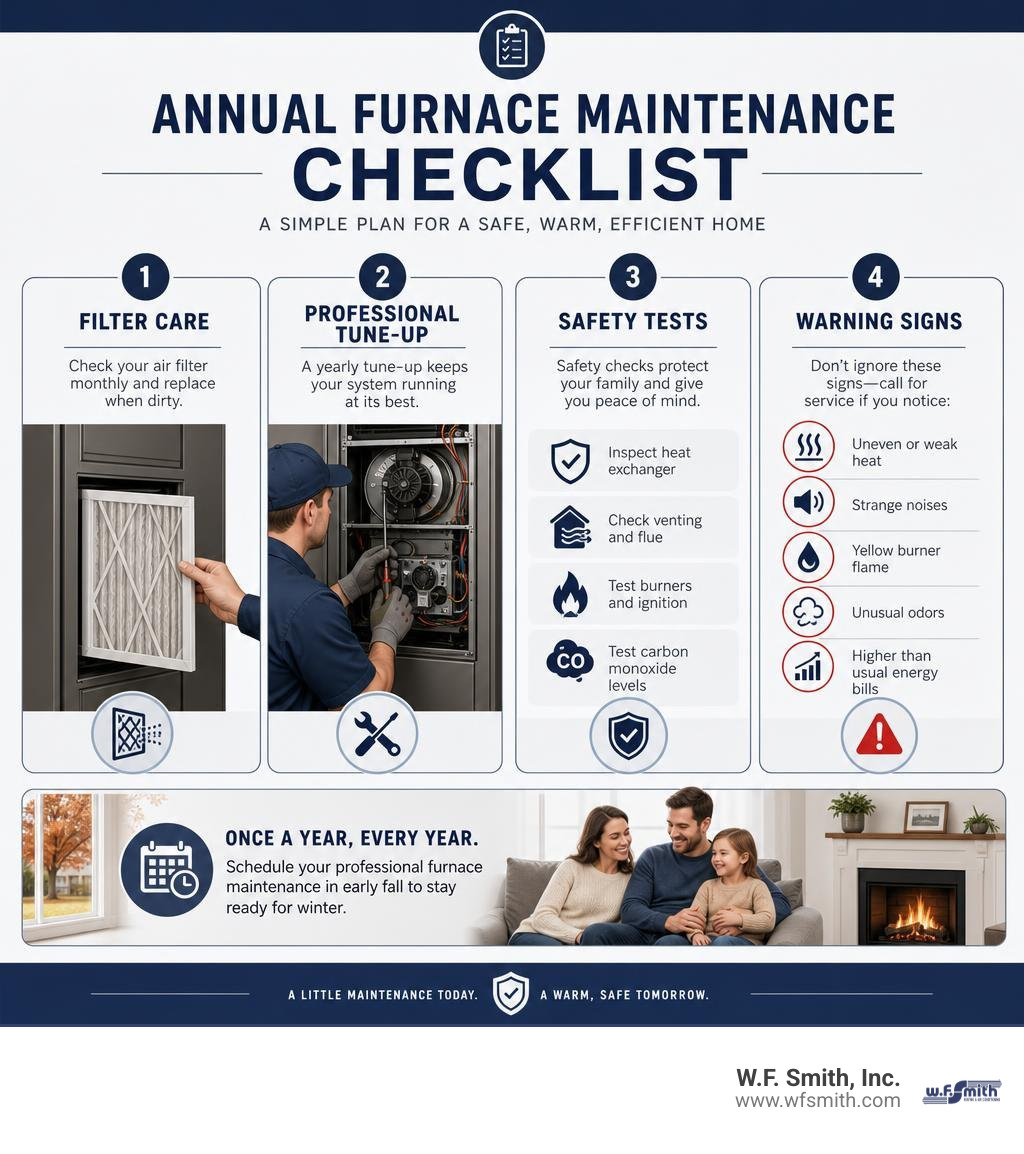
Schedule a professional furnace tune-up once a year, ideally in early fall, and check your air filter monthly during heating season. A thorough visit should include safety testing, heat exchanger and vent inspection, burner and blower checks, airflow measurements, and carbon monoxide testing. This routine can help prevent a cold-weather breakdown, reduce heating costs, and catch safety issues before your family depends on the system every day.
For most homeowners, annual maintenance costs about $90 to $250. That is often far less than an unexpected furnace repair, which commonly runs $300 to $500. It can also help a well-maintained furnace reach its expected 15- to 20-year service life.
This guide explains what belongs on your maintenance checklist, what you can safely do yourself, and when it is time to call a qualified HVAC technician.
Why Annual Furnace Maintenance Is Essential for Safety and Efficiency
Winter weather can place intense demands on your home’s heating equipment. When freezing temperatures arrive, you rely on your furnace to run smoothly for hours at a time. Routine preventative care helps ensure the equipment can handle that workload without driving up utility bills or posing health risks to your family.
Neglected systems must work harder to generate and circulate warm air. Accumulated dust on the blower motor, soot on the burners, and dirty mechanical components can lengthen heating cycles and make it harder to reach your thermostat’s target temperature.
The W.F. Smith team’s furnace maintenance tips can help homeowners build a practical routine for filter care, thermostat checks, and seasonal preparation.
If your furnace begins acting differently, these warning signs that your furnace needs a tune-up can help you recognize when to schedule service before a small issue becomes an urgent repair.
The Core Benefits of Annual Furnace Maintenance
Investing in routine seasonal service provides several practical advantages for your home comfort and your budget:
- Lower Monthly Heating Bills: Clean burners and well-calibrated airflow allow the furnace to transfer heat efficiently into your living spaces, which can reduce fuel consumption.
- Extended Equipment Lifespan: A well-maintained gas furnace typically lasts 15 to 20 years. In contrast, neglected systems can experience major mechanical failures much earlier.
- Protection of Manufacturer Warranties: Many equipment brands require documented proof of yearly professional care. If a critical part fails, having service receipts can support a warranty claim.
- Fewer Emergency Breakdowns: Catching worn belts, failing capacitors, or restricted flame sensors early can prevent sudden heating loss on the coldest nights of the year.
Critical Safety Checks and Carbon Monoxide Prevention
While energy savings are helpful, safety is the most critical reason to service your heating system. Natural gas and propane furnaces generate heat through controlled combustion, which naturally produces combustion byproducts, including carbon monoxide (CO).
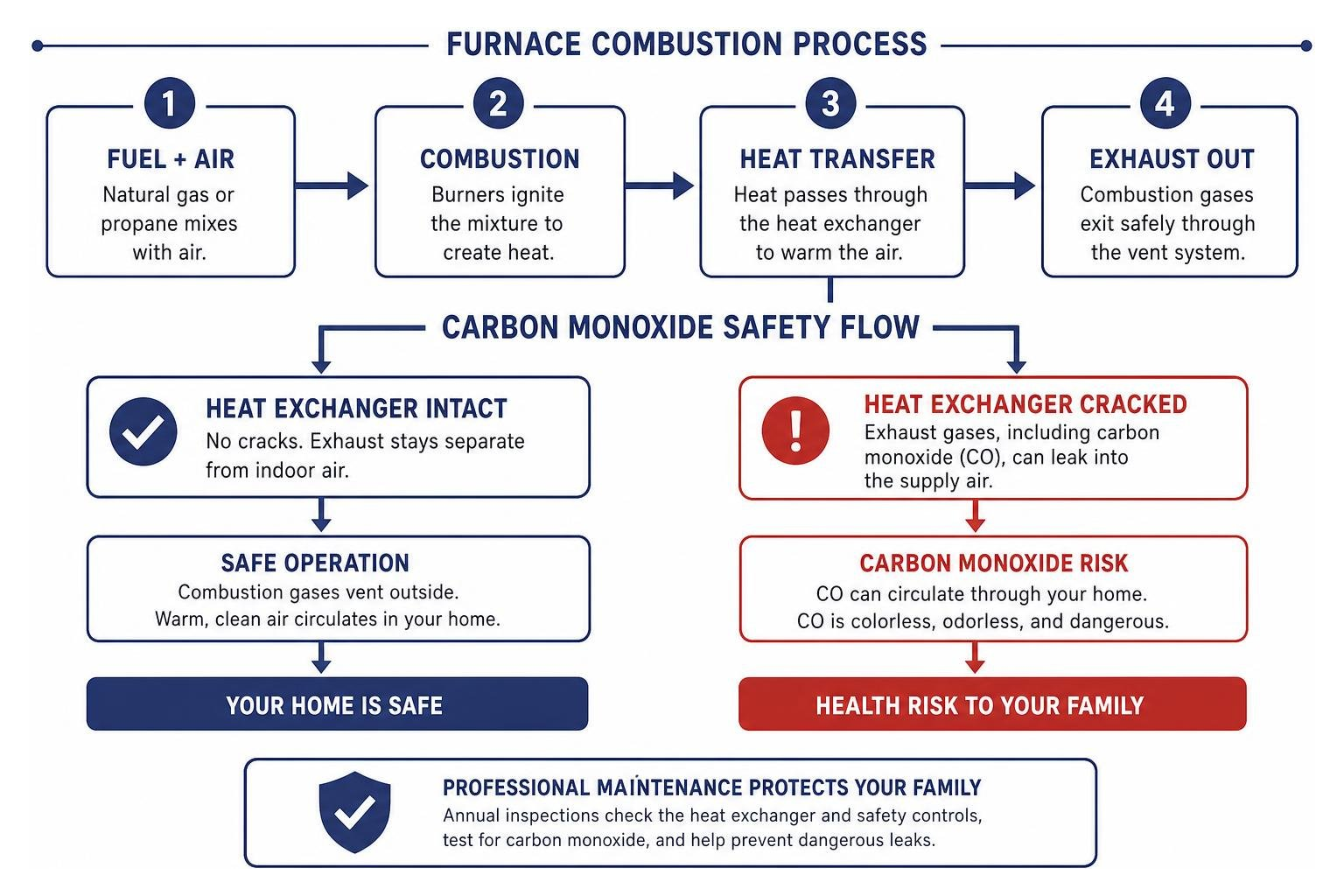
The primary barrier between toxic exhaust gases and your indoor breathing air is the furnace heat exchanger. Over years of operation, constant expansion and contraction can cause metal fatigue, resulting in microscopic hairline cracks. When a heat exchanger cracks, dangerous carbon monoxide can seep directly into the supply airstream and circulate through your home.
During a professional inspection, HVAC technicians test safety mechanisms such as flame roll-out switches, high-limit switches, and draft sensors. Learning to spot changes in furnace performance helps you identify potential safety risks before they become hazardous emergencies.
The Multi-Point Professional Furnace Tune-Up Checklist
A comprehensive professional service visit goes far beyond a quick visual check. It is an extensive technical evaluation that typically takes between one and two hours to complete properly.
What to Expect During Your Professional Annual Furnace Maintenance
When you schedule professional furnace maintenance service, the W.F. Smith team works through major mechanical and electrical checks to help prepare your system for the heating season.
- Thermostat Calibration: Verifying that your thermostat reads room temperature accurately and signals the furnace control board correctly.
- Burner and Ignition Assembly Cleaning: Removing soot, dust, and debris from the burner tubes and ignition components to support clean, smooth ignition.
- Flame Sensor Service: Gently cleaning oxidation from the flame sensor rod. A dirty flame sensor is a common cause of furnace lockouts.
- Blower Assembly Inspection and Cleaning: Inspecting the blower motor, testing the run capacitor, brushing dust from the squirrel cage wheel blades, and checking blower belt tension on belt-driven models.
- Electrical Tightening and Multimeter Diagnostics: Checking electrical wiring connections, testing line voltage, and measuring operating motor amperage against manufacturer nameplate ratings.
- Airflow and Temperature Rise Calculation: Measuring the temperature difference between the return air duct and supply plenum to ensure it matches the equipment design specifications.
Safety Controls, Venting, and Combustion Testing
Professional service also involves specialized combustion and ventilation testing that requires calibrated instrumentation. HVAC technicians check the chimney or PVC exhaust piping for blockages, rust, or improper pitch to help ensure exhaust gases flow outside rather than backdrafting into the living space.
Modern diagnostic tools allow HVAC technicians to measure flue gas temperatures and carbon monoxide levels within the exhaust stream. This combustion analysis helps confirm that your heating system is burning fuel safely and operating as intended.
DIY Upkeep vs. Professional Service: What Homeowners Can Handle
Home comfort maintenance works best as a shared responsibility. While complex diagnostic steps require technical training and specialized equipment, regular homeowner upkeep helps prevent everyday airflow issues from developing between service visits.
Homeowners can stay ahead of routine concerns by checking filters, listening for unusual sounds, and watching for changes in heating performance between annual appointments.
Monthly Air Filter Care and Home Inspection Routine
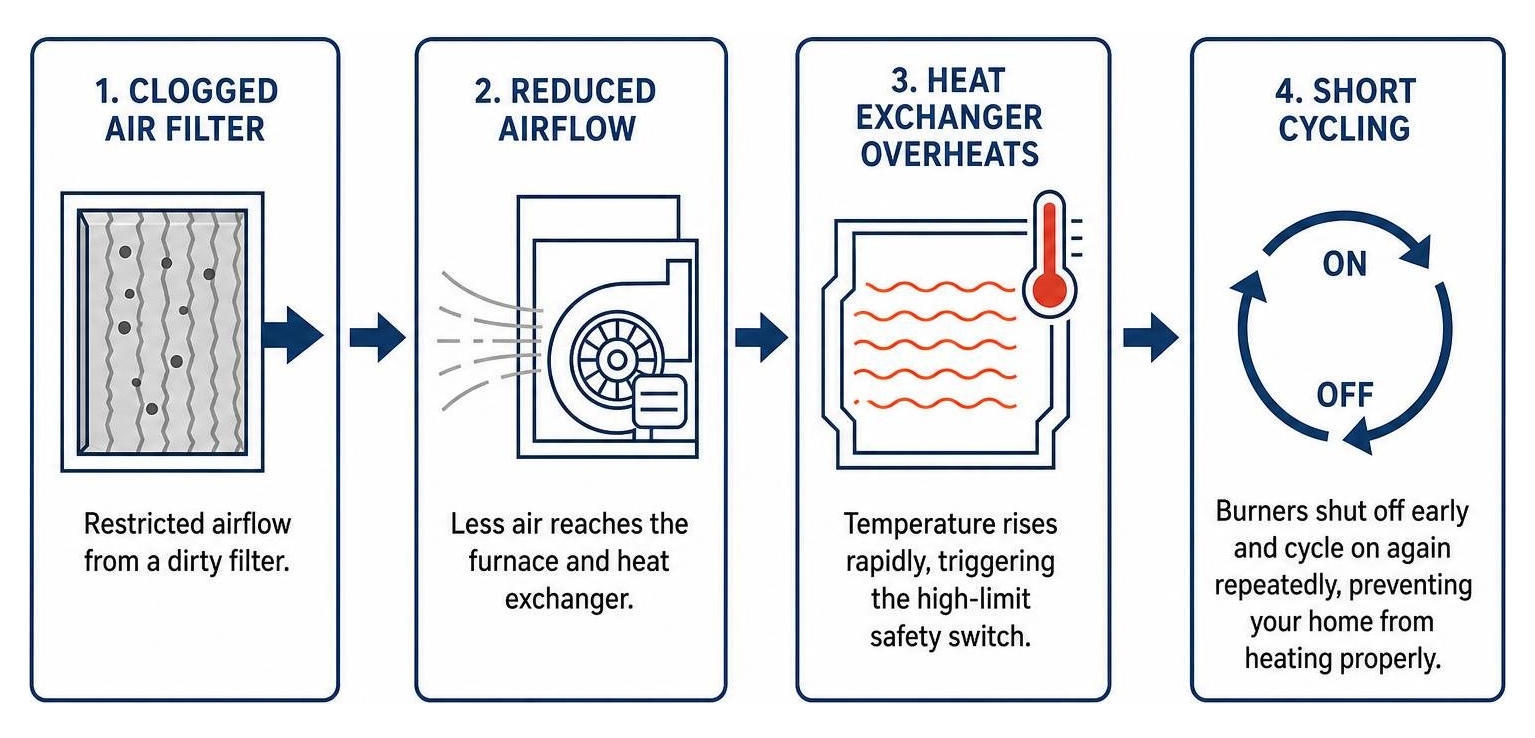
Your primary DIY responsibility is monitoring the air filter. A clogged filter is one of the most frequent causes of furnace short-cycling: restricted airflow causes internal heat to build rapidly, tripping the high-limit safety switch and shutting down the burners before your home is warm.
Here is a practical checklist you can perform in under 15 minutes each month:
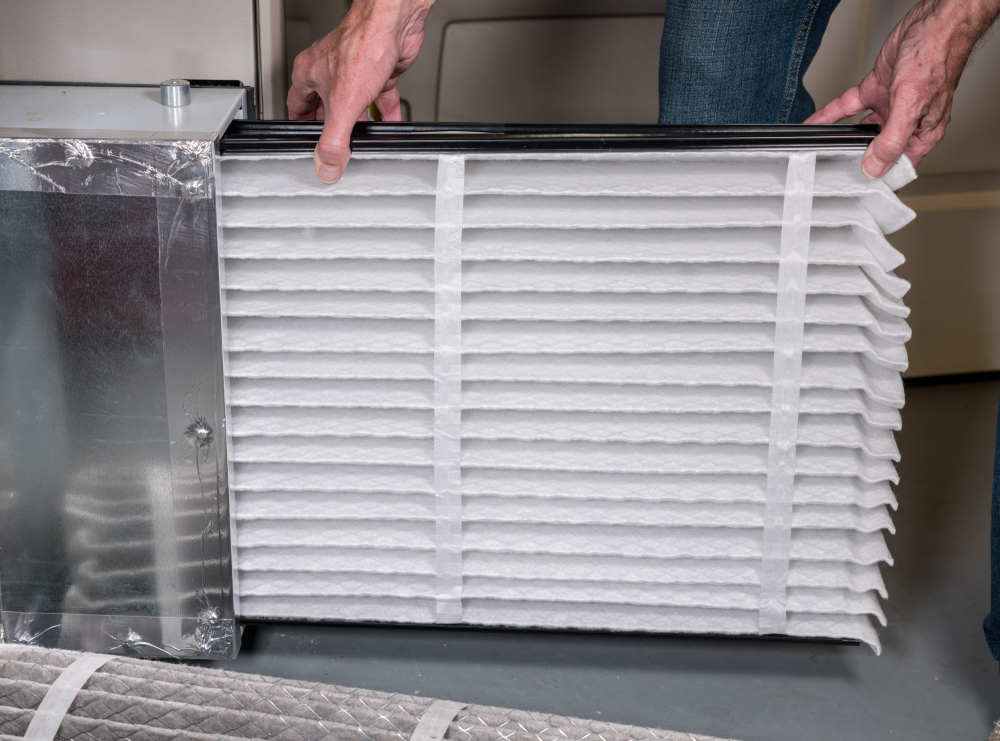
- Check the Air Filter: Inspect standard 1-inch filters every 30 days during active heating months, replacing them every 1 to 3 months. For thick 4- to 5-inch media filters, inspect every few months and replace them every 6 to 12 months. When inserting a new filter, ensure the airflow arrow points toward the furnace blower cabinet.
- Select Appropriate Filter Ratings: For most residential systems, a MERV rating between 8 and 11 balances strong particle capture with healthy system airflow. Avoid ultra-restrictive high-MERV filters unless your system’s blower is designed to handle the higher static pressure drop.
- Clear Clearance Zones: Maintain at least three feet of open clearance around your furnace. Never store paint cans, gasoline, cardboard boxes, or laundry items near the combustion chamber.
- Check Supply and Return Grilles: Walk through your home to verify that room registers are open and unobstructed by furniture, drapes, or rugs. Closing vents in unused rooms creates backpressure that strains the blower motor.
- Test Alarms and Thermostats: Test your carbon monoxide and smoke alarms monthly, and change thermostat batteries annually before cold weather sets in.
Tasks That Require Certified HVAC Technicians
While keeping your furnace clean and changing filters is straightforward DIY work, some tasks must always be left to certified HVAC professionals due to safety risks:
- Gas Pressure Adjustments: Setting manifold gas pressure requires a sensitive digital manometer. Incorrect gas pressure can lead to soot buildup, cracked heat exchangers, or delayed ignition.
- Electrical Diagnostics and Control Board Testing: Probing live high-voltage circuits and capacitor terminals presents serious electrical shock risks.
- Heat Exchanger Integrity Testing: Inspecting heat exchangers for micro-fractures requires specialized combustion analyzers and flexible inspection cameras.
- Flue Gas Analysis: Measuring toxic exhaust components requires calibrated combustion analyzers.
- Internal Gas Valve Service: Servicing fuel lines requires professional pipe fitting and leak detection tools to prevent dangerous gas leaks.
If you notice unusual system behavior, schedule a professional inspection rather than attempting gas or electrical repairs yourself.
Cost Breakdown: Routine Tune-Up vs. Emergency Breakdown
Skipping annual service might seem like a way to save money, but deferred maintenance usually leads to higher expenses over time. A small preventative tune-up investment can help you avoid major mid-winter repair bills.
| Service Category | Typical Cost Range | Primary Purpose & Financial Impact |
|---|---|---|
| Annual Professional Tune-Up | $90 to $250 | Cleans critical parts, verifies safety controls, supports efficient operation, and helps keep warranties active. |
| Standard Emergency Repair | $300 to $500 | Fixes sudden breakdowns such as failed blower motors, cracked igniters, or stuck gas valves during cold spells. |
| Major Component Replacement | $800 to $1,500 | Replaces critical parts such as cracked heat exchangers or damaged inducer assemblies. |
| Full Heating System Replacement | $3,000 to $7,000 | Installs a new heating system when an aging unit fails prematurely. |
When an unexpected breakdown leaves you without heat, furnace repair services can help restore safe, reliable operation.
If an older system has severe structural damage or repeated failures, furnace replacement services may be more cost-effective than continuing to repair obsolete equipment.
Timing and Red Flags: When to Schedule Service
The best time to book your furnace tune-up is early fall, between late August and October, before the first cold snap arrives. Scheduling early gives you access to flexible appointment times, lets you address worn parts at your convenience, and helps ensure your system is ready before freezing temperatures hit.
Homeowners in Bucks and Montgomery County can arrange seasonal service through Bensalem, PA, furnace tune-ups or Willow Grove, PA, furnace tune-ups to prepare their homes before winter.
Watch for these warning signs that indicate your furnace needs prompt professional service:
- Yellow or Flickering Burner Flames: Burner flames should burn a crisp, steady blue. A yellow or orange flame can indicate incomplete combustion, dirty burners, or a potential carbon monoxide issue.
- Loud or Unusual Mechanical Sounds: Squealing can indicate a failing motor bearing or loose belt, banging or booming can point to delayed ignition, and metal rattling often signals loose blower wheel components.
- Short-Cycling: If your furnace turns on and off every few minutes without warming your home, it may be overheating or experiencing flame sensor failures.
- Persistent Gas or Chemical Odors: A faint dusty smell during the first startup of the season is normal as dust burns off the heat exchanger. However, strong sulfur smells, rotten egg odors, or persistent electrical burning scents require immediate attention.
- Soot Accumulation: Black soot deposits around the burner chamber or on nearby walls can indicate poor combustion that needs immediate correction.
Frequently Asked Questions About Furnace Care
How often should furnace maintenance be performed?
Professional furnace maintenance should be performed once every year, ideally during early autumn. Even if your heating system appears to be operating normally, annual checkups can catch minor mechanical wear, ensure safety devices operate correctly, and clean internal components that collect dust during months of non-use. For aging systems over 15 years old, a mid-winter inspection can provide added peace of mind.
Can I perform a full furnace tune-up myself?
Homeowners can manage essential tasks such as replacing air filters, clearing vent registers, testing thermostat settings, and keeping the mechanical area clean. However, a complete tune-up requires testing gas pressure, measuring electrical draw, and running carbon monoxide combustion analysis. These tasks require specialized training and diagnostic tools. Attempting to disassemble gas valves or electrical components without proper certification can void manufacturer warranties and create safety hazards.
How do I know if my furnace needs emergency service?
You should arrange immediate emergency heating service if you smell natural gas, notice a rotten egg odor, hear loud booming noises during startup, or your furnace stops working during freezing temperatures. If a carbon monoxide detector sounds or you suspect a gas or carbon monoxide leak, turn off the system if it is safe to do so, leave the home, and contact emergency services and a qualified HVAC professional.
Conclusion
Proactive heating care is one of the most effective habits you can build as a homeowner. Combining simple monthly filter checks with annual professional service helps you maximize energy efficiency, protect your equipment’s operational lifespan, and keep your home safe and warm all winter long.
For more than 80 years, the team at W.F. Smith, Inc. has provided dependable heating, cooling, and indoor air quality services across the greater Philadelphia area. Backed by a 100% satisfaction guarantee and 24/7 availability, the team is ready to keep your home comfortable in every season. When you need help with your heating system, contact our professional furnace service technicians to schedule an appointment.

W.F. Smith was great. They worked very professionally and neatly. They were extremely knowledgeable about the equipment and all specific HVAC practices. Would recommend them to the world!