5 Holiday Heating Tips to Save Energy

The holidays are a busy time for most. You’re probably going to have to do a good bit of holiday shopping depending on the size of your family and you may even have guests over for a holiday dinner. You’re going to quickly notice that all of this is going to affect your energy costs.

You’ll want to keep your home nice and warm for all of your friends and family that stay over, after all. Not to mention that there’s a pretty good chance you’ll be imprisoned in your kitchen trying desperately to put together an assortment of holiday dishes without catching fire to your house.

All of this can be stressful enough as it is without the added anxiety caused by pouring over those high energy bills – so let us provide you with a few tips that can help you reduce your energy costs during the holiday season:

Heating Tips: How to Save Energy During the Holidays

1. Keep the Oven Closed

We know you want to check on that Christmas ham and maybe get a whiff of that delicious aroma, but every time you open the oven door the oven’s temperature drops as much as 25 degrees. Resist checking whatever it is your baking way before you know that it’ll be done and if you do need to check it, simply turn the oven light on and look through the window.

2. Match Pans & Burners

When using your stove top, make sure that the pans or pots you are heating up fit on the burner. If you place a small six-inch pan on an eight-inch burner, you’re going to end up losing a lot of heat. Conversely, if you place an eight-inch pan on a six-inch burner, it’s going to take much longer than usual to heat your food up.

3. Run Full Dishwasher Loads

The dishwasher will actually use less water than if you wash dishes by hand – and if you have guests over, the last thing you want to do is spend all day washing their dishes anyway. Just make sure you only run the dishwasher when there is a full load – and if you rinse your dishes before putting them in the dishwasher, rinse them using cold water. Hot water takes up a lot of energy to heat.

4. Schedule a Heating Inspection

You don’t want your heating system breaking down in the middle of a family meal, nor do you want your heating system working so inefficiently that your heating bills are astronomical. Have your furnace inspected (or heat pump, depending on your heating system) before the holidays hit so you can repair any issues before they become costly.

5. Insulate Your Attic

Insulate your attic to make sure your home’s heat doesn’t escape your house when temperatures drop during the holidays. This will help keep heat trapped inside your home, thereby keeping you and your guests warm and comfortable.

Philadelphia’s Heating Experts for 70 Years

These are just a few holiday heating tips that you should keep in mind to keep energy costs down and comfort up. For information about our heating services, contact us at W.F. Smith today.

5 Furnace Noises You Shouldn’t Ignore

A furnace can be a noisy thing. Luckily, for most of us, we’ve grown accustomed to the unique sounds our heating system emits. You rest in bed at night, waiting to hear the familiar rumble that lets you know all is well and the night ahead will be toasty and warm.

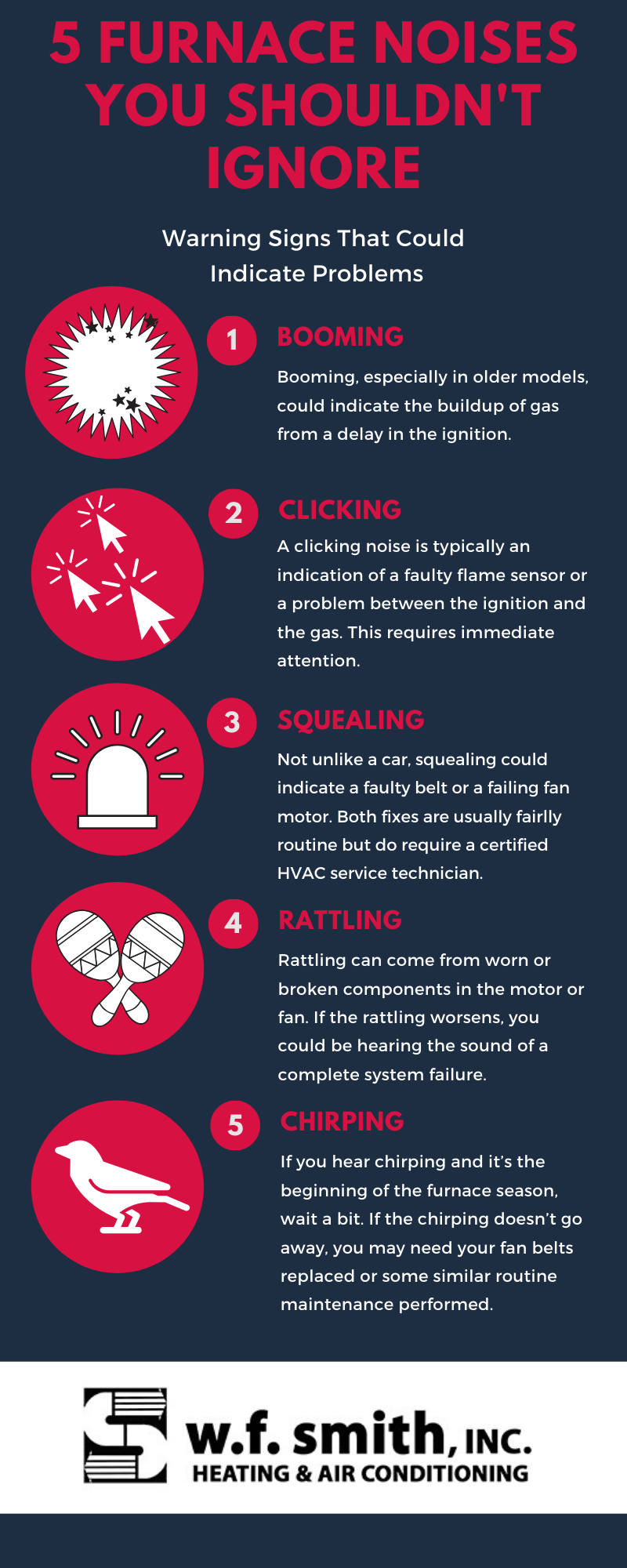
Normal furnace sounds you hear regularly are a comfort in themselves, letting you know your system is at work to keep your home warm. But what about the sounds that aren’t part of your furnace’s usual operation? Could these sounds indicate impending problems for homeowners? And just what do these booms, screeches, and crashes really mean? Check out this infographic for a quick overview of some of the common culprits of these unusual sounds.

Below, we’ve outlined five furnace noises you shouldn’t ignore.

Warning Signs Your Furnace Needs Repair

Noises are usually an indication that your furnace needs routine maintenance or repair. However, some noises can indicate an issue with your furnace that could possibly put you and your family at risk. Here is a list of five problematic furnace noises and what your furnace is trying to tell you.

  1. Booming – It’s not uncommon for homeowners to hear a boom when the furnace engages. In some furnaces, especially older models, a boom could indicate the buildup of gas from a delay in the ignition. If you hear this sound, call a professional service technician immediately, especially if there is an odor of natural gas around the furnace.
  2. Clicking – A clicking noise coming from your furnace is typically an indication of a faulty flame sensor or possibly a problem between the ignition and the gas. This will also require immediate attention.
  3. Squealing – Not unlike a car, squealing coming from your furnace could indicate a faulty belt or a failing fan motor. Both fixes are usually pretty routine but do require a certified HVAC service technician.
  4. Rattling – A rattling sound that doesn’t subside could be indicative of worn or broken components in the motor or fan. If the rattling worsens, you could be hearing the sound of a complete system failure.
  5. Chirping – Chirping noises are common in a furnace that hasn’t been used in a while. If you hear chirping, and it’s the beginning of the furnace season, wait a bit. If the chirping doesn’t go away, you may need your fan belts replaced or some similar routine maintenance performed.

If your furnace is making any of these noises (or if it’s making a completely different noise!), we recommend calling out an expert to ensure everything’s working safely.

Maintenance Is Key

Routine furnace maintenance is a must in order to keep your furnace in good working order. If it’s been a while since you’ve had your furnace inspected, the sounds you hear could simply be due to your lack of seasonal maintenance and not a major problem.

W. F. Smith can help you decipher the language of your furnace. When you hear noises that aren’t part of normal operation, contact our professional heating technicians. The longer you ignore these five furnace noises, the more damage could be done to your system. These not-so-normal sounds can be a red flag that you need service now. Watch this quick video for a recap about when you should call W.F. Smith Heating & Air Conditioning to take a look at your furnace.

This content is blocked because Animoto cookies have not been accepted.

Contact us at the first sound of trouble, and don’t forget to ask about our maintenance plans!

Why Does My AC Smell Like Mildew?

For most people, their homes act as a safe haven away from the blistering heat of the hottest days of the Philadelphia summers. They turn their air conditioning unit on and expect to feel the refreshing cooling sensation that comes with a fully functioning HVAC system. However, if you turn on your air conditioning system only to smell the musty smell associated with mold and mildew growth, it can certainly put a damper on your mood. Air conditioning should be refreshing and comfortable but otherwise undetectable. The only thing more miserable than dealing with the hot, sticky conditions is dealing with a foul smell coming from your air conditioning vents.

The last thing you want to deal with in the summer are foul odors coming from your AC that ruin your home’s internal environment. If your AC smells like mildew, mold, or other foul odors, it is time to troubleshoot the problem and perhaps call for professional assistance.

Common Causes For Mildew Smell From Your AC

Mold and mildew odors are some of the most common odors found in air conditioning duct work, and they can occur for a variety of reasons. A properly functioning air conditioning system should overcome the presence of moisture — the building blocks for mold and mildew growth. However, if you have let your regular AC maintenance lapse, these safeguards may not have the capacity to prevent them from worsening. Knowing how to identify these potential issues can help ensure your home is as cool and pleasant-smelling summer refuge as possible. 

Many homeowners may know what mildew smells like, they may not have an idea of where they can find it within their system. Here are the most common causes for mildew odors to occur in HVAC systems:

Dirty or Clogged Filters 

Air conditioning filters are known to be a crucial component of any HVAC system. However, we tend to neglect them most of the time. Did you know that dirty air conditioning filters can lead to mildew growth? The buildup of dust, debris, and other pollutants in your filters can create a breeding ground for mold and mildew to grow unchecked. This can lower your indoor air quality and lead to respiratory issues, along with causing damage to your AC system over time.

Clogged Drip Pan

Maintaining your residential AC system may not be the most thrilling task on your to-do list, but it is essential in keeping you and your family comfortable. One often overlooked component is the drip pan, which collects the moisture generated by your AC unit. When this pan becomes clogged with dirt and debris, it can create the perfect breeding ground for mold and mildew that can quickly spread throughout your system. The buildup can even cause leaks and water damage to your home.

Clogged Condensate Drain Line 

Did you know that a clogged condensate line in your residential air conditioning system can cause a buildup of mildew? This often overlooked issue can lead to unpleasant odors and even respiratory problems for you and your family. If you suspect there’s an issue with your condensate drain line, W.F. Smith Heating & Air Conditioning can help. We can perform regular maintenance and cleaning of your AC system to prevent this problem from occurring.

Moist Ductwork 

Did you know that the moisture that accumulates in your residential AC ductwork can lead to a strong mildew smell? While air conditioning is meant to keep you cool and comfortable, the constant airflow through the ducts can create a breeding ground for mildew if not properly maintained. The moisture from the air, along with trapped dust and debris, can create an unpleasant odor that permeates throughout your home. Luckily, there are ways to prevent this from happening. Regular cleaning and maintenance of your AC system can ensure that your ductwork remains dry and free from mildew, allowing you to enjoy the cool comfort of your home without any unwanted smells.

Internal Problems  

Have you ever walked into your home and been hit with a strong, unpleasant odor? It could be coming from your air conditioning system. Internal problems in your AC, such as clogged filters or dirty coils, can create the perfect environment for mildew to thrive. And let’s be honest, no one wants a mildew-scented home. By regularly maintaining your AC, you can prevent these internal problems and eliminate that unwanted odor. With a bit of care, you can enjoy fresh, clean air once again.

When Do You Need Professional Assistance?

Infographic detailing when a homeowner needs to call in the professionals for AC maintenance

Many homeowners may try to utilize different DIY repairs to help address the mildew smell in their AC system. However, while these options may help in the short term, they don’t always address the underlying cause of your issue. If there’s a problem within your unit that’s causing the mildew growth, you’re only managing a single symptom. 

If you’ve tried the easy DIY solutions like changing your air filters and checking the drip pan for visible clogs with no success, it is time to contact a professional HVAC technician. Many people will first opt to have their ductwork cleaned, but this is simply masking the problem if the underlying cause is not identified. Your technician can survey the situation to determine if an underlying problem needs to be fixed so the smell doesn’t keep coming back.

Schedule AC Repair Service in Philadelphia Today

Homeowners looking for a professional AC repair service in Philadelphia, PA, don’t have to look further than W.F. Smith Heating & Air Conditioning. Since 1946, we have helped countless customers throughout Philadelphia, Bucks, and Montgomery counties figure out what is wrong with their AC system and rid their homes of that pesky mildew smell. We can get to the bottom of your indoor air quality issues and get your system back in good working order in no time. 

Are you tired of smelling mildew every time you turn on your air conditioner on in the summer? For help with a mildew smell from the air conditioner in Philadelphia, call the experts at W.F. Smith to clean and fix the problem. 
Why Is My Air Conditioner Leaking Water?

Have you ever walked outside to find the condenser unit of your air conditioner leaking water? Maybe you noticed a puddle of water indoors after your AC runs for an extended period of time — whichever is the case, if your air conditioner leaks water, it’s important to schedule AC repair immediately.

Is It Normal for My AC to Leak Water?

You can expect your air conditioner to leak some water when it runs. But, it’s important to understand the difference between an expected amount of water and when your air conditioner is leaking too much. Keep reading to learn why your air conditioner leaks water and when to call an HVAC professional for help.

Reasons Your Air Conditioner Leaks Water

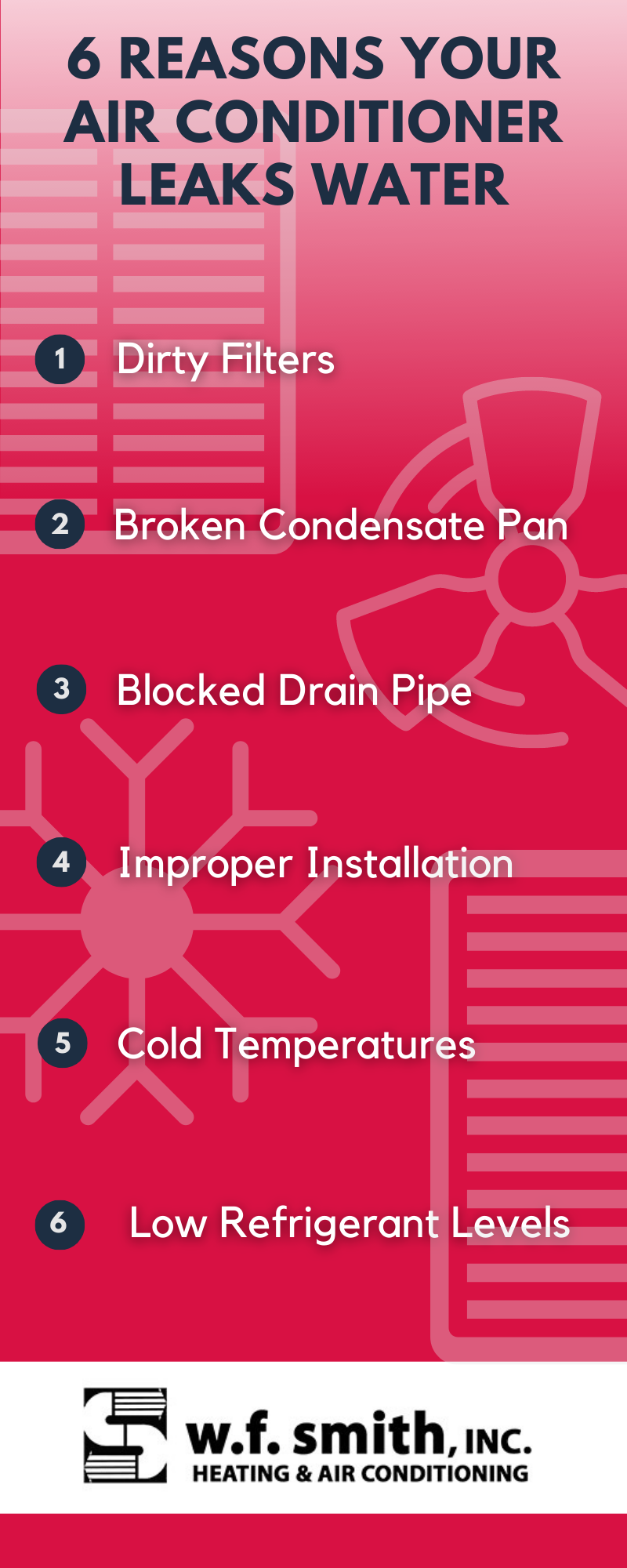
The following issues can all be the cause of your central air conditioner leaking water:

  1. A clogged condensate drain can cause AC water leaks – From time to time, your condensate drain may become partially blocked or completely clogged due to a buildup of dirt, rust, algae, and other debris.
  2. Disconnected drain line in your air conditioner – If your air conditioner was improperly installed, its drain line can loosen over time and cause the pipe to disconnect from its connection within your air conditioner. Similar to when the condensate drain is clogged, a disconnected drain line may cause your air conditioner to leak.
  3. Air conditioner running in cold temperatures – In Philadelphia and its suburbs, it can be easy to let your air conditioning run long after it’s necessary. If your air conditioner attempts to cool your home when outdoor temperatures drop below 60°F, the cooling coils may ice up and cause your air conditioner to leak water.
  4. Cracked condensate drain inside your AC – Over time your condensate pan may rust and crack. When this happens, your drain pan is no longer sealed and could cause water to leak from your air conditioner.
  5. Your air conditioner’s air filters are dirty – A dirty air filter restricts airflow over the evaporator coils. As a result, the coils get too cold and freeze over. When they melt, excess moisture drips into the condensate pan and causes it to overflow.
  6. The AC’s refrigerant levels are low – Similar to a dirty air filter, low refrigerant levels result in a low amount of pressure in your air conditioning system, causing the evaporator coils to freeze over. If your evaporator coils freeze, it could cause the drain pan to overflow and leak water.

How Much Water Should I Expect My AC to Leak?

During operation, your air conditioning unit will produce small amounts of condensation. How much water leaks from your air conditioner, however, depends on a couple of factors, including the thermostat setting and the temperature outside.

How Much Water Leaking From My Air Conditioner Is Too Much?

Small amounts of condensation near your AC’s drain pipe is normal and to be expected. When your air conditioner works hard during extremely hot and humid days, you can expect to see more water leaking than average. A small puddle underneath the condensing unit is most likely the result of normal operation.

During normal operation, you can expect to see some leaking and condensation on your unit. If your unit is leaking even when it’s not in use, it could be a sign of a bigger problem.

If your water leak continues for more than 24 hours, call a professional air conditioning contractor to inspect your unit.

How Do I Stop My Outdoor Condenser From Leaking?

If you’ve been dealing with too many AC repairs, it may be time to upgrade your system and switch to a regular maintenance plan. Many of the causes of indoor and outdoor AC unit leaks can be remedied with proactive and preventative maintenance practices. As mentioned above, one of the main causes of AC leaks is a faulty condensate pan. 

Regularly scheduled tune-ups for your HVAC system will include inspecting your condensate pan for faults and early signs of damage. In the long run, preventive maintenance will save you money in repairs, energy bills, and emergency HVAC services. Professional maintenance is a sure-fire way to keep your system running at maximum efficiency for years to come. 

Schedule AC Repair in Philadelphia, PA

For more information about our AC repair services and our other residential and commercial services, don’t hesitate to reach out to our team today!

Why is my AC Blowing Hot Air?

It’s a huge frustration for homeowners in the Philadelphia area;  the mercury is climbing and the air outside your home seems to be steaming.  You walk into your house, and notice there isn’t much of a difference.  Your AC engages, and, reaching your hand out to feel the air coming from your vents, you find warm air blowing throughout your home.  You check to make sure the thermostat is set to “AC” instead of “heat”, and “auto” instead of “on”.  It is.  So, you wonder “why is my AC blowing hot air? “

There may be some easy and doable solutions to your question, so no need to panic.  Take a moment and run through the following checklist, before you contact the professionals at W.F. Smith, Inc Heating & Air Conditioning:

Have you changed your AC filter recently?

If not, this could be the reason for your hot air problem.  In decades past, it was common to change out your filter every six months, or, seasonally.  With todays ultra-filtration filters, experts recommend swapping the old filter for new every 8-12 weeks.

The reason for more frequent replacement is that today’s filter technology’s creates a better barrier against dust, debris and common household allergens, allowing the filter to become blocked much more easily.  A blocked filter restricts air flow and can cause your condenser to freeze up, preventing efficient cooling.

Is the Area Around Your Condenser Debris-Free?

The exterior unit of your home cooling system houses the condenser and condenser-coils.  Dirt, leaves, overgrown grass and weeds can all impede your AC’s efficiency. The obvious solution is to keep the area around your AC unit clean.  Don’t place plants or shrubs around your AC unit, or surround it with decorative fencing, in an attempt to make the area more “aesthetic”.

Instead, contact the experts at W. F. Smith and enquire about a maintenance program so that your coils, and condenser unit are inspected annually.  With regular inspections, you’ll have clean coils, avoid expensive repairs, and have peace of mind that your AC will be keeping you cool all season long.

Additional Causes For Ineffective Air Conditioning Operation

If neither your filter, nor your outside condenser, are the obvious problem, you’ll need a professional HVAC technician to diagnose your problem and provide a solution.  W. F. Smith, Inc, is your go-to HVAC installation, service and repair professional in the greater Philadelphia area.

There could be a deeper reason for your inefficient AC.  You may have mechanical problems, or your condenser may need to be replaced.  Parts wear out over time, and you may not realize if something is broken.

Schedule AC Repair in Philadelphia

W. F. Smith technicians can check for leaks in your coils, recharge your coolant, examine components of your home cooling system for wear and tear, replace broken parts, or  take care of any other AC repairs as needed.

Contact us today to schedule AC Repair in Philadelphia or the surrounding metro area.