
10 HVAC Maintenance Tips

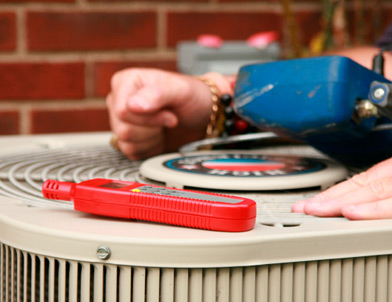
Close up of someone inspecting an air conditioning system

If you’ve been burned by high energy bills or emergency air conditioning repairs in the past, you know the importance of being proactive about maintenance. In addition to your annual AC tune-up, there are steps any homeowner can take to prepare the AC for summer, avoid future repairs, and extend the life of the equipment.

Test Your Air Conditioner

If you haven’t started using your air conditioning yet this year, go ahead and turn it on now. Set it to several degrees below the current temp to make sure it can get cool. Listen for strange noises and look for leaks or other obvious problems.

Clean the Filter and Set a Schedule

Change your air filter (or clean a disposable filter), because dirty air makes the equipment have to work harder and can lead to freeze-ups or breakdowns. Then mark your calendar so you’ll remember to clean the filter once per month during cooling season, or however often the manufacturer recommends.

Clear Debris from the Outdoor Unit

Pick up leaves, branches, and trash that might have collected around your outdoor AC unit. If shrubs grow close to the equipment, prune them back to leave a few feet of space.

Straighten Bent Fins

Do the condenser fins look flattened? An AC tune-up will straighten things out. You can get a fin comb at the hardware store but be very careful!

Clean the Outdoor Unit

Use a vacuum attachment to clean the coils. For even better results, schedule a maintenance visit by a Philadelphia air conditioning company that will thoroughly clean all components.

Get a Smart Thermostat

One of the best ways to maintain your AC is to use it a little bit less. A programmable thermostat can pay for itself by avoiding energy waste while you’re at work, while extending the AC lifespan.

Use a Ceiling Fan

If you’re willing to turn the thermostat up a degree or two, using a ceiling fan to save energy will absolutely take some pressure off your AC and keep it running stronger over time.

Check Insulation and Weatherstripping

Philadelphia homes should have at least R-38 insulation in the attic. Consider adding more insulation wherever you can, and check window and door seals and weatherstrips to replace or add them as needed.

Throw Some Shade

Everyone likes letting in natural light, but you can maintain your AC better by avoiding excessive heat gain. Use blinds or heavy curtains on east- and west-facing windows, or grow shade trees outside of them.

Never Skip Annual AC Maintenance

If everything seems fine, you might be wondering if professional AC maintenance is worth it. At W.F. Smith, our tune-up includes more than just changing the filter and cleaning the air conditioner. We test for airflow and efficiency, tighten electrical connections, and spot concerns early before something serious happens.

To schedule AC maintenance in Philly, call 215-273-3901 or contact us online!

How to Choose a Newtown, PA HVAC Contractor

Choosing an HVAC contractor in Newton, PA isn’t as easy as just calling up the first number that you find. The last thing you want to do is hire an irreputable contractor that may overcharge you or do a poor job. The following are a few tips to help you choose an HVAC contractor in Newtown you can rely on!

Look Up Google Reviews

One of the advantages of the Internet is that it makes it pretty easy to look into a company’s reputation. If customers have been ripped off or have had a bad experience with a certain company, they’re sure to leave a poor review. Check the Google reviews on the contractors you’re looking at.

Remember, even the best contractors may have one or two bad reviews – just make sure that you compare the amount of good reviews as well.

Check the Better Business Bureau

Look the contractor up on the Better Business Bureau’s website. There, you’ll be able to find customer reviews as well as any complaints that were filed against the company. If a lot of complaints were filed with the Better Business Bureau, you may want to avoid working with that contractor.

However, if there are only one or two complains, delve a little further to see if they were resolved. Just like bad reviews, complaints can occur – it’s what the contractor did to resolve them that matters. Of course, if there are dozens of complains, you may want to look elsewhere.

Ask For Recommendations

One of the best ways to find a good HVAC contractor is to ask friends and family for recommendations. Not only can they give you the name of a contractor that they were especially happy with, they may also provide a name or two of who you should avoid.

Look For Customer Testimonials

What better way to get an idea of what customers think of a company than through customer testimonials? A contractor that is proud of its quality service will seek out customers to provide testimonials. While written testimonials are a good indicator of the contractor’s quality, video testimonials are even better.

Check Out Their Website

A high quality HVAC contractor in Newtown, PA that takes great pride in their work will typically try to set up a professional looking website – like ours for example! They want their website to reflect their quality, after all. A contractor that couldn’t be bothered with their website, which means it runs poorly or looks like it was set up a decade ago, might not care about the details and may not put the kind of effort into their business that you would like to see.

Check Their Google Ranking

HVAC contractors with high Google rankings typically have a lot of happy customers. It’s usually indicative of their popularity, which is usually a good sign of their quality.

If you are looking to hire an HVAC contractor in Newton, PA, then be sure to use these tips or contact our team for information on our HVAC services in Newtown today.

Central Air Conditioners vs. Window Air Conditioners

When it comes to purchasing a new air conditioning unit, there are a lot of factors that you will want to consider before coming to a decision. These factors include the energy efficiency of the unit, the cost and the easiness of installation. While comparing various air conditioning units, you’re going to come across two common types – window air conditioners and central air conditioners.

The following information will help you determine which best suits your needs:

Central Air Conditioners vs. Window Air Conditioners: What’s the Difference?

Window air conditioners are very different than central air conditioner. A central air conditioner involves many more parts. Typically, there is a condenser unit that sits outside of the building, whether it’s in the yard or up on a roof. The condenser uses a set of pipes to run coolant into the air handler. Central air conditioners also make use of the duct system within the building in order to distribute cool air throughout individual rooms.

A window air conditioner is a single unit that contains no other parts. The unit has a condenser, evaporator, thermostat and fan already built in. The unit is designed to be wedged into a window frame and is most effectively used to cool single rooms.

Central Air Conditioners vs. Window Air Conditioners: What’s Cheaper?

The window air conditioner is by far the easier one to install since it doesn’t need to be connected to a duct system in order to disperse air. All you need to do is open up the window and fit the unit between the frame before shutting the window down onto the top of the unit. This is something that you can easily do on your own.

With a central air conditioner, you are going to need to hire an HVAC professional to have it properly installed. Central air conditioners will also require regular inspection and maintenance, neither of which are necessary with window air conditioners. These costs are all going to add up, making the window air conditioner a cheaper purchase.

Central Air Conditioners vs. Window Air Conditioners: What’s More Efficient?

When you look at the stats, it may seem like a window unit will use less energy. The average window unit uses between 500 and 1,440 watts of electricity in order to run, whereas a central air conditioner in the average-sized home uses around 3,500 watts. Part of the reason why central air conditioners use so much energy is because they need to use moving parts in order to disperse the cool air throughout the home.

However, a window unit is only effective at cooling one room at a time. This means that to cool the entire home, you would need window units for every room. This becomes less energy efficient and more costly than operating a central air conditioner – especially since new technology, such as automation and zoning – allow central air conditioners to be even more efficient than before.

Questions? Call W.F. Smith!

Keep these things in mind when choosing an air conditioner and be sure to contact W.F. Smith today for additional HVAC advice. We’ve serviced Philadelphia’s HVAC needs for 70 years!

Spring HVAC Checklist for Philadelphia Homeowners

Winter is coming to an end, which means that spring is right around the corner in Philadelphia. Odds are you used your heating system extensively during the winter months in order to keep warm.

The spring is a time of the year where you won’t need to depend on your heating system or your cooling system too much, making it the perfect time to do a little HVAC maintenance to make sure that your cooling system—heat pump or air conditioner—is running properly and efficiently for when summer hits.

We’ve outlined a full spring HVAC Checklist for Philadelphia homeowners. Don’t miss out on these tips to prepare your air conditioner for summertime!

Spring HVAC Checklist: What Philadelphia Homeowners Need to Know

1.) Change Your Air Filter

\You should be changing your air filter on a monthly basis in order to ensure the proper airflow throughout your home. If you don’t change your air filter regularly, dust and dirt will build up to the point where it will obstruct your airflow.

This will make it harder for your HVAC system to cool or heat your home properly, affecting both your comfort and your energy bills. Read more about changing your air filter and the role it plays in your spring HVAC checklist.

2.) Check Operation of All HVAC Units

Turn on all of your HVAC system’s units to make sure that they are working properly. If your HVAC system isn’t cooling or heating your home to the temperature you’ve set, then you have an issue with either your thermostat or your HVAC system and you’ll want to schedule professional maintenance.

You should also make sure that none of your HVAC units are making strange sounds or producing strange scents – these are all signs of potential problems and should never be skipped as part of your spring HVAC checklist.

3.) Tighten Electrical Connections

Electrical connections that are faulty can make the operation of your HVAC system unsafe and can also end up reducing the lifespan of your HVAC’s major components. This should be a regular step in a spring HVAC checklist for Philadelphia homeowners.

4.) Clean & Lubricate Indoor HVAC Components

All of the HVAC system’s indoor components, including the blower fans and coils, should be cleaned and lubricated to ensure that they work as efficiently as possible. Cleaning and lubricating these components will also help to prevent any problems from developing in the near future.

5.) Clean the Outdoor HVAC Units (Your Air Conditioner or Heat Pump!)

Clean out any leaves, grass or dirt that may be blocking your vents. If you don’t clean them out, it will restrict the airflow in your home, which will reduce your HVAC system’s efficiency.

6.) Check Your Air Conditioner’s Refrigerant Levels

Because temperatures are going to begin going up as summer gets closer, you’re going to want to make sure that your air conditioner is in peak operating condition. Check the refrigerant levels to make sure that the unit will cool your home efficiently and effectively. Read more about checking your air conditioner’s refrigerant.

These maintenance tasks should be performed to make sure your HVAC system is performing properly after experiencing heavy use during the winter, and also to prepare it for the upcoming summer months.

While many of these tasks can be performed on your own, we recommend that you have a professional technician perform an HVAC inspection every spring.

Philadelphia HVAC Inspections

To schedule a professional HVAC system inspection this spring, be sure to contact W.F. Smith today.